


After a chaotic week following the Justice Department’s mid-trial settlement with Live Nation-Ticketmaster, the antitrust trial picked back up surprisingly smoothly on Monday — this time, with dozens of states leading the case.
Technology
Samsung is adding Perplexity to Galaxy AI


In addition to summoning Bixby or Gemini, Galaxy S26 users will be able to call on Perplexity by saying “hey, Plex.” The integration of Perplexity into Galaxy AI is just one element of the company’s embrace of a “multi-agent ecosystem.”
Often, people will use different AI agents for different tasks, depending on where their strengths lie. So Samsung is opening up the ability to integrate different agents into the OS. Hey, Plex isn’t just some transparent version of the app baked into a Galaxy phone to quickly get answers to questions. Perplexity will have access to Samsung Notes, Clock, Gallery, Reminder, and Calendar, as well as select third-party apps, though which ones specifically Samsung didn’t say.
Samsung seems to believe that people will increasingly use AI to interact with their phones. But, as we’ve learned, people can develop strong attachments to particular AIs. So the company is betting that giving people the freedom to put whatever agent they want at the heart of their phone will help differentiate them from competition like Apple and Google.
Of course, Samsung’s next Unpacked event is just around the corner. I’m sure we’ll hear more about Galaxy AI and Samsung’s vision for a multi-agent future on the 25th.


This isn’t the outcome the states originally wanted. Out of concerns about being able to effectively take over the case and fear that the jury would be prejudiced by the shakeup, they requested a mistrial, which would have restarted the court battle at an unknown future date. But an irritated Judge Arun Subramanian seemed likely to deny the request, and once the states figured out how to retain the DOJ’s expert witness and were able to quickly hire up, they withdrew their mistrial motion. After the new faces were introduced, the trial restarted from roughly where it left off more than a week ago, with testimony that included how Live Nation deployed its “velvet hammer” against rivals.
Subramanian welcomed the jurors back from their “spring break” and asked if they had read or encountered any news about the case when they were out, which is forbidden by the jury instructions. They either shook their heads or remained silent. He reminded the jurors that the US had resolved its claims, as had a handful of states, but the rest were proceeding to trial. Jurors shouldn’t make any inferences from the fact those parties are no longer in the case, he said.
With the DOJ out of the picture, the lawyers who questioned early witnesses were gone, replaced by a new team co-led by Jonathan Hatch, an attorney from the New York AG’s office, and Jeffrey Kessler of Winston & Strawn, who represented college athletes in the landmark Supreme Court antitrust case against the NCAA over compensation.
The states’ attorneys picked up questioning of Jay Marciano, the COO of AEG, a competitor to Live Nation on multiple fronts. While Hatch refreshed jurors on parts of Marciano’s prior testimony, it was otherwise a fairly standard examination. Marciano testified about ticketing models he prefers in Europe, where multiple ticketing services often work at a venue, unlike the norm in the US where venues tend to accept exclusive ticketing contracts, often from Ticketmaster.
On cross examination, Marciano spoke to an incident the jury heard about early in the trial: a call between the Barclays Center’s then-CEO and Live Nation CEO Michael Rapino, who responded to an attempt to abandon Ticketmaster by saying it would be harder for the arena to get concerts with the new UBS Arena nearby. While Barclays interpreted this as a threat to protect Ticketmaster, Marciano affirmed that it’s common as a concert promoter to play venues against each other to get more favorable terms, and that the UBS Arena likely would attract artists away from Barclays as the new venue in town.
Live Nation’s president of US concerts, Robert Roux, addressed a separate allegation: that Live Nation uses its broad control over US amphitheaters to maintain its monopoly power, leaving no other real options for artists looking to play large outdoor venues. Through Live Nation’s own business presentations, plaintiff attorney Josh Hafenbrack demonstrated that the company made big strides to gain power over four of the top five amphitheaters in the US by ticket sales between 2016 and now. A 2018 presentation showed a largely highlighted list of the top 100 amps worldwide, with the green highlights representing the 62 Live Nation owned, operated, or exclusively booked venues at the time. Since then, Roux confirmed, the company has added several more on that list.
Live Nation denies it acted anticompetitively, and argues the states ignore other kinds of venues that compete for the same shows. But Roux wrote in a 2015 email that many non-superstar artists come in wanting to play amphitheaters — many of which, evidence shown in court has suggested, are controlled or exclusively booked by Live Nation. He also wrote that in those cases, there was “room for tighter negotiations and deals.”
“Either we are together or we are competitors”
Other emails described how Live Nation thinks about its competition when contemplating otherwise lucrative deals. In a 2018 email exchange, Rapino questioned why Live Nation should give shows to a promoter in the South it considered acquiring, Red Mountain Entertainment, before it actually owned it. Roux wrote at the time that the message to Red Mountain should be, “Either we are together or we are competitors.” He described the approach as a “velvet hammer.” On the witness stand, Roux said the message wasn’t meant to “antagonize” the promoter, but to be firm and send a clear message. In a separate exchange that mentioned Red Mountain, Roux wrote that Live Nation shouldn’t get “complacent” and “let small guys encroach from the edges.” Roux said the comment was a general one, and not specific to the promoter. Live Nation acquired Red Mountain in 2018.
In 2020, Rapino advised Roux against letting Radio Disney and concert promoter Superfly into a Live Nation venue, even after they offered a contract that would yield at least $400,000 in profit for Live Nation for renting out the amp. One executive had raised a concern about allowing a third-party promoter into the amp, even though the “money is great.”
Finally, Roux testified that Live Nation’s profits per fan have multiplied in recent years, with profitability in large amps, a key market in the case, growing more than other venue categories between 2019 and 2024. Before certain costs were factored in, the company made $386 million in profit from large amps in 2024, nearly triple the amount it made in that segment in 2019.
Besides the delay in the case while the states’ team sorted out its next moves absent the DOJ, there wasn’t a noticeable change in the flow of trial and how the new litigators operated, compared to the first week of trial. The case is still expected to run several more weeks, though both sides said they’ve worked to trim their witness lists to help make up for lost time. Toward the end of this week, one of the trial’s most high-profile witnesses is expected to take the stand: Live Nation’s CEO.
Follow topics and authors from this story to see more like this in your personalized homepage feed and to receive email updates.

NEWYou can now listen to Fox News articles!
Every so often, we receive an email that stops us cold. Not because it is dramatic. Not because it is careless. Because it feels impossible.
Sheri M. from Georgia recently wrote to us with this question:
“Yesterday I learned that someone had stolen my debit card information. I was alerted by my bank about 10:00 p.m. last night that someone tried to use my card in Brazil. I am in the Southern United States and have never traveled outside the country. What I have trouble understanding is that this particular debit card has never been used and has never been out of a locked vault. It has been activated, and once activated, I locked it up. No one had access to it, no questions about that. It is just not possible. So how could someone have my card information? I asked this question at my bank, and after speaking to several people, they are at a loss as to what to tell me. I hope you can shed some light on this.”
GHOST-TAPPING SCAM TARGETS TAP-TO-PAY USERS
Debit card numbers can be compromised digitally through system breaches or automated number-guessing attacks. (fizkes/Getty Images)
Sheri, first, we are glad your bank flagged it. That alert tells you fraud monitoring worked. Now let’s address the part that feels unreal. How can someone use a debit card that has never left a locked vault?
If you have asked that same question, you are not alone. This type of debit card fraud happens more often than most people realize. And it almost never involves someone physically touching your card.
Sign up for my FREE CyberGuy Report
Get my best tech tips, urgent security alerts and exclusive deals delivered straight to your inbox. Plus, you’ll get instant access to my Ultimate Scam Survival Guide – free when you join my CYBERGUY.COM newsletter.
How debit card fraud happens without using the card
When a card is compromised without being used, the issue is typically digital. Here are the most likely explanations.
1) The number was exposed before you received it
Debit cards move through multiple systems before they reach your mailbox. Third-party vendors manufacture, encode and ship them. That means the card number exists in databases long before you open the envelope. If one of those systems is breached, criminals can obtain card numbers in bulk. They never need the physical card. They never need your home. In that case, it has nothing to do with your vault.
2) A BIN attack may be responsible
Every debit card starts with a bank identification number. Criminals use software to generate the remaining digits at high speed. They test thousands of combinations using small transactions or foreign authorizations to see which numbers work. This is known as a BIN attack. They are not stealing your specific card. They are guessing valid numbers mathematically. If your card was activated, even if it was never used, it becomes part of the pool that can be tested. A foreign attempt, like one in Brazil, is often a test authorization. It feels personal. In reality, it is automated.
WEB SKIMMING ATTACKS TARGET MAJOR PAYMENT NETWORKS
A customer completes a transaction at Pike Place Market in Seattle, Washington, on May 28, 2025. Financial security specialists recommend canceling compromised cards and monitoring accounts immediately after a fraud alert. (M. Scott Brauer/Bloomberg via Getty Images)
3) A processor or network weak point
Sometimes the exposure does not originate at the bank itself. The weak link can involve:
- A payment processor
- A card network
- A digital wallet backend
- A servicing vendor
Frontline bank employees often do not have visibility into these system-level issues. Patterns can take time to surface internally. That is why you may not receive a clear explanation right away.
4) Backend systems assign numbers early
Many banks pre-assign card numbers or connect them to digital systems before you ever swipe the card. If that backend data is exposed, the physical card remaining locked away does not matter. That is why debit card fraud without using the card can still occur.
Why did the transaction show up overseas?
You may wonder why the attempt came from Brazil. Foreign authorizations are often used as test transactions. Criminal groups run small or unusual location charges to see which numbers are active. If the charge clears, they escalate. The good news is your bank blocked it.
What you should do right now
If this happens to you, act quickly.
- Cancel the card completely. Do not just lock it. Make sure the number is permanently closed.
- Request a new card number. Confirm it is not a reissue of the same digits.
- Monitor your checking account daily for at least 30 days.
- Freeze your credit with all three credit bureaus.
- Add identity monitoring to detect broader misuse.
That final step is often overlooked.
WHY SCAMMERS OPEN BANK ACCOUNTS IN YOUR NAME
Experts say debit card fraud often occurs without the physical card ever being used or stolen. (Nikos Pekiaridis/NurPhoto via Getty Images)
Why identity monitoring matters
Debit card fraud can be isolated. It can also signal a larger data exposure.
If your card number surfaced through a breach or vendor leak, other personal details may be circulating too. Email addresses, phone numbers and Social Security numbers often appear together in stolen datasets. That is where early detection becomes critical.
Our top Identity Theft Protection recommendation monitors credit activity, financial accounts and dark web marketplaces for signs your identity is being misused. You receive fast alerts so you can respond before small incidents turn into larger problems.
Instead of waiting for a late-night fraud alert, you gain earlier visibility.
See my tips and best picks on Best Identity Theft Protection at Cyberguy.com.
Ways to stay safe from invisible debit card fraud
You cannot control global criminal networks. You can reduce your exposure.
- Keep debit cards locked in your banking app when not in use
- Turn on real-time transaction alerts
- Use credit cards for online purchases when possible
- Freeze your credit as a preventative step
- Avoid storing debit card details across multiple retail sites
- Use identity monitoring for broader protection
Layered security gives you more control.
Kurt’s key takeaways
Sheri’s experience feels impossible because she did everything right. The card never left the vault. It was never used. No one had access. Yet the number was still tested from across the world. That is the reality of today’s financial crime. It is automated, remote and system-driven.
If this can happen to a card locked in a vault, what does that say about how secure our financial system really is? Let us know by writing to us at Cyberguy.com.
CLICK HERE TO DOWNLOAD THE FOX NEWS APP
Sign up for my FREE CyberGuy Report
Get my best tech tips, urgent security alerts and exclusive deals delivered straight to your inbox. Plus, you’ll get instant access to my Ultimate Scam Survival Guide – free when you join my CYBERGUY.COM newsletter.
Copyright 2026 CyberGuy.com. All rights reserved.

Sony’s upgraded PlayStation Spectral Super Resolution (PSSR) technology is rolling out to several titles on the PS5 Pro, including Cyberpunk 2077, Final Fantasy VII Rebirth, Silent Hill 2, and more. Digital Foundry got a chance to test some of them and found that the “new upscaler delivers the kind of upgrade we were looking for from PS5 Pro.” Problems with shimmering, flickering, and other visual artifacts have been addressed, and they said it now delivers crisper and more consistent in-game graphics.
This is the first upgrade we’ve seen from AMD and Sony’s combined Project Amethyst work on improving the effect of rendering a game at a lower resolution, then using AI trained on graphics to analyze each frame and upscale it, delivering improved quality on the same hardware without reducing the framerate. The upgraded PSSR is included with the latest PS5 system software update, which will start rolling out “in phases” on March 17th at 1AM ET, and Sony says its improvements will also improve AMD’s next FSR update when that rolls out.
Assassin’s Creed Shadows and Cyberpunk 2077 will also get a patch with the PSSR update in the “coming weeks,” while CrimsonDesert will adopt the tech when the game launches on March 19th, according to Sony. You can also toggle the updated tech on or off for PS5 Pro games not on this list that already support PSSR, though Sony notes that “results may vary by title.”

Politics3 minutes ago
Iran’s top security official killed in airstrike, Israel says

Science9 minutes ago
I had to man up and get a mammogram

Sports15 minutes ago
‘Meal Ticket’ doc goes deep into the real history of the incomparable McDonald’s All-American Games

World27 minutes ago
Ex-Belgian diplomat ordered to stand trial over murder of Congo’s Lumumba
News57 minutes ago
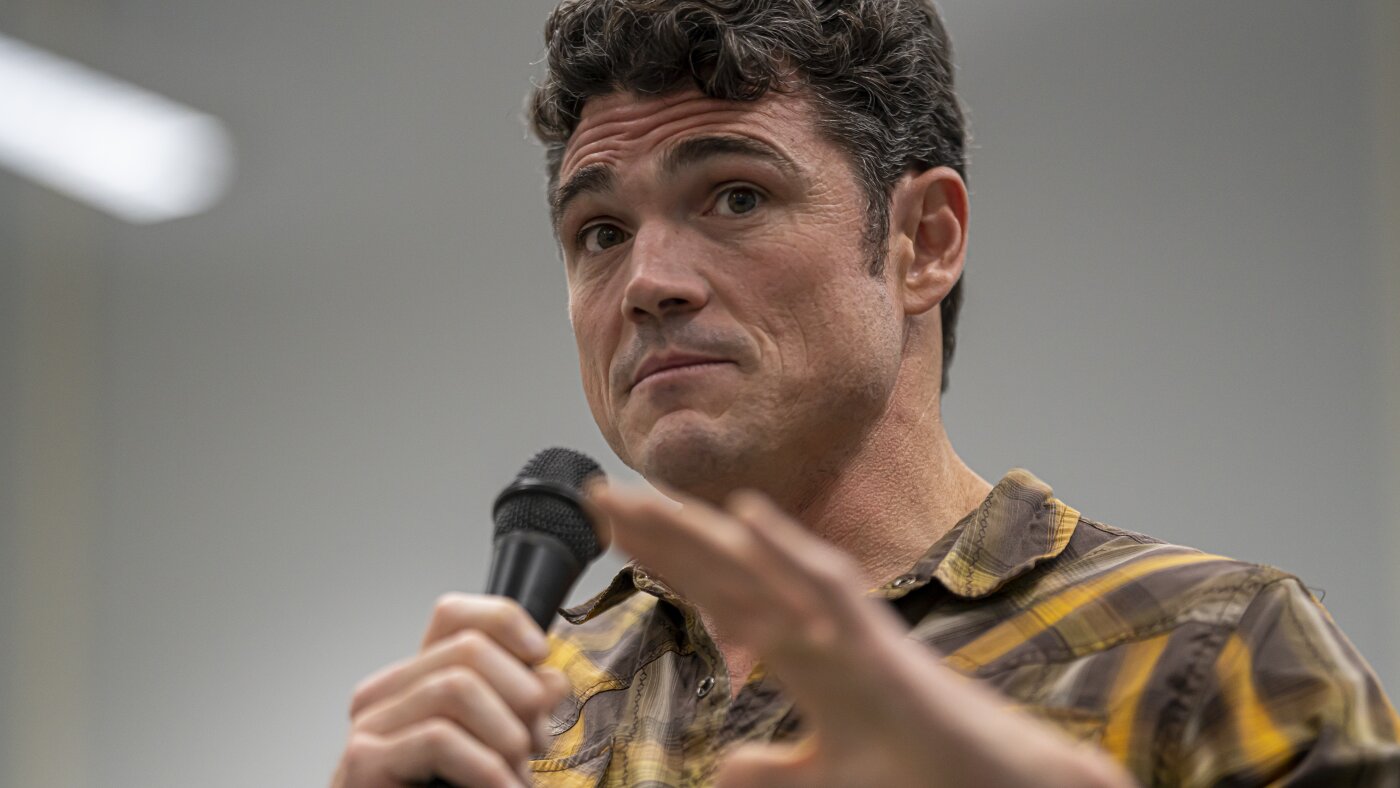
Joe Kent, a top counterterrorism official, resigns citing Iran war

Florida1 year ago
Florida High School Football Rankings: Top 25 teams – Oct. 21

Oregon2 years ago
How old is Bo Nix? What to know about Oregon quarterback ahead of 2024 NFL Draft

Connecticut2 years ago
Cleary's 21 help Le Moyne down Central Connecticut State 69-64 in OT

Virginia2 years ago
99th annual Pony Swim held in Virginia

Indiana2 years ago
Indiana Members Credit Union announced as new anchor tenant at Bottleworks District
World27 minutes ago
Ex-Belgian diplomat ordered to stand trial over murder of Congo’s Lumumba
News57 minutes ago
Joe Kent, a top counterterrorism official, resigns citing Iran war

Politics11 hours ago
Minnesota bill would ban warrants allowing police to collect data from devices near a crime scene

World13 hours ago
Kallas says ‘no appetite’ to shift mandate of EU Hormuz naval mission

News13 hours ago
Trump predicts US will have ‘honour of taking Cuba’ amid power blackout
-

 Oklahoma1 week ago
OSSAA unveils Class 6A-2A basketball state tournament brackets, schedule
-

 Oklahoma3 days ago
Family rallies around Oklahoma father after head-on crash
-

 Michigan1 week ago
Operation BBQ Relief helping with Southwest Michigan tornado recovery
-

 Nebraska4 days ago
Wildfire forces immediate evacuation order for Farnam residents
-

 Southeast1 week ago
‘90 Day Fiancé’ alum’s boyfriend on trial for attempted murder over wild ‘Boca Bash’ accusations
-

 Health1 week ago
Ancient herb known as ‘nature’s Valium’ touted for improving sleep and anxiety
-

 Connecticut1 week ago
Exclusive | Ex-CBS anchor Josh Elliott back on Connecticut dating scene after ugly Liz Cho split
-

 Technology1 week ago
Sony appears to be testing dynamic pricing on PlayStation games