Sports
Super Bowl halftime shows ranked: Prince, Beyoncé, U2 — and Kendrick Lamar on deck


The Athletic has live coverage of Chiefs vs Eagles in Super Bowl LIX, and Kendrick Lamar’s halftime performance.
(Editor’s note: The Athletic baseball writer Levi Weaver is an accomplished singer, songwriter and musician who has played roughly 1,000 shows in 43 states and 10 countries.)
On Sunday, as the Philadelphia Eagles and Kansas City Chiefs head to their locker rooms, crews will rapidly set the stage (literally) for what has become one of the most high-profile music performances of each year: the Super Bowl halftime show.
This year, headlining will be Kendrick Lamar, who — let’s admit it — has had himself a year. Fresh off five Grammy Award wins for “Not Like Us,” Lamar is a consummate showman with a keen eye for detail.
GO DEEPER
Kendrick Lamar won 5 Grammys on Sunday. Now he prepares for his Super Bowl set list
I have no idea what to expect, but I will be locked in when the lights come up.
The big question: Where will it rank all time? In advance of this year’s performance, I watched every Super Bowl halftime show. (I do not recommend doing this.) There are some brilliant performances — by all means, rewatch those — but there are also a few that are … well, you’ll see.
Here’s the rubric I used for the ranking. The most a show could score is 50 points.
Music (1-10): Instrumentation, vocal performance
Staging (1-10): Combination lighting/stage presentation and choreography
Set list (1-5): Were the hits played? Was the energy high?
Memorable (1-10): Ten points means we’re still talking about it; one point means the same thing, but for all the wrong reasons.
“Vibes” (1-12): The most important (and least tangible) element … did it work?
Geographic relevance (1-3): Was a local act incorporated? Or, did the locale contribute to the performance at all?
In 1992, organizers had yet to learn that the Super Bowl could have much better production value. This one was so bad that it prompted organizers to shake things up the following year — bringing in Michael Jackson and changing the halftime show forever.
Gloria Estefan’s performance was fine, but she didn’t even appear until late in the 13-minute show, after a snowflake army’s rendition of something called “Winter Magic,” followed by children rapping about Frosty the Snowman.
I now believe that this is the video they show performers when asking, “Are you sure you don’t want to lip-sync it?”
The “Indiana Jones”-themed set looked very expensive, and the costumes certainly were more involved than anything we’d seen before. But there was far too much bad acting: A faux Indiana Jones (not Harrison Ford) steals the Super Bowl trophy, and there is a fight scene, replete with movie sound bites playing. The whole thing felt like a half-baked promo put together by studio execs.
Patti LaBelle and Tony Bennett deserved better, but both felt very shoehorned in, as if the organizers would have preferred not to include musical guests at all. They wrapped with “Can You Feel The Love Tonight” from “The Lion King.” Mercifully, that was the end.
The halftime show sponsored by House of Blues. We could have had Wynton Marsalis, Dr. John, The Meters, Fats Domino, Allen Toussaint or the Preservation Hall Jazz Band. Instead, this show kicked off with another marketing scheme for an upcoming movie about a blues band (from Chicago).

James Brown teamed with Jim Belushi — and ZZ Top in the background — during halftime of Super Bowl XXXI. (RVR Photos / USA Today)
James Brown was good (albeit lip-synced, as evidenced here and elsewhere). ZZ Top was solid. Good choices, but sullied by the blues headliners.
It should have worked. The halftime show was emerging from the apologize-for-2004-by-booking-older-acts era, and the presentation was decidedly modern — futuristic, even. All it lacked was an act that could sing on pitch. Fergie’s mic was cut for the first few seconds, but in retrospect, I’m not sure turning it on was the best remedy.
This performance sounded like a group of college friends on a fun night out at a karaoke bar. Slash did fine in his cameo, and Usher was … well, he did the splits, so that was something. But aside from a flashy stage presentation, it was largely only memorable for unfortunate reasons.
I absolutely hated this show in real time. I did my best to watch it with fresh eyes for this list.
I still hate it.
From the intro where Bruce Springsteen barks at us to “put the chicken fingers dowwwwn” to having a referee throw a delay of game flag just before Steven Van Zandt hollers, “It’s Boss tiiiiiiime!” … it’s just all so very cringe.
The E Street Band is made up of some brilliant musicians, and Springsteen is a great songwriter. That should boost them higher on this list, but for me, none of that was able to shine through the cheesiness of the presentation.
28: Diana Ross (1996): 25 points
It’s honestly remarkable how many of these feel like an attempt to correct a mistake made the year before. A year after the “Indiana Jones” debacle, organizers went back to a more traditional on-field setup: marching band members in formation as Diana Ross blasted through a medley of her numerous hits from a bare-bones stage.
It was very straightforward, inoffensive and a reasonable marriage of old-style choreography with a big star at the center. But none of it felt very inventive or up to the scope of the event. The exit via helicopter was a nice touch, I guess.
27. The Who (2010): 26.5 points
Sorry for getting in the music production weeds here, but I think I have a theory for why this set fell flat. They mixed a rock and roll band like a pop act: The vocals were way too prominent over the instrumentation. Given how much effort it took Pete Townshend to hit the high notes on “Baba O’Riley” and how half-baked Roger Daltrey’s harmonica solo sounded, it was a particularly egregious decision.
At their best, The Who were at the forefront of the rock and roll revolution. Here, they come off as an anachronism on a futuristic light-show stage.
The idea — celebrating 40 years of Motown — was solid. Mixing artists from the heyday of Motown (The Temptations, Smokey Robinson, Martha and the Vandellas) with current artists (Queen Latifah, Boyz II Men), I was interested. I like all of these acts. It was like seeing a living museum of the Motown era, with a modern wing for the kids. There’s value in that!
But was it entertainment value? Not to the level you’d expect from a Super Bowl halftime show.
This one scores high in stage presentation. The set looked closer to an Olympics opening ceremony than anything previously seen at a Super Bowl. Throw in the Disney orchestra, and the whole thing felt very grandiose.
Unfortunately, once the artists took the stage, it started to feel very not-so-grandiose. The Super Bowl halftime show should be a party, not an emotional final scene of an inspirational film. When Edward James Olmos’ narration starts — he even used the phrase “the tapestry of magic”— it’s apparent: They want us to feel things.
Just play the hits! Do the drum thing from “In The Air Tonight.” It’s so simple!
A much better set list, but somehow, the sum was less than the parts. I can’t knock Shania Twain’s performance at all. Gwen Stefani was a bit pitchy from all the running around and dancing, but it was still pretty good. The Police should have gotten a longer set, and Sting’s attempt to replicate Nelly’s half-jersey from a few years prior wasn’t great.
Overall, it lacked elements that would have made it memorable.
I tried to rank on the merits of performance alone. Starting the show in a small club atmosphere below the stadium was a nice touch. But then, Justin Timberlake goes into “Rock Your Body” (the offending song from 2004 … more on that later), omitting the final line with a “hold up, stop.” And later in the set, “Cry Me a River” — written about Britney Spears — also hits differently, knowing what we know now.
It’s a shame because devoid of context, this was an objectively brilliant performance. There was even a tribute to Prince, with a shot of Minneapolis lit up in purple!
This is murky, and again, I really tried to rank on the merits of the performance — even though I know full well what everyone remembers. I think this was an objectively better halftime show than the Rolling Stones … but the metrics are the metrics, and everyone talked about this for the wrong reasons.
Even before the “incident,” this halftime show already had a different vibe than any we’d seen before. We even got our first curse word in albeit a fairly tame “ass is bodacious” line by Nelly. In retrospect, hearing “I am getting so hot; I’m gonna take my clothes off” feels more like an omen than a singalong. Kid Rock even references “topless dancers” and “methadone clinics” in “Bawitdaba.”
It was a modern, slightly more tawdry halftime show! And then …
It’s a shame that the show as a whole is more or less forgotten thanks to controversy. Janet Jackson deserved better.
This was the second year of the “vintage acts” era. It’s nowhere near “Winter Magic” bad, but after 2004’s controversy scuttled a blossoming trend of multiple megastars on stage at once, it was a bit of a letdown to see a shorter version of a standard show from a band whose peak was 25 or so years prior — even if they are one of the all-time great touring acts.

Mick Jagger of The Rolling Stones performed during halftime of Super Bowl XL. (John David Mercer / USA Today)
As Mick Jagger said before launching into “Satisfaction”: “This one, we coulda done at Super Bowl I.”
If they had, it would be much higher on this list.
Big Bad Voodoo Daddy is a good example of how a band doesn’t have to be the biggest act in the world to succeed on a large stage. Swing music was going through a renaissance around this time, and they kicked off the show with a fun (if a bit dated) vibe.
But what I really want to talk about is this: Stevie Wonder was driving a car. (Let’s throw it to Shaquille O’Neal for conspiracy theory story time.)
Wonder’s set was uncharacteristically shaky — some echo issues that were out of his control and one botched high note — but still good. It was Estefan who stuck the landing. The Latin-infused set was a perfect fit for Miami. Overall, pretty good for the era!
Adam Levine’s vocals are a big part of what makes Maroon 5 such a good band, so it was a bit disappointing for them to be just OK in the first half of the show. The falsetto in “She Will Be Loved” and “Moves Like Jagger” was strong — less so in “Sugar.”
I can’t decide how I feel about the “SpongeBob SquarePants” introduction of Travis Scott. My gut says “bad,” but my heart tells me to stop being old and grumpy. My bigger issue was if you’re going to have to bleep out half of Scott’s performance, maybe just go with someone else?
Points for getting Big Boi for an Atlanta Super Bowl, but otherwise (beyond Levine taking off his shirt) this was a fairly forgettable show.
18. Tom Petty (2008): 32.5 points
It was a pretty good show by a great artist. Very few bells and whistles, just the hits. Get in, get out, passing grade, on to the next.
Prince and Tom Petty played in back-to-back halftime shows. Following Prince probably hurts Petty’s ranking here. Not his fault, just a tough draw.
A Beatle? Playing The Beatles songs? On a stage that actually took some effort to construct? Big pyrotechnics? Seems like a winning combination. I’m almost inclined to forgive an emotional ballad here, since an entire Super Bowl crowd singing along to “Hey Jude” is a moment that those in attendance surely haven’t forgotten.
Unfortunately, it is painfully obvious that 2005 marked the beginning of a seven-year era of halftime shows that seemed designed to apologize to the public for the controversy of 2004. The goal appeared less to take the halftime show to new heights and more to simply avoid an international incident. Mission accomplished, but in context, it was a little boring compared to what it could have been.
Country music was having a moment in 1994, and this lineup worked great for a southern Super Bowl in Atlanta. Clint Black had bigger hits, but going with “Tuckered Out” before handing it off to the inimitable Tanya Tucker was a pun I can appreciate. The Judds had broken up four years prior, so it was cool to see Naomi join her daughter Wynonna on stage for “Love Can Build a Bridge” (though “Rockin’ With the Rhythm of the Rain” would have been better, in my opinion).
While the music was solid, the production value was pretty mid for the first three performers, until the younger Judd took the stage to a sea of sword-length glow sticks that really emphasized the stadium-show feel. I’m not sure they could have done much more, though. Too many bells and whistles would have felt inauthentic.
2001 marked a sea change between safe and middle-of-the-road to finding the biggest stars of the day — and then adding some more big stars. Great in theory, but going back and forth between NSYNC and Aerosmith for the first half was vibes whiplash. Fortunately, it improved when the collaboration got started with “Walk This Way.”
I would have loved to have seen Run-DMC here, but Britney Spears and Mary J. Blige filled in brilliantly. Nelly’s half-Ravens/half-Giants jersey was something we’ll all remember.
It was at this point I realized that I prefer when the Super Bowl is not on the West Coast. We get a nighttime show instead of a mid-afternoon festival feel. Organizers did a good job employing a lot of bright colors and flowers into the staging, but it didn’t feel like a real party while the sun was up.
I mean no offense to Coldplay when I say this: Their performance was exactly a Coldplay show, and they’re one of the biggest bands of this millennium. But when Mark Ronson and Bruno Mars hit the stage, the energy level soared. Mars was suited for this stage. So was Beyoncé, and the dance-off mashup between the two was the sort of pairing the halftime show should strive for.
13. Lady Gaga (2017): 36.5 points
The choice to pair “God Bless America” and “This Land is Your Land” as an opener was not only low-energy, but a weird pairing. I get why one might have felt we needed some healing and unity in January 2017, but this felt forced and ill-advised.
But then, the jump — followed by the descent to the stage while Lady Gaga kicked her legs like a frog mad about being picked up — lives rent-free in my head at least a half-dozen times a year.
Had the show started around the 1:20 mark, it would have ranked higher, as the rest of the show was vintage Lady Gaga. Bold stage choices with art-school aesthetics, massive hits, good vocal performance … and even a keytar! The show even finished with Gaga jumping off something else, this time catching a ball in the process. I could have lived without slowing the show down with “Million Reasons,” but I’d be beating a dead horse about keeping the set list peppy.
12. Usher (2024): 37.5 points
For as excellent as the second half of this show was, it will be easy to forget in a few years that it started pretty shaky. Usher’s vocals sounded uncharacteristically wobbly for the first couple of songs, as did Alicia Keys’. It made me wonder if there was a problem with the in-ear monitors.
But after a quick page from the Maroon 5 playbook (vocals struggling? Take off your shirt!) the vibes pulled a 180-degree turn. While H.E.R. owned the moment with a killer guitar solo, Usher pulled off a quick costume change that included roller skates (points for unique props).

Usher danced on skates during halftime of Super Bowl LVIII. (Mark J. Rebilas / USA Today)
By the time Lil Jon and Ludacris showed up for “Yeah!,” it was a full-blown party. If they’d been able to bring that energy from the beginning, this could have ranked higher.
11. The Weeknd (2021): 39 points
The performance that launched a million memes. I’m a big fan of mixing in some modern artists who don’t have the decades-long cache of hits to choose from.
Performance-wise, it was good! His lower vocal register was a bit shaky, but my goodness did he blast out the high notes. Unfortunately (in direct contrast to The Who), the vocals were mixed too low. I feel like I can hear the drum cymbals above everything else for the first half of the show. But this show was more about the spectacle than the performance, and on that front, it delivered. Even the fact he spent so long in that lit-up corridor with the masked dancers was delightfully weird.
At this point in halftime show history, the stages had been getting bigger and more elaborate. I thought this would be the apex, but the following year raised the bar even further (more on that later).
This is The Weeknd’s meme-generator predecessor. We still remember Left Shark a decade later. Also, remember Katy Perry riding in on that big robotic-looking, Transformer/Mufasa thing?
I’m not sure the second half of the show — with all the cartoonish, beach-ball mascot dancers and palm trees — would have worked for a halftime show had the shark on the left not forgotten the bulk of the dance routine. It was such a phenomenon that people tend to forget that Missy Elliott also put on a great performance of “Get Ur Freak On” and “Lose Control.”
9. Rihanna (2023): 41 points
Some important context: Rihanna hadn’t played a show in five years. It was later revealed she also was pregnant with her second child.
And yet, there she was, suspended high above the field at State Farm Stadium.
If context benefits, it can also take away. If we could time-travel Rihanna back to 2006, it would have been among the most iconic performances of all time, on any stage. Floating stages. The dancers and the choreography. The number of certified bangers. The level of creativity and spectacle would have broken our collective psyche.
But in 2023? The best show in the history of the world (circa 2006) was just a good halftime show. It was good! I have no nitpicks. But was it special? Well, it cracked this top 10, so … a little bit?
Finally, the Material Girl arrived at the centerpiece of American excess.
It was everything you’d expect from a Madonna show: hit after hit, slightly tawdry choreography, a gospel choir, centurions. Nicki Minaj and M.I.A. still were early in their careers but held their own as guest stars, as did CeeLo Green.
A great halftime show, but I’d be remiss not to point out that M.I.A. flipped off the camera as she delivered the line “I don’t give a s—,” which caused the NFL to make the next move.
This is by far the most, uh, “sensual” halftime show we’ve ever seen. From Shakira belly dancing with a rope to Jennifer Lopez’s pole routine above a writhing mass of backing dancers, it was definitely pushing envelopes.
But it wasn’t all hip shaking and pelvic thrusts. The six-piece brass ensemble serving as Shakira’s backing dancers was a nice touch, and her vocal performance was one of the best we’ve seen. J-Lo’s vocal performance absolutely exceeded my expectations, as well, going full-throated rasp at times and staying on pitch. And then Shakira hopped on a drum kit and played it well? Dang!
From a talent standpoint, I can’t deduct any points at all. The Latin-influenced dance finale was a perfect ending to a set that felt very Miami. As far as the general sexiness of it all, it wasn’t obscene, but it definitely pushed the boundaries of what we could expect from a halftime show.
I had been saying for a while at this point that the Super Bowl needed a halftime show of Bruno Mars and Janelle Monáe. This show granted half of my request, and I felt vindicated.
After a short intro with Mars playing a drum solo, it was time to party. Pedal down, start to finish. Mars’ persona and catalog are uniquely and perfectly suited for this occasion. The goal of his career seems to be getting everyone on the dance floor and having the night of their lives. It’s a true talent to be on the world’s biggest stage and still make the audience feel like the experience is about them.
No offense to the Red Hot Chili Peppers, who are consummate performers and did nothing wrong, but I would have been fine to let Mars do the whole thing. Still, the chaotic mashup of the two acts was a spectacle and deserves credit for working well as a one-off.
Imagine that the only halftime shows you’ve ever seen involved marching bands or children rapping about snowmen. And then, one of the most transformative artists of all time starts his performance by defiantly posing on the stage in silence — for a minute and a half.

Michael Jackson put on an unforgettable show during halftime of Super Bowl XXVII. (Steve Granitz / WireImage)
It’s incredibly rare for something from 1993 to hold up more than 30 years later, but this performance does. The production value (by 1993 standards, anyway), the musicianship (bonus points for guitarist Jennifer Batten’s glam-rock hairstyle adding to the message that this was something different) … it absolutely changed the Super Bowl halftime show forever. And even though it’s clearly dated, it holds up.
The only real deduction comes from shifting gears to an overwrought rendition of “We Are the World” when “Thriller,” “Bad” and others were right there for the taking.
I’m going to get roasted for putting this ahead of Michael Jackson, but with points for stage presentation and set list, that’s how it shakes out. Beyoncé’s vocals were flawless, and the stage and lighting were immaculate, with video screens allowing Beyoncé to serve as her own backing dancer(s). Oh, and Destiny’s Child reunited after a seven-year (!) hiatus. From beginning to end, this was a flawless halftime show: a megastar, a reunion, a high-energy set and a beautiful stage.
Also, it wasn’t until Beyoncé asked the crowd to put their hands together that I realized there hadn’t been much crowd participation in these shows. It’s a small thing, but it played well.
This one had it all, with one exception: a moment that transcended the performance and elevated beyond greatness and into magic.
3. U2 (2002): 48 points
There were no guest stars for this one, which felt exactly right. I’m hard-pressed to think of any other band that could handle the emotional gravitas of a Super Bowl that came less than six months after 9/11. U2 managed to pull off the impossible — performing a touching tribute to a moment that was, at the time, still too big and too new to fully process … but doing so without sacrificing an ounce of showmanship or delving into jingoism.
The band opened with “Beautiful Day” before going into “MLK” as a large banner featuring the names of those who died in the attacks rose behind them to the top of the stadium. They wrapped with “Where the Streets Have No Name.” I remember audibly gasping as the banner fell at the end.
It was the one halftime show where it was perfectly fine to be emotional.
This lineup, in Los Angeles, had Dr. Dre kicking off proceedings sitting behind an all-white mixing board as a hat tip to the number of hits he has produced. It had a stage that was a map of the city, replete with vintage cars and houses with rooms. It had Anderson .Paak and band members playing along with the tracks. It had dancers. This is the greatest stage design in halftime show history, hands down.
But a great stage is nothing without a performance to match, and among these legends, there were more than enough hits to make a set list that featured no weak spots. The spectacle was surreal perfection. Kendrick Lamar delivered a sharp performance with memorable choreography that contributed to organizers booking him as the headliner in 2025. The staging and upside-down 50 Cent were the most tweetable images of the night, but Lamar’s performance was underrated.
Finish it with Dr. Dre playing the piano on “Still D.R.E.,” and it’s the second-best Super Bowl halftime show of all time.
1. Prince (2007): 50 points
“(The stage) was slippery to begin with, and when it rained on it, it was treacherous.”
The deluge began about 30 seconds before Prince took the stage, and organizers asked Prince if he wanted to cancel the performance due to safety concerns. Prince, per Super Bowl halftime show producer Don Mischer, answered the question with a question: “Can you make it rain harder?”
When he launched into the guitar solo of “Purple Rain” as the heavens poured forth, it was one of those moments that nobody ever could have planned. Not just an all-time halftime show, but an all-time rock and roll performance.
It was transcendent, and it’s a halftime show many have watched on multiple occasions since.
(Top photo of Kendrick Lamar: Mike Coppola / Getty Images)



Sports
Kylian Mbappé’s seventh goal of the World Cup lifts France past Paraguay in physical Round of 16 match

NEWYou can now listen to Fox News articles!
The United States may not have been in action on Independence Day, but France — who fittingly played an important role in the Revolutionary War — was on the pitch in Philadelphia against Paraguay in a massive Round of 16 clash for a trip to the quarterfinals.
It was a hot day in the birthplace of our nation, and that made things difficult for both teams in more ways than one.
While Paraguay is a great squad, they were significant underdogs against a heavily favored French team led by superstar Kylian Mbappé, who has been lighting it up this tournament.
THIS ‘AMERICA THE BEAUTIFUL’ RENDITION BEFORE THE FRANCE VS PARAGUAY MATCH WILL GIVE YOU GOOSEBUMPS
French and Paraguayan players get into a shoving match during their Round of 16 match on Saturday in Philadelphia. (Kyle Ross-Imagn Images)
Obviously, the heat itself is a factor, but it also made for a slower pitch, something that was believed to play into the hands of Paraguay.
However, most of the action in the first half was played on their end as France put the pressure on through the first half hour of the match.
It was intense, and that intensity boiled over in the 35th minute with some pushing and shoving after Mbappé and Paraguay’s Andrés Cubas started a wild shoving match.
VAR DENIES CROATIA’S GAME-TYING GOAL AS CRISTIANO RONALDO LEADS PORTUGAL TO ROUND OF 16
But while the intensity ramped up — and stayed high for pretty much the entire game — Paraguay weathered the storm and had every reason to feel good about reaching halftime with the game scoreless.
France got some more scoring opportunities in the early part of the second half, including a near-breakaway for Mbappé.
France’s Kylian Mbappe scored the go-ahead and ultimately game-winning goal against Paraguay on a penalty kick. (James Lang-Imagn Images)
In the 67th minute, France was awarded a penalty kick for a foul against Desire Doue that had to go to VAR for review, and it was Mbappé who took it.
MESSI, ARGENTINA AVOID A SHOCKING UPSET IN WILD KNOCKOUT STAGE MATCH AGAINST CAPE VERDE
Mbappé has tended to do most of his damage in the second half, and that trend continued here with him drilling the penalty past Paraguay goaltender Orlando Gill.
That was his 19th career World Cup goal, and his seventh of this tournament alone, tying him with Argentina’s Lionel Messi for the tournament lead.
Paraguay seemed to fade after the Mbappé goal, but turned it on again late, forcing Mike Maignan to make his first save of the day about 89 and a half minutes into the match.
CLICK HERE TO DOWNLOAD THE FOX NEWS APP
It seemed like Paraguay’s plan was to try and get a rise out of the French, and they succeeded in drawing three yellow cards. In fact, they even tried to keep that going after the match with players meeting near midfield for some more pushing and shoving.
But France is moving on, and they will take on Morocco in a quarterfinal match on Thursday in Boston.
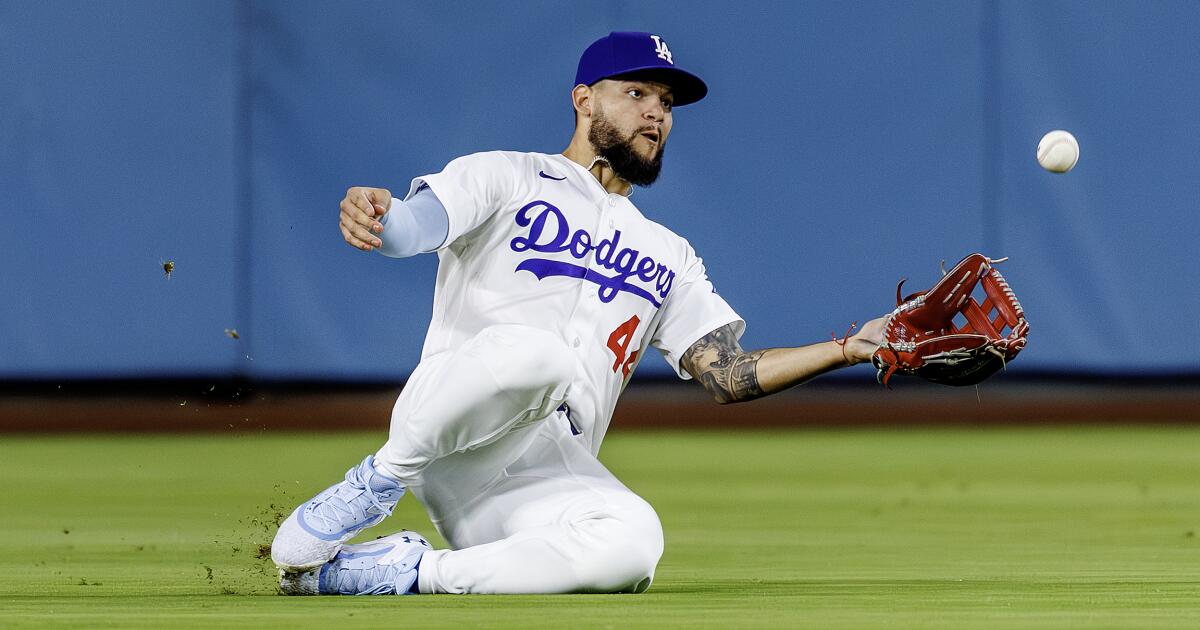
The Dodgers have four more 2026 All-Stars joining Shohei Ohtani on the National League squad.
Center fielder Andy Pages claimed the first All-Star nod of his career. And third baseman Max Muncy (three) first baseman Freddie Freeman (10) and pitcher Yoshinobu Yamamoto (two) added to their Midsummer Classic honors.
Ohtani (six) bypassed phase two of All-Star voting by earning the most fan votes of any player in the first phase.
All of the Dodgers position players were elected as starters, marking the first time since 1980 that the team has had four All-Star starters.
The MLB All-Star Game will be played in Philadelphia on July 14.
Sports
Chris Johnson’s former teammate reflects on ex-star’s surprise ALS diagnosis, tight-knit bond after milestone

NEWYou can now listen to Fox News articles!
The NFL world was stunned on Monday when it became public that Chris Johnson, one of just nine players ever to rush for 2,000 yards in a season, is suffering from ALS.
The news hit close to home for Ryan Fitzpatrick, who played for Johnson’s Tennessee Titans for a season. And despite it being just one year, the two have a special connection.
“He was a great teammate when I got to play with him for the one year, and obviously a super talented guy on the football field. We texted about a year ago. I was just looking back at our text messages, and one of the things that I had sent him — the 100th touchdown pass that I threw in the NFL was to CJ2K, and he signed the football for me and gave it to me. It says, ‘To my cool white boy. Congrats on number 100,’” Fitzpatrick recalled in an interview with Fox News Digital. “So the amount of street credit I have from Chris Johnson calling me a cool white boy has always been awesome to me.”
Quarterback Ryan Fitzpatrick, No. 4 of the Tennessee Titans, hands off to running back Chris Johnson, No. 28, against the Seattle Seahawks at CenturyLink Field on October 13, 2013 in Seattle, Washington. (Otto Greule Jr/Getty Images)
But ALS is just such a tough thing to have to deal with, obviously for Chris and for everybody around him. You can just imagine the frustrations of his mind being there but his body starting to fail him and how difficult that is. We’re obviously all hoping for the best for him, and all our love and support goes to him and his wife and his family.”
In a lengthy social media post, Johnson said that there is growing research that shows a link between repetitive head trauma and ALS, and studies have shown that NFL players are four times as likely to develop ALS as the general population.
Fitzpatrick, personally, said that when it comes to football, he would do it all over again, even as the risks are more prevalent now than ever before. However, what comes with age is more grim reality.
Tennessee Titans running back Chris Johnson runs against the Carolina Panthers at Bank of America Stadium in Charlotte, N.C., on Aug. 28, 2010. (Sam Sharpe/USA TODAY Sports)
FORMER NFL STAR CHRIS JOHNSON SAYS HE’S BEEN DIAGNOSED WITH ALS
“I do think guys playing football understand at least the broad scope of what the risks are. I think a lot of guys would tell you, and I would be the same way, football has given me so much in my life that it’s something I would do again in a heartbeat. And for my kids that want to pursue it, I’m happy for them to pursue it,” Fitzpatrick said.
“But as you get older, I’m 43, as you get older, and your parents get older, I lost my mom five years ago, there’s just more stuff that seems to happen. It’s really sad. One of my best friends from high school was diagnosed with ALS. So seeing that firsthand, and the difficulties that come with it, not just for him but everybody that is around him, it’s really hard. As you get older, stuff happens, and there are things that you have to deal with and figure out. So unfortunately, it’s a tough part about aging.”
There is no known cure for ALS – known as amyotrophic lateral sclerosis. It’s a progressive disease in which the brain loses connection with the muscles, according to the ALS Association. The afflicted slowly lose their ability to walk, talk, eat, dress, write, swallow and, eventually, breathe.
Tennessee Titans running back Chris Johnson breaks free for a long run against the San Francisco 49ers in the fourth quarter at Candlestick Park in San Francisco, Calif., on Nov. 8, 2009. The Titans defeated the 49ers 34-27. (Cary Edmondson/USA TODAY Sports)
CLICK HERE TO DOWNLOAD THE FOX NEWS APP
The former running back played in the NFL from 2008 to 2017 with the Titans, New York Jets and Arizona Cardinals.
Fox News’ Ryan Gaydos and Angelica Stabile contributed to this report.
Follow Fox News Digital’s sports coverage on X, and subscribe to the Fox News Sports Huddle newsletter.
-

 Los Angeles, Ca3 minutes ago
Firefighters battle Fourth of July blazes around Los Angeles
-

 Detroit, MI23 minutes ago
Storm chances linger into the start of the week across Metro Detroit
-

 San Francisco, CA33 minutes ago
Relay for America runs flag from San Francisco to D.C. in message of unity
-

 Dallas, TX38 minutes ago
Cowboys newcomer already looks like a waste of money in Dallas
-

 Miami, FL45 minutes ago
Police search for suspect after man is shot while on a boat near hotel in Fort Lauderdale on 4th of July
-

 Boston, MA48 minutes ago
Sonny Gray shines again, and the Red Sox make it two straight wins at the Angels to start grinding road trip – The Boston Globe
-

 Denver, CO53 minutes ago
Aldi expanding into Colorado, applies for permits at two Denver locations
-

 Seattle, WA60 minutes ago
Seattle Storm lose 77-72 to Fire behind Carla Leite’s 20 points

