Sports
Robinson Cano, at 41, finds joy — and hits — in the Mexican League


MEXICO CITY — One day in late July, Robinson Canó finished a workout and stepped out into a quiet hallway at Alfredo Harp Helú Stadium. He had two hours before his team, the Diablos Rojos del Mexico, would face the Conspiradores de Queretaro in an afternoon matinee, and he had a pregame routine to complete.
He needed to eat. He needed to stretch. And, at some point, he needed to finish an interview about why, at the age of 41, he was here in Mexico City, an eight-time MLB All-Star plying his trade in the Mexican League, where the salary cap is around $475,000 per month for an entire roster of 30 players.
“Cinco minutos,” Canó said, as he headed off to finish another task.
It was Saturday, and it had been a long week. The day before, the Diablos had arrived home from Leon at close to 4 a.m. On Friday night, Canó had collected two hits in an 18-11 victory over Queretaro.
Canó made more than $260 million in his career, including $240 million in a deal signed with the Mariners a decade ago. Were it not for two performance-enhancing drug suspensions, he would likely be a lock for the Hall of Fame. The Mexican League has long been a refuge for minor-league castoffs, four-A players and former major-leaguers with checkered pasts. But it’s rarely, if ever, been a place for a player like Canó.
So you might suspect that Canó spent the summer collecting a (relatively modest) check and serving as a (washed-up) draw for Mexican baseball fans. But that’s not what happened. Instead, Canó arrived this spring and immediately became the best hitter in the league, leading the Diablos — Mexico’s most storied club — to the best regular season in franchise history.
Canó finished the regular season batting .431, winning the “Champion Bat” for the highest average in the league and setting a new club record — which also tied for the highest average in the Mexican League this century. Meanwhile, the Diablos finished the regular season with a staggering 71-19 record, the highest winning percentage in league history. They entered Thursday with a 2-0 series lead over Puebla in the best-of-seven first round of the playoffs.
Canó’s arrival coincided with a Mexican League season that saw a record number of former big-leaguers thanks to relaxed rules on foreign imports, as well as increasing investment from club owners. (The Diablos also employ Trevor Bauer, the former MLB pitcher who served what amounted to a 194-game suspension for violating the league’s Joint Domestic Violence, Sexual Assault and Child Abuse policy.)
But after months of watching Canó dominate helpless pitchers, transforming into either the Ted Williams of the Mexican League, or perhaps its answer to Lionel Messi, the biggest question seemed to be: Why?
Why was Canó, at 41, grinding like he was back at second base for the New York Yankees — scouting pitchers who peaked at Double A, helping teammates who just want to survive a few more years, pushing himself to play five or six times per week?
“For me, the joy that I have is being able to be on the field,” Canó says. “I love the game. I still have that in me. I want to keep playing. I get a chance here.”
At some point, as his skills faded, his major-league career ended, and he faced his own baseball mortality, Canó considered what he would like to do with all that free time.
He opted for more baseball.
The Mexican Baseball League, or LMB, was founded in 1925. And for most of its existence, it has been a waystation for interesting outsiders. Consider the story of George Brunet, a lefty pitcher who debuted for the A’s in 1956, spent 15 seasons kicking around the majors, and then headed for Mexico in 1973, where he pitched for another 16 years, earned the nickname “El Viejo” (The Old Man), tossed a no-hitter at age 42, and suffered a heart attack in 1981. He returned the next year and won 14 games for Veracruz at age 47.
Or consider James Bell, better known as “Cool Papa,” the Negro Leagues star who batted .437 for Veracruz in 1940, joining a cadre of Black players from the era who were welcomed south of the border.
Then there was the pitcher from the Dominican Republic, who, when his six-game major-league career was over, came to Mexico and enjoyed brief stints with teams in Mexico City and Aguascalientes. José Canó didn’t leave much legacy in Mexico, but he did let his young son swing a bat on the field in Aguascalientes when he came to visit.
Robinson Canó recalled the story of his father one day in February, when club officials from the Diablos were visiting him in Miami and trying to sell him on a summer in Mexico. Canó’s career stateside had been waning since 2020 when, as a member of the Mets, he had tested positive for the anabolic steroid Stanozolol. It was his second violation of MLB’s policy on performance-enhancing drugs, which triggered a year-long suspension in 2021. When he returned to the Mets in 2022, he batted .195 in 12 games before being released.
Canó kicked around with the Padres and Braves, toiling briefly at Triple-A El Paso, before being released for good in August. Not ready to hang up his cleats, he continued to play winter ball in the Dominican and invested in Baseball United, a coming startup league focused on growing the sport in the Middle East and South Asia, which announced a partnership with the Saudi Baseball and Softball Federation in March. But Miguel Ojeda, a former big-league catcher and the Diablos sports director, wanted to offer a completely different pitch.
Considered by some to be the “New York Yankees of Mexico,” the Diablos Rojos play their home games at Alfredo Harp Helu Stadium, a modern ballpark that cost $166 million, opened in 2019 and quickly became the jewel of the league. Tucked between turns of the Autódromo Hermanos Rodríguez — Mexico City’s sprawling Formula One track — the stadium’s white canopy roof can be seen from its surrounding working-class neighborhood. The venue’s namesake is the Diablos’ owner, Harp Helu, a billionaire businessman who is also an investor in the Padres.
Ojeda emphasized to Canó that the Diablos’ home clubhouse was major-league caliber — weight room, sauna, kitchen, chef — and that the team could offer security during his stay. (Most players live at a nearby hotel.) He mentioned the possibility of up to 20 import players, meaning the roster would be filled with players with big-league experience. “It would be a big boom for baseball,” he told Canó.
Ojeda was also honest: The Diablos have more championships than any club in Mexican League history — 16 in total — but their last title was in 2014. Their fans were getting restless.
“We’ve been dominating it during the regular season,” Ojeda said. “We just haven’t been able to win.”
Diablos officials declined to reveal how much they offered Canó, but said that Canó and Bauer were “the best paid players in the history of this team.” One American player, who asked for anonymity because he was not authorized to discuss salaries, said most players with major-league experience were making anywhere from $15,000 to $25,000 per month, while Canó was thought to receive a premium over that. The monthly salary cap for a Mexican League roster is roughly $475,000 — equating to an average salary of just less than $15,000 per month — though Ojeda said the team had exceeded the cap and was paying a luxury tax.
In the end, money wasn’t a sticking point. “He doesn’t need the money,” says Diablos manager Lorenzo Bundy. So when Canó agreed to sign, the Diablos front office and coaching staff emphasized one thing: The team wanted to ensure that Canó was fresh and healthy for the postseason, so they would limit his playing time to three or four games per week.
But then Canó showed up in the spring and met with Bundy.
“I came to win,” Canó said.
Pretty soon, he was batting over .400.
So Bundy put him in the lineup each day.
On a cool night in late July, Canó stepped into the batter’s box in the first inning against Queretaro. The temperature hovered in the high 50s. A mix of reggaeton and American pop music played. A crowd of more than 10,000 fans spun noisemakers, blew into plastic horns and chanted “Vamos Diablos,” creating a near-permanent din.
Canó faced Wilfredo Boscan, a 34-year-old right-hander from Venezuela whose only big-league experience consisted of six appearances for the 2016 Pirates. Canó slapped a single to left field on the first pitch. One inning later, he stepped up again and blooped another single into center.
Canó is a little thicker in the midsection these days, and his hands are slower. But the lefty swing, for the most part, is the same one he possessed during nine seasons with the Yankees.
“He’s got a beautiful swing,” said Pirates manager Derek Shelton, who managed Canó in rookie ball. “It has never changed.”
When Canó was playing for the Gulf Coast League Yankees in 2001, Shelton decided that he was “the smartest baseball player at that age” that he had ever seen. Canó was 18 and flashy, the kind of player who would charge hard for a slow roller and flip the ball behind his back. Shelton was always reminding Canó to use two hands, quoting a phrase he learned from his own father: “Robbie, God gave you two hands for a reason.”
Canó debuted with the Yankees in 2005, in the twilight of a dynasty, and grow into one of the best second baseman in the league. He helped New York win the World Series in 2009, and for a moment seemed like a Yankee lifer. But then came two moments that defined the rest of his career: In 2013, he fired agent Scott Boras, joined Jay-Z’s Roc Nation agency and departed New York for Seattle. And then, five years later, he tested positive for the diuretic furosemide, a banned substance that landed him an 80-game suspension.
Canó would finish his career with 335 home runs and 68.1 Wins Above Replacement, better than Roberto Alomar or Ryne Sandberg, two second basemen who reached the Hall of Fame this century. But that positive test — coupled with a second in 2020 — is likely to mar Canó in the eye of Hall of Fame voters. Canó maintains that he has not given much thought to his own case.
“I never paid too much attention or looked deep into what it takes — what type of numbers or whatever,” he said. “If things happen, great. If not, I’m always going to be thankful for the years that I played. I accomplished a lot of things.”
If Canó’s teammates on the Diablos are curious about his past, it has little to do with controversy. One day this summer, Jimmy Yacabonis, a former big-league lefty, was working out in the weight room with Canó when a song by rapper 50 Cent came on the stereo.
“Hey Robbie,” Yacabonis said, “did you ever meet 50 Cent?”
Canó whipped out his phone and pulled up a photo of him and 50 Cent from his time in New York.
“He’s very down to earth,” Yacabonis said. “For a guy that’s that high profile to be that cool and that laid back around everybody, he’s an awesome teammate, honestly.” Earlier this summer, Canó decided to outfit the team with personalized cleats.
But what really caught his teammates’ eye was his everyday diligence. He studied opposing hitters and doled out tips. He was a presence in the clubhouse. If he made a mistake in the field, he would corner the pitcher for a quick debrief. He maintained a routine just as if he was still playing for the Yankees.
“He’s seen a million games and been part of a million games,” said Diablos pitcher Ryan Meisinger, who last appeared in the majors with the Cubs in 2021. “If he sees something, he lets us know.”
Canó still has a flair for the dramatic. One day after collecting two hits against Queretaro, he ranged to his right at second base and retired former big leaguer Leonys Martin on a nifty side-arm throw, the kind of play he made for years in New York.
Back then, when Canó was starring for the Yankees and Shelton was coaching for Cleveland, the coach received a signed jersey from his former player.
The inscription included one phrase: “God gave you two hands for a reason.”
Robinson Cano was a perennial star with the Yankees, and helped them to a 2009 World Series win, before leaving for Seattle. (Jim McIsaac / Getty Images)
There is a joke inside the Diablos clubhouse that Canó, at age 41, is the greatest hitter in the world.
“It’s like ‘create-a-player’ on (MLB) The Show,” Meisinger says.
He is Ichiro Suzuki. He is Rod Carew. He is the Mexican League’s Ted Williams, batting .400 and leaving his teammates in awe. When Canó heard the Williams comparison earlier this summer, he laughed.
“Come on,” he said. “Not even close!”
So how does one make sense of what Canó is doing?
The competition level of the level can be inconsistent. Some clubs — like Mexico City or Monterrey — can claim Triple-A quality. But much of the league is probably closer to Double A, and Kevin McCarthy, a former Royals pitcher who plays for Nuevo Laredo, admits “you might run into a Low-A game here and there.” One veteran scout says the league is filled with “throwers and not pitchers.” It is also a hitter’s paradise.
Mexico City plays their home games at an altitude of 7,350 feet — more than 2,000 feet higher than Coors Field in Denver — while more than a third of the league plays above 5,000 feet. McCarthy also cited the prevalence of turf fields, which can lead to more singles on ground balls. Another long-term factor has been the league’s reputation for loosely enforcing performance-enhancing drugs. The league does test its players, however.
Bundy, who has managed at Double A and Triple A, compared Canó’s .431 average to someone batting around .370 in the Pacific Coast League.
“I feel like in this league, a lot of the guys try to pitch to his holes,” Yacabonis said. “But some of the guys aren’t able to do that. And when they leave stuff over the plate, he’s ready to hit it.”
The question of how to understand Canó’s numbers has even been a topic of conversation among Diablos pitchers, a group which includes former big-leaguers Alex Claudio, Conner Menez and Daniel Ponce de Leon.
“It’s video game numbers,” Meisinger said. “I don’t know. We were talking about it in the bullpen the other day. He comes up with a runner on second: ‘Well, here comes a double.’ I don’t really know how to explain it.”
The simplest way to describe Canó’s summer in Mexico?
“Fun,” he says.
The Diablos were a juggernaut. He played at a high level. The cheers from the Mexican fans were rejuvenating.
The Diablos led the league in attendance, averaging 11,761 fans per, which was up 12 percent from last year and more than 60 percent from 2019, the last season before the pandemic. They are a heavy favorite to win their first championship in a decade. But one thing Cano noticed was how much opposing fans cared.
“Even if the other team is losing, they’re still singing,” Canó said.
Canó is not one to look back — or forward, for that matter. He might consider a return to Mexico next year. The inaugural Baseball United league in the Middle East kicks off in 2025. At some point, he says, he’d love to work in a major-league front office. He also wants to focus on being a dad to his two children.
His career was not perfect. But when he considers it in total, he thinks of the World Series championship, the successes on the field and the experiences he had.
“I think that everyone has their time,” he says. “So, I think that I had my time.”
He again mentioned the memory of his father playing in Mexico.
“This is something I talked to a lot of friends and people about,” he says. “You can go and just play and have fun.”
(Top image: Daniel Goldfarb / The Athletic; Photos: Carlos Santiago / Eyepix Group / LightRocket via Getty Images)



The final weekend of the 2026 FIFA World Cup is here, with France and England playing for third place on Saturday before defending champion Argentina takes on 2010 winner Spain for the title on Sunday.
Here’s everything you need to know about the last two matches of the 39-day, 48-team tournament in North America (all times Pacific).

Saturday’s third-place game
France vs. England
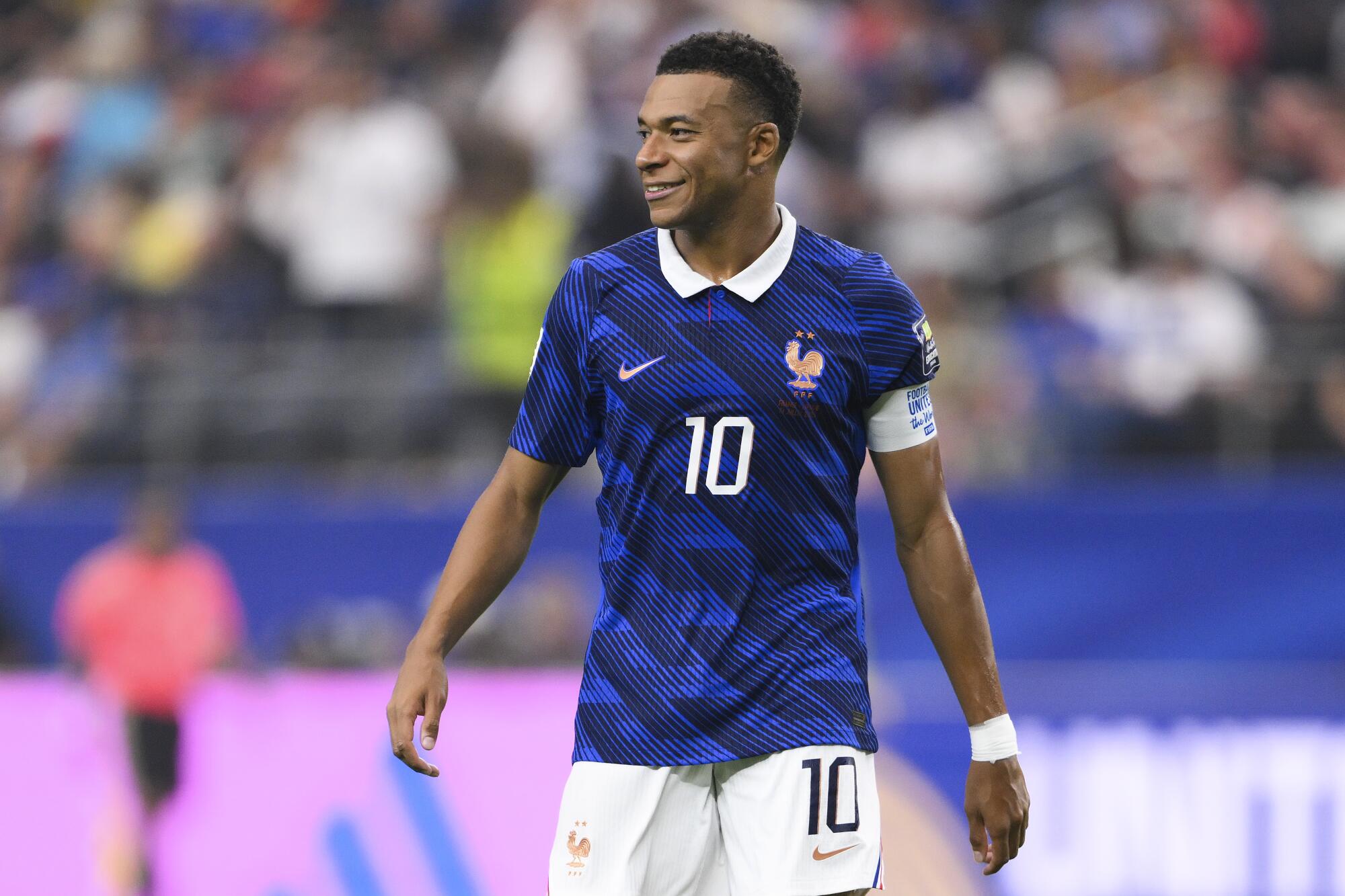
France star Kylian Mbappé smiles during a World Cup semifinal match against Spain on Tuesday.
(David Ramos / Getty Images)
Where: Hard Rock Stadium, Miami Gardens, Fla.
Time: 2 p.m.
TV: Fox, Telemundo | Streaming: Fox One, Peacock
The buzz: This is a game neither team really wants to play. The disappointment of missing the final is fresh and the weather report calls for temperatures in the high 80s with 68% humidity and a chance of thundershowers — a brutal South Florida summer day. The $2-million difference in prize money between third and fourth place isn’t likely to make any of that more palatable. Still, the game will have meaning for France since it will be the final match for coach Didier Deschamps, the winningest World Cup manager in history. And captain Kylian Mbappé, tied with Argentina’s Lionel Messi for most goals in the tournament (8), has a chance to become the first player to win consecutive Golden Boots. England is playing in the consolation final for the second time in three World Cups; it lost to Belgium 2-1 in 2018. But this one will probably sting even more since the Three Lions were five minutes away from their first final in six decades before collapsing against Argentina. This could be the last World Cup game for England’s Golden Generation of Harry Kane, Jordan Pickford, John Stones and Jordan Henderson.
Sunday’s championship game
Spain vs. Argentina

Argentina star Lionel Messi celebrates after a win over England in the World Cup semifinals on Wednesday.
(Buda Mendes / Getty Images)
Where: MetLife Stadium, East Rutherford, N.J.
Time: Noon
TV: Fox, Telemundo | Streaming: Fox One, Peacock
The buzz: Argentina has a chance to become the first repeat World Cup champion since Brazil in 1962, which would give Messi another grand achievement in his sixth and likely final World Cup. Messi enters the weekend as the all-time leader in goals, assists and games played in tournament history. But unbeaten Argentina hasn’t made things easy, with its winning goals in the four knockout-round games coming in the 92nd minute or later. Spain, the reigning European champion, will be playing to put a second star on its jersey to match the one it won in 2010. La Roja, with the sixth-youngest roster in the World Cup, got to the final on the strength of spectacular defense led by Unai Simón, who has six clean sheets in seven games. Mikel Oyarzabal is the team’s leading scorer with five World Cup goals. The teams had one common opponent in this tournament, tiny Cape Verde, a World Cup debutante. It played Spain to a scoreless draw in its opener, then held Argentina to a 1-1 standoff into extra time before falling.


NEWYou can now listen to Fox News articles!
One of the most memorable moments of the 2026 Winter Olympics came early, when skier Lindsey Vonn delivered a gutsy performance for the ages by competing at 41 just a week after injuring her knee in a crash.
Unfortunately, as admirable as her perseverance was, she injured herself badly in another crash just 13 seconds into her run in the women’s downhill final.
Five months later, Vonn is still very much dealing with her injuries.
MARCELLO HERNÁNDEZ ROASTS JAKE PAUL, TIGER WOODS AND BILL BELICHICK IN ESPYS MONOLOGUE
Lindsey Vonn speaks on stage during the 2026 ESPYs. (Mike Coppola/Getty Images)
“It’s been a very slow process,” Vonn told People while attending the ESPYs Wednesday in New York City. “It’s been five months since I’ve been able to actually go to the gym in a somewhat meaningful way. And walking is actually still really hard for me. My ankle is still broken.”
Regardless of the outcome, her decision to attempt that run remains one of the most courageous moments of the Games.
Lindsey Vonn was involved in a serious crash during the women’s downhill event at the 2026 Winter Olympics. (Screengrab by IOC via Getty Images)
ZERO BS. JUST DAKICH. TAKE THE DON’T @ ME PODCAST ON THE ROAD. DOWNLOAD NOW!
Remember when I mentioned that injury before the Olympics? That wasn’t just a minor bump in the road; it was a completely ruptured ACL.
There was no questioning her courage, but the aftermath has been difficult.
Lindsey Vonn walks through pit lane ahead of the 2026 Monaco Grand Prix. (Beata Zawrzel/NurPhoto)
“I was in a wheelchair for so long. I was on crutches for so long,” Vonn said. “It was honestly almost 3½ months that I was unable to walk unassisted. I got very emotional when I was able to walk on my own.”
CLICK HERE TO DOWNLOAD THE FOX NEWS APP
This week, Vonn posted an update on her recovery and said she has “a very long road ahead.”
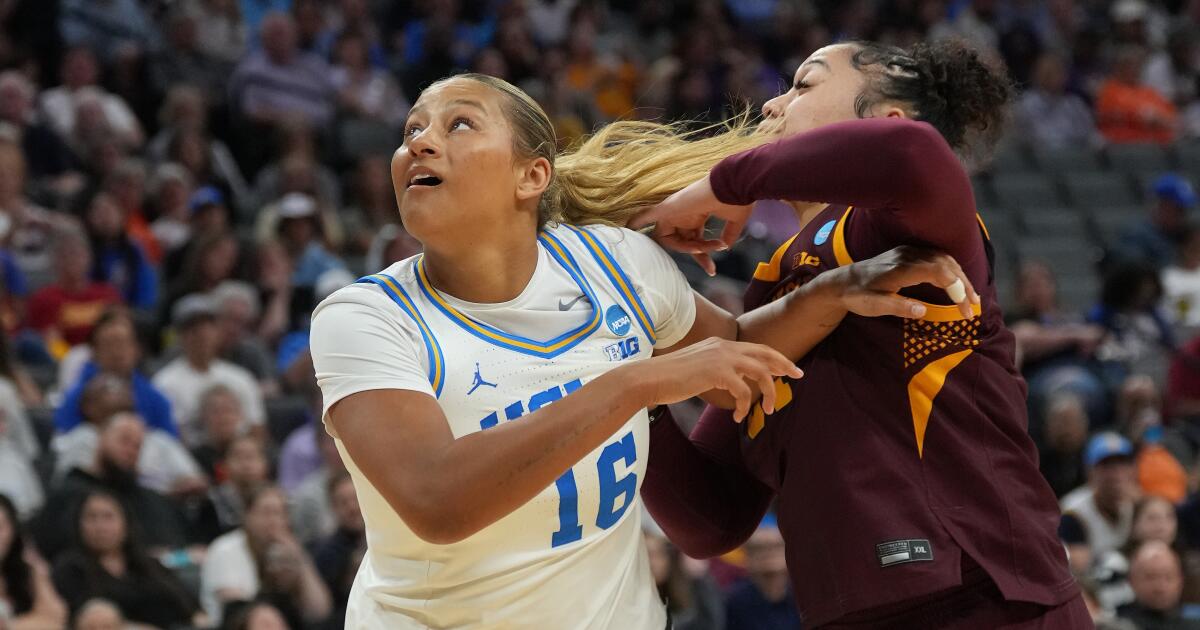
The UCLA women’s basketball team won its first NCAA championship in April. Now, it’s vying to stay on top.
Based on Thursday’s practice, after which UCLA spoke with the media for the first time since its dominant title run, it’s clear that the Bruins intend to remain on top, even with a target on their back and a revamped roster.
Success leaves clues
One would think a defending champion pursuing a repeat would, well, just try to run it back.
But not Cori Close’s bunch.
Entering her 16th season as coach, Close is emphatic about the importance of process over outcome — or journey over destination — and leaning into the beauty of the grind.
“We get to walk out and live out what we learn from the championship run,” Close said. “But we’re also not trying to repeat a championship outcome. We’re trying to repeat a championship process. And success leaves clues. There are things that we want to make sure we carry over from what we learn.
“But this is a new art project. This is a new identity. This is a new chance. The standards don’t change, but the way we go about it is going to be unique to this team, and that’s really fun to explore.”
The 98%
UCLA coach Cori Close speaks during a news conference on April 4.
(Ronaldo Bolaños / Los Angeles Times)
Part of the “championship process” Bruins fans can expect to hear about is the “98%.”
Close repeated it. Players repeated it. It’s a mentality Close wants the Bruins to keep in mind throughout the season.
“What I mean by that is 98% of the game is played without the ball,” Close explained. “Can you become a better screener? Can you learn someone else’s tendencies? Can you talk more on defense? Can you become a better rebounder? How many ways can we learn from each other and be better ‘98%’ players? And if we do that, we’ll be on our way.”
Possessing the ball — the 2% — does matter. But players who can thrive without the ball will establish a team that, in Close’s eyes, can be difficult to beat.
Sienna Betts’ role

UCLA forward Sienna Betts, left, speaks to her older sister, UCLA center Lauren Betts, before a game in December.
(Caroline Brehman / Associated Press)
Sienna Betts, the younger sister of departed UCLA star Lauren Betts, is set to have a key role as a returning sophomore on a team with many new players.
“It’s going to be different,” Sienna said, referencing the Bruins losing six players to the WNBA. “But I mean, I’m excited. And it’s not the first time I’ve been in a position like this; I mean, not at this level, obviously. So, I’m just excited to be in this new role. And I have coaches who are here to help me.
“I’m just planning on doing whatever Coach Cori needs from me, whatever the team needs.”
The 6-foot-4 forward is primed to be the Bruins’ anchor in the paint. She demonstrated her leadership during Thursday’s practice as well as some bully ball inside.
Betts, who is left-handed, mentioned her focus on right-handed shooting this offseason in preparing for increased touches. She averaged six points and four rebounds over 28 games as a freshman. Close said she is improving quickly.
“The younger players have grown into new roles,” Close said. “I think you could see glimpses of that [with] how Sienna’s already started to do that, even maybe ahead of where I thought she’d be at this point.”
Elina Aarnisalo’s return

UCLA guard Elina Aarnisalo controls the ball in the Sweet 16 of the 2025 NCAA tournament.
(Young Kwak / Associated Press)
Elina Aarnisalo, who played for UCLA as a freshman in 2024-25, is back in Westwood after spending her sophomore season with North Carolina.
The 5-10 guard averaged 5.1 points, 3.4 assists and 2.2 rebounds as a freshman and saw her scoring double (10.2) in Chapel Hill. Aarnisalo, a native of Finland, said she is more confident, not only as a player but also as a communicator.
“There’s going to be a lot of spots on the team open now after a big draft class,” Aarnisalo said. “And a lot of seniors leaving, that obviously interested me too. Talking with Cori [about] what my role could be on this team and what we could accomplish this year … just knowing the standards at UCLA, how we practice, how they focus on individual work; I’ve seen it, and I’ve seen my old teammates [and] how they’ve succeeded in this environment, which is why I wanted to come back.”
Aarnisalo averaged 21 minutes per game as a freshman and 27 as a sophomore. She stands a good chance of receiving even more playing time.
New faces, same goal

Former Texas Christian guard Donovyn Hunter is among the new players on the UCLA roster.
(Tony Gutierrez / Associated Press)
The Bruins will look starkly different after essentially exchanging six WNBA-ready players for five enticing transfers.
Those newcomers are Texas Christian guard Donovyn Hunter, Iowa State forward Addy Brown, Arkansas guard Bonnie Deas, Notre Dame guard KK Bransford and Aarnisalo.
“These girls are obviously really talented, come from really different programs,” Betts said. “It takes a second to adjust to Coach Cori’s rhythm, and her offense, and just how she runs practice and games. But I think they’re doing a great job integrating in, and they’re all just great human beings off the court and on the court. So, I’m really excited for this group.”
Close acknowledged she has been very busy. She had to retool the roster while simultaneously celebrating the previous one.
“I’m not complaining, but it has been a great challenge and an incredible, intense thing,” Close said. “I mean, literally, the minute after the UCLA women embrace new players, tougher standards in bid to repeat as champs game, we are on the phone with recruits from the locker room, and the next day, the transfer portal opens. So, I mean, this has been nonstop.”
UCLA’s first test is north of the border
The Bruins will face Canada’s women’s national team in an exhibition next Wednesday in Victoria, British Columbia.
While UCLA is far from a polished product, facing Canada’s best is, if anything, a great opportunity to gain even more exposure and improve team chemistry.
“We’re trying to get better. We’re trying to get more physical,” Aarnisalo said. “So we’re going to be in better shape when the actual game starts and the season starts. So it’s an everyday process.”
Timea Gardiner trending upward
Bruins forward Timea Gardiner is expected to play in Canada after missing last season as a medical redshirt because of a knee injury.
Gardiner, who transferred to UCLA in 2024 after two years at Oregon State, averaged 7.6 points, 3.4 rebounds and 18 minutes per game in her first season with the Bruins.
-
Sports4 minutes ago
World Cup championship and third-place game: Start times and how to watch
-

 World16 minutes ago
Rule of Law in Hungary shows ‘radical change’ under Magyar, EU says
-

 News46 minutes ago
Where Wildfire Smoke Is The Worst Right Now—And What To Do About It
-

 Los Angeles, Ca2 hours ago
LADWP begins long-term repairs after West Hollywood water main rupture
-

 Detroit, MI3 hours ago
Livestream: Mayor Sheffield, Detroit health chief to address wildfire smoke threat
-
 San Francisco, CA3 hours ago
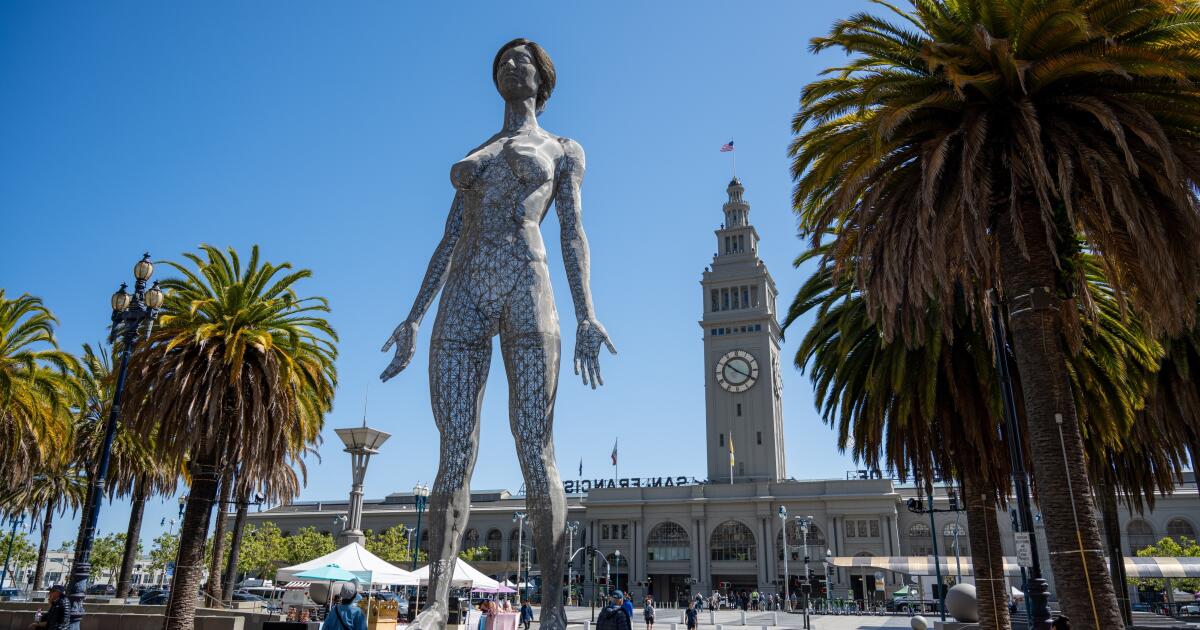
A sculpture of a giant naked woman goes on sale in San Francisco. Bring a crane
-

 Dallas, TX3 hours ago
No ‘straight answer’: Why Pioneer Cemetery is the latest battleground at City Hall
-

 Miami, FL3 hours ago
TSA hosts news conference ahead of World Cup third place match at Miami Stadium

