Sports
Indiana edges Michigan to reach 10 wins, likely Playoff and wants more: What is this world?


BLOOMINGTON, Ind. — Indiana junior receiver Elijah Sarratt, a zero-star recruit as a high schooler in Virginia, delivered a figurative roasting to Michigan sophomore cornerback and former four-star recruit Jyaire Hill, leaving him behind in the open field and cruising under a 36-yard touchdown pass from Kurtis Rourke.
Indiana junior defensive end Mikail Kamara, a zero-star recruit as a high schooler in Virginia, got between Michigan senior right guard Giovanni El-Hadi and sophomore right tackle Evan Link and right into the face of quarterback Davis Warren. Both of those Wolverines linemen came out of their prep careers with four stars next to their names, and both were needed to deal with Kamara. Eight stars vs. none. None won.
Indiana, the losingest major college football program, beat Michigan, the winningest, 20-15 on Saturday in front of 53,082 reborn ignorers of November basketball at Memorial Stadium. That’s 10 wins for the first time in Indiana history. That’s 11 wins all-time against Michigan in 73 tries. That’s the one that makes it hard to come up with a scenario in which first-year coach Curt Cignetti and his Hoosiers aren’t among the teams selected for the first 12-team College Football Playoff.
And I swear to you, as sure as Bob Knight could chuck a chair, these people were acting like they had to answer for something Saturday.
“I’m glad we won,” Cignetti said. “I’m not happy with the way we played.”
He said that a few ways while commending his defense and his team for being “gutty,” and he did so after he was asked about the little bit of emotion he let show in the on-field interview with CBS after it ended — while Indiana students stood happily in the stands and didn’t rush the field, because apparently beating the defending national champion is just what they do around here now.
Those couple of seconds on the field to take it all in, some of the smiles Cignetti shared with family members and friends as he walked past the massive IU weight room toward the presser, the fact close to 20 family members and friends crowded into the place … these are the hints of a gigantic moment.
Cignetti and his No. 8 Hoosiers (7-0 Big Ten) weren’t going to say it, not after they let a 17-3 first-half lead over the disappointing Wolverines (5-5, 3-4) dissolve into the need to stop a tying two-point conversion and another U-M drive in the fourth quarter, which the IU defense did. Indiana was supposed to roll over this Quick Lane Bowl-looking Michigan team, as Indiana has rolled over everyone, and that’s not what happened.
Have covered 7-8 Indiana football games. Tailgating scene today tops all of them combined. Bad photo that doesn’t tell the story notwithstanding. pic.twitter.com/HqmoweWGmm
— Joe Rexrode (@joerexrode) November 9, 2024
That’s fine, Hoosiers. There’s a Big Ten championship in play. The game of the season up next, at No. 2 Ohio State after a well-timed week off. So the fact that The Athletic’s Austin Mock has the Hoosiers at 92 percent to make the Playoff and their regular-season finale is against wretched rival Purdue needn’t prompt any public exhales. Especially after this version of Michigan outplayed Indiana in the second half.
But we outside the program don’t have to play ball. We can rub our eyes and shake our heads and laugh almost uncomfortably at the fact we are asking as a college football nation in November whether these Hoosiers have quite enough to win a national championship.
We’re wondering how Michigan hung so tough with Indiana. We’re giving the Wolverines a nice pat on the back for doing so, and gee, what if coach Sherrone Moore didn’t forfeit 31 seconds before taking a timeout late or spend much of the second half proceeding as if just trying to avoid a blowout? After the news conferences on Saturday, back up in the press box, people were watching the Alabama–LSU game and talking about how it might affect IU’s Playoff draw like that’s a normal thing to discuss.
Are we in The Upside Down? How far away from Bloomington is Hawkins, Ind., the supernatural setting for “Stranger Things”?
We can be amazed. We can be enthralled, too. Because Indiana football in 2024 reminds us that this sport is not just math and science. If it were, the Hoosiers wouldn’t have dominated play in the first half and searched for answers after a wobbly second. They would have been trucked like most Indiana teams through the decades against most Michigan teams.
The 247Sports Team Talent Composite, which assesses rosters based on recruiting rankings, tells us Michigan, having lost a lot from last year’s Jim Harbaugh-led natty, is still No. 5 in the Big Ten and No. 16 nationally. Indiana is No. 16 in the Big Ten and No. 57 nationally. There’s a talent chasm between these teams.
Go by the starting lineups and Michigan’s offense averaged 3.45 stars — despite zero-star quarterback and former walk-on Warren — and its defense averaged 3.73 stars. Indiana’s offense averaged 2.81 stars, and its defense averaged 2.0 stars. So, yeah, Michigan is nearly one star per player better with its defense on the field against Indiana’s offense — even without its best player, injured cornerback and five-star Will Johnson — and we’re asking how the Wolverines got all these stops.
Eight of Indiana’s starting 22 on Saturday, Sarratt and Kamara among them, played for Cignetti at James Madison. Players elevate from Group of 5 programs to Power 4 leagues and make a mark frequently. But a whole slew of James Madison players, and a former Mid-American Conference quarterback, threatening a hostile takeover of the Big Ten?
Recruiting rankings mean something, of course, and correlate in bulk with program success, but they say nothing of how a player will grow and work and fit into a scheme. These evaluations say nothing about how people will get along. Or how they will be coached and developed. They can’t predict choices made in a dorm room on a Thursday evening when happy hour beckons but a young man hits the squat press or the books instead.
It’s not just science and math, it’s art. And an Indiana program known for bad replicas of “Dogs Playing Poker” is getting calls from the folks at the Guggenheim.
Yes, Saturday might have offered a glimpse of potential struggles ahead against the best in the sport for this team, which still hasn’t played a great one. The loss of left guard Drew Evans — another zero-star recruit turned excellent player — to an Achilles injury in practice last week can’t be ignored in Michigan’s four sacks and frequent second-half pressures. The math says Indiana’s depth is tenuous.
Yet the way Saturday’s game went should be good for Indiana. For one thing, no one will be screaming disrespect on behalf of the Hoosiers when Tuesday’s rankings come out. More likely, they will question why Indiana is as high as it is. There’s no doubt Cignetti will love and use that.
And he just saw his players face unwanted pressure and respond to it. The defense did it over and over again. The special teams made an enormous play, Ke’Shawn Williams’ 22-yard punt return to the Michigan 39 to set up a Nicolas Radicic field goal for breathing room. Rourke made a crucial throw to get IU close enough and later ran for the first down on a read-option keeper that finally enabled victory formation.
“We knew eventually we’d come to a game that would be close and we’d have to see what we’re made of,” Rourke said.
“When you’re a good team and you stay confident, stay poised in those moments, you know, no moment is too big,” Williams said.
Enjoy it for 24 hours. Watch the film. Make improvements. The Hoosiers sounded like any other winning team involved in any other championship chase Saturday. Williams did, however, acknowledge that he looked around in the final seconds at that crowd and thought: “This is crazy.”
It was. And it is.
“I can’t say enough about these guys,” Cignetti said. “I don’t throw many bouquets out there; you guys know that. But these guys have accomplished quite a bit.”
No, he doesn’t throw bouquets. He takes clay that is not supposed to be of premium quality and molds it into something very much of premium quality. Leonardo da Cignetti said he’s going to take a much-needed day off Sunday. Then it’s back to the masterpiece.
(Photo of Zach Horton and Elijah Sarratt: James Black / Icon Sportswire via Getty Images)



ATLANTA — The jury is still out on whether Lionel Messi is the greatest soccer player ever. But there should be no doubt he’s the greatest to ever play in a World Cup.
And you don’t need the records, the wins or the goals to prove that — although he certainly has enough of those. You just need to see Messi at his most magical, as he was Wednesday, setting up a pair of game-changing goals in a seven-minute span to lift Argentina to a 2-1 win over England and into Sunday’s World Cup final with Spain.
“It’s really hard to speak right now, but I’m going to try not to cry,” Lautaro Martínez, who scored the winning goal two minutes into stoppage time, said in Spanish. “I’m already overwhelmed inside. It’s incredible. Everything we’ve achieved is just incredible.”
Like their 13-game World Cup unbeaten streak, dating to the opening game of the 2022 tournament in Qatar. Or back-to-back trips to the final, which gives them a chance to become the first repeat champion in the men’s tournament since Brazil in 1962.
Argentina’s Lautaro Martinez scores his team’s second goal in front of England goalkeeper Jordan Pickford (1) and fellow England players Ezri Konsa (2) and John Stones (5) during a World Cup semifinal in Atlanta on Wednesday.
(Erik S. Lesser / Associated Press)
But it hasn’t been easy. Eleven of Argentina’s 19 goals — including both scores in Wednesday’s semifinal — have come after the 75th minute. They trailed in the 80th minute or later in two of their last three knockout games, only to rally both times.
And Messi has either scored or assisted on three of the four goals that rescued Argentina.
“This group, in the face of adversity, keeps going, keeps going, and never gets tired,” Martínez said. “And we have the best in the world as our example.”
On Wednesday that meant heartache for England, which was as close to a World Cup final as it has been in six decades, leading 1-0 on Anthony Gordon’s second-half goal with just five minutes left in normal time.
But after taking the lead, England turned strangely conservative, dropping all 11 players behind the ball at times, daring Argentina to score. Eventually it did, with Enzo Fernández curling a right-footed shot from about 20 yards past England keeper Jordan Pickford and in at the left post to tie the game.
It was a pass from Messi that found Fernández in space at the top of the box, earning the Argentine captain his record 11th World Cup assist.
“The opponent doubted themselves,” Argentine coach Lionel Scaloni said. “We smelt blood and went for it. We all felt it. “
The tie didn’t last for long though, with Messi threading a perfect cross from the right wing to Martínez, who found space between English defenders John Stones and Ezri Konsa at the far post. Messi’s pass just cleared the leaping Stones, then dipped to Martínez, who nodded it home.

England’s Harry Kane and England’s Jude Bellingham are dejected after losing to Argentina during a World Cup semifinal on Wednesday in Atlanta.
(Jeff Roberson / Associated Press)
When the ball hit the net, the sellout crowd at Atlanta’s massive Mercedes-Benz Stadium erupted.
“Once again, despite falling behind, we managed to turn the game around in stoppage time. That speaks volumes about this group, about this team that never settles, always wants more, always strives for more,” Martínez said.
It also gives Messi a chance to strive for more in Sunday’s final. He has already played in more World Cup games, scored more World Cup goals and had more World Cup assists than any man in history. With a win over Spain, he can join another elite group of men: those who have won back-to-back World Cup titles.
History will eventually decide if it was Messi’s brillance or the tactical surrender of England coach Thomas Tuchel that truly turned the game around. Tuchel, however, said he had no regrets.
“We played the matches how they were,” he said. “We overcame every obstacle. We were very, very close today. It’s not a moment now to analyze the full tournament because we lost a crucial match.”
His captain, Harry Kane, who lost in the semifinal of a World Cup for the second time in three tournament, was also not interested in second-guessing.

Argentina’s Lionel Messi sits on the shoulders of a teammate and celebrates after beating England in a World Cup semifinal on Wednesday in Atlanta.
(Rebecca Blackwell / Associated Press)
“We had a lot of good moments in this tournament, a lot of good games,” he said. “We talked about knocking on the door. We’re close, we just have to find that missing piece in the final stage of the tournament.”
They may be closer than they think: England is the only team this century to score the first goal in a World Cup semifinal but not reach the final, according to the OptaJoe statistical service.
Argentina’s team, meanwhile, is missing nothing — except maybe a second title,
“The people of Argentina should celebrate being in a final,” Scaloni said. “This group of players is difficult to describe in words. They are so special. I’m getting emotional. They fight for everything.
“We’re going to try to win the final. But what else does this team need to do? There isn’t much else to say. I’m eternally grateful to this group of players.”
Sports editor Iliana Limón Romero contributed to this report.

NEWYou can now listen to Fox News articles!
After five years out of the Octagon, Conor McGregor’s return barely lasted one minute.
McGregor opened his Saturday fight against Max Holloway aggressively, attempting a running kick before throwing a head kick moments later. However, he slipped both times because it was apparent he had suffered a knee injury.
He tried to power through it, but nearly two minutes into the fight, he grabbed at his right leg again, and referee Mike Beltran called the fight after just 69 seconds.
Conor McGregor reacts after losing to Max Holloway in a welterweight fight at UFC 329 on Saturday, July 11, 2026, in Las Vegas. (John Locher/AP)
In his first post on Instagram since the bout, McGregor vowed to return from the injury.
“We’ll be back,” McGregor said after showing off his new energy drink.
Prior to that, McGregor showed off the “Mac” drink, enjoying it alongside his wife. McGregor then shared his faith.
Conor McGregor of Ireland reacts after an injury stoppage in a welterweight fight during UFC 329 at T-Mobile Arena in Las Vegas, Nev., on July 11, 2026. (Chris Unger/Zuffa LLC)
WWE’S PAUL HEYMAN TAKES SWIPE AT CONOR MCGREGOR INJURY ON ‘MONDAY NIGHT RAW’
“In the name of the Father, the Son, and the Holy Spirit. Amen. We’ll be back. Let’s go.”
McGregor made an emotional post the day after the fight, saying his “head gasket is gone.”
“Destroyed. I had no injury / injuries going into the fight. I was throwing kicks, planted and jumping, all throughout camp as well as backstage before the fight. This came out of nowhere. I am beyond dark here. I can only describe it as hell,” he said on X.
UFC president Dana White said he assumed McGregor suffered a “blown ACL.”
Conor McGregor kicks Max Holloway in a welterweight fight at UFC 329 on Saturday in Las Vegas. (John Locher/AP)
CLICK HERE TO DOWNLOAD THE FOX NEWS APP
McGregor was participating in his first bout since July 2021 when he lost to Dustin Poirier due to a devastating leg injury. He’s only won one fight since 2020.
Fox News’ Ryan Gaydos, Chantz Martin, and The Associated Press contributed to this report.
Follow Fox News Digital’s sports coverage on X, and subscribe to the Fox News Sports Huddle newsletter.

While every World Cup introduces viewers to new young stars, this tournament featured eight players who were older than 40 — one more than the number of over-40 players in the previous 22 World Cups combined.
Among them were Portugal’s Cristiano Ronaldo, 41, and Mexico’s Memo Ochoa, 40, who were playing in their sixth World Cups alongside Argentina’s Lionel Messi, a relative youngster at 39. No one has played in more men’s World Cups.
But while Ronaldo and Ochoa have gone home, Messi will be playing in his third semifinal in four tournaments Wednesday when Argentina, the reigning champion, faces England at Mercedes-Benz Stadium in Atlanta.
The newfound longevity of elite soccer players has been made possible by advances in sports medicine, diet and analytics that measure everything from biomechanics and heart rate to muscular output and sleep cycles, all in real time. And injuries that once ended careers can now be repaired through outpatient procedures.
Argentina star Lionel Messi holds his jersey up and celebrates with teammates after a World Cup quarterfinal win over Switzerland on Saturday in Kansas City, Mo.
(David Ramos / Getty Images)
“Over the past 10, 20 years, the sports science within the game has changed a lot,” said Liam Anderson, an exercise physiologist at the University of Birmingham in England, who has worked as an applied practitioner in top-flight professional soccer for more than a decade.
“Players are now definitely more aware of their bodies and I think the professionalism has changed quite a lot as well. But they’re also in tune with the things which are helping them recover, manage their training load and ultimately stay fitter and healthier for longer.”
Gone are the days when chain-smoking Dutch legend Johan Cruyff would light up a cigarette on the bench, French world champion Zinedine Zidane would smoke in the locker room and George Best would party and drink so hard he would disappear for days at a time.
“There’s a couple of reasons,” Dr. Michael Joyner, a specialist in the physiology of elite athletes at the Mayo Clinic, said of the growing lifespan of soccer players. “The first is that people just make a lot more money and as a result, there’s tremendous incentive to keep playing. The second is people are taking much better care of themselves.”
“You just don’t hear about people like George Best anymore,” said Joyner, speaking for himself and not the clinic where he works.
“Diet is huge,” Anderson added. “High-protein diets and fueling with carbohydrates for matches. Nutritional strategies have changed considerably in the last 10-15 years.”
And those diets are tailored by position since a midfielder, who may run more than seven miles in a match, burns more calories than a goalkeeper.
As the eldest player in Major League Soccer, Diego Chara has had to make some concessions to age.
“It’s a little detailed,” said Chara, a midfielder with the Portland Timbers. “Talking about recovery time, it maybe takes a little bit longer than before. Nutrition. Working in the gym, it’ll be longer than other players.”
But if Chara, 40, is an old man in a league where the average age is younger than 26, he would have been something of whippersnapper in this summer’s World Cup.

The Portland Timbers’ Diego Chará passes the ball under pressure from the Columbus Crew’s Wessam Abou Ali on Feb. 21in Portland, Ore.
(Amanda Loman / Associated Press)
Soccer isn’t the only sport in which 40 is the new 30.
Serena Williams returned to Wimbledon this summer at age 44 and at least half a dozen athletes 40 and older showed up at the Milan-Cortina Olympics last February hoping to medal. Four of them succeeded, including American Elana Meyers Taylor, 41, who became the oldest athlete to win an individual gold in Winter Olympics history in the women’s monobob.
It isn’t unheard of for athletes to be golden in their golden years. Ted Williams hit .316 at 41 and Gordie Howe played 80 games and had 41 points in his final NHL season at 52. Nolan Ryan threw a no-hitter and pitched 173 innings at 44 while Tom Brady quarterbacked the Tampa Bay Bucs to a Super Bowl title at 43.
But if those age-defying performances were outliers, playing into your mid-40s and even early 50s may soon become, if not common, at least less unusual.
“People are just staying in better shape, taking care of themselves,” Joyner said. “Career-changing or career-ending injuries are no longer career-ending injuries. It just goes on and on, all of this stuff combined.”

American Serena Williams, 44, serves against Australian Maya Joint during a match at Wimbledon on June 30.
(Cameron Spencer / Getty Images)
State-of-the-art training centers and access to top-line sports medicine have also become more accessible, even in poor countries.
“The elite level has spread and really become global, as opposed to where there used to be pockets,” Joyner said. “The opportunities to compete are so great.”
Few team sports are as physically demanding as soccer, though, which makes both the growing number of seasoned citizens and their performances noteworthy. Messi has averaged nearly a game a week for club and country during the past 23 years, yet he entered the semifinals of this tournament tied for the scoring lead with France’s Kylian Mbappé, who is 12 years younger.
Ronaldo has played even more games yet he became the oldest player to score in a World Cup knockout game when his penalty kick helped eliminate Croatia and midfielder Luka Modric, who will be 41 in less than two months.
“They’ve probably lost a little bit off the top, but their experience and their mind make up for that,” said Scott Trappe, a professor of human bioenergetics at Ball State. “So the overall package of them as a sports person is really they’re contributing at a high level. I think we’re going to continue to see this movement.

Portugal’s Cristiano Ronaldo celebrates scoring a World Cup group stage goal against Uzbekistan on June 23 in Houston.
(Charlotte Wilson / Getty Images)
“They like playing the sport and as long as they can and contribute and they make these teams, they’re going to do it. I don’t see the trend going away.”
And that will not only change the way we think of sports and athletes, it will completely rewrite the record book. Messi, for instance, entered the semifinals of this World Cup as the tournament’s all-time leading scorer with 21 goals. But that was just one ahead of Mbappé, who could appear in another three or four World Cups.
“No question,” Trappe said. “You look what’s going on in pro cycling. We’ve got some guys in their upper 30s competing in the Tour de France, but we also have a teenager competing. So this lifespan, what used to be a five- to eight-year period for cycling at the at the highest levels is turning out to be, you know, double or triple that.”
Both Messi and Ronaldo have benefited from how they play as well, walking rather running for long stretches of the game to conserve energy for the burst they need to lose a defender. It’s a strategy Mbappé, Norway’s Erling Haaland and other young players have adopted and if they do that over enough games, the wear and tear it saves could add years to the end of their careers.
“We are expanding. The age will start moving up a little bit further up and players’ careers will definitely be longer,” Anderson said. “The sort of normal distribution of playing age will begin to move forward and that experience within the squad will be key.’

Argentina’s Lionel Messi dribbles the ball during the World Cup quarterfinal match against Switzerland on Saturday in Kansas City, Mo.
(Charlie Riedel / Ap Photo/charlie Riedel)
Consider Wednesday’s semifinalists. In its quarterfinal win, Argentina used six players older than 32 and two — Messi and defender Nicolas Otamendi — who are over 38. The spine of England’s team runs from goalkeeper Jordan Pickford through defender John Stones to striker Harry Kane, who are all 32.
“We’re coming up with new ways on how to improve and maximizing potential,” Anderson said. “God gave us what we are and it’s maximizing that, not necessarily changing that.”
That knowledge won’t stay in the stadiums and locker rooms for long, expanding to others who choose to adopt the same wellness discipline as professional athletes.
“It cycles down,” Trappe said. “We’re studying that in the lab at a pretty high level. This sort of healthy lifestyle in terms of functionality and extending into our later years and having a higher quality life, there’s data starting to emerge there.
“These types of things are going to trickle into that for sure.”
-
 Business5 minutes ago
Paramount shareholder lawsuit accuses Ellisons of corruption
-
 Entertainment11 minutes ago
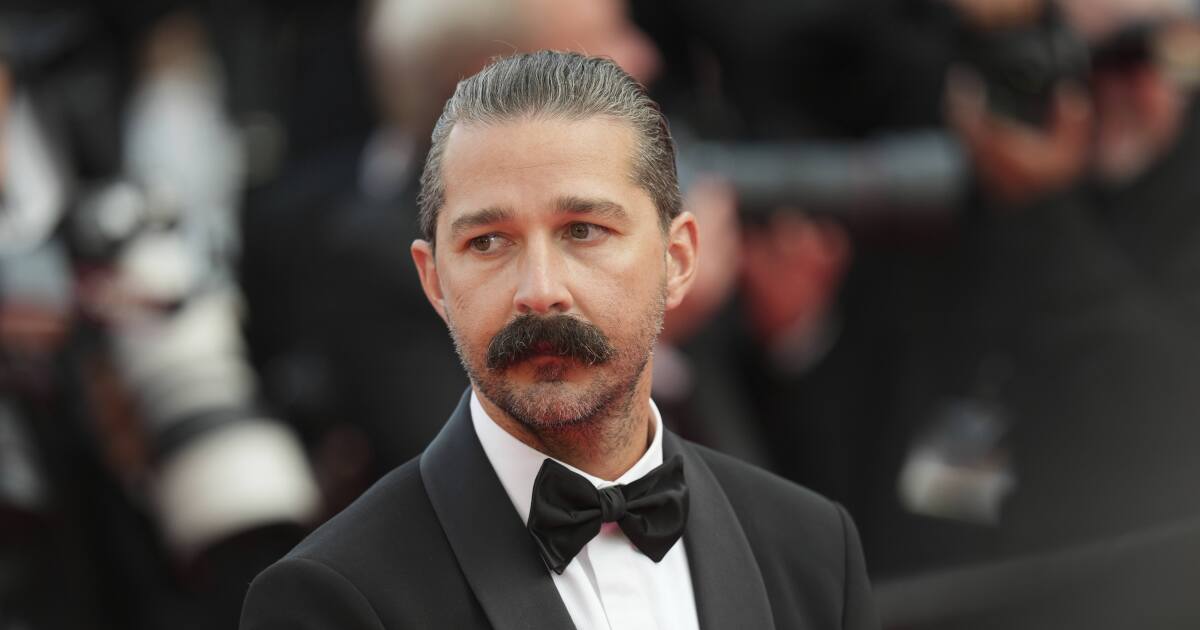
‘You’re scaring my people.’ Shia LaBeouf’s alleged stalker arrested after posting viral video
-
 Politics23 minutes ago
Californians back Becerra and reject AI data centers by big margins, poll finds
-
 Science29 minutes ago
How to eat safely amid outbreak of diarrhea-causing cyclosporiasis
-
Sports35 minutes ago
Magical Lionel Messi leads Argentina past England for trip back to World Cup final
-

 World47 minutes ago
Toronto engulfed by wildfire smoke as US cities threatened
-
 News1 hour ago
Argentina is back in the World Cup final after a thrilling semifinal win over England
-

 Los Angeles, Ca3 hours ago
Remains of murder victim identified as missing Southern California millionaire

