Sports
Column: In wake of Kamila Valieva’s disqualification, delayed justice for U.S. figure skaters

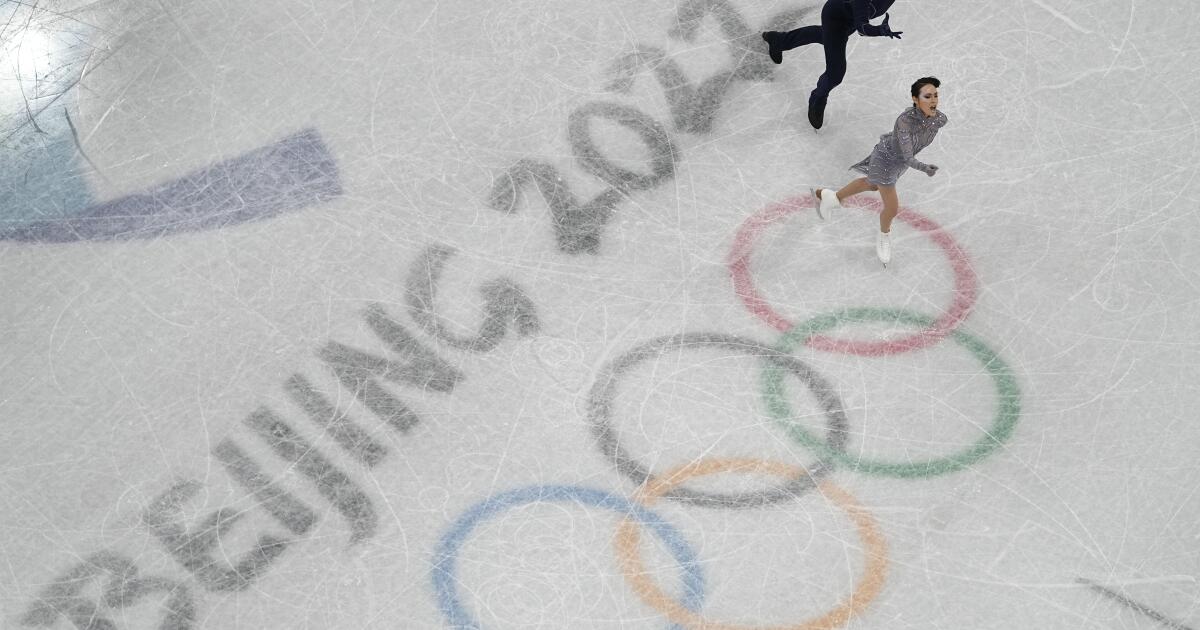
Their golden moment is gone, never to be enjoyed as it should have been, on the ice where nine American figure skaters were robbed of a gold medal in the Beijing Olympics team competition because of the doping-fueled performance of Russian teenager Kamila Valieva.
But after nearly two years of plodding investigations and more than a few anxious moments, justice for the U.S. skaters, though delayed, has not been denied. A decision rendered Monday by the Switzerland-based Court of Arbitration for Sports confirmed Valieva had committed an anti-doping violation and as a result erased her results at the Olympics and other events from Dec. 25, 2021 onward, suspending her for four years from that date. Based on that ruling, the International Skating Union said Tuesday the U.S. team would be elevated from silver medalists to gold.
No matter where or when their medal ceremony takes place, it won’t have the same immediacy for the Americans as if they had climbed to the top step of the medal stand in Beijing in view of a global audience of millions and were able to proudly wear their medals around the athletes’ village. But it will prove a point beyond affirming the skill of their skating.
It will, ice dancer Evan Bates believes, celebrate a larger principle: that efforts to punish doping are essential to the integrity of sports, no matter the patience, persistence, and vigilance that fight requires.
“Through this entire saga, I think focusing on the positivity that this has been a victory for clean sport, albeit it was a difficult and arduous wait, I think we feel very grateful that this case has had due process and has reached this conclusion here. Maybe not a conclusion, but this finding,” Bates said Tuesday during a conference call with reporters.
“And I think there are so many clean athletes who historically have not had their moment, have not had the recognition they deserved, whether that’s because those doping didn’t get caught or the case didn’t come to trial. Or what have you. There are countless athletes in history, through the decades, that have not had the moment that we have just now had. So we’re extremely happy. We’re extremely pleased. And we’re just really focusing on that and celebrating achievement.”
The decision by CAS can be appealed to the Swiss Federal Tribunal on procedural grounds. Japan was elevated from third to silver-medal status, but there’s still questions about whether the Russian team, ranked third after the disqualification of Valieva’s scores, will get a bronze medal over fourth-place Canada. The medals were withheld in Beijing, not awarded because of investigations triggered by the disclosure of Valieva’s positive doping test at the Russian championships.
Valieva, then 15, was almost certainly manipulated by the adults around her into taking the prohibited substance trimetazidine, which is used to treat heart conditions and helps the efficiency of blood flow. They wanted the reflected glory of her success but instead turned her into a cautionary tale. Her coaches and federation jeopardized her health and her career. She’s a tragic figure in many ways.
What’s certain after all of this is that the nine Americans will be golden. The team was composed of singles skaters Nathan Chen, Vincent Zhou, and Karen Chen; pairs skaters Alexa Knierim and Brandon Frazier, and the ice dance duos of Madison Hubbell and Zachary Donohue and Madison Chock and Bates. Of that group, only Chock and Bates are still actively competing, having won their fifth U.S. title last weekend.
“There is no scenario at this point in which Team USA is not the gold-medal winners,” said Sarah Hirshland, chief executive and president of the U.S. Olympic and Paralympic Committee.
“We have a high degree of confidence and I have been given very clear direction that we should proceed in awarding gold medals to the United States team, and that’s what we’re going to do.”
Hirshland said the new top three teams could be united in one place to be awarded their medals, but she’s not bound by that and is focusing on properly honoring the American skaters. Holding a three-team ceremony would be awkward and unnecessarily bring back memories of Valieva’s joy-sapping cheating.
Chock, who’s from Redondo Beach, acknowledged she had “a small, underlying feeling of maybe a little bit of sadness and disappointment that we didn’t get that Olympic moment,” a weight that vanished when the ruling was announced. Over the last two years, she and her teammates often envisioned their version of the long-delayed ceremony.
“When all of this initially happened, the first thing that came to everyone’s mind was we would love to have a true Olympic medal ceremony, and so for us, that would be a medal ceremony at the Paris Games this summer,” she said. “That would be the dream ceremony. To be able to stand atop a podium at an Olympic event and be there with our families and just to celebrate and be surrounded by the Olympic spirit and the Olympic movement would be our dream scenario.”
Hirshland said she’s “putting champagne on ice” for that occasion in Paris. Bates doesn’t need champagne to celebrate. “I just want to be standing there with all nine of us on the top spot on the podium with the hand over the heart, singing the national anthem,” he said, “and I just can’t wait for that moment to arrive.”
Delayed, but not denied, and that’s what matters.



Sports
Mike Breen says fans ‘deserve to be thrown a bone’ as NBA cuts all local broadcasts from the playoffs

NBA playoffs begin, Will anyone stop the Thunder? | The Herd
The NBA playoffs are underway, with the Play-In tournament starting tomorrow. The Oklahoma City Thunder are the heavy favorite to repeat as champions. Colin Cowherd asks if the San Antonio Spurs, Boston Celtics, or anyone else can stop the Thunder.
NEWYou can now listen to Fox News articles!
Mike Breen, the New York Knicks’ play-by-play announcer and star NBA voice with ESPN, is not happy with a key league move heading into the NBA Playoffs.
And he didn’t hold back his frustrations during the Knicks’ regular-season finale on Sunday night.
For the first time in NBA history, all local network broadcasts are being pushed out of the playoffs for nationally televised games. Those networks paid a premium to air the playoffs, but the league had always allowed the local home broadcast to be aired as well as the national TV spots in previous seasons.
ESPN play-by-play sports commentator Mike Breen looks on prior to the game between the Boston Celtics and Philadelphia 76ers at the Wells Fargo Center on Feb. 25, 2023 in Philadelphia, Pennsylvania. The Celtics defeated the 76ers 110-107. (Mitchell Leff/Getty Images)
Breen, alongside his longtime partner, Knicks great Walt “Clyde” Frazier, ripped the league’s decision on the final day of his broadcasting duties for the Eastern Conference squad.
“First time ever that no longer can the home team announcers and broadcasters televise the first round,” Breen mentioned during the 110-96 loss to the Charlotte Hornets while broadcasting on MSG.
KNICKS BROADCASTER’S JOKE COMPARING BULLS’ ‘OBLITERATED’ DEFENSE TO IRAN LEAVES PARTNER STUNNED
“The entire playoffs are exclusive to national TV broadcasters. I mentioned this earlier this season. I think, personally, Clyde, it’s a poor decision. Fans want to hear their home team announcers, at least in the first round. For so many of us, they become part of the family.”
Breen added that he understands “the networks pay a fortune for exclusivity,” granted he works for one of those networks on ESPN.
“But fans deserve to be thrown a bone once in a while in terms of letting the home team have a little bit of the first round,” he continued.
The NBA reached a whopping $76 billion broadcast rights deal that kicked in at the start of this season, and it will last for the next 11 seasons. Like other pro sports leagues, the deal is carved out across various platforms, both long-standing networks and streaming.
ESPN play-by-play announcer Mike Breen calls the game between the Los Angeles Lakers and the Dallas Mavericks at Crypto.com Arena in Los Angeles, California, on Jan. 17, 2024. (Kirby Lee/USA TODAY Sports)
While the NBA got together the deal it liked with Disney, Amazon and NBCUniversal, Breen hopes it would consider working something out to get local broadcasters back into the fold for the playoffs.
However, he knows how the business is at the end of the day.
“Somehow, if there’s any way they can work out some kind of compromise, I’m not hopeful for that, but it would be wonderful to have it because this is our final telecast of the season,” Breen said.
Breen, now, will focus on his ESPN duties as the lead commentator for the “Worldwide Leader” on the court. His famous “Bang!” call on clutch three-pointers has been synonymous with the biggest moments in the NBA Playoffs for years now, and that will get started very soon as teams in both the East and West gun for their shot at the Larry O’Brien Trophy and to call themselves NBA Finals champions.
The Oklahoma City Thunder, the reigning Finals champs, are the No. 1 seed in the Western Conference once again, while teams like the San Antonio Spurs, Denver Nuggets and Los Angeles Lakers will battle them to be crowned conference champions.
Mike Breen looks on before the game between the Golden State Warriors and the Los Angeles Lakers during Round 2 Game 3 of the Western Conference Semi-Finals 2023 NBA Playoffs on May 6, 2023 at Crypto.Com Arena in Los Angeles, California. (Andrew D. Bernstein/NBAE/Getty Images)
CLICK HERE TO DOWNLOAD THE FOX NEWS APP
In the East, Breen’s Knicks own the No. 3 seed, while the Detroit Pistons (No. 1) and Boston Celtics (No. 2) had successful regular-season campaigns to earn a top spot heading into the playoffs.
The Play-In Tournament will be the first games for the NBA Playoffs, which will stream exclusively on Amazon Prime Video. Then, the first round will split its tipoffs on NBC/Peacock, Prime Video and ESPN.
Follow Fox News Digital’s sports coverage on X and subscribe to the Fox News Sports Huddle newsletter.
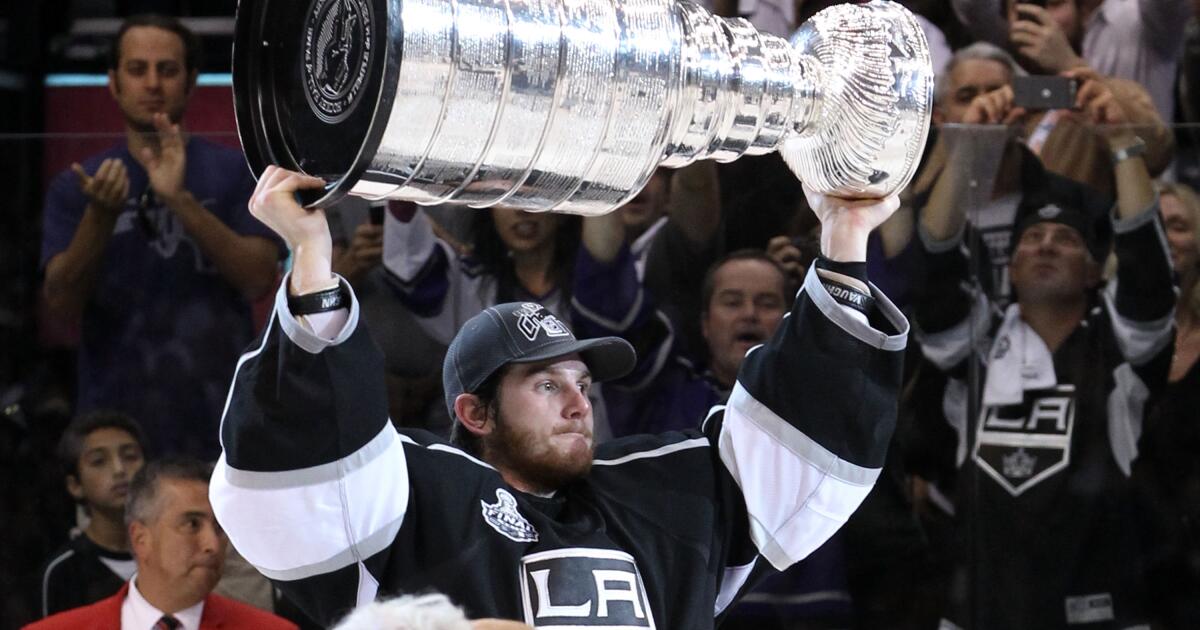
SUNRISE, Fla. — New York Rangers goalkeeper Jonathan Quick is calling it a career after 19 NHL seasons and three Stanley Cup championships — with 16 of those seasons and two championships as a member of the Kings.
The 40-year-old goalie told reporters Monday that he would be playing in his final game that night when the Rangers visit the Florida Panthers. It will mark Quick’s 921st game appearance, counting playoffs.
“Tonight will be my last game in the league, and I am looking forward to it,” Quick said following the morning skate ahead at Amerant Bank Arena in Sunrise, Fla. “My wife flew down with the kids, my parents will be here. I am looking forward to this last one, try to get one more win here.”
He added of his decision: “It just felt right. Felt like the right time. I put some thought into it.”
Selected by the Kings in the third round of the 2005 draft, Quick became a fixture in front of the net for L.A. during the 2008-09 season. He was a key member of the Kings’ Stanley Cup champion teams in 2012 and 2014, earning the Conn Smythe Trophy as the most valuable player of the 2012 Stanley Cup playoffs with a 16-4 record, a .946 save percentage and 1.41 goals-against average.
Quick won a silver medal as a backup goaltender for the U.S. at the 2010 Vancouver Olympics, although he did not see any playing time. At the 2014 Sochi Games, Quick went 3-2 as the starting goalie for the fourth-place U.S. team.
By March 2023, Quick was the Kings’ leader among goalies in the categories of total games (743), wins (370) and shutouts (57). At age 37, however, he had also lost a step or two. The Kings traded him to the Columbus Blue Jackets, who turned around and dealt him to the Vegas Golden Knights the next day.
Quick saw a decent amount of playing time down the stretch in the regular season because of injuries to the Golden Knights’ goaltenders. He didn’t make it into any games during the team’s championship run in the Stanley Cup playoffs.
After spending the last three seasons in New York, Quick is set to make his 70th and final start with the Rangers and add the final numbers to a stat line that currently includes 20,315 saves (18th most all time), 410 wins (12th most) and 65 shutouts (17th).
“He earned the respect of his teammates, coaches and staff members through his work ethic and dedication to his craft,” Rangers general manager Chris Drury said in a statement posted on social media. “Jonathan is a special person and player, and the entire Rangers organization wishes him — along with his wife, Jackie, and three children, Madison, Carter and Cash — all the best in retirement.”
The Rangers are 33-38-9 and will miss the playoffs for the second straight season. They finish the year Wednesday night at Tampa Bay.
Another key member of the Kings championship teams, Anze Kopitar, also is retiring after this season, following 20 years in the NHL, all with L.A.
Sports
ESPN star calls for 2017 Masters winner to have his lifetime exemption removed after meltdown

NEWYou can now listen to Fox News articles!
ESPN star Mike Greenberg called for Sergio Garcia’s lifetime exemption into the Masters Tournament to be pulled after his antics on the course in the final round on Sunday.
Garcia received a code of conduct warning after he smashed his driver in frustration at Augusta National. He slammed his club into the turf twice after hitting a shot that ended up in the bunker. Then he took a swipe at a table with a green cooler on it.
ESPN personality Mike Greenberg is interviewed on radio row at the George R. Brown Convention Center in Houston, Texas, on Feb. 1, 2017, ahead of Super Bowl LI. (Jerry Lai/USA TODAY Sports)
Greenberg seemingly saw Garcia’s anger as a detrimental issue.
“A lifetime exemption is a privilege extended by Augusta to its champions out of respect,” he wrote on X. “If that respect is not reciprocated, there is no law that says a past champ cannot be banned.
RORY MCILROY REPEATS AS MASTERS CHAMPION, JOINS RARE COMPANY AT AUGUSTA NATIONAL
Sergio Garcia lines up a putt on the second green during the first round of the Masters Tournament at Augusta National Golf Club in Augusta, Ga., on Apr. 9, 2026. (Michael Madrid/Imagn Images)
“I’m not sure they should have Sergio Garcia back after the garbage he pulled today.”
Garcia, who competes in LIV Golf, won the Masters in 2017. It is his only major victory of his career. Since winning in 2017, he only made the cut for the final two rounds once. The feat came at this year’s tournament. He finished 52nd in the field.
Sergio Garcia plays his shot on the seventeenth hole during the second round of the Masters Tournament at Augusta National Golf Club in Augusta, Ga., on April 10, 2026. (Bill Streicher/Imagn Images)
He joined LIV Golf in 2022 as he was among the PGA Tour stars who left the organization. He has two wins in the series – at LIV Golf Andalucía in 2024 and LIV Golf Hong Kong in 2025. He played his way into a playoff four times, only winning the Andalucía event.
Fox News’ Ryan Morik contributed to this report.
Follow Fox News Digital’s sports coverage on X and subscribe to the Fox News Sports Huddle newsletter.

Detroit Chinatown Vision Committee discusses Detroit Chinatown

Bay Area bike program pays commuters to ditch their cars

TxDOT Dallas Seeks Input on Proposed Widening of FM 740/FM 548

Man seriously hurt in Dorchester crash – Boston News, Weather, Sports | WHDH 7News

Historic 84-year-old Bonnie Brae gas station in Denver officially listed for sale by family

Florida High School Football Rankings: Top 25 teams – Oct. 21

How old is Bo Nix? What to know about Oregon quarterback ahead of 2024 NFL Draft

Cleary's 21 help Le Moyne down Central Connecticut State 69-64 in OT

99th annual Pony Swim held in Virginia

Indiana Members Credit Union announced as new anchor tenant at Bottleworks District

Embattled Rep Tony Gonzales announces plans to resign amid sexual misconduct allegations

UN experts slam attacks on Gaza shelters, forced displacement in West Bank

DOJ fires at least 4 prosecutors involved in FACE Act cases during Biden administration

Melania Trump’s Epstein remarks turn up the heat on DOJ, Acting AG Todd Blanche to do more
Newsletter: Cautious optimism in Brussels as Orbán ousted in landslide Hungarian opposition win
-

 Atlanta, GA1 week ago
1 teenage girl killed, another injured in shooting at Piedmont Park, police say
-

 Georgia7 days ago
Georgia House Special Runoff Election 2026 Live Results
-

 Arkansas4 days ago
Arkansas TV meteorologist Melinda Mayo retires after nearly four decades on air
-

 Pennsylvania1 week ago
Parents charged after toddler injured by wolf at Pennsylvania zoo
-
 Milwaukee, WI1 week ago
Potawatomi Casino Hotel evacuated after fire breaks out in rooftop HVAC system
-

 Technology1 week ago
Anthropic essentially bans OpenClaw from Claude by making subscribers pay extra
-

 Austin, TX6 days ago
ABC Kite Fest Returns to Austin for Annual Celebration – Austin Today
-

 World1 week ago
Zelenskyy warns US-Iran war could divert critical aid from Ukraine