Washington, D.C
Trump Transition Team Considering a Public Safety Czar for D.C.


President-elect Donald Trump’s transition team is considering a possible takeover of public safety in D.C., potentially installing—with congressional approval—some type of federally appointed czar over law enforcement in the nation’s capital, according to two sources.
The sources emphasized no firm decisions have been made. “A lot of things are being considered,” said one involved source familiar with the presidential transition team’s discussions at Trump’s Mar-a-Lago Club in Palm Beach.
Two separate sources suggested that a U.S. deputy attorney general or similar official could possibly be appointed to directly oversee the District’s police force, fire and emergency services, the 911 call center, and possibly even juvenile justice work that is now done by the locally elected Attorney General Brian Schwalb. D.C. Republican Party chair Patrick Mara previously speculated about the potential for federal control of the Metropolitan Police Department.
Such a takeover of public safety would be a more targeted action than what happened in the late 1990s, when Congress created the federal Financial Control Board to run the entire District government, which at the time was nearly bankrupt.
Several District officials and business leaders are discouraging any public discussion of what Trump might do, fearing it might “poke the bear” and make matters worse with the incoming president. Mayor Muriel Bowser’s office did not respond to requests for comment on this story.
The potential intrusion into local governing could come even though Bowser and the D.C. Council are making a determined public effort in the halls of Congress and elsewhere to highlight sharp drops in violent crime this year compared to recent years.
At a year-end briefing on crime in early December, Bowser revealed she had personally spoken with transition officials. “Yes, I’ve talked to them about public safety … and I specifically talked about … how we have been very focused on driving down crime,” she said.
The D.C. Council also recently has pulled back from several of its more progressive crime policies—toughening pretrial detention and expanding DNA testing of suspects charged with crimes, and creating aggressive policing in targeted “drug free zones,” which officials have credited with reduced crime in hot spots around the District.
The Council also has eased restrictions on police officers’ ability to physically detain suspects while maintaining a ban on “chokeholds” in place since 1982. Ward 2 Councilmember Brooke Pinto, who chairs the Council’s public safety committee, wrote in her year-end report that “the District is ending the year with the lowest amount of violent crime we have seen in over 20 years. The ongoing work to keep DC residents and visitors safe continues.”
And the Council recently voted to expel Ward 8 Councilmember Trayon White, who is facing criminal bribery charges in federal court. Ahead of the vote, councilmembers spoke publicly about the importance of upholding the body’s ethics. Some members also privately worry that their failure to take strong action would invite interference from Congress during this heightened moment for the city. White was re-elected in November and is set to be sworn in Jan. 2. The Council is expected to take a final vote to expel him in February.
At minimum, Trump is expected to nominate a new and more aggressive U.S. Attorney for the District to replace Matthew Graves, who was chosen by President Joe Biden in 2021. Graves has served three years as the District’s chief prosecutor amid criticism that his prosecutions haven’t matched the level of crime in the District.
Short of a full takeover of public safety, Trump’s transition team is considering revising or rescinding some of the District’s most progressive criminal justice laws. The Republican-controlled Congress could direct Bowser and the Council to hire more police and public safety workers.
The Metropolitan Police Department has about 600 fewer officers than in previous years. Bowser has pressed the 13-member Council to do more to help bring the force to about 4,000 officers. But a recent audit by D.C. Auditor Kathy Patterson concluded better deployment of the current force and hiring more civilian staff would be more effective than hiring more sworn officers.
The still-private transition discussions belie the hopes of some local leaders that Trump would be too busy with national and international issues to focus on local D.C. “He’s going to do something,” the source familiar with Mar-a-Lago discussions says about the District. Trump has made criticism of crime in the District a constant theme for many years, irrespective of whether crime rates are up or down.
At a July rally at his Doral golf club in Florida, Trump declared: “We will take over the horribly run capital of our nation in Washington, D.C. and clean it up, renovate it, and rebuild our capital city so that it is no longer a nightmare of murder and crime, but rather it will become the most beautiful capital anywhere in the world.”
In August at a campaign stop in York, Pennsylvania, Trump vowed to make the District “safe” again. “You want to be able to go there and you want to be able to enjoy it, and you don’t want to be mugged or shot or killed in our capital, which has become very unsafe,” Trump said. “It’s horribly run, graffiti stained, and we’re going to fix it very quickly and beautifully.”
District officials gamely dispute Trump’s filth and crime-ridden declarations. And they note that he generally has trashed urban areas from New York to San Francisco with their more liberal and Black and brown populations. But only in the nation’s capital does federal law give Trump and Congress the upper hand to interfere with or override District laws and operations.
The District’s limited Home Rule Act, passed by Congress in 1973, includes a provision that allows any president to take over the District’s police department for 48 hours by declaring an emergency, and longer if Congress approves.
Local officials say they believe that the next Congress, with Republicans in control of both chambers, would likely support Trump if he made such a move. Trump also is empowered to call out the District’s National Guard to patrol streets even though the policing powers of the Guard are limited.
The Constitution empowered Congress to establish a federal capital district where it would “exercise exclusive legislation in all cases whatsoever.” Even lawyers for the District recognize the broad power of that provision as long as Congress’ actions do not violate human rights or other federal laws. “We have no real cards to play,” says one District official.
Walter Smith, a respected local lawyer and a former D.C. deputy attorney general who supports statehood for the District, contended in the Washington Post in November that the Constitution’s “exclusive legislation” provision does not mean Congress has wholesale power to simply “take over” the government. Others dispute that view and note the continuing enmity with which some members of Congress attack the District.
In July, Republican Sen. Mike Lee of Utah introduced a bill that would abolish the District’s entire Home Rule government. Lee pointedly named the bill the “Bringing Oversight to Washington and Safety to Every Resident Act,” or the “BOWSER Act.”
Some District officials have pointed out that Bowser has developed a good working relationship with Republican Rep. James Comer of Kentucky, who as chairman of the House Committee on Oversight and Accountability oversees the District. Comer has praised Bowser’s focus on public safety and other issues and was a key player in the District’s recent win in Congress to get control of the federal RFK Stadium land—a positive sign for the District.
But given the drumbeat of Trump’s outrage over crime, local leaders privately say it’s still more likely that the Trump transition will take action against local D.C. rather than decide to do nothing.
Tom Sherwood is a contributing writer for City Paper and the resident political analyst for WAMU’s Politics Hour with Kojo Nnamdi.
Recommended Stories



Donald Trump kicked off what was intended to be a “spectacular birthday party” for American’s 250th year of independence with a political rally touting his presidency.
“I am thrilled to declare that America is back,” Trump said at the opening ceremony for the Great American State Fair in Washington DC, held on the National Mall. “As you know very well, a short time ago we were a dead country. We were dead. Now we’re the hottest country anywhere in the world. We’re respected by everybody. Nobody’s laughing at us any more.”
He rattled off a list of what he described as victories, including a preliminary deal to end the conflict with Iran, a crackdown on immigration and a tax bill. “In the American Revolution, they had a saying no tax on tea. But with the Great Big Beautiful Bill we did even better,” he said, harkening back to the event’s purpose.
He also boasted about projects he has spearheaded around Washington to beautify the city ahead of its independence anniversary, including his project to make the Lincoln Memorial reflecting pool “American flag blue” for the celebrations. The revamp has cost about $14.1m, as the pool has faced setbacks including an algae bloom and peeling polyurethane liner.
Trump repeated a claim, that the administration has offered no evidence of, that the peel was caused by vandals: “Thugs, bad people.”
Before the remarks, attendees gathered on the national mall waved star-spangled flags as the US marine band drummed up energy.
Popular musical acts including the Commodores, Martina McBride and Young MC had been announced as headliners for the opening ceremony, but they and other performers backed out of the event, citing its political undertone. Some states also opted out of participating in the Great American State Fair over similar concerns.
Opera singer Christopher Macchio and country musician Lee Greenwood, whose 1984 single God Bless the USA has soundtracked Maga rallies for years, took the stage instead.
Alexis Wilkins, the girlfriend of the FBI director, Kash Patel, sang the national anthem. Wilkins, who announced her performance in a Tuesday social media post, had rebuffed online speculation about nepotism factoring into her appearance. “I was invited to sing this anthem on my own accord,” she wrote on X.
Trump has spoken of America’s 250th birthday as an inflection point, a time for the nation to recommit itself to patriotism and faith. But while the events were initially touted as nonpartisan and nonpolitical, many of the scheduled celebrations have morphed into Maga-themed occasions. Those programs include Make America Healthy Again Mondays and an Independence Day celebration that will feature a campaign-style rally hosted by Trump.
after newsletter promotion
The National Mall was also the backdrop for another event celebrating America’s 250th year of independence, a UFC fight that drew ethics concerns over the optics of a for-profit company commandeering a public space.
Freedom 250 is also slated to host another sporting event dubbed the Patriot Games. High school students will compete in physical and mental challenges. Scholarship funding of $125,000 will be awarded to one male and one female champion.
The celebrations come as the Trump administration fields criticism that it has promoted “revisionist” history. Early into his second term, the president signed an executive order to purge the nation’s public monuments of “ideological indoctrination”. Materials referencing slavery, Indigenous people and the climate crisis were removed from parks, although a judge recently ordered the administration to reinstate them.
Washington, D.C
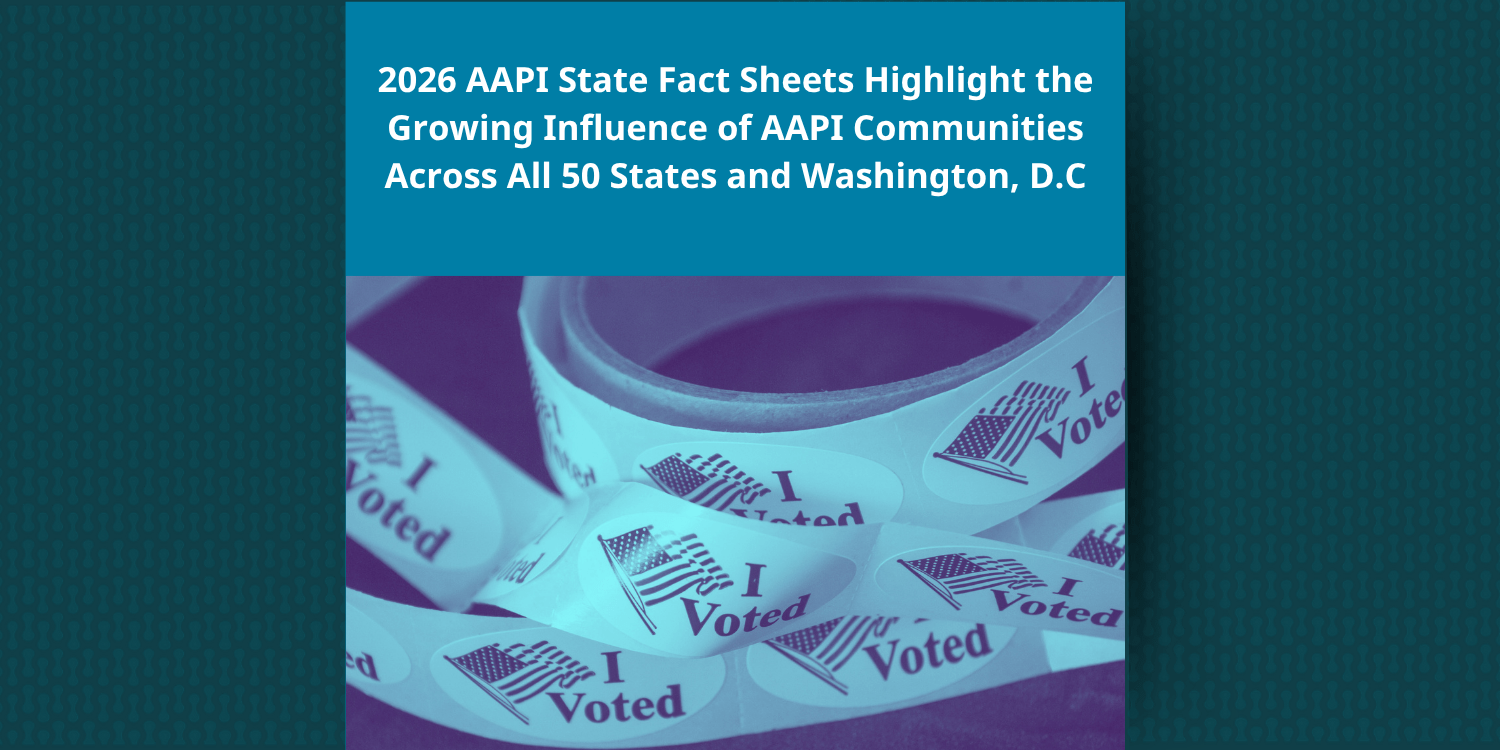
AAPI Data Releases 2026 AAPI State Fact Sheets, Highlighting the Growing Influence of AAPI Communities Across All 50 States and Washington, D.C. – AAPI Data
MEDIA CONTACT:
Amanda Ong
press@aapidata.com
AAPI Data Releases 2026 AAPI State Fact Sheets, Highlighting the Growing Influence of AAPI Communities Across All 50 States and Washington, D.C.
Washington, DC – Asian and Pacific Islander American Vote (APIAVote) and AAPI Data today released the 2026 AAPI State Fact Sheets, a comprehensive set of demographic and voter data for all 50 states and the District of Columbia. Updated every two years, the fact sheets provide policymakers, advocates, researchers, journalists, campaigns, and community organizations with essential data on the nation’s fastest-growing racial demographic and voter bloc.
“AAPI voters are shaping elections nationwide, yet our communities are still too often overlooked or misunderstood,” said Christine Chen, Executive Director of APIAVote. “These fact sheets give organizers, policymakers, media, and advocates the context they need to build more informed, effective, and inclusive engagement strategies and to better understand AAPI communities’ growing impact on American democracy.”
“Our communities are growing rapidly in places well beyond the Northeast and the Pacific West,” said Karthick Ramakrishnan, Founder and Executive Director of AAPI Data. “It is critical for news media, funders, and civic engagement organizations to use these updated findings to ensure accuracy and efficacy in their work.”
The 2026 State Fact Sheets include state-specific information on:
- AAPI population and eligible voters
- Population growth trends
- Citizenship and immigration data
- Language access and English proficiency
- Economic indicators, including poverty and health insurance coverage
- Geographic concentrations by county
- Voter demographics and civic engagement
The fact sheets are based on data from the U.S. Census Bureau’s American Community Survey and include both monoracial and multiracial AAPI populations. Together, these data provide a more complete picture of AAPI communities and equip decision-makers with the information needed to better serve and engage one of the country’s fastest-growing populations.
The 2026 AAPI State Fact Sheets are available for free and may be downloaded individually by state or as a combined report at: https://apiavote.org/policy-and-research/aapi-demographics-by-state/. The factsheets can also be found on the AAPI Data website: https://aapidata.com/demographics/2026-aapi-voter-state-fact-sheets
About AAPI Data
AAPI Data is a national research and policy organization producing accurate data to support community narratives that drive action toward enduring solutions for Asian American, Native Hawaiian and Pacific Islander (AANHPI) communities. Learn more at aapidata.com.
About APIAVote
Asian and Pacific Islander American Vote (APIAVote) is the nation’s leading nonpartisan nonprofit dedicated to engaging, educating, and empowering Asian American and Pacific Islander (AAPI) communities to strengthen and sustain a culture of civic engagement. See our website for more information at https://www.apiavote.org/

WASHINGTON, D.C. (WSAW) – It’s a day for gathering and remembering victims of internet crimes.
The parents of Bradyn Bohn, the D.C. Everest teen who was a victim of sextortion, are in Washington, D.C. for the event.
A sign with Bradyn’s picture, his name, ‘forever 15′– along with too many more– sit outside the capitol.
It’s the inaugural ‘Social Media Victims Remembrance Day.’ A number of lawmakers were on hand. Bradyn’s mom, Brittney Bird, says Congress needs to choose families over big tech.
“My first thought is it’s absolutely heartbreaking,” she said. ”None of us should be here. These groups have been doing this for coming up on four years now. And there hasn’t been a change. If four years ago there would have been a change, my son would be here. Countless children would still be here. It’s heartbreaking, but at the same time there’s strength in numbers. So there’s that strength. And it gives us hope, you know, that things will change and that we’ve got each other.”
Bradyn died by suicide in March 2025 after a sextortion scheme. The efforts of his parents helped lead to the creation of Bradyn’s Law, signed into law last December. It established sextortion as a new crime, and imposes severe penalties on perpetrators.
Click here to download the WSAW news app or WSAW First Alert weather app.
Click here to submit a news tip or story idea.
Copyright 2026 WSAW. All rights reserved.
-
 Politics2 minutes ago
Trump refuses to sign landmark housing bill, demanding Congress pass voter ID law
-
 Sports12 minutes ago
Mexico celebrates magical World Cup win over Czechia at rowdy Azteca Stadium
-

 World24 minutes ago
Venezuela rocked by 7.5 and 7.2 earthquakes: What we know
-
 News54 minutes ago
With a Round of 32 spot already clinched, the U.S. takes on Turkey in the World Cup
-

 Los Angeles, Ca2 hours ago
Hospital needs help identifying man found unconscious in downtown Los Angeles
-

 Detroit, MI3 hours ago
Large police presence for an investigation on Detroit’s west side
-

 San Francisco, CA3 hours ago
No tolerance for hate or crime at SF Pride this weekend, officials say
-

 Dallas, TX3 hours ago
Alanna Smith injury update: Dallas Wings player in concussion protocol

