Washington, D.C
Jake Moody hits game-winning field goal vs. Commanders in dramatic Bears debut


The walk-off field goal — set up by cornerback Nahshon Wright’s fumble recovery with 3:07 left in the game and a 36-yard drive by the offense — was just one of the four field goals Moody made on Monday Night Football. His four makes equaled a franchise record for most field goals made in a debut, matching Jeff Jaeger who did so in Week 4 of the 1996 season.
Moody hit field goals from 47 and 48 yards on the Bears’ first two offensive possessions before making a 41-yarder with 8:09 left in the third quarter. At the start of the fourth quarter, Moody attempted a go-ahead 48-yard field goal, but the kick was blocked.
Before lining up for the game-winner, his next and only other attempt following the block, Moody gave himself a simple message: “You’re only as good as your next kick,” which allowed him as smooth of a recovery as possible.
“Such a cool story,” Daly said. “So happy for Jake. He’s obviously been in this league for a couple years now, but for him to be able to come in here with a couple weeks notice and be able to get the job done … Obviously the kick before wasn’t pretty. I look at myself on that one. I’ve got to do a better job with protection in the left ‘A’ gap.
“For all of us to bounce back and persevere, not only on the special teams, but also the team as a whole that we were able to persevere and find a way to get a win.”
The Bears’ victory in Washington marks a three-game winning streak and their second straight game decided on a field goal attempt. Against the Raiders Sept. 28, the Bears won thanks a blocked field goal by cornerback Josh Blackwell.
Being on the opposite side of the field-goal attempt Monday night, yet still coming out on top, provided the Bears an added layer of excitement.
“It just shows that we’re resilient,” Odeyingbo said. “We’re gonna fight to the end on the very last play. Whether we’re kicking the last field goal or they’re kicking the last field goal, we’re gonna find a way to make that game-winning play and come home with a win.”
Moody’s dramatic Bears debut ended with a postgame locker room celebration and a game ball delivered by Johnson.
Between the various postgame on-field and locker room festivities, Moody became acclimated to his new teammates in the best way possible. Still, he’ll probably be conducting more introductions all week long.
“I’m glad to be on the team, glad to be a part of this,” Moody said. “I can’t wait to formally meet everybody else at some point.”

Washington, D.C
DC will pay $50,000 to man detained while protesting guard patrol with ‘Star Wars’ song, record says

WASHINGTON (AP) — The District of Columbia has agreed to pay $50,000 to settle a lawsuit filed by a resident who accused police officers of illegally detaining him for following an Ohio National Guard patrol while playing Darth Vader’s theme song from “Star Wars” on his cellphone, according to a document released Monday.
The plaintiff, Sam O’Hara, sued the district, four Metropolitan Police Department officers and a guard member from Ohio over what he says was his act of protest against President Donald Trump’s federal law enforcement surge in Washington, D.C.
A court filing on Thursday disclosed the settlement but didn’t specify any monetary terms. The amount is included in a copy of the settlement agreement that D.C. Attorney General Brian L. Schwalb’s office provided to The Associated Press.
The $50,000 settlement includes attorney’s fees and costs. O’Hara is represented by the American Civil Liberties Union of the District of Columbia. In an email on Friday, an ACLU spokesperson referred to the settlement’s financial terms as “a significant amount” that O’Hara “is pleased with” but said they weren’t disclosing the dollar figure to protect his privacy.
O’Hara, an artist who works in the hospitality industry, agreed to drop his claims against the district and the MPD officers within three business days of receiving the settlement payment. The settlement isn’t an admission of wrongdoing by the district, the agreement says.
O’Hara’s settlement with the district doesn’t resolve his related claims against an Ohio National Guard member, Sgt. Devon Beck, who has asked a judge to dismiss O’Hara’s claims against him.
O’Hara sued the district in October, claiming police officers violated his First Amendment rights to free speech and his Fourth Amendment rights against unreasonable seizures and excessive force.
O’Hara played “The Imperial March” theme from “Star Wars” on his phone as he followed several National Guard troops down a public street on Sept. 11, 2025. One of the troops summoned police officers, who stopped O’Hara and kept him handcuffed for 15 to 20 minutes before releasing him without charges, according to the lawsuit.
Trump’s ongoing deployment of guard members in Washington began last August after the Republican president issued an executive order declaring a crime emergency in the nation’s capital. The surge inflamed tensions with residents of the heavily Democratic district. Hundreds of guard members remain deployed in the district nearly a year later, with no clear end in sight.

US President Donald Trump escalated his criticism of Democratic mayoral nominee Janeese Lewis George, describing her as a “communist” and warning that her policy agenda could negatively affect Washington, DC, ahead of the city’s November mayoral election. Trump made the remarks on his Truth Social platform, placing crime, immigration and policing at the center of his criticism.Trump attacks Democratic agenda
In his statement, Trump claimed George supports measures including reducing prison populations, expanding sanctuary city policies, opposing Immigration and Customs Enforcement (ICE), restoring cashless bail, cutting police funding and resisting anti-crime initiatives. He argued that such proposals would weaken public safety in the US capital and reverse recent improvements.
George becomes favorite after primary victory
Janeese Lewis George secured the Democratic nomination earlier this month after winning the party’s mayoral primary in Washington, DC. Given the city’s strong Democratic voting base, her victory has positioned her as the leading candidate to succeed outgoing Mayor Muriel Bowser in the November general election.
Trump vows to protect Washington
Trump insisted that his administration would not allow Washington, DC, to be “destroyed,” arguing that the city has become significantly safer through crime reduction efforts and urban renewal projects. He also announced that he intends to meet with George, while describing the US capital as “again a Safe and Prestigious Community.”
Repeating his criticism, Trump said: “Many people, including myself, have worked long and hard to get it there, and we will not let it be destroyed by a Communist adherent who has no intention to, MAKE WASHINGTON GREAT AGAIN!”
Berk Kutay Gokmen
28 June 2026•Update: 28 June 2026
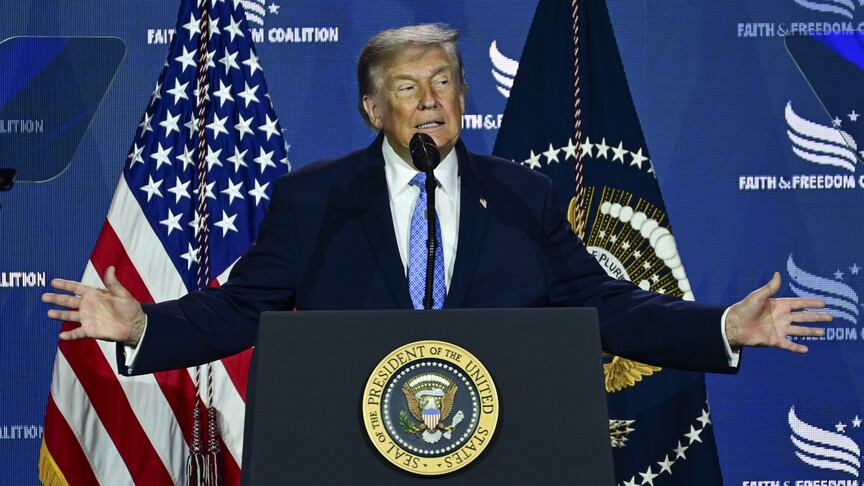
US President Donald Trump on Sunday criticized Democratic mayoral nominee Janeese Lewis George, calling her a “communist” and attacking her policy positions ahead of Washington, DC’s mayoral election.
“Janeese Lewis George, the Communist who is almost certainly going to be elected Mayor of Washington, D.C., has stated that she wants to empty the prisons, make D.C. a Sanctuary City, oppose ICE, welcome Criminal Illegal Aliens back into our beloved Capital, resist Anti-Crime Crackdowns, Defund the Police, continue and expand Cashless Bail, and so many other Capital destroying ‘things’,” Trump wrote on his Truth Social platform.
George won the Democratic primary for mayor of Washington, DC, earlier this month, securing her party’s nomination in the heavily Democratic city and becoming the likely successor to outgoing Mayor Muriel Bowser after the November general election.
Trump said he would not allow Washington, DC, to be “destroyed.”
“In the end, it will never work out, nor will I let it even have a chance because I have worked too hard to make Washington, D.C., the Envy of the World, with almost No Crime, and a Beautification process that has been second to none,” he said.
Trump also said he would “meet with Janeese Lewis George,” adding that Washington, DC, is “again a Safe and Prestigious Community.”
“Many people, including myself, have worked long and hard to get it there, and we will not let it be destroyed by a Communist adherent who has no intention to, MAKE WASHINGTON GREAT AGAIN!” he added.
-

 New York59 minutes ago
Read the Indictment of Malik Beasley
-

 Los Angeles, Ca1 hour ago
Stolen Sea Scouts boat found in Marina del Rey, suspect arrested
-

 Detroit, MI1 hour ago
Michigan House passes bill to restrict big investors from amassing single-family homes
-

 San Francisco, CA2 hours ago
San Francisco rolls out heightened security measures ahead of World Cup knockout match, 4th of July
-

 Dallas, TX2 hours ago
Klyde Warren Park reveals expansion plans, construction timeline
-

 Miami, FL2 hours ago
Person hospitalized after fire breaks out at North Miami Beach apartment building
-

 Boston, MA2 hours ago
Scottish soccer fan who died in Boston was ‘Tartan Army to his core,’ fundraising page says – The Boston Globe
-

 Denver, CO2 hours ago
Nuggets decline Jalen Pickett’s team option for 2026-27 season, sources say

