Washington, D.C
DC mayor responds to proposed 'Bowser Act,' which aims to repeal Home Rule


Bowser defends DC Home Rule as Congress moves to repeal it
D.C.’s mayor is responding to a proposed bill that aims to repeal Home Rule in the district and could strip the powers of the D.C. government if passed. FOX 5’s Lili Zheng has the story.
WASHINGTON – D.C.’s mayor is responding to a proposed bill that aims to repeal Home Rule in the district and could strip the powers of the D.C. government if passed.
The bill was introduced by Sen. Mike Lee, R-Utah, and Rep. Andy Ogles, R-Tennessee last week. It has been named the “Bringing Oversight to Washington and Safety to Every Resident” (BOWSER) Act in the Senate and House, named after District of Columbia Mayor Muriel Bowser.
According to the bill sponsors, the proposal is in response to the mayor and city council’s “failure to prevent violent crime, corruption, and voting by non-citizens”. It would repeal the District of Columbia Home Rule Act one year after passage.
UNITED STATES – JANUARY 13: D.C. Mayor Muriel Bowser concludes a news conference on security measures for the 60th Presidential Inauguration, at the Marion S. Barry, Jr. Building on Monday, January 13, 2025. (Tom Williams/CQ-Roll Call, Inc via Getty
Mayor Bowser has addressed calls to repeal Home Rule in recent months and doubled down on her past statements Monday that D.C. has followed the law and is prepared to continue defending itself.
“Home Rule is a limited self-government, but what we should be focused on is our pathway to becoming the 51st state,” Mayor Bowser said Monday.
The backstory:
Home Rule refers to the law signed in 1973 by President Richard Nixon, which created a local government for Washington, D.C. It granted DC residents the ability to elect a mayor and council, but Congress retained the power to overrule local legislation and D.C. residents remained without a vote in Congress.
Prior to Home Rule being enacted, D.C. representatives were chosen by Congress and the President.
What’s in the BOWSER Act?
Congress has the authority to manage the nation’s capital according to Article 1, Section 8, Clause 17 of the Constitution, the bill sponsors said.
FOX 5 reached out Monday for interviews on the proposed legislation, but neither Sen. Lee’s or Rep. Ogles’ offices returned our requests for comment.
In a joint statement, Lee said described the ‘corruption, crime, and incompetence of the D.C. government’ as an ‘embarrassment to our nation’s capital for decades’.
Rep. Ogles’ remarks in the joint statement took direct aim at Mayor Bowser.
“The radically progressive regime of D.C. Mayor Bowser has left our nation’s Capital in crime-ridden shambles.” said Rep. Ogles. “Washington is now known for its homicides, rapes, drug overdoses, violence, theft, and homelessness.
Bowser and her corrupt Washington City Council are incapable of managing the city. As such, it seems appropriate for Congress to reclaim its Constitutional authority and restore the nation’s Capital. The epicenter of not only the United
States Federal Government but also the world geopolitics cannot continue to be a cesspool of Democrats’ failed policies.”
What they’re saying:
Mayor Bowser did not directly respond to the bill being named after her, nor did she address criticism from the bill sponsors.
When asked about the significance of Home Rule in D.C., Bowser said Monday, the district’s focus remains on becoming the 51st state in the country
“I know there’s talks about other places being the 51st state, but we’re going to be the 51st state. What that means is that we’ll be treated just like every other American. Right now, we’re not, because we pay taxes. In fact, we pay more taxes than most, because we’re larger than two states, but we don’t have representation in Congress,” she said.
She added, residents are witnessing what that means under a new administration.
“When important things are being debated like cabinet nominees, we neither have a voice or a vote,” she said. “In the House, our congresswoman is a delegate, but she doesn’t have a vote. So, we are reminded what it means to be full citizens of this nation and we can only get that through statehood.”
DC residents could lose home rule in new Congress
D.C. residents may lose the ability to govern themselves come January if Republicans make good on a promise to reassert more federal control. FOX 5’s Katie Barlow explains what could happen.
What’s next:
Home Rule in D.C. has been challenged in the past, according to Prof. Leah Brooks at George Washington University’s Trachtenberg School of Public Policy and Public Administration.
It’s possible this legislation could get further than it has in the past given Republican majorities in both the House and Senate, Prof. Brooks noted. However, Brooks pointed out the bill currently less than a page long and does not clearly define what happens if Home Rule is repealed.
“Basically what happens the legislation says is, we get rid of home rule as it was defined in 1973 by Congress. What it doesn’t say is, what happens after that? So, what happens after that?” she questioned. “Do we go back to the Home Rule we had as of 1967 that Lyndon Johnson passed? Do we go back to Congress managing every facet of D.C.? It’s hard for me to imagine that Congress to become the city council of Washington D.C.”
It’s not immediately clear if other congressmembers have openly supported this bill.
The Source: The information in this story comes from FOX 5 reporting.



(Photo courtesy of North Dakota National Guard. via the North Dakota Monitor)
(North Dakota Monitor) – North Dakota will send 60 National Guard members to Washington, D.C., starting in April, for an estimated three months to help police the city.
The move is in support of President Donald Trump’s August executive order declaring an emergency in D.C. The president said assistance from states is necessary to address what he described as rampant crime in the nation’s capital.
“Safeguarding the citizens, federal workers and elected leaders in our nation’s capital is a matter of national security, and we appreciate these Soldiers volunteering for this important mission,” Gov. Kelly Armstrong said.
Most of the 60 North Dakota members will come from the 131st Military Police Battalion, based in Bismarck, according to the announcement.


WASHINGTON – Thousands are expected gather in Washington, D.C. for a “No Kings” march and rally.
Here’s everything you need to know:
What is the No Kings protest?
What we know:
Organized locally by area chapters of Indivisible and allied grassroots groups, the event aims to draw protesters to downtown Washington and surrounding counties to oppose policies of the Trump administration and to voice broader concerns about civil rights and democratic norms.
No Kings protest details
Timeline:
The march will kick off at 10 a.m., with participants gathering at Memorial Circle near Arlington Cemetery, with additional access from the Blue Line or nearby parking at the Fashion Centre at Pentagon City, according to the event organizers. There is no public parking in the immediate area, but participants can be dropped off at the circle.
From there, the procession will head across the Memorial Bridge into Washington, D.C., passing the Lincoln Memorial and continuing on to the Washington Monument.
At the conclusion of the march, participants can walk to a downtown rally, from 1:30 p.m. to 4 p.m.
Other ‘No Kings’ rallies in the DMV
Dig deeper:
In addition to the main rally in downtown D.C., several other demonstrations tied to “No Kings 3” are scheduled around the DMV this Saturday.
In Arlington, Virginia, activists are organizing a march across the Memorial Bridge beginning at 10 a.m., with protesters expected to continue into West Potomac Park before joining larger crowds in the District proper, for example.
There are hundreds of “No Kings” events scheduled to take place this Saturday throughout the DMV. You can click here to find a list of all of them.
How to watch No Kings march and rally in DC
What you can do:
FOX 5 DC will be covering No Kings in D.C. all day on FOX LOCAL and in the liveplayer at the top of this story.
FOX 5 DC is available to watch for free on Roku, Amazon FireTV, Apple TV, Google Android TV and Vizio with the FOX LOCAL app. Here’s how to download FOX LOCAL on your mobile phone.

So you went to a No Kings protest. Now what?

The onlookers who stumble upon a No Kings Day protest in Michigan

Get out of the house with these SF events

Inside the Dallas furry convention drawing thousands and sparking culture battles

Jannik Sinner’s Girlfriend Laila Hasanovic Stuns in Skirt Before Miami Open Final

Florida High School Football Rankings: Top 25 teams – Oct. 21

How old is Bo Nix? What to know about Oregon quarterback ahead of 2024 NFL Draft

Cleary's 21 help Le Moyne down Central Connecticut State 69-64 in OT

99th annual Pony Swim held in Virginia

Indiana Members Credit Union announced as new anchor tenant at Bottleworks District
So you went to a No Kings protest. Now what?

JD Vance says he was ‘obsessed’ with UFOs, believes aliens are actually ‘demons’
The EU's recipe for trade deals : easy on beef, tough on wine
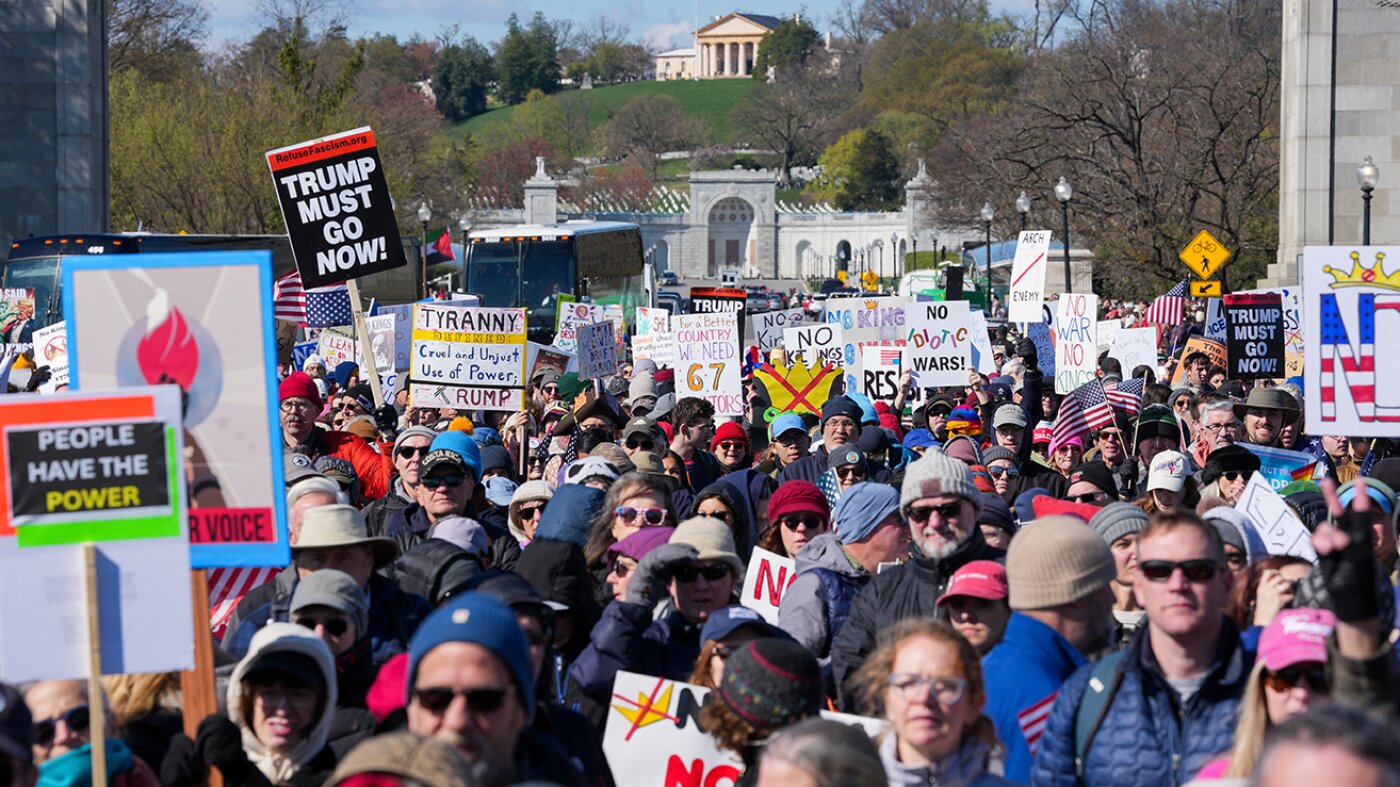
Photos: ‘No Kings’ protests across the country

Jeffries declines to break with indicted Democrat after ethics panel’s guilty verdict
-

 Sports1 week ago
IOC addresses execution of 19-year-old Iranian wrestler Saleh Mohammadi
-

 New Mexico7 days ago
Clovis shooting leaves one dead, four injured
-

 Miami, FL3 days ago
Jannik Sinner’s Girlfriend Laila Hasanovic Stuns in Ab-Revealing Post Amid Miami Open
-

 Tennessee6 days ago
Tennessee Police Investigating Alleged Assault Involving ‘Reacher’ Star Alan Ritchson
-

 Minneapolis, MN3 days ago
Boy who shielded classmate during school shooting receives Medal of Honor
-

 Technology1 week ago
YouTube job scam text: How to spot it fast
-

 Science1 week ago
Record Heat Meets a Major Snow Drought Across the West
-

 Politics1 week ago
Schumer gambit fails as DHS shutdown hits 36 days and airport lines grow