Washington, D.C
$3 Billion RFK Stadium Proposal May Bring The Washington Commanders Back To D.C.


While it has been nearly 30 years since Washington’s NFL team has played a game in the District, the Commanders are reportedly closer than ever before to signing a deal with the D.C. city council that will bring them back ‘home’ from their current stadium in Landover, Maryland.
While the Commanders have been playing in Landover since 1997, the stadium has been plagued with issues ranging from reportedly poor field quality for the players leading to injuries to stadium infrastructure breaking at the expense of paying fans for years.
So, while the news of a new stadium coming soon is no surprise, the question is more about where it will be located.
What is the deal between the Commanders and the D.C. City Council, and has it been finalized?
No official statement has been made saying any deal has been completed that would bring the Commanders back to the District; however, it’s now being widely reported that the city council and the Washington Commanders are ‘close’ to a $3 billion deal.
The alleged deal would have the District’s government contribute roughly $850 million to the stadium project, while the Commanders would foot the remaining $2.5 billion of the bill.
According to the same reports, the structure of the deal’s financing would allow D.C. to pay $500 million between 2026 and 2030, and the remaining $350 million would be paid off in 2032 through tax revenue generated from the new development.
When is the new stadium going to be built?
According to the Commanders’ new owner, Josh Harris, who has been vocal about his interest in returning the team to the District, a reasonable target would be a completed new stadium by 2030.
Plus, given that this deal reportedly stipulates that the new stadium be completed by 2030, it further insinuates that the project could start as soon as this year if the deal were to go through!

Where is the new stadium going to be located?
All signs point to the stadium taking over the currently decrepit RFK Stadium site, which has been ostensibly abandoned since 2017.
As of March 2025, the demolition of the current RFK Stadium has been underway for just a few months, with mostly interior sections being broken down, whereas it’s expected that demolition of the exterior will commence in April.
According to the Events DC site, the demolition will cost $25 million and is expected to run through Fall 2026.
Why are people opposing this deal?
Those opposing this deal are not without reason; building a new Commanders Stadium in the District would definitely impact property value in the District.
Given the already high cost of living in the District, with options for affordable housing around Washington, D.C. being limited, to say the least, many are upset to see such a high budget of taxpayer funds being used for the stadium rather than affordable housing.
What is the new RFK Stadium going to look like?
Considering the deal has yet to be finalized, it is not guaranteed that a new stadium will be built at the RFK site at this point.
However, some exciting proposals have been made, such as the design from a Virginia Tech Grad that went viral earlier this year.



‘No Kings’ protests across DC
Thousands of people took to the streets of Washington, D.C., and across the U.S. on Saturday to protest President Donald Trump’s administration as part of massive “No Kings” protests.
WASHINGTON – Washington, D.C., and the surrounding DMV area are set to host the third major “No Kings” march and rally this Saturday, March 28, 2026, as part of a wave of nationwide demonstrations planned for the same day.
Event details:
Organized locally by area chapters of Indivisible and allied grassroots groups, the event aims to draw protesters to downtown Washington and surrounding counties to oppose policies of the Trump administration and to voice broader concerns about civil rights and democratic norms.
The march will kick off at 10 a.m., with participants gathering at Memorial Circle near Arlington Cemetery, with additional access from the Blue Line or nearby parking at the Fashion Centre at Pentagon City, according to the event organizers. There is no public parking in the immediate area, but participants can be dropped off at the circle.

People take part in a “No Kings” protest in Washington, D.C., the United States, on Oct. 18, 2025. (Photo by Li Rui/Xinhua via Getty Images)
From there, the procession will head across the Memorial Bridge into Washington, D.C., passing the Lincoln Memorial and continuing on to the Washington Monument.
At the conclusion of the march, participants can walk to a downtown rally, from 1:30 p.m. to 4 p.m.
A broader movement
Big picture view:
A nationwide series of “No Kings” protests is set for March 28—over 3,000 events are scheduled.
These protests are organized by groups including Indivisible and the broader 50501 Movement, which have coordinated previous actions in June and October 2025 that drew millions of participants nationwide, including in Washington, D.C.
Other ‘No Kings’ rallies in the DMV
Dig deeper:
In addition to the main rally in downtown D.C., several other demonstrations tied to “No Kings 3” are scheduled around the DMV this Saturday.
In Arlington, Virginia, activists are organizing a march across the Memorial Bridge beginning at 10 a.m., with protesters expected to continue into West Potomac Park before joining larger crowds in the District proper, for example.
There are hundreds of “No Kings” events scheduled to take place this Saturday throughout the DMV. You can click here to find a list of all of them.
The Source: Information from “No Kings” organizers, Indivisible, Mobilize and previous FOX 5 DC reporting.

ASHEVILLE, N.C. (FOX Carolina) – The Great Mother March has begun a 500-mile pilgrimage from Asheville, North Carolina, to Washington, D.C.
Organizers said the 32-day journey is a women’s empowerment pilgrimage inspired by the Buddhist monks’ Walk for Peace.
“This is a universal movement,” founder Whitney Freya, an artist, author and sacred activist, said. “Everyone has a mother. Every tradition reveres a Great Mother. And we all depend on Mother Earth. This march is a call to honor those truths while reminding us what is possible when we move together, with intention, hope, and love.”
The march is expected to end April 22, Earth Day, when participants reach the steps of the U.S. Capitol.

Here’s a look at the group’s route:

Organizers said the group will walk alongside the Appalachian Mountains through rural communities in North Carolina and Virginia, with planned stops including Black Mountain, Old Fort, Marion, Linville and Boone, North Carolina.
From there, the group plans to travel via Todd and West Jefferson, North Carolina, and the River Country Campground along the New River, to the Peace Pentagon near Independence, Virginia.
The marchers are expected to arrive in Galax, Virginia, on April 1, then continue to Hillsville, Floyd, Ferrum and Rocky Mount, arriving in Rocky Mount on April 5.
The group is expected to reach Lynchburg on April 9 and travel up U.S. 29 to Waynesboro, arriving April 12.
Organizers said the marchers plan to arrive in Charlottesville on April 13 and spend April 14 at IX Art Park to rest and prepare for the final leg to Washington.
From Charlottesville, the group plans overnight stops in Barboursville, Orange, Culpeper and Warrenton, Virginia, before arriving in Manassas on April 19. Additional stops include the Workhouse Arts Center in Lorton, Virginia, and Alexandria, Virginia, ahead of the group’s arrival in Washington on April 22.
Feel more informed, prepared, and connected with FOX Carolina. For more free content like this, download our apps.
Copyright 2026 WHNS. All rights reserved.

A U.S. Park Police officer was shot in Washington, D.C., while on duty, according to a statement from the agency.
Park Police said the officer was shot at 7:30 p.m. on Monday in Southeast Washington on Queens Stroll Pl.
The officer has been transported to a local hospital, officials said.
The circumstances of the shooting are unclear. A Park Police spokesperson told ABC News the officer has non-life-threatening injuries.
Attorney General Pam Bondi said on X that she has spoken to D.C. Mayor Muriel Bowser and Metropolitan Police Chief Jeffery Carroll and was briefed on the shooting.
“Please pray for the officer’s recovery,” the attorney general said.
This is a developing story. Please check back for updates.

Wil Wheaton Discusses ‘Stand By Me’ and Narrating ‘The Body’ Audiobook

A professional cornhole player and quadruple amputee is arrested for murder

The Bumpboxx BB-777 is the ultimate in boombox nostalgia

US military sends drones, alongside 200 troops, to Nigeria amid fears of renewed Boko Haram insurgency

Chicago alderwoman apologizes for ‘wrong place at the wrong time’ comment on slain student

Florida High School Football Rankings: Top 25 teams – Oct. 21

How old is Bo Nix? What to know about Oregon quarterback ahead of 2024 NFL Draft

Cleary's 21 help Le Moyne down Central Connecticut State 69-64 in OT

99th annual Pony Swim held in Virginia

Indiana Members Credit Union announced as new anchor tenant at Bottleworks District
Chicago alderwoman apologizes for ‘wrong place at the wrong time’ comment on slain student

Fake Euronews website targets Hungary election with false claims
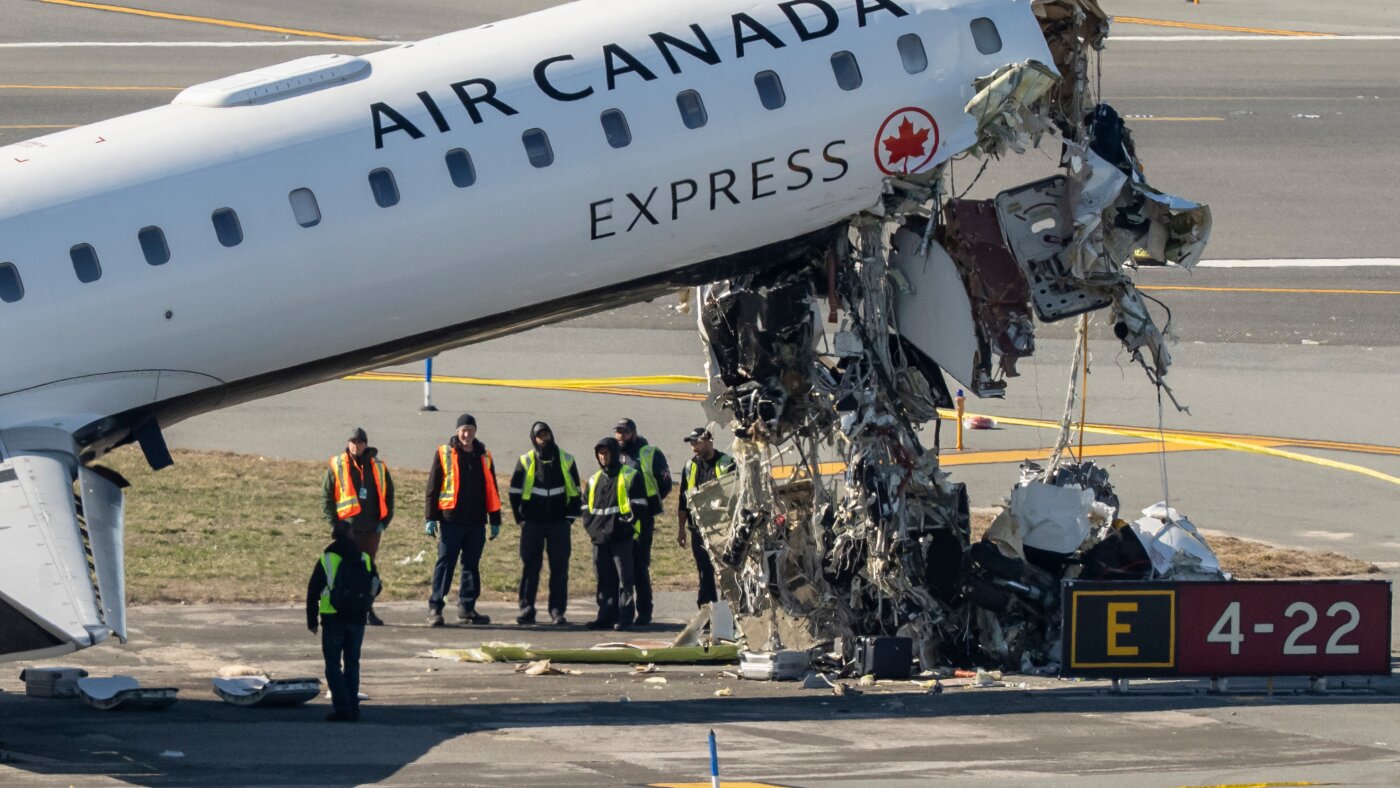
An air traffic controller was juggling extra roles during the LaGuardia plane crash

Iran War: Pentagon set to send thousands of elite 82nd Airborne troops to region | BBC News

Video: Passengers Wait in Long Security Lines at LaGuardia After Deadly Crash
-

 Detroit, MI6 days ago
Drummer Brian Pastoria, longtime Detroit music advocate, dies at 68
-

 Georgia1 week ago
How ICE plans for a detention warehouse pushed a Georgia town to fight back | CNN Politics
-

 Movie Reviews6 days ago
‘Youth’ Twitter review: Ken Karunaas impresses audiences; Suraj Venjaramoodu adds charm; music wins praise | – The Times of India
-

 Alaska1 week ago
Police looking for man considered ‘armed and dangerous’
-

 Education1 week ago
Video: Turning Point USA Clubs Expand to High Schools Across America
-

 Sports4 days ago
IOC addresses execution of 19-year-old Iranian wrestler Saleh Mohammadi
-
 Science1 week ago
Industrial chemicals have reached the middle of the oceans, new study shows
-

 New Mexico2 days ago
Clovis shooting leaves one dead, four injured