Virginia
Why researchers are crashing cars in Virginia


RUCKERSVILLE, Va. — Before you buy a vehicle, there’s an incredible amount of time, research, and testing that goes into creating it.
Part of that includes crash testing to see how safe you’ll be inside a vehicle in the event of an accident.
Much of that crash testing takes place in Virginia at the Insurance Institute for Highway Safety (IIHS).
Problem Solvers
This Virginia research facility is helping to shape safety in the auto industry
6:49 AM, May 20, 2024
IIHS describes itself as, “an independent, nonprofit scientific and educational organization dedicated to reducing deaths, injuries, and property damage from motor vehicle crashes through research and evaluation and through education of consumers, policymakers, and safety professionals.
The Highway Loss Data Institute (HLDI) shares and supports this mission through scientific studies of insurance data representing the human and economic losses resulting from the ownership and operation of different types of vehicles and by publishing insurance loss results by vehicle make and model.”
I went to the facility to see what goes into this research and how it’s making a difference worldwide in the auto industry.
Erin Miller/WTKR Erin Miller/WTKR

The day began in a lab room 650 ft. away from the crash test site. On the morning I was there, engineers were prepping a 2024 Lincoln Nautilus and taking painstakingly precise measurements of everything.
With a robotic manipulator arm, they measure how far the dummy is sitting from the driver’s seat to the angle of the sea, and how the seat belt is worn.
Engineers, along with representatives from Ford, started this prep work hours before the crash test was even scheduled.
“These guys work really, really hard to prep these vehicles for these tests to make sure they’re going to run on time and that everything’s going to work out just rights,” says Joseph Young.

WTKR
Joseph Young is the Director of Media Relations at IIHS. As we walk around the vehicle, he tells me what they’re testing for.
“One of the things we’re looking closely at is the dummy’s movement, especially this rear-seated dummy. We don’t want to see that it gets too close to the seatback in front of it. We’re also looking closely at how the seat belt interacts with the hips of the dummy and the chest,” he says.
One way to do that, I learned, is by adding a little paint to the dummy. When the vehicle crashes, the dummies will likely bump into something inside the vehicle. When they hit the front seat, or the side airbag, for example, the paint will smear, and researchers will know exactly where the dummy hit.
WTKR
If you’re in the market for a luxury mid-size SUV it’s probably a good idea to check out the results from the Lincon Nautilus’ crash test because then you’ll be able to compare it to other vehicles on the market.
“We will pull the dummy injury values from those dummies very quickly and [researchers] start analysis right away,” Young says.
Each second, of the 16-second ride, is captured by several cameras inside and out of the vehicle shooting at 500 FPS (frames per second).
I pulled up the safety rating results, and the 2024 Lincoln Nautilus scored well, getting a “good” rating on crashworthiness and seat belts and child restraints.
Raul Arbelaez, Vice President for the Vehicle Research Center says the IIHS rating encourages manufacturers to improve vehicles and that stretches well beyond Virginia.
“In China, throughout Europe [and] other parts of the world — are kind of modeling some of the things we’re doing and taking those approaches to their own consumer information programs,” Arbelaez says.
After I saw this test, I immediately wanted to know how my car stacked up.
If you’re thinking the same thing, click here and you can look up the Make and Model of all vehicles that have received IIHS ratings.



CHARLES TOWN, W.Va. (WCHS) — Gov. Patrick Morrisey signaled support for the horse racing industry in West Virginia through a bill signing Monday.
Senate Bill 1060 updates laws to include certified thoroughbred horses and raises a funding cap for restricted races from $1 million to $2 million.
The measure allows horses that have lived in West Virginia for six months to compete for larger purses. State leaders are hopeful the move will incentivize out-of-state horse owners to relocate to West Virginia.
In addition, the bill would allow licensed racing associations to transmit broadcasts of races with a portion of wagers going toward the West Virginia Thoroughbred Development Fund.
Changes will go into effect on June 7.
BE THE FIRST TO COMMENT
Currently, horse races are held in West Virginia’s panhandles, at the Mountaineer Racetrack and Resort in New Cumberland and the Hollywood Casino in Charles Town.

VIRGINIA BEACH, Va. (WAVY) — Virginia Beach police are investigating after a large crowd of teens were fighting Saturday evening at Nova Adventure Park.
A Virginia Beach police officer was in the 2000 block of Lynnhaven Parkway at approximately 9:35 p.m. when a large group of teens started fighting. Additional officers arrived and the teenagers disbursed.
Police said at least one victim involved suffered an injury that was not life-threatening.
The incident is under active investigation.

LYNCHBURG, Va. (WSET) — Gas prices in Virginia are easing slightly, but any relief at the pump may be short-lived.
AAA reports the state average is now $4.01 per gallon, down about four cents from last week. Despite the dip, prices remain significantly higher when compared to recent months, up roughly 65 cents from a month ago and nearly a dollar more than this time last year.
The national average is also elevated, sitting at $4.12 per gallon.
Experts say the primary driver behind the sustained increase is the rising cost of crude oil, fueled in part by ongoing tensions in the Middle East.
Even if those pressures begin to ease, analysts warn that drivers should not expect immediate relief.
“The old adage is about gas prices going up they go up like a rocket and then come down like a feather. So they tend to go up very fast in geopolitical crisis like this, but they come down much much slower. So we’re watching and waiting to see what happens there in the Middle East,” said Morgan Dean, Manager of Public and Government Affairs for AAA.
For now, the outlook remains uncertain as global events continue to influence what drivers are paying at the pump.

Coroner: Toddler dies after being hit by vehicle in Upstate

PBR | No. 1 John Crimber goes 4-for-4, tops final three rounds to win First PREMIER Bank PBR Sioux Falls

Tennessee immigration bill sparks nonprofit concerns over unintended impacts on vulnerable US citizens

Texas AG opens investigation into Austin over APD guidance on ICE warrants
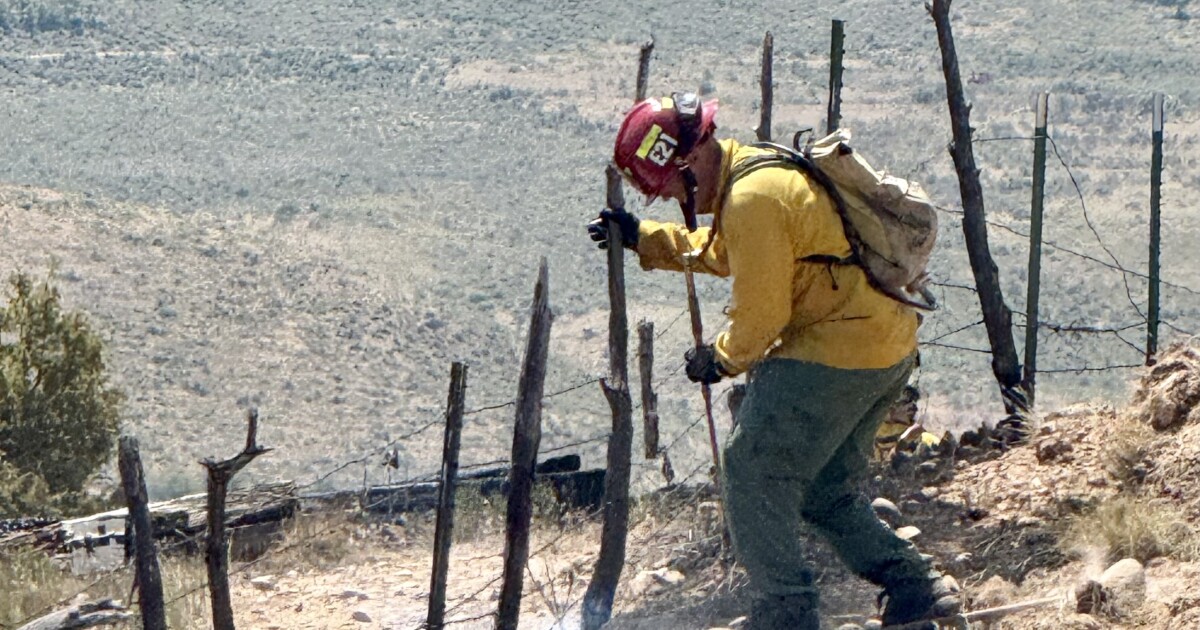
Utah delays imposing fee for wildfire mitigation program

Florida High School Football Rankings: Top 25 teams – Oct. 21

How old is Bo Nix? What to know about Oregon quarterback ahead of 2024 NFL Draft

Cleary's 21 help Le Moyne down Central Connecticut State 69-64 in OT

99th annual Pony Swim held in Virginia

Indiana Members Credit Union announced as new anchor tenant at Bottleworks District

Embattled Rep Tony Gonzales announces plans to resign amid sexual misconduct allegations

UN experts slam attacks on Gaza shelters, forced displacement in West Bank

DOJ fires at least 4 prosecutors involved in FACE Act cases during Biden administration

Melania Trump’s Epstein remarks turn up the heat on DOJ, Acting AG Todd Blanche to do more
Newsletter: Cautious optimism in Brussels as Orbán ousted in landslide Hungarian opposition win
-

 Atlanta, GA1 week ago
1 teenage girl killed, another injured in shooting at Piedmont Park, police say
-

 Georgia6 days ago
Georgia House Special Runoff Election 2026 Live Results
-

 Arkansas3 days ago
Arkansas TV meteorologist Melinda Mayo retires after nearly four decades on air
-

 Pennsylvania1 week ago
Parents charged after toddler injured by wolf at Pennsylvania zoo
-
 Milwaukee, WI1 week ago
Potawatomi Casino Hotel evacuated after fire breaks out in rooftop HVAC system
-

 Technology1 week ago
Anthropic essentially bans OpenClaw from Claude by making subscribers pay extra
-

 Austin, TX6 days ago
ABC Kite Fest Returns to Austin for Annual Celebration – Austin Today
-

 World1 week ago
Zelenskyy warns US-Iran war could divert critical aid from Ukraine