Virginia
Trump administration's cancellation of internet access grants will cost Southwest and Southside Virginia, officials say


An Abingdon nonprofit organization, looking to expand broadband access and literacy, put its blueprints in place.
People Inc. of Virginia used $55,000 in federal money and worked with multiple Southwest Virginia nonprofits to create a plan that would help a variety of Southwest Virginia residents with digital literacy, coding and consumer protection, and would provide devices for doing schoolwork to children living below the poverty line, among other actions.
People Inc. set up similar plans in Northern and Central Virginia locations with another $70,000.
The next step was to execute the plans, and People Inc. applied for another $400,000 to do that, said Rachel Fogg, the organization’s communications director. The money would have come via the Digital Equity Act of 2021, passed into law during the Biden administration.
“If we receive that funding, that would be wonderful, and we’ll be able to put the digital opportunity plan into real practice,” Fogg said. “But right now, we do not know whether or not we will receive that funding.”
Virginia stood to receive more than $18 million from the Digital Equity Act for programs ensuring internet access for all, along with the skills to navigate it.
On the night of May 9, the Trump administration sent a letter to Virginia’s Department of Housing and Community Development, which was to distribute the block grant money. According to the letter, the program was canceled, DHCD Director Bryan Horn said during a Broadband Advisory Council meeting on Wednesday.
That notification and others nationwide came a day after President Donald Trump wrote on social media that the Digital Equity Act was “racist” and “unconstitutional” and that he planned to end it.
Trump claimed in his post that the Digital Equity Program the law created was a “woke handout” based on race. But a former Biden administration official who worked for a time in the Trump administration said that, according to the law, white Americans are the “vast majority” of those who stood to benefit.
Evan Feinman, a Lynchburg native based in Richmond, led the Broadband Equity Access and Deployment program for four years under then-President Joe Biden and for a short time under Trump. He spent almost two years deeply involved with the Digital Equity Program, as well. It was not focused on race, but it did focus on elderly people, families living in poverty, veterans and others, including minority and ethnic groups, Feinman said.
“But actually, if you look at the balance of people that are eligible across the totality of it, the vast, vast, vast majority of people who are eligible were in fact white folks, either because they were rural, they were veterans, they were elderly or because they were poor.”
All references to the Digital Equity Act were scrubbed this week from the National Telecommunications and Information Administration website and other federal sites. The NTIA administered the program.
Information about the law remained on the U.S. Census Bureau’s website, where a page said it was meant to assist the elderly, poor people, military veterans, disabled people, state inmates transitioning back to society, English learners or others with low literacy levels, members of racial or ethnic minority groups, and rural residents.
“While, yes, you could design a program that was focused on supporting an ethnic minority, you would still have to show why they had a particular disadvantage compared to other folks,” Feinman said. “That was only one way a group became eligible for the program, [along with] being a veteran also works, being poor also works, being a rural person also works.”
‘Wasteful spending’ or ‘access to opportunity’?
The $2.75 billion law was passed as part of the larger Bipartisan Infrastructure Law, also called the Infrastructure Investment and Jobs Act. It established three grant programs, with money already distributed for planning grants and competitive grants filed with the federal government.
The third aspect was called the Digital Equity Capacity Grant and was to distribute $1.44 billion in block grants to the states, each of which set up a digital equity plan that organizations would refer to in applying for money. The Biden administration approved Virginia’s plan in December.
Sen. Jennifer Boysko, D-Fairfax County, chairs the state’s Broadband Advisory Committee. During Wednesday’s meeting, Boysko said that a national bipartisan working group of broadband-centric state legislators this week discussed the possibility of a lawsuit to overturn the Trump administration’s actions on the capacity grants.
She asked Horn, the housing director, if Virginia Attorney General Jason Miyares was considering that possibility. Horn said he was unaware.
Messages on Wednesday and Thursday to Miyares’ office were not returned, nor were messages seeking comment from U.S. Rep. Ben Cline, R-Botetourt County, and Rep. John McGuire, R-Goochland County.
U.S. Rep. Morgan Griffith, R-Salem, in a message sent through his communications director, said the “funds could probably be better spent elsewhere.”
He added: “In light of a $37 trillion debt burden on the country, I believe it is important to rein in wasteful spending of taxpayer dollars and promote fiscal responsibility.”
Gov. Glenn Youngkin’s press secretary, Peter Finocchio, wrote in an email exchange on Thursday that Virginia has “made enormous strides” in broadband deployment, dedicating more than $900 million to connecting residents via the Virginia Telecommunications Initiative. It was the first state to submit required plans in order to receive Broadband Equity Access and Deployment, or BEAD, funding of $1.48 billion, he wrote.
“Termination of Digital Equity Act funding will not impact Virginia’s work on broadband deployment,” Finocchio wrote.
While BEAD money is meant to complete Virginia’s work connecting all parts of the state, some may be directed to digital equity efforts if a state can show that it has ensured broadband service to all “unserved” and “underserved” locations, according to an FAQ that the NTIA posted.
The same document says that NTIA “strongly encourages” states to coordinate BEAD and Digital Equity Program plans.
Sens. Mark Warner and Tim Kaine, both D-Va., released statements that disapproved of the administration’s actions.
“If the Trump administration bothered to look beyond a title, it would see that the Digital Equity Act is about access to opportunity in rural communities,” Warner said through a spokeswoman. “The act of dismantling this program and continuing to block BEAD dollars months after they were approved undercuts bipartisan efforts to expand broadband to all Americans.”
BEAD has been stalled as the administration reviews aspects of its implementation, according to multiple published reports.
Kaine noted that the act was beneficial to older Americans, rural residents and veterans.
“I am troubled that the President is once again threatening to unlawfully withhold funding appropriated by Congress, and I urge him to reverse course,” Kaine said through a spokeswoman.
A focus on telehealth, workforce development, seniors
Fogg, from People Inc., said that it had planned to serve about 560 people over the grant’s three-year term. The organization’s plan noted that there “is a limited population of persons of color or non-English speakers within the region. Therefore, creating programs specifically for these populations is not considered the first priority.”
The plan would have focused on the elderly population in People Inc.’s service area: Bland, Buchanan, Carroll, Dickenson, Grayson, Lee, Russell, Scott, Smyth, Tazewell, Washington, Wise and Wythe counties, along with Bristol and Galax. Core services would have been digital literacy, device access and affordability, privacy and cybersecurity, and broadband affordability.
Gate City-based Appalachian Community Action and Development Agency was among the nonprofits that partnered with People Inc. on the plan. Its executive director, Lisa Barton, said that recent cuts “seem to be here today, gone tomorrow, back the next day.”
She said she has learned from years in public service to keep a cool head about it.
“You learn to adapt,” she said. “You work with what you have to the best of your ability.”
But an aging population has a growing need to master online tools, she said.
“The internet is such an important tool for rural areas, especially, because sometimes we are so isolated, and transportation is an issue,” she said. “If we can help give people tools to do telehealth, you know, even apply for Social Security, those types of things online, to where they don’t have to drive an hour or two hours to a doctor, or to apply for something, or even to get groceries. You know that we owe it to them to help them all that we can.”
Another Southwest Virginia nonprofit, the Fairlawn-based New River/Mount Rogers Workforce Development Board, had applied for a capacity grant as well, with hopes of serving 150 people over two years. Leaders there said the board was focused primarily on workforce development.
Information the development board supplied said that it cost $3.48 million to provide workforce programming in 2023. Meanwhile, the employment programs it sparked resulted in $33.34 million saved in government benefits, while adding $14.5 million to the gross regional product and delivering $3.7 million in income tax revenue.
“It’s typically a 15-to-1 return on investment,” said the board’s executive director, Marty Holliday.
Other federal grant dollars are in jeopardy, too, which could do further damage to the region’s economy, Holliday said.
“People aren’t moving here, and people are aging here, so it is important to get every able body working,” she said, adding that “the federal government doesn’t give you money because they have a big heart. They give you money because they want taxpayers. We take our job very seriously. We want people to be in the system like the rest of us, paying taxes and living.”
It was unclear what other organizations in Southwest and Southside Virginia had applied for capacity grants, or how much of the $18.3 million was at stake in those parts of the commonwealth.
The Department of Housing and Community Development, citing the Virginia Freedom of Information Act, said it would not be able to provide requested information until May 29. Other requested information included how much capacity grant money NTIA had already provided to DHCD, if any.
An email to the NTIA press office went unanswered.
Boysko, the state senator who chairs the Broadband Advisory Council, said she is not worried about the people in her Northern Virginia district.
“The people who are going to lose out are not people who live in my neighborhood,” said Boysko, a small-town Alabama native who graduated from Hollins University. “They are the people who live on the Southside, in southwestern Virginia, in areas where there is not adequate assistance to help people get connected … and I think that’s a shame.”
Related stories

Virginia
West Virginia commit announces decision by blasting ‘Country Roads,’ lighting a couch on fire
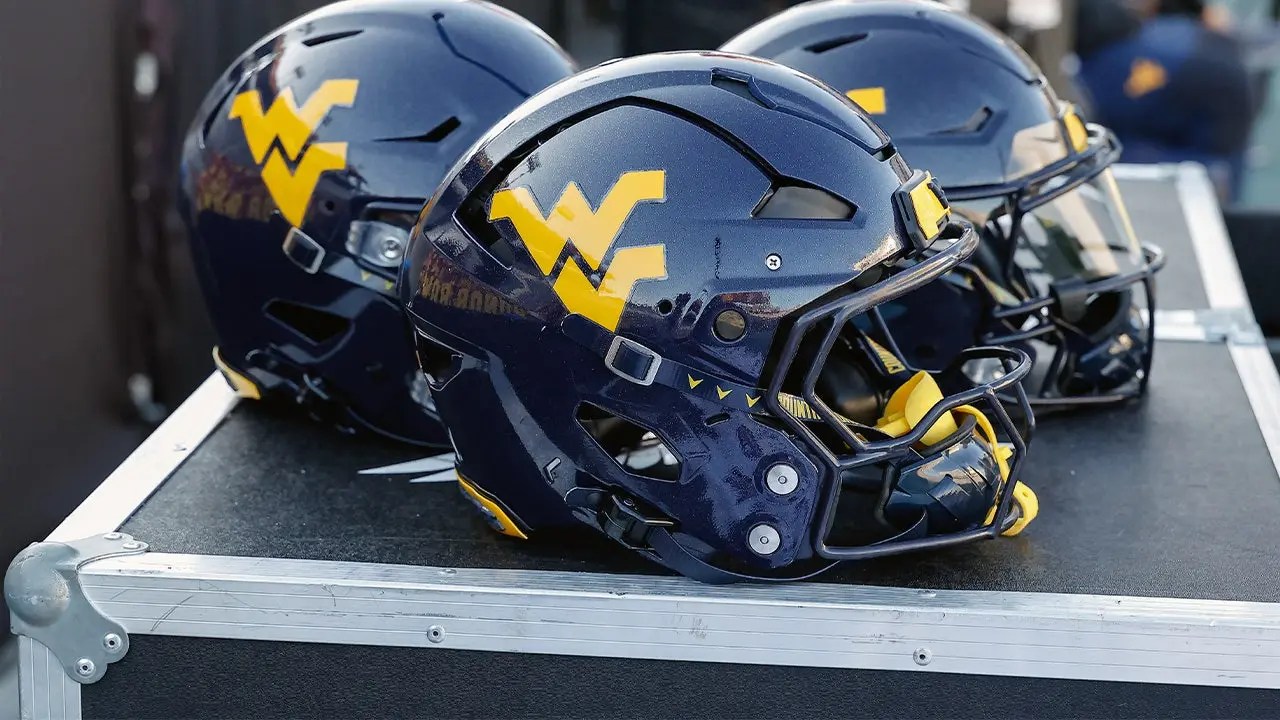
A big moment in any student-athlete’s career is announcing what school they’re committing to, and I don’t think you’re going to find an announcement better than one we’ve got coming from one of the newest West Virginia Mountaineers.
What’s that smell? It… it smells like a couch burning to the sounds of the Mountaineers’ beloved John Denver “Take Me Home, Country Roads.”
You bet your sweet a– that’s what it is.
There’s a growing chance that any recruit who lights a couch on fire is going to end up wearing one of these. (Photo by Kevin Abele/Icon Sportswire via Getty Images)
Ethan Lawson is a 6’6″, 300-lb offensive lineman and part of the 2027 recruiting class.
THE 2007 MOUNTAINEERS REMAIN COLLEGE FOOTBALL’S GREATEST ‘WHAT-IF’ STORY NEARLY TWO DECADES LATER
According to Sport Illustrated he has fielded offers from a bunch of programs including Appalachian State, Liberty, Air Force, Army, Navy, Duke, Wake Forest, UConn and more.
But, they all missed out because Lawson posted his decision on X, and well… I think he was always West Virginia material.
Bobcat Goldthwait was burning couches on camera before it was cool.
But, alright, there’s no doubt about it: someone is about to sell some jerseys.
ZERO BS. JUST DAKICH. TAKE THE DON’T @ ME PODCAST ON THE ROAD. DOWNLOAD NOW!
And if there’s not a furniture store in Morgantown that brings in Lawson and fellow offensive line recruit Kevin Brown (who also lit a couch on fire because that’s becoming a thing) for an ad, then… then, well, I don’t know what, but it would be quite the missed opportunity.
It’s early, but Rich Rodriguez’s West Virginia Mountaineers lead college football in recruits burning couches. (Ben Queen-Imagn Images)
Hey, like it or not, sometimes in the age of NIL it can be a popularity contest. If fans like you, it could mean greater visibility and more lucrative deals. Perhaps that was the mission here, and we all know it worked.
CLICK HERE TO DOWNLOAD THE FOX NEWS APP
I refuse to believe any Mountaineers fans saw that video, heard the song and then didn’t reflexively raise a beer (even if they didn’t realize they were drinking one and say, “Hell yeah, brother.”)
We’ll see if the sort of thing translates onto the field, but even if it doesn’t, I feel like there’s money to be made making appearances and lighting furniture on fire at frat parties.

BRISTOL, Va. (WCYB) — Crews put out a house fire in Bristol, Virginia, on Wednesday morning, according to officials.
The Bristol, Virginia Fire Department was dispatched at 3:09 a.m. for the fire in the 900 block of Vermont Avenue. The house was unoccupied at the time fire crews arrived on the scene.
Firefighters encountered heavy smoke and flames in the front of the house. They were able to quickly extinguish the fire under challenging conditions. The fire scene remains active and an investigation is underway. No injuries have been reported.


Powerball, Mega Millions jackpots: What to know in case you win
Here’s what to know in case you win the Powerball or Mega Millions jackpot.
Just the FAQs, USA TODAY
The Virginia Lottery offers multiple draw games for those aiming to win big.
Here’s a look at June 2, 2026, results for each game:
Mega Millions
Mega Millions drawings take place every week on Tuesday and Friday at 11 p.m.
15-26-43-48-60, Mega Ball: 12
Check Mega Millions payouts and previous drawings here.
Pick 3
DAY drawing at 1:59 p.m. NIGHT drawing at 11 p.m. each day.
Night: 4-5-7, FB: 9
Day: 8-7-6, FB: 5
Check Pick 3 payouts and previous drawings here.
Pick 4
DAY drawing at 1:59 p.m. NIGHT drawing at 11 p.m. each day.
Night: 7-0-6-5, FB: 8
Day: 1-1-9-0, FB: 1
Check Pick 4 payouts and previous drawings here.
Pick 5
DAY drawing at 1:59 p.m. NIGHT drawing at 11 p.m. each day.
Night: 2-9-1-0-4, FB: 0
Day: 5-9-4-1-7, FB: 0
Check Pick 5 payouts and previous drawings here.
Cash Pop
Drawing times: Coffee Break 9 a.m.; Lunch Break 12 p.m.; Rush Hour 5 p.m.; Prime Time 9 p.m.; After Hours 11:59 p.m.
Coffee Break: 10
After Hours: 14
Prime Time: 04
Rush Hour: 13
Lunch Break: 06
Check Cash Pop payouts and previous drawings here.
Millionaire for Life
Drawing everyday at 11:15 p.m.
16-33-41-50-52, Bonus: 01
Check Millionaire for Life payouts and previous drawings here.
Feeling lucky? Explore the latest lottery news & results
This results page was generated automatically using information from TinBu and a template written and reviewed by a Center for Community Journalism (CCJ) editor. You can send feedback using this form.
-

 Connecticut5 minutes ago
Several injured in I-91 crash involving multiple vehicles in Hartford: Officials
-

 Delaware8 minutes ago
Delaware Lottery Powerball, Play 3 Day winning numbers for June 3, 2026
-

 Florida13 minutes ago
Now hitting deadline, Florida flunks Everglades pollution cleanup
-

 Georgia20 minutes ago
Lambert rising freshman is second-youngest winner of Georgia Women’s Amateur
-

 Hawaii23 minutes ago
Gov. Green responds to lawsuit challenging Hawaiian Homes program | Maui Now
-

 Idaho28 minutes ago
Idaho State Police: Driver runs stop sign, hits hay-stacker truck in Twin Falls
-
 Illinois35 minutes ago
Consumer advocacy groups oppose Illinois American Water $142.4M rate hike and potential major acquisition
-

 Indiana38 minutes ago
PHOTOS | Restored fountains at Garfield Park Sunken Garden

