Virginia
NPR fights for access to Virginia execution recordings


Next week, the Virginia Court of Appeals will consider whether to lift the veil of secrecy over execution tapes that give the public a rare glimpse into how the state administered capital punishment before abolishing the practice in 2021.
The tapes, recorded in the execution chamber by prison employees, were hidden for years before NPR journalist Chiara Eisner unearthed four recordings that a former prison employee donated to the Library of Virginia archives. That audio, which NPR published in 2023, revealed new details about oversight by prison employees moments before carrying out the state’s ultimate punishment.
The Virginia Department of Corrections has disclosed that it recorded 32 additional tapes concerning 27 executions over three decades, but it refused to turn them over when NPR and Ian Kalish, a clinical supervising attorney at the Reporters Committee, requested the audio under Virginia’s Freedom of Information Act. Last year, NPR sued for the tapes’ release with free legal support from the First Amendment Clinic at the University of Virginia School of Law, which is administered by attorneys from the Reporters Committee for Freedom of the Press.
A circuit court in Charlottesville sided with the Department of Corrections, finding that the recordings were protected under a Virginia FOIA exemption that protects records of prisoners. Throughout the school year, Reporters Committee attorneys worked with students in the UVA First Amendment Clinic to brief the case in the Court of Appeals.
NPR, Eisner, and Kalish have been represented in the case by clinic co-directors Lin Weeks, an RCFP senior staff attorney, and Gabe Rottman, director of RCFP’s Technology and Press Freedom Project. Ahead of oral argument on July 16, we spoke with Kalish to learn more about why the clinic got involved in the fight for public access to execution records and what implications the case could have on efforts to hold Virginia prisons accountable.
This interview has been edited for length and clarity.
How did the UVA Law Clinic and Reporters Committee attorneys get involved in this case?
It originally came to the clinic’s radar because Chiara was going to report on the fact that she had submitted the FOIA request and that had been denied, so the clinic offered some commentary about the request and the denial. We continued to work with Chiara and NPR in terms of figuring out if there was a potential way to push back, and then the clinic ended up partnering with them on the litigation.
What makes this such an important case for clinic students to work on?
I think these records are very valuable because this process is largely happening within sort of a black box. It’s important for the public to understand what happens in these situations because these actions are being taken in the name of the public. I think just being able to facilitate that type of oversight is quite important.
More generally, I think public access cases are good for students because they offer discrete legal issues, generally issues of statutory interpretation regarding what an exemption in a statute says and what it means and how it applies to a specific record. It’s a little bit more teed up and focused than other types of cases are at times, so it allows the students a little bit more opportunity to really dig in and shepherd a case from its initiation to its conclusion.
What is it about these execution tapes that make them worth pursuing in court?
I think the four tapes are very rare. The fact that they’re publicly accessible doesn’t happen often, but they are very valuable.
I think it’s important to have information about execution and what it looks like in general because while Virginia is no longer engaged in the practice, other states are. There’s always the potential that things might change. I think that execution remains such a significant political issue that it’s important for people to understand what the procedure looks like, what happens, just for them to make an informed decision about whether they support the practice of capital punishment or not.
What are the key arguments that Reporters Committee attorneys have made about why these records should be public?
The main argument that is being teed up on appeal is this question regarding the interpretation of an exemption that prevents the public from gaining access to records of inmates, which we interpret to mean information that would otherwise be in the possession of inmates or information generated by the inmates, such as correspondence that is being held by the prison. Just because an inmate’s information is held by the agency because of the nature of the jailer-prisoner relationship doesn’t necessarily mean that anyone who puts a FOIA request to the agency should be able to get access to it.
But in contrast, we interpret this exemption to not reach administrative documents or information created by the agency that relates to the conduct of the agency. For example, procedures followed during the execution process are state action. We don’t think that exemption for the records of the individual should be read so broadly as to shield that type of thing from public oversight because in effect, you’re walling off the prison system significantly from all oversight.
By its nature, the actions that agency takes are for the most part directed toward or involving individual inmates. So you really need to preserve the ability to access records and information about those actions.
How do you think the outcome of this case could shape the application of Virginia’s Freedom of Information Act in the future?
I think the nature of Virginia FOIA is sort of interesting in that it has this blanket presumption of access but then exemptions are very particularized, and there are a lot of them. Because of that, there’s not a lot of really binding authority about what each one means. Some exemptions have had the benefit of judicial analysis and guidance, others haven’t.
I think whenever you don’t have this type of clear guidance from a court, people relying on the statute to access records are at a bit of a loss. There’s really no clear case to point to if a FOIA officer denies a request to say, “Hey, this court says that this material is reachable,” or, “This court says that this exemption should be interpreted this way.” I think any opportunity you have to clarify what the statute means is important.
Particularly with this exemption, it can be applied very broadly if it means what the Department of Corrections has argued and what the trial court seems to have endorsed. If it just means that things involving or related to a specific inmate can be withheld, it’s unclear to me what type of meaningful oversight you could have over the Virginia Department of Corrections or the prisons at all. So I think this one in particular is even more important just because of the potential scope of its use moving forward.
The Reporters Committee regularly files friend-of-the-court briefs and its attorneys represent journalists and news organizations pro bono in court cases that involve First Amendment freedoms, the newsgathering rights of journalists and access to public information. Stay up-to-date on our work by signing up for our monthly newsletter and following us on Twitter or Instagram.

Virginia
West Virginia commit announces decision by blasting ‘Country Roads,’ lighting a couch on fire
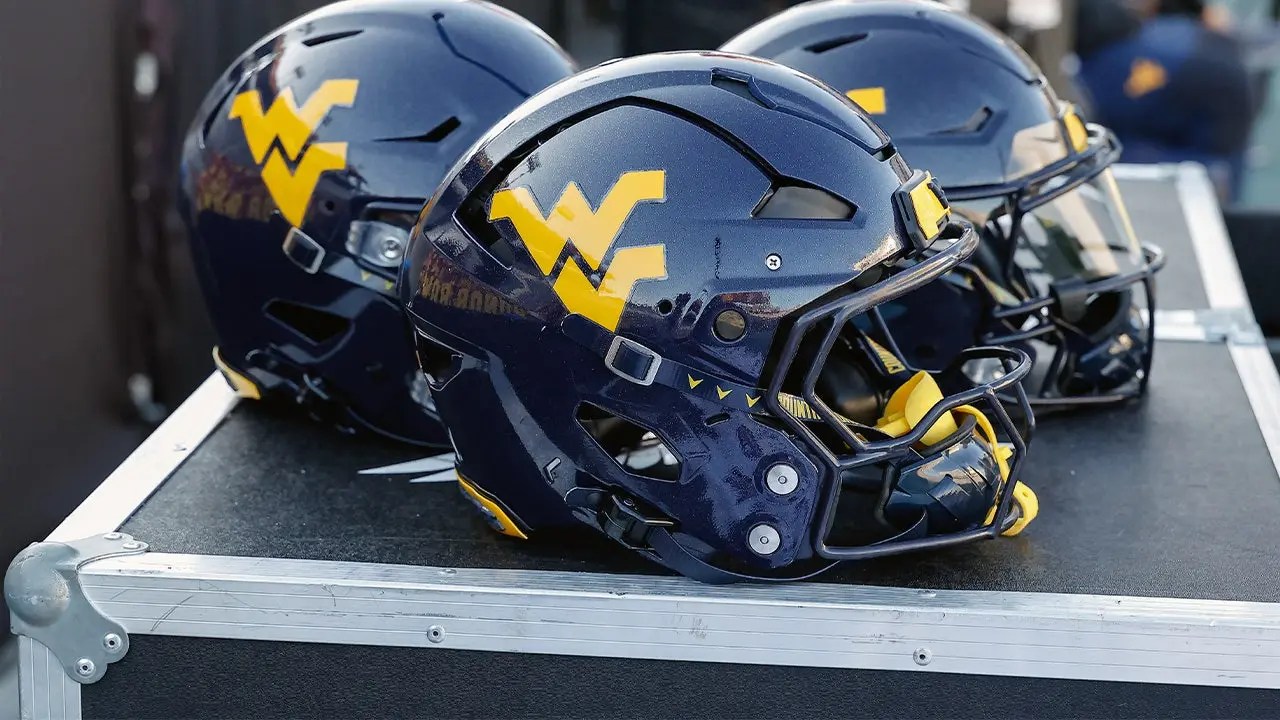
A big moment in any student-athlete’s career is announcing what school they’re committing to, and I don’t think you’re going to find an announcement better than one we’ve got coming from one of the newest West Virginia Mountaineers.
What’s that smell? It… it smells like a couch burning to the sounds of the Mountaineers’ beloved John Denver “Take Me Home, Country Roads.”
You bet your sweet a– that’s what it is.
There’s a growing chance that any recruit who lights a couch on fire is going to end up wearing one of these. (Photo by Kevin Abele/Icon Sportswire via Getty Images)
Ethan Lawson is a 6’6″, 300-lb offensive lineman and part of the 2027 recruiting class.
THE 2007 MOUNTAINEERS REMAIN COLLEGE FOOTBALL’S GREATEST ‘WHAT-IF’ STORY NEARLY TWO DECADES LATER
According to Sport Illustrated he has fielded offers from a bunch of programs including Appalachian State, Liberty, Air Force, Army, Navy, Duke, Wake Forest, UConn and more.
But, they all missed out because Lawson posted his decision on X, and well… I think he was always West Virginia material.
Bobcat Goldthwait was burning couches on camera before it was cool.
But, alright, there’s no doubt about it: someone is about to sell some jerseys.
ZERO BS. JUST DAKICH. TAKE THE DON’T @ ME PODCAST ON THE ROAD. DOWNLOAD NOW!
And if there’s not a furniture store in Morgantown that brings in Lawson and fellow offensive line recruit Kevin Brown (who also lit a couch on fire because that’s becoming a thing) for an ad, then… then, well, I don’t know what, but it would be quite the missed opportunity.
It’s early, but Rich Rodriguez’s West Virginia Mountaineers lead college football in recruits burning couches. (Ben Queen-Imagn Images)
Hey, like it or not, sometimes in the age of NIL it can be a popularity contest. If fans like you, it could mean greater visibility and more lucrative deals. Perhaps that was the mission here, and we all know it worked.
CLICK HERE TO DOWNLOAD THE FOX NEWS APP
I refuse to believe any Mountaineers fans saw that video, heard the song and then didn’t reflexively raise a beer (even if they didn’t realize they were drinking one and say, “Hell yeah, brother.”)
We’ll see if the sort of thing translates onto the field, but even if it doesn’t, I feel like there’s money to be made making appearances and lighting furniture on fire at frat parties.

BRISTOL, Va. (WCYB) — Crews put out a house fire in Bristol, Virginia, on Wednesday morning, according to officials.
The Bristol, Virginia Fire Department was dispatched at 3:09 a.m. for the fire in the 900 block of Vermont Avenue. The house was unoccupied at the time fire crews arrived on the scene.
Firefighters encountered heavy smoke and flames in the front of the house. They were able to quickly extinguish the fire under challenging conditions. The fire scene remains active and an investigation is underway. No injuries have been reported.


Powerball, Mega Millions jackpots: What to know in case you win
Here’s what to know in case you win the Powerball or Mega Millions jackpot.
Just the FAQs, USA TODAY
The Virginia Lottery offers multiple draw games for those aiming to win big.
Here’s a look at June 2, 2026, results for each game:
Mega Millions
Mega Millions drawings take place every week on Tuesday and Friday at 11 p.m.
15-26-43-48-60, Mega Ball: 12
Check Mega Millions payouts and previous drawings here.
Pick 3
DAY drawing at 1:59 p.m. NIGHT drawing at 11 p.m. each day.
Night: 4-5-7, FB: 9
Day: 8-7-6, FB: 5
Check Pick 3 payouts and previous drawings here.
Pick 4
DAY drawing at 1:59 p.m. NIGHT drawing at 11 p.m. each day.
Night: 7-0-6-5, FB: 8
Day: 1-1-9-0, FB: 1
Check Pick 4 payouts and previous drawings here.
Pick 5
DAY drawing at 1:59 p.m. NIGHT drawing at 11 p.m. each day.
Night: 2-9-1-0-4, FB: 0
Day: 5-9-4-1-7, FB: 0
Check Pick 5 payouts and previous drawings here.
Cash Pop
Drawing times: Coffee Break 9 a.m.; Lunch Break 12 p.m.; Rush Hour 5 p.m.; Prime Time 9 p.m.; After Hours 11:59 p.m.
Coffee Break: 10
After Hours: 14
Prime Time: 04
Rush Hour: 13
Lunch Break: 06
Check Cash Pop payouts and previous drawings here.
Millionaire for Life
Drawing everyday at 11:15 p.m.
16-33-41-50-52, Bonus: 01
Check Millionaire for Life payouts and previous drawings here.
Feeling lucky? Explore the latest lottery news & results
This results page was generated automatically using information from TinBu and a template written and reviewed by a Center for Community Journalism (CCJ) editor. You can send feedback using this form.
-

 San Diego, CA2 minutes ago
Automated license plate readers and public surveillance cameras are coming to Imperial Beach
-

 Milwaukee, WI7 minutes ago
Friends, family gather to remember gunshot victim Pepe Sikisi-Belle Jr.
-

 Atlanta, GA14 minutes ago
As FIFA World Cup nears, some MARTA riders raise safety concerns after recent attacks on transit system
-

 Minneapolis, MN17 minutes ago
Minneapolis leaders split over ShotSpotter contract
-

 Indianapolis, IN22 minutes ago
Work completed on $3 million restoration of fountains at Garfield Park
-

 Pittsburg, PA29 minutes ago
Pittsburgh Regional Transit starting to install new ReadyFare machines
-

 Augusta, GA32 minutes ago
Five Augusta Women’s Tennis Players Honored on PBC All-Academic Team – Augusta University
-

 Washington, D.C44 minutes ago
Washington archbishop removes priest as exorcist after comments on UFOs and demons

