Virginia
God’s Doctors


Nearly 20 million people gained health-insurance coverage between 2010 and 2016 under the Affordable Care Act. But about half of insured adults worry about affording their monthly premiums, while roughly the same number worry about affording their deductibles. At least six states don’t include dental coverage in Medicaid, and 10 still refuse to expand Medicaid to low-income adults under the ACA. Many people with addiction never get treatment.
Religious groups have stepped in to offer help—food, community support, medical and dental care—to the desperate.
Over nine months last year, the photographer Matt Eich documented the efforts of five such organizations in his home state of Virginia. These groups operate out of trailers and formerly abandoned buildings; they are led by pastors, nuns, reverends and imams. In many cases, they are the most trusted members of their communities, and they fill care gaps others can’t or won’t. —Bryce Covert
The Health Wagon
Wise, Virginia
The Health Wagon is the oldest mobile free clinic in the country. It was founded in 1980 by Sister Bernie Kenny, a Catholic nun and nurse practitioner, who first offered care out of a Volkswagen Beetle. Today it has four mobile units that operate out of RVs, plus two buildings that offer medical and dental care. It plans to soon open the first nonprofit pharmacy in the region.
This is Appalachia—the western tip of the state, near the Kentucky border. The place has been hit hard by the opioid crisis, and residents suffer from high rates of cardiovascular disease, mental-health problems, diabetes, asthma, and cancer. “We’re the Lung Belt, we’re the Heart Belt, we’re the Kidney-Stone Belt,” Teresa Owens Tyson, who has been with the clinic since its early days and is now its CEO, told me. Most of the people the Health Wagon serves either don’t have insurance or have such high copays and deductibles that they can’t afford to use their policies. Tyson said she’s seen lines of people 1,600 deep waiting at the clinic at 6 a.m. Dental services are in particularly high demand: A 12-year-old recently came in whose teeth were so decayed, the child already needed dentures.


The Rec
Luray, Virginia

Reverend Audre King grew up in Luray. He went away to college, got married, and was living hours away in Northern Virginia when he says God told him in a dream to go back home and begin a ministry there.
He tried to buy a long-abandoned building on his childhood block, but no bank would give him a loan. Finally, the owner agreed to sell it to him for cheap if he used it to serve the community. Digging out all of the dirt and dead animals and hooking the place up to electricity and water took months, but in 2017, the Rec was up and running.
It now serves hundreds of hot meals in area where many people live in motels without kitchens. It also provides mental-health programming, kids’ activities, a computer lab, and fitness classes. “Our goal is that anything, for whatever reason, the town or county can’t or won’t be able to fund—a resource they won’t provide—we want to be that help,” King told me.
All of its services are provided almost entirely by volunteers; the only person who gets paid is a bus driver who transports kids from their schools and homes to the Rec and back. King doesn’t take a salary for either the Rec or at the Eternal Restoration Church of God in Christ, where he serves as minister; he works for a gas company.
When he preaches at the church, he’s teaching the Gospel, he told me; but at the Rec, he’s “living the Gospel.” He pointed to Matthew 25:35–40: “For I was hungry and you gave me food … I was naked and you clothed me, I was sick and you visited me.”


CrossOver Healthcare Ministry
Richmond, Virginia

Last fiscal year, CrossOver treated more than 6,700 patients, over half of whom came from other countries as immigrants and refugees. Most undocumented immigrants can’t access Medicaid; those who can may still struggle to navigate the complex health-care system, especially if English isn’t their first language. The interdenominational group runs two free clinics offering primary care as well as cardiology and pulmonology, OB-GYN care, dental and vision care, behavioral-health services, pediatric care for children over 3, and a low-cost pharmacy. CrossOver relies on more than 400 volunteers to see patients, and still can’t open up enough appointments for everyone who comes seeking care: “We turn away about 30 to 35 people a week,” Julie Bilodeau, the group’s CEO, told me.


Adams Compassionate Healthcare Network
Chantilly, Virginia
About 10 years ago, Yahya Alvi applied for a job at the Adams Compassionate Healthcare Network, half an hour from Washington, D.C. The organization’s president told him that his dream was to open a free clinic. “That is my passion,” Alvi responded. He started by securing empty space at a nearby mosque and taking free equipment from a clinic that was giving it away. At the beginning, he employed only one doctor and himself, and the clinic was open just one day a week.
Today, it operates six days a week and has two paid nurse practitioners in addition to the two doctors. The clinic was founded by Muslims, but it accepts anyone without insurance or the money to pay for medical care, from anywhere in the country and practicing any religion. “Our religion says that all human beings are created by God almighty,” Alvi told me. “And all deserve equal treatment.”


Madam Russell United Methodist
Saltville, Virginia

One day in 2021, Steve Hunt was on the side of the road, trying to hitchhike to a grocery store about seven miles from his home in Saltville, Virginia. Hunt had lost his sight a few years earlier, after an infection in his leg went septic and he fell and knocked his retinas loose. Lisa Bryant saw him when she pulled up at a stop sign. She’s a pastor, and she had just finished a service at one church and had to be at another in an hour. She was in a hurry. But just the week before, she had preached about Jesus calling his followers to bring the blind and suffering to him. She gave Hunt a ride.
The interaction came at a crucial time for Hunt. “I was at bottom at that point,” he told me. His house was strewn with glass shards because he kept breaking things. He was struggling with addiction. “Everything was falling down around me, mentally and emotionally,” he said. “I was asking God to kill me that day she picked me up.”
Instead, Hunt started going to the new 12-step program Bryant had started at her main church, Madam Russell United Methodist. “They just kind of pulled around me, supported me,” he said of the congregation. He’s helped Bryant expand that program, the only one in a town where opioid use is rife but all the addiction-recovery programs are oversubscribed. Bryant has also set up community-service opportunities at her church for people convicted of drug offenses, and is working to secure transitional housing for people dealing with addiction.
Bryant doesn’t think the point of being a Christian is just to get to heaven after death, but to see the kingdom of heaven on Earth, too. She’s realized that “giving these people a new community, a healthy community, is one of the best things we can do for them,” she said. “We all need each other. That’s just how we’re created.”
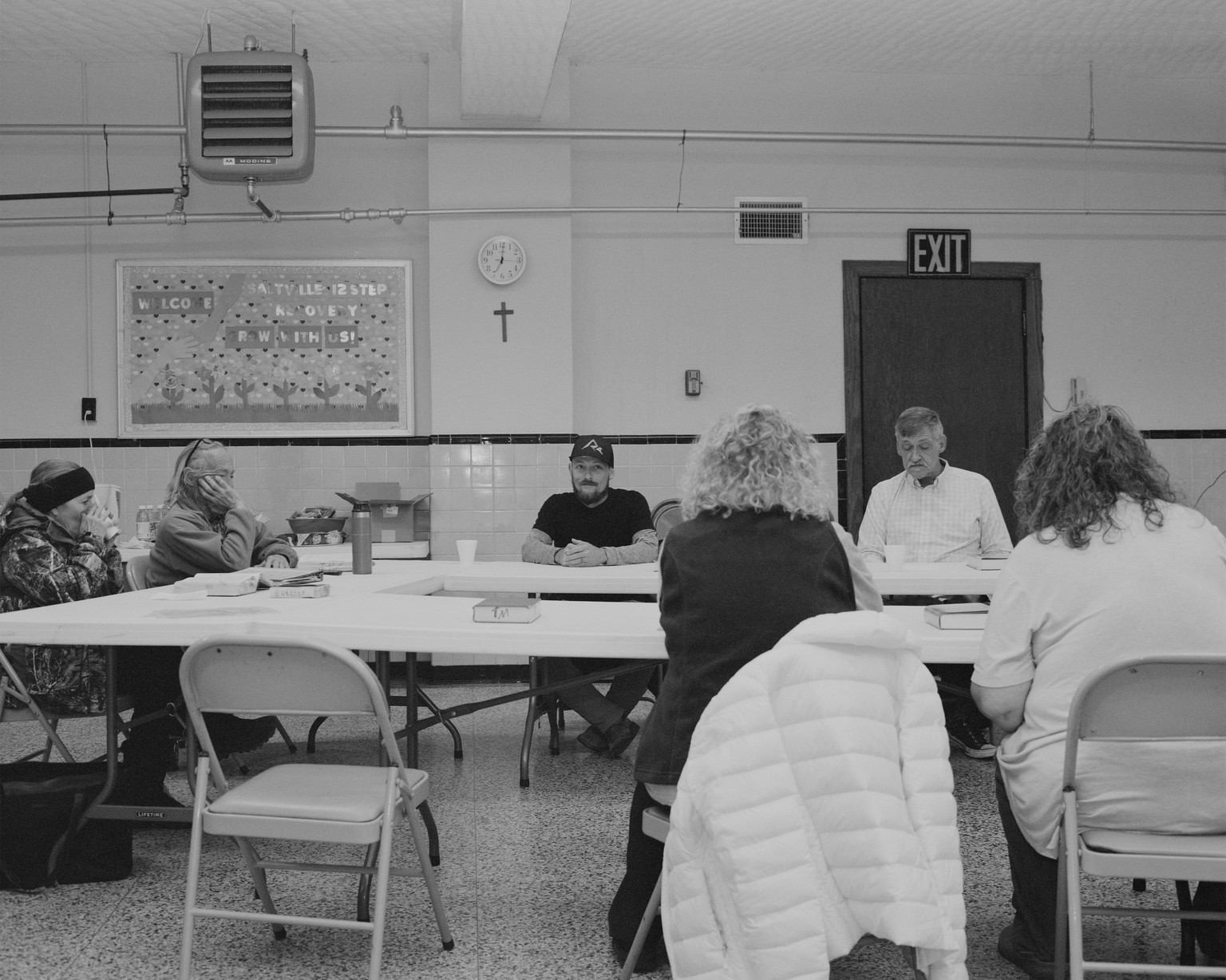

Support for this story was provided by the Magnum Foundation, in partnership with the Commonwealth Fund.



Virginia
The Virginia International Tattoo: Where 250 Years of Freedom Takes the Stage – VisitNorfolk

If you’re uncertain what the words “Tattoo” and “Hullabaloo” mean in the context of Norfolk, Virginia’s largest annual event, Scott Jackson is happy to explain.
“About 15 years ago, I took a trip to Edinburgh, Scotland, to see the Edinburgh tattoo, which is the biggest tattoo in the world and the most famous,” says Jackson, Producer/Director of the military-themed spectacle known as the Virginia International Tattoo. “My hotel was at the bottom of a road called the Royal Mile… and when you walk up this mile on the night of a tattoo performance, it’s totally vibrant. It’s so exciting. There’s music on every corner. There’s street performers. There’s food, there’s beer. When I got to the castle, I already felt great. I was already in a great mood.”
The annual Virginia International Tattoo runs April 16–19, 2026, and this year it carries the theme of America’s 250th anniversary. The timing is not lost on Jackson, a student of military history who discovered, in preparing for this year, that George Washington himself called for the first tattoo in American history.
“At that time, a tattoo was a small military ceremony,” Jackson explains. “It was basically a time each night when soldiers were called back to a base, and there was a roll call, and a military ceremony, sometimes called a beating retreat.”
From that origin story, Jackson has built a show that threads 1776 through every act. The Old Guard Fife and Drum Corps, performing in 1776 uniforms, will demonstrate how fifes, drums and bugles once served as battlefield communication, the original radio operators of the Continental Army. The French Navy Band and a Royal Air Force rifle display team called the King’s Color Squadron represent the allies who stood with the colonies.
“There’s a great line from the musical Hamilton,” Jackson says, “‘I want to be in the room where it happened.’ Well, these were the countries that were in the room where it happened.”
South Korea’s Army Band provides a “a giant umbrella of Korean culture,” with traditional dance and costumes, a taekwondo display team, and two K-pop stars currently serving their mandatory military service.
“In the U.S. in the ’50s, Elvis Presley was drafted into the Army, who felt like it was a distraction, so they actually staged him in Germany. He basically had a desk job,” Jackson says. “Well, the South Koreans said, ‘Oh, you’re a K-pop star, we’re drafting you. We’re sending you to Virginia Tattoo to represent.’”
More than 800 civilian and military performers from six nations will fill Scope’s arena floor. For those making the drive from the Richmond region and beyond, the experience begins well before curtain. According to Jackson, that is precisely what you don’t want to miss.
The festivities aren’t just inside the arena, Jackson notes. For several hours before each performance, the exterior Scope Plaza comes alive with brass quintets, traditional Celtic dancers, beer tastings, festival food and a market of makers selling Tattoo-related merchandise. This is the Hullabaloo, a free pre-show open to the public and Jackson’s answer to Edinburgh’s Royal Mile.
“When you can, come early and relax, because then when the show starts, you’re already in a great place,” he says. “If you haven’t gone yet, this is the year to go.”
Tickets are available at vafest.org or by calling (757) 282-2822. Show times are Thursday–Saturday at 7:30 p.m. and Sunday at 2:30 p.m.

Virginia
Con artists stole jewelry worn by women in Northern Virginia. Police are asking for help finding them – WTOP News

Several people used sleight of hand to steal jewelry worn by women in Northern Virginia, and police in Fairfax County are asking for the public’s help to find the suspects.
Several people used sleight of hand to steal jewelry worn by women in Northern Virginia, and police in Fairfax County are asking for the public’s help in finding the suspects.
The robberies began at 1:30 p.m. on March 20 and followed a similar pattern. According to police, suspects described as women in SUVs would approach other women in parking lots, start conversations and offer them jewelry.
As the suspects placed costume jewelry on the women, they would use sleight of hand to remove the women’s real jewelry, driving off before the victims knew what happened, police said.
Troopers in Delaware detained and identified those inside the Toyota, including Cristina Milhaela Paun, 21, of Baltimore. She was then let go.
Detectives in Fairfax County said they have since identified Paun as a suspect in two of the March 20 thefts and obtained warrants for felony pickpocketing and robbery. She is wanted, and police are asking the public for information regarding her whereabouts.
The exact times and locations of each theft are listed below:
- 1:30 p.m., 6900 block of Hechinger Drive in Springfield (white SUV, Paun identified as a suspect)
- 1:30 p.m., 13900 block of Metrotech Drive in Chantilly (black SUV)
- 3:30 p.m., 12900 block of Wood Crescent Circle near Herndon (white SUV, Paun identified as a suspect)
- 3:55 p.m., 6800 block of Commerce Street in Franconia (black SUV, two suspects, described as a 50-year-old woman with red hair and gold teeth and a 25-year-old woman wearing a headscarf). Video of this incident can be seen below.
Get breaking news and daily headlines delivered to your email inbox by signing up here.
© 2026 WTOP. All Rights Reserved. This website is not intended for users located within the European Economic Area.
‘Stay Alive,’ about daily life in Nazi Berlin, shows how easy it is to just go along

AO3 is finally out of beta after 17 years

Iran’s tallest bridge collapses after reported US airstrikes; Iran threatens American allies in retaliation

What B-52 bombers bring to Iran fight — and what it means for the war now

At least 46 children dead amid measles outbreak as virus spreads globally

Florida High School Football Rankings: Top 25 teams – Oct. 21

How old is Bo Nix? What to know about Oregon quarterback ahead of 2024 NFL Draft

Cleary's 21 help Le Moyne down Central Connecticut State 69-64 in OT

99th annual Pony Swim held in Virginia

Indiana Members Credit Union announced as new anchor tenant at Bottleworks District
What B-52 bombers bring to Iran fight — and what it means for the war now

Podcast: Hungary elects: what is at stake and who is likely to win?
ICE detention deaths are on a record pace. One Texas facility bears the brunt

GOP rails against ‘s— sandwich’ deal as all eyes turn to House to end DHS shutdown

Planning commission approves Trump’s White House ballroom plans
-

 South-Carolina5 days ago
South Carolina vs TCU predictions for Elite Eight game in March Madness
-

 Culture1 week ago
Wil Wheaton Discusses ‘Stand By Me’ and Narrating ‘The Body’ Audiobook
-

 Miami, FL1 week ago
Jannik Sinner’s Girlfriend Laila Hasanovic Stuns in Ab-Revealing Post Amid Miami Open
-

 Culture1 week ago
What Happens When We Die? This Wallace Stevens Poem Has Thoughts.
-

 Minneapolis, MN1 week ago
Boy who shielded classmate during school shooting receives Medal of Honor
-

 Vermont5 days ago
Skier dies after fall at Sugarbush Resort
-

 Education1 week ago
Video: Transgender Athletes Barred From Women’s Olympic Events
-

 Politics5 days ago
Trump’s Ballroom Design Has Barely Been Scrutinized