Texas
Tim Walz’s overture on Texas border crisis a welcome olive branch


What Gov. Greg Abbott didn’t say about immigration in a recent CNN interview speaks volumes about why the nation has not had serious immigration reform in decades.
Tim Walz, the Minnesota governor and presumptive Democratic vice presidential nominee, recently conceded that there is a border crisis and Democrats need to acknowledge it, something this editorial board has urged Democrats to do.
“When they’re asked if it’s a crisis, you need to answer, ‘Yes, it’s a crisis.’ And then deal with it,” Walz said in an interview on the Ezra Klein Show, days before he became Vice President Kamala Harris’ running mate.
It’s important for leading Democrats to get serious about acknowledging what Walz did in plain language. Conservatives are fairly skeptical about the left’s willingness to engage in strong border enforcement, but Walz didn’t mince words.
“Leaving it and saying it’s not a problem is a political detriment to Democrats,” he said. “Just acknowledge it is. You’re not denigrating anyone, and you’re not helping them — being the immigrants — by saying it’s not a problem. Because they know better than anybody it’s a problem. Because they’re stuck at a border community with nowhere to go.”
Abbott’s decision to bus migrants out of Texas to deep blue cities got near universal condemnation from the left. The reality was that it demonstrated states like Texas cannot and should not be forced to bear the burden of an unmanaged border. And it helped wake up the country to the problems at the border.
Walz characterized Abbott’s busing program as cruel and inhumane. That’s unhelpful. The governor was fairly criticized in 2022 for dropping off more than 100 migrants near the Naval Observatory in below-freezing temperatures without coordinating with local groups. But Texas has bused more than 100,000 people without incident, and many have expressed gratitude for the free trips.
Walz did concede that the action “suggests the problem in Texas is pretty bad.”
That’s a start at least on getting real about how difficult mass migration has been on Texas and especially on border towns and cities.
Walz importantly said that he would support the bipartisan Sinema-Lankford immigration reform bill that we think balances serious enforcement with humane processing of asylum applications.
When Abbott was asked on CNN whether he would work with a potential Harris-Walz administration on border security, he rightly pointed out key policy differences. That’s fair. But it’s unfortunate he stopped short of saying that he would engage with Democrats in Washington who are ready to look at solutions.
That is what most Americans find so frustrating about the immigration debate. Abbott might harbor frustration with federal inaction, but he must also signal a willingness to work with anyone who is willing to bring forward some answers.
We get that it is difficult for a Republican to promise to work with a Democrat or vice versa in this highly polarized environment, especially when presented with a hypothetical question. Nonetheless, Walz’s gesture is welcome, and we wish Abbott would have acknowledged it.
It used to be common to hear a politician say, “I’ll work with anyone who wants to work with me.” Now, somehow, that’s political poison.
It is true that, for months, Harris and President Joe Biden wrongly insisted that the border was secure even as tens of thousands or more crossed it illegally. Only after the border crisis became undeniable did the Biden-Harris administration belatedly enact an executive order to reduce illegal migration and back the bipartisan border security package.
GOP presidential nominee Donald Trump foolishly helped kill that measure earlier this year to preserve a campaign issue. Harris has promised to resubmit the measure if elected.
Americans want and deserve border and immigration solutions. We are tired of years of unproductive cynicism. Border issues are solvable but require leadership, outreach and compromise to not make perfection the enemy of progress, beginning with Democrats and Republicans, regardless of whether they are in the White House, Congress or state capitols.
We welcome your thoughts in a letter to the editor. See the guidelines and submit your letter here. If you have problems with the form, you can submit via email at letters@dallasnews.com



The Texas Longhorns entered the 2025 season with more expectations than any team has had to deal with in recent memory.
Many among the media were ready to crown the team and quarterback Arch Manning before they even played one game. Of course, those unrealistic expectations were never met, even though the team finished with a 10-3 record and a Citrus Bowl win over the Michigan Wolverines.
2026 is heading in the same direction for the Longhorns. Many believe head coach Steve Sarkisian has the most talented team in the country. But in order to fix the issues from this past season, the Longhorns needed to fix one issue that has cost them in the past.
Changing The Narrative
One of the biggest issues the Longhorns had last season was the play of the offensive line. It was apparent in the first game of the season against the Ohio State Buckeyes that Manning didn’t have the pocket time needed to make big plays.
This offseason, Coach Sarkisian went out and found two massive transfer portal additions that should completely change the narrative on this offensive line.
It starts with potential starting right tackle Melvin Siani. Siani has spent time with the Temple Owls and last season with the Wake Forest Demon Deacons.
The Longhorns are set at left tackle with Trevor Goosby, who could play himself into being a top 10 pick in the 2027 NFL Draft. If the team can get competent play from Siani, the offense will be able to open up the playbook, and the world may finally see Manning at his college peak.
The Longhorns also went out and found a potential fix at left guard for the 2026 season. Western Kentucky Hilltoppers transfer Laurence Seymore could be another strong patch for the holes in the offensive line.
After spending the first two seasons of his college career with the Miami Hurricanes, Seymore made stops with the Akron Zips and the Hilltoppers.
Of course, the one concern with Seymore is wondering if he can compete at the SEC level coming from the C-USA.
This season for the Longhorns starts and stops with the play of Manning. Coach Sarkisian and the rest of this coaching staff understood that protecting their quarterback was the most important goal when building the 2026 roster.
The Longhorns are going to be leaning on veteran talent to protect their quarterback, and it may very well be the best decision they made this offseason.
Sign up to our free newsletter and follow us on Facebook, X and Instagram for the latest news.
 Add us as a preferred source on Google
Follow


U.S. Senate candidate James Talarico promise to serve all in El Paso
U.S. Senate candidate James Talarico discusses key public issues in Texas during the first stop of his Frontera Tour July 11, 2026 in El Paso.
The two candidates vying for the U.S. Senate seat in Texas are making stops across the Lone Star State this week.
Democrat James Talarico and Texas Attorney General Ken Paxton will head to South Texas as the two go head-to-head in the Nov. 3 General Election to replace U.S. Sen. John Cornyn, R-Texas. Cornyn lost his reelection bid to Paxton in the Republican Primary Election.
The campaign tour continues for Talarico after hosting townhalls in El Paso and Marfa as part of his “Frontera Tour,” while Paxton is holding a “Rally in the Valley” in McAllen.
Here’s where the candidates will be in Texas.
Paxton heads to McAllen for ‘Rally in the Valley’
Paxton is heading to McAllen for his “Rally in the Valley” event at 5:30 p.m. on Tuesday, July 14. He’ll be joined by National Border Security Council President Paul Perez, TX-28 Nominee Tano Tijerina, and TX-34 Nominee Eric Flores.
The all-ages event will take place at University Draft House Townlake McAllen, 100 West Business 83, and spots can be reserved at eventbrite.com.
Talarico to visit Del Rio, Eagle Pass, Laredo
Talarico continues his “Frontera” tour with a stop in Del Rio on Monday, July 14.
“Gather with your family, friends, and neighbors to hear from James about taking his fight against Big Money and corruption to Washington. Together, we can win back power for working people in a system that’s rigged for the ultra-wealthy,” the event page states, adding that the program will be short and voters can greet Talarico after.
Here are the stops on Talarico’s “Frontera” tour:
Monday, July 13:
- 3 p.m. Memo’s Restaurant, 804 E Losoya St. in Del Rio
- 7 p.m. International Center For Trade, 3295 Bob Rogers Drive in Eagle Pass
Tuesday, July 14:
- 6 p.m. La Posada – San Agustin Ballroom, 1000 Zaragoza St. 107 in Laredo
Natassia Paloma may be reached at npaloma@gannett.com, @NatassiaPaloma on X, natassia_paloma on Instagram, and Natassia Paloma on Facebook.
-
 News2 minutes ago
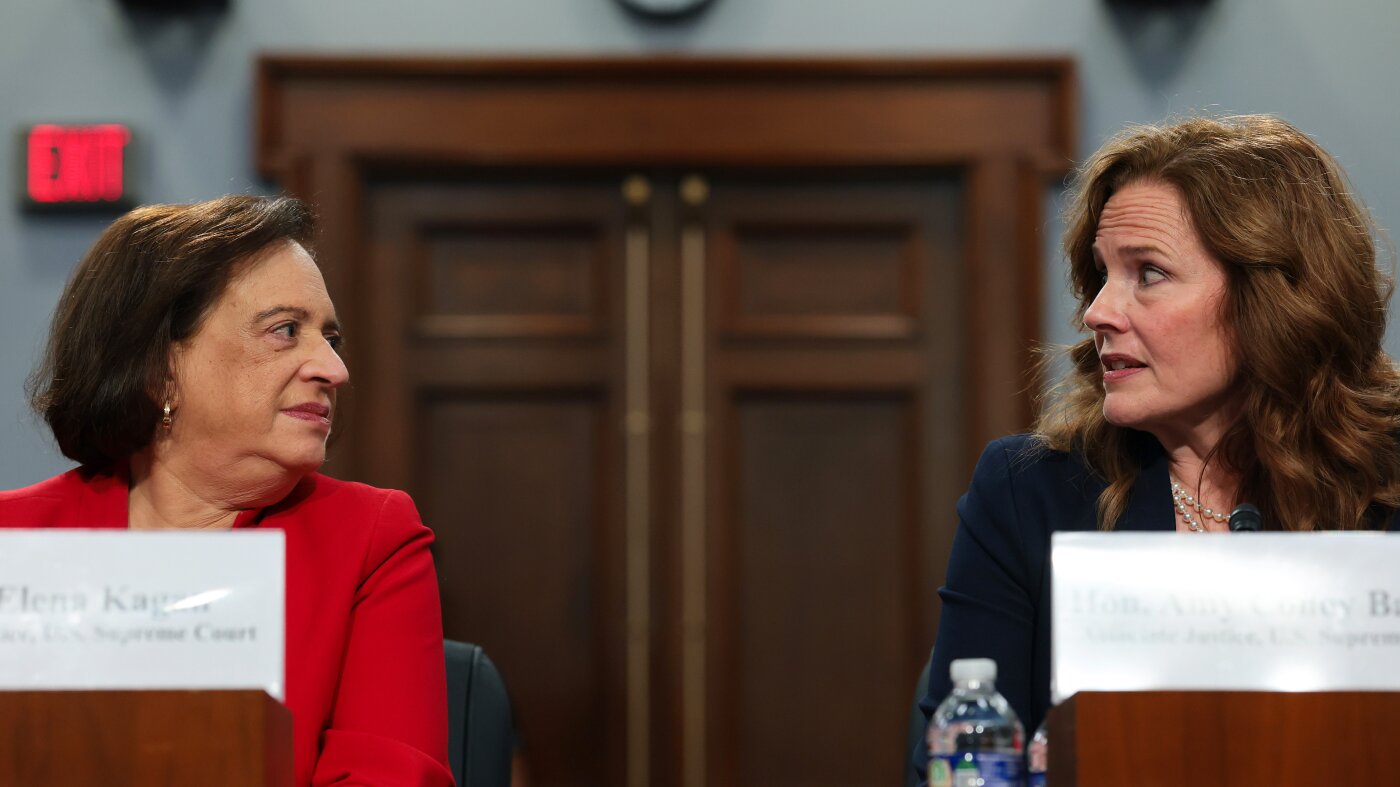
Supreme Court Justices give chilling accounts of threats to their safety
-

 Los Angeles, Ca2 hours ago
Stabbing at Chino Hills liquor store ends in attempted murder arrest
-

 Detroit, MI2 hours ago
A small group of citizens rally for mental health coverage in Detroit
-

 San Francisco, CA2 hours ago
1 dead, 2 missing after boat capsizes near Alcatraz in San Francisco Bay
-

 Dallas, TX2 hours ago
Death penalty off the table for man accused of beheading Dallas motel manager, prosecutors say
-

 Boston, MA3 hours ago
Chickadee, the popular Mediterranean restaurant in Seaport, is shutting down – The Boston Globe
-

 Denver, CO3 hours ago
Denver Nuggets 7-Year NBA Veteran Gets Honest On Peyton Watson
-

 Seattle, WA3 hours ago
Top 25 Seattle Seahawks Going into 2026 NFL Season: #17 Grey Zabel

