Texas
Old pipes cause Texas cities to lose tens of billions of gallons of water each year

/static.texastribune.org/media/files/8a8851f5e56a6f3768d059adcebaf520/SAWS%20Water%20Main%20Break%20CS%2012%20TT.jpg?ssl=1 "Old pipes cause Texas cities to lose tens of billions of gallons of water each year")
Sign up for The Brief, The Texas Tribune’s daily newsletter that keeps readers up to speed on the most essential Texas news.
Texas’ most populous cities lost roughly 88 billion gallons of water last year because of aging water infrastructure and extreme heat, costing them millions of dollars and straining the state’s water supply, according to self-reported water loss audits.
The documents show that bigger municipalities are not immune to water issues often seen in smaller, less-resourced communities around the state. All but one big city saw increased water loss from last year’s audits.
While cities are losing water because of inaccurate meters or other data issues, the main factors are leaks and main breaks.
Here’s how much each of Texas’ biggest cities lost last year, according to their self-reported audits:
- Houston: 31.8 billion
- San Antonio: 19.5 billion
- Dallas: 17.6 billion
- Austin: 7.1 billion
- Fort Worth: 5.9 billion
- El Paso: 4.8 billion
Houston, San Antonio, Dallas, Austin, Fort Worth and El Paso must submit water loss audits to the Texas Water Development Board yearly. Other water agencies must do audits only every five years, unless the city has over 3,300 connections or receives money from the board.
“What we have right now is not sustainable [or] tenable,” said Jennifer Walker, National Wildlife Federation’s Texas Coast and Water Program director.
The cities of Houston and Dallas saw the biggest increase in lost water reported. Houston saw a 30% jump from last year’s audit, while Dallas saw an increase of 18%.
Houston is the largest populous city in the state, home to roughly 2.3 million Texans; it lost around 31 billion gallons of water last year.
Houston Public Works blames the region’s long drought from June 2022 to December last year for the increase. Droughts cause clay in soil to dry up and shrink, stressing older water lines and making them more likely to break and leak. Officials said this, combined with aging infrastructure, led to a significant increase in water leaks across the city.
“HPW will continue to pursue all funding options available to help replace aging infrastructure,” the Houston spokesperson said.
Aging infrastructure isn’t only a Houston problem. Dallas officials said they only expected a roughly 4% increase in water loss in 2023. They saw a double-digit increase instead.
A Dallas Water Utilities spokesperson said the city is investigating the cause of the increase and “reviewing records to ensure all allowable unbilled/unmetered authorized uses were properly accounted for in the 2023 calculation.”
On the other side of North Texas, Fort Worth saw an increase from 5.6 billion gallons lost in 2022 to 5.9 billion gallons in 2023, losing Cowtown more than $8 million.
Walker, from the National Wildlife Federation, said numbers are also rising because cities are getting more accurate in reporting water loss.
Fort Worth has a “MyH2O program” that replaced all manual read meters with remote read meters and implemented a Real Water Loss Management Plan in 2020 to focus the city efforts related to leak surveys, leak detection and the creation of district metering areas.
“It is actually a testament to how we are using available data to make better decisions and improve reporting with a higher level of confidence,” said Fort Worth Water Conservation Manager Micah Reed.
Last year, voters passed a proposition that created a new fund specifically for water infrastructure projects that are overseen by the Texas Water Development Board.
The agency now has $1 billion to invest in projects that address various issues, from water loss and quality to acquiring new water sources and addressing Texas’ deteriorating pipes. It’s the largest investment in water infrastructure by state lawmakers since 2013.
Walker calls the $1 billion a “drop in the bucket.”
Texas 2036, an Austin-based think tank, expects the state needs to spend more than $150 billion over the next 50 years on water infrastructure.
While some of the Texas Water Fund must be focused on projects in rural areas with populations of less than 150,000, Walker said the bigger cities could also receive some funding.
In San Antonio, the San Antonio Water System isn’t “waiting for [the state] to come and tackle the problem for us.”
The city lost around 19 billion gallons of water in 2023 and has seen an increase over the last five years.
“We’re in a state that doesn’t even fund public education,” said Robert Puente, president and CEO of the San Antonio Water System. “So good luck to us getting some money from the state on these issues.”
Earlier this week, the SAWS board of trustees unanimously approved a new five-year water conservation plan.
The city of Austin lost around 7 billion gallons of water in 2023.
Austin has hired a consultant to review our water loss practices and metrics, according to city officials. The capital city is also in the process of replacing water mains around Austin.
Walker said while Texas lawmakers should invest more money in water infrastructure, city officials also need to hire more staff and better planning to address water loss.
The one city that lost less water in 2023 was El Paso, which reported losing 475 million fewer gallons last year. Since El Paso is in the desert, water conservation and having a “watertight” infrastructure is the city’s main focus, said Aide Fuentes, El Paso Wastewater Treatment Manager.
“That makes us a little bit different from the rest of Texas in that sense,” Fuentes said.
El Paso Water officials aim to reduce water loss by 10%.
Walker said the data shows that cities should make the case to the state lawmakers to continue to address water Infrastructure in the next legislative session. She added this issue isn’t going away.
“We really need [to] try to live with what we have and not lose the water that we already have in place and make sure that it’s reaching its intended destination,” Walker said.
Disclosure: San Antonio Water System and Texas 2036 have been financial supporters of The Texas Tribune, a nonprofit, nonpartisan news organization that is funded in part by donations from members, foundations and corporate sponsors. Financial supporters play no role in the Tribune’s journalism. Find a complete list of them here.
Just in: Former U.S. Rep. Liz Cheney, R-Wyoming; U.S. Sen. John Fetterman, D-Pennsylvania; and Oklahoma Gov. Kevin Stitt will take the stage at The Texas Tribune Festival, Sept. 5–7 in downtown Austin. Buy tickets today!



For more than a year, high-profile Texas Republicans have argued that Muslims are secretly plotting to take over Texas, centering their outrage on the East Plano Islamic Center, a mosque and Muslim community in North Texas known as EPIC. That hysteria resulted in a range of government enforcement actions last year, including a probe by the Texas Funeral Service Commission that barred EPIC from performing funeral rites. Last July EPIC sued the state, alleging Texas had violated its religious freedom. Late Wednesday, a federal judge in the Western District of Texas ruled that the mosque’s lawsuit can proceed despite the state’s attempt to dismiss it. In his ruling, the judge also issued a strong rebuke to claims made by Governor Greg Abbott and other state officials, writing that “no evidence has been presented” that EPIC intends to impose “Sharia law,” Islamic teachings based on the Quran and words of the Prophet Muhammad, on Texans.
The case stems from last March, when the funeral commission issued a cease and desist order that barred the mosque from performing traditional cleansing, shrouding, and prayer over bodies, on the grounds that EPIC may have been unlawfully conducting such rites without a license. (EPIC denies this allegation.) As Texas Monthly has reported, the agency was pushed to issue the order by some of Abbott’s closest advisers, who had made unsupported claims that EPIC and a proposed housing development it was affiliated with, EPIC City, was building a “no go zone” exclusive to Muslims (it was not).
EPIC sued the funeral commission in July 2025, arguing that the cease and desist order was an unconstitutional prohibition on religious practices. In Islam, preparing bodies for funerals stands as one of the most sacred rites; by the time of EPIC’s lawsuit, according to the petition, at least eleven congregants had been forced to receive rites elsewhere—away from their home mosque.
EPIC later amended its lawsuit to include former funeral commission chair Kristin Tips after text messages were released showing she had shared anti-Muslim messages and videos as the agency’s investigation unfolded. Among the examples was a graphic Tips had sent to the commission’s then–executive director, Scott Bingaman, that accused Islam of allowing child marriage and pedophilia. After sending it, Tips texted Bingaman a YouTube video with the title: “EPIC CITY TEXAS! Are Muslims planning a TAKEOVER?”
For nearly a year, the case has been locked in a procedural back-and-forth as Tips and the agency—represented by Attorney General Ken Paxton’s office—have pushed for the court to dismiss the case. Late Wednesday evening, Judge David Alan Ezra, a Ronald Reagan appointee, issued an order denying Tips’s attempt to dismiss the lawsuit. He also rejected Tips’s claim of qualified immunity, which can shield government officials from personal liability in civil cases. That rejection is rare in courts, such as this one, that appeal to the Fifth Circuit, which is one of the most conservative federal appellate courts in the country and is typically welcoming to government defendants.
In his ruling, Ezra cited the funeral commission’s deviation from historical norm in the EPIC case, as the agency has repeatedly asserted—first in 1987 and again in 2014—that Islamic religious organizations could conduct funeral and burial services without government oversight. The judge also affirmed that the alleged conduct—including the cease and desist order and Tips’s anti-Muslim messages—was seemingly “the result of religious discrimination” that violated EPIC’s clearly established religious rights under the Constitution’s Equal Protection Clause and other laws protecting religious liberty. In a rather remarkable footnote, the judge added that, based on the evidence offered, the court firmly rejected claims “suggesting that EPIC has applied, or intends to apply, ‘Sharia law’ in its practices.”
Though the case will now continue to wind through the courts, the judge’s ruling is a firm rebuke of the anti-Muslim political hysteria fueled by Abbott and his team of advisers. As Texas Monthly reported this month, the governor’s inner circle took an unusually active role in the funeral commission’s regulatory case against EPIC. After being looped into the agency’s pending investigation, which stemmed from an April 2024 complaint levied by a private individual, the governor’s attorneys, including Abbott’s general counsel, Trevor Ezell, edited the boilerplate cease and desist order the commission was ready to issue to make it more severe and punitive.
The original document, drafted by a funeral commission staffer, included a line warning that noncompliance would result in the agency taking “legal action.” Abbott’s team struck that line and suggested replacing it with a “criminal referral” to the Collin County district attorney—in what amounted to a hijacking of the agency’s usual independent regulatory process. At one point, a close adviser of Abbott even reported to a commission staffer that Abbott had texted him that after the cease and desist order was sent out, the funeral commission was his new favorite agency.
Over the following months, the governor’s advisers, including Ezell and a budget and policy adviser, Alex Aragon, weighed in often on the EPIC probe, requesting regular updates, coordinating public statements, and, at times, directing regulatory action. When the agency investigated other cases—such as a high-profile incident in which a Dallas funeral home allegedly accidentally shipped a stillborn baby to a Louisiana laundry facility—the governor’s team exhibited no similar interest. More than a year after the funeral commission’s cease and desist order, its investigation remains ongoing. No violations have been found.
Tips, the agency’s former chair, led the funeral commission until March 12, when, according to an email obtained by Texas Monthly, she “prayerfully” resigned, effective immediately, late in the night. While the circumstances around her departure remain unknown, she had spent months under fire for allegations that she had illegally lobbied for tort reform in her position as chair, which she denies. But in her absence, the governor’s pursuit of EPIC has continued. In March, the funeral commission issued a broad new subpoena to EPIC, seeking every record of funeral services that the mosque has on file.
After EPIC’s attorneys pushed back, arguing the order was too large in scope, Paxton’s office got involved—issuing a letter that demanded EPIC comply. Meanwhile, Abbott has continued his crusade against the mosque, going on Fox News earlier this week to deride EPIC and what he alleged were “multiple violations” of the law. The governor has touted that a dozen state agencies have investigated EPIC. To date, no criminal charges have been filed against the mosque, and a federal probe into EPIC by the the Department of Justice was dropped with no findings of malfeasance.


The NHL took the first step toward expansion in Texas earlier this week, agreeing to terms with billionaire Dan Friedkin and his family to explore the feasibility of putting a franchise in Houston or Austin.
Far enough from the Dallas Stars, who relocated from Minnesota in 1993, a new team would not interfere with their territorial rights. And the league has shown no fear of adding one team at a time, so No. 33 does not have to come with No. 34.
“Symmetry I don’t think should necessarily govern expansion,” Commissioner Gary Bettman said Tuesday. “You expand if you think it makes sense and enhances what the league has.”
What is behind the NHL’s interest in Texas
Money is the obvious answer. Bettman said the total investment of the project would be some $3.5 billion, which would include expansion fees paid to established owners along with the cost of building a new arena.
The Houston Rockets’ arena downtown is publicly owned but controlled by team owner Tilman Fertitta’s Clutch City Sports and Entertainment group. The home of the American Hockey League’s Texas Stars, in the Austin suburb of Cedar Park, has a capacity of 8,000 that is a little over half the size of the NHL’s smallest current rink (Winnipeg).
“I would be surprised if the NHL would be OK with an expansion team that does not have a new arena,” said Brian Mills, an associate professor at the University of Texas who teaches courses on sports economics and strategy. “The revenue potential with the luxury boxes and the way that they set those up and the money that they like to extract from the local cities is way too large to pass up.”
They are also huge markets. Houston at nearly 2.4 million is the fourth-most-populated U.S. city; Austin at just over 1 million is in the top 12.
“Obviously it makes sense if you’re a sports league to have a franchise in the nation’s fifth-largest metro area and one that is growing rapidly,” said Holy Cross professor Victor Matheson, an expert in sports economics. “Houston obviously makes sense in general as a destination for any league.”
Austin is smaller but has doubled its population since the mid-1990s and has seen an infusion of people over the past five years. Only eight of the NHL’s existing markets are bigger.
“It’s becoming more and more of a tech city, so I wouldn’t be surprised if there’s more hockey fans here than there used to be,” Mills said. “I would imagine there’s some market for the NHL here in Austin, particularly more than when it was a sleepy, small town capital of Texas 30 years ago.”
History of hockey in Houston and Austin
When hockey was picking up in popularity in the 1960s and ‘70s and the NHL went from six teams to 18, the rival World Hockey Association was founded and Houston got a franchise when the one in Dayton, Ohio, failed to get off the ground.
The Aeros’ inaugural season was in 1972-78, and they were best known for “Mr. Hockey” Gordie Howe playing for them along with sons Mark and Marty. They won four Avco World Trophies as WHA champions before folding.
An AHL team using the same name existed in Houston from 1994-2013. The Texas Stars have played in Austin since ’09.
“There’s some interest of hockey,” University of Houston economics professor Steven G. Craig said. “Houston is full of immigrants from around the country and around the world. And Austin is sort of similar in the sense of a pretty heterogeneous population.”
Pros and cons of a Houston or Austin NHL franchise
Growing the sport in another so-called non-traditional spot is a big benefit. Smashing successes in places like Las Vegas and Tampa, Florida, show what hockey can do across the Sun Belt when strong ownership is involved.
“Southern cities have been doing pretty well now these days in the NHL: the Lightning and the Panthers,” Mills said of the two teams in Florida. “You’ve got some pretty good hockey teams after some pretty miserable failures with some earlier expansion to the South.”
Abandoning the second try in Atlanta (the Thrashers from 2000-11) was more a failure of ownership than the market. The same could be said in Arizona, where a revolving door of owners led to arena miscues and eventually the Coyotes being sold and moved to Salt Lake City in 2024 to become the Utah Mammoth.
A 33rd team also means 20-23 more NHL players and hopefuls in the minors. The changing landscape of hockey development at the junior and college levels has the potential to churn more talent through the pipeline in North America than ever before, along with players coming from Europe.
“You do have a pretty big pool of players,” Matheson said. “I’m not particularly worried about diluting the talent there because I think there’s a lot of skill.”
What’s next and where the 34th team may be
After this six-month exploratory phase is complete, recent history suggests a season-ticket drive would be one of the subsequent steps. Ticket drives validated interest that led to the Vegas Golden Knights and Seattle Kraken.
The Board of Governors would need to approve moving forward in the process. No vote has yet been held, though the executive committee supported exploring Houston and Austin.
And while the NHL is comfortable with unbalanced Eastern and Western conferences, getting to 34 teams seems inevitable if it goes to 33. Bettman said the board on Tuesday was updated on situations in Atlanta and Arizona, and it would be no surprise if one of those places got another crack at it.
ere’s everything you need to know about one of the most recognizable trophies in North American sports — The Stanley Cup.
-

 Technology20 seconds ago
Debt collection letter for debt you don’t owe? What to do now
-
 Business7 minutes ago
Newsom blesses Uber ballot measure truce — but fight over car crash lawsuits continues
-
 Entertainment10 minutes ago
La Cruz offers a musical memorial to Pulse shooting victims on Pride Month
-
 Politics22 minutes ago
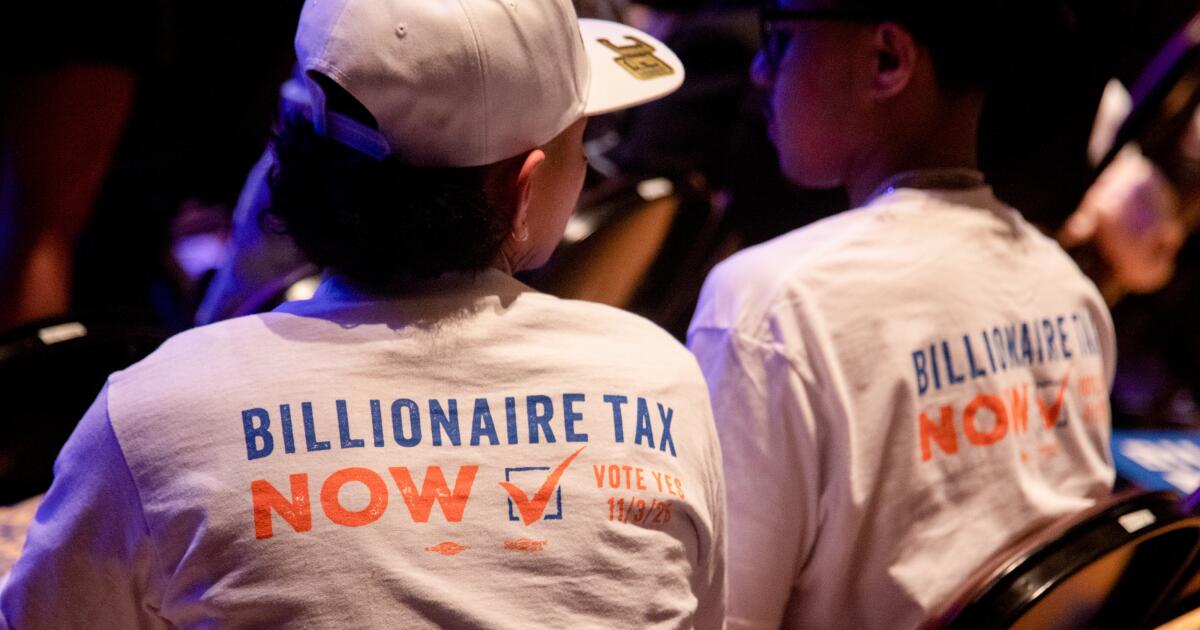
Controversial billionaire tax proposal will appear on November ballot
-
 Sports30 minutes ago
Shohei Ohtani is the first Dodger to be named 2026 All-Star
-

 World40 minutes ago
Who will control Africa’s AI infrastructure and at what cost
-
 News1 hour ago
The Supreme Court says the U.S. can turn away asylum seekers at the border
-

 Los Angeles, Ca2 hours ago
Jury says it is deadlocked in trial of man accused in Palisades Fire

