Texas
‘Ghastly sight’: Thousands of cattle killed in historic 2024 Texas Panhandle wildfires


“It’s a ghastly sight,” Sid Miller, commissioner of the Texas Department of Agriculture, told USA TODAY.

Texas panhandle wildfires burn cars, buildings
The Smokehouse Creek Fire has become the largest fire in Texas history.
Thousands of livestock have been killed in the wildfires that’ve ripped across the Texas Panhandle over the last week, inflicting unprecedented damage upon the largest cattle region in the nation.
Officials surveying the damage said more than 3,600 cattle have died since the fires – some of which are still ongoing – spread through multiple counties and into Oklahoma, destroying hundreds of homes and killing at least two people. The number of dead cattle is expected to double or triple in the coming days as inspectors continue inspecting the land and animals are euthanized because of burn injuries and trauma, Sid Miller, commissioner of the Texas Department of Agriculture, told USA TODAY.
“It’s a ghastly sight,” Miller said, recounting hundreds of cows lying dead on smoldering fields. “We’ve never seen anything like this.”
The largest of the blazes, the Smokehouse Creek fire, burned more than 1 million acres of land, an area larger than the state of Rhode Island, and is the largest wildfire in state history. While authorities have not said what caused the fires, citing early and ongoing investigations, a lawsuit filed in county court last week alleged that a downed utility pole in Stinnett was to blame.
Texas is home to 11 million livestock animals and 85% are in the panhandle, making it the country’s most prominent region for beef production, Miller said. The mass deaths likely won’t impact the price of beef around the nation, but it has already devastated local ranchers, many who’ve maintained businesses that have been in their family for generations, he said.
“They’ve lost their livestock, ranches, all their belongings, all their family heirlooms,” Miller said. “Many of them just have the shirt on their back.”
The Smokehouse Creek fire quadrupled in size in less than 48 hours, catching officials, civilians and farmers off guard and unable to prevent widespread damage. Miller said several large ranchers cut down their own fences so their livestock could escape into surrounding wheat fields; other farmers barely had enough time to get themselves out alive.
Dozens of nearby residents joined the massive recovery effort, donating money, food and equipment to their neighbors. Trailers packed with hay, feed and other supplies have answered the urgent need for vital sustenance as the wildfires consumed the cattle’s primary food source.
“This is ranchers helping ranchers,” said Jason Smith, a beef cattle specialist and associated professor for Texas A&M University. He noted that some farms were untouched or suffered little damage, while others were completely destroyed.
Several nearby ranches have loaned out tractors and other heavy equipment needed to pile up and transport the corpses of cattle before they’re buried or incinerated. Chance Bowers, who operates a ranch in Hansford County, about 80 miles northeast of Amarillo, said such equipment was used to move hundreds of cattle who died either from burns or smoke inhalation.
“We were right in the middle of calving season,” Bowers said. “In a few weeks, we’ll really know what we lost. … This pasture alone, there’s 70 dead.”
Though the fires are still ongoing, local officials said they’ve seen enough damage to know recovery won’t come quickly.
“A lot of these people are going to have to sell,” Miller said. “They have no grass, no infrastructure, no fences, no cattle. They’ll sell and wait for better days. … It’ll take a couple of years to get things back in shape.”
Contributing: The Associated Press; Lubbock Avalanche Journal, part of the USA TODAY Network



A day off at the pool — and a little sunburn — didn’t stop the Minnesota Twins’ momentum.
Brooks Lee hit a three-run homer as Minnesota scored multiple runs in the first inning for the third consecutive game, and the Twins went on to complete a series sweep of the Texas Rangers with a 9-3 win Thursday.
Minnesota has won four games in a row and scored 25 runs in the three-games series in Texas. The two teams had a rare, mid-series day off on Wednesday with the England-Croatia World Cup game being played in Arlington.
“We’re locked in every day,” Lee told Audra Martin on the team’s broadcast. “Yesterday, taking time off, lay out by the pool, get a little burnt and then right back to it. We did a good job getting focused. I feel like we do that with rain delays, too, just lock back in and we’re doing it.”
Lee’s 12th homer capped a four-run first off Jack Leiter (3-7). Trevor Larnach made it 6-0 in the fourth with a two-run shot to straightaway center that just cleared the extended glove of leaping Alejandro Osuna. Larnach’s third hit was an RBI single in the fifth, and Ryan Kriedler hit a two-run homer in the eighth.
Joe Ryan (5-3) struck out seven but needed 97 pitches to get through five scoreless innings while allowing three singles. Leiter was done after the fourth, and has given up 17 runs while losing three starts in a row.
The Twins never trailed in the sweep that extended their winning streak to four, matching their longest this season. Their 14-5 record at Globe Life Field is the best for any American League opponent since the ballpark opened in 2020.
Wyatt Langford, Ezequiel Duran and Justin Foscue hit solo homers for the Rangers, who have lost five of six games. They are 0-15 when giving up multiple runs in the first inning.
Twins DH Josh Bell, who was born in nearby Irving and grew up in the area, had an RBI single before Lee’s homer. Bell hit a three-run homer in the first inning of the series-opening 4-2 win Monday, and had an RBI single for a 2-0 lead in the first of a 12-2 win on Tuesday.
“We’re just passing the baton each time,” Lee said of the offensive output. “Our guys are hot. They feel good and they came out swinging today. It was awesome to see. We’ve done that for a while now.”
Up next
Twins rookie left-hander Connor Prielipp (2-4, 5.26 ERA) starts Friday at Arizona. The Diamondbacks are scheduled to start right-hander Michael Soroka (8-3, 3.11).

Watch CBS News

A Texas state trooper was killed in a crash in the Panhandle, becoming the 244th Texas Department of Public Safety officer to die in the line of duty since 1823, according to the agency.
Sergio Romero, 27, died Wednesday after a semi-truck pulled in front of him as he attempted a traffic stop around 4 p.m. on U.S. 287 in Childress County, DPS said.
In a statement, Col. Freeman F. Martin praised Romero’s courage, integrity, and service.
“Today, we grieve the loss of one of our own,” Martin said. “… Our hearts break alongside his family, friends, fellow troopers, and all who loved him. We will never forget the ultimate sacrifice he made in service of his fellow Texans.”
Romero previously served with the Hall County Sheriff’s Office before joining DPS as part of Class B-2025 in Childress, the agency said.
He is survived by his wife, Francisca, and their two young sons.
Funeral arrangements are pending. The crash remains under investigation.
-
 Lifestyle14 seconds ago
What does freedom actually look like? : It’s Been a Minute
-

 Technology10 minutes ago
Barret Zoph is out at OpenAI again after just five months
-

 World15 minutes ago
Iran hardliner behind US deal warns Tehran won’t honor agreement if Trump fails to deliver
-

 Politics22 minutes ago
Top GOP lawmaker rallies around conservative school board member facing calls to resign
-

 Sports30 minutes ago
2026 World Cup Odds: How Far Can Mexico Go After Winning Group A?
-

 Technology37 minutes ago
6 in 10 identity crimes now begin with a new account
-
 Business40 minutes ago
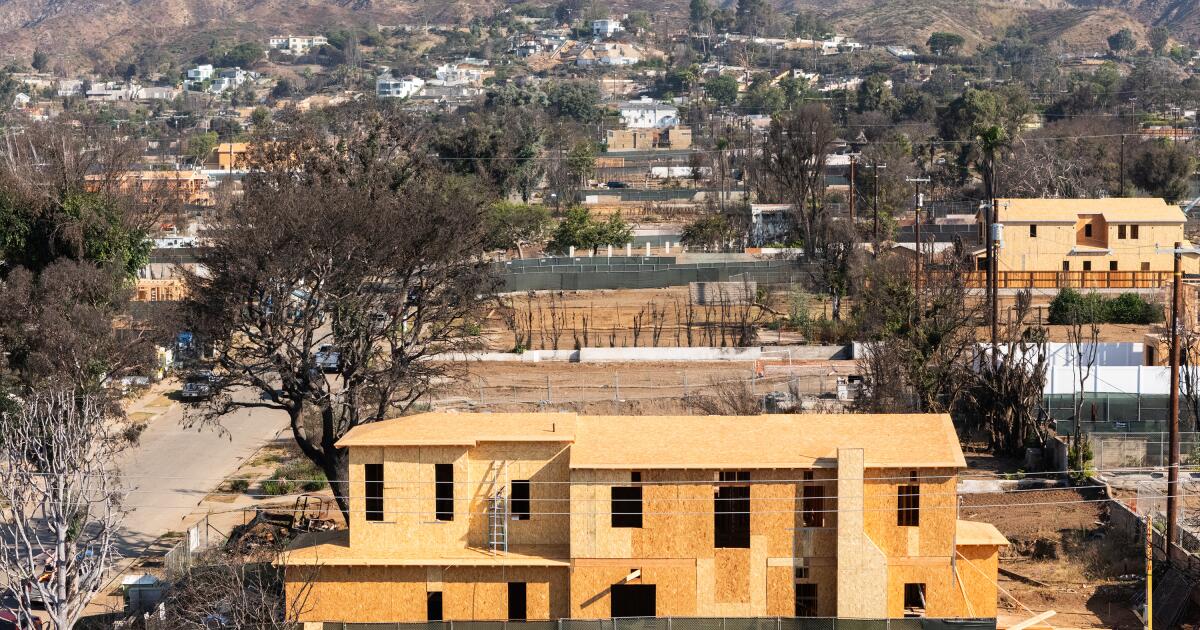
January 2025 wildfire victims seek tougher penalties against State Farm over claims handling
-
 Entertainment45 minutes ago
Review: ‘Sugar,’ with Colin Farrell as an alien private eye, gets a new and improved second season

