South
Protests break out in DC after body cam footage released of deadly police shooting, 6 demonstrators arrested

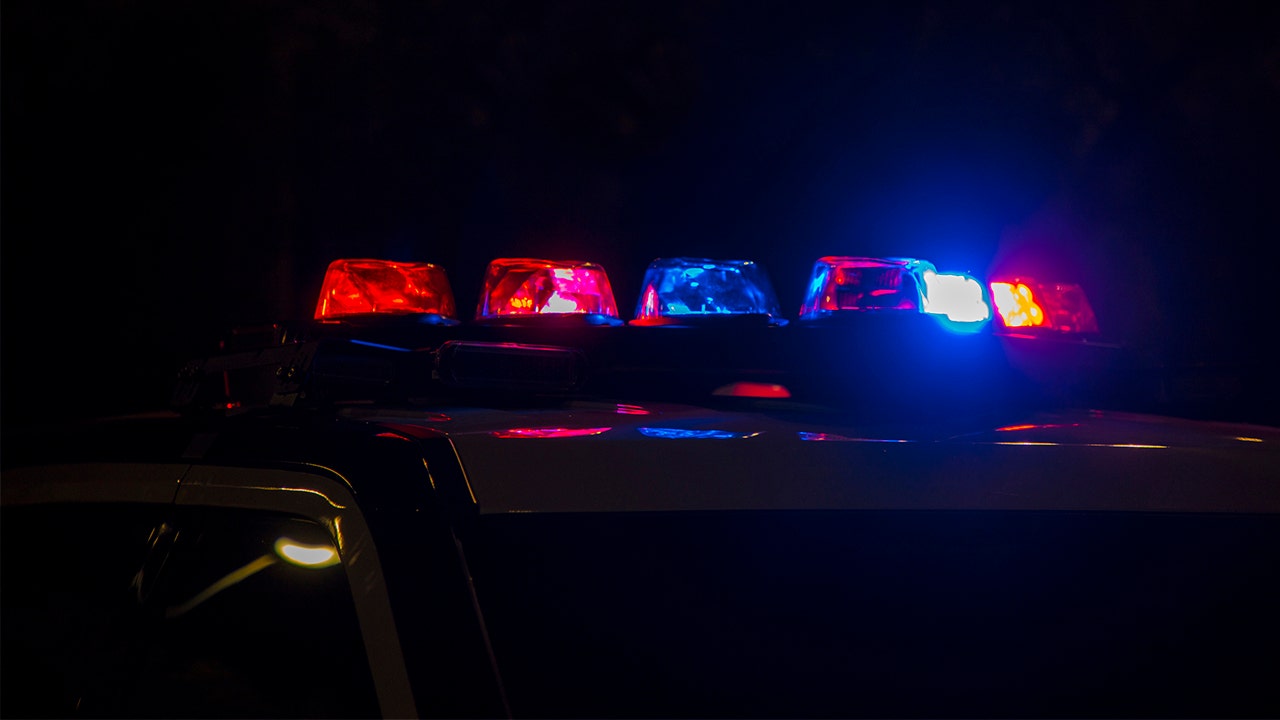
A group of demonstrators held a protest in Washington, D.C., Tuesday night over a recent fatal police shooting of a man in the southeast part of the district.
This comes after 26-year-old Justin Robinson, a member of the D.C. violence interruption program called Cure the Streets, was shot and killed by police officers earlier this month at a McDonald’s on Marion Barry Avenue.
Cure the Streets is a pilot public safety program launched by the Office of the Attorney General of D.C. that seeks to reduce gun violence.
5 SUSPECTS DETAINED IN WASHINGTON, DC AFTER RAMPANT BURGLARIES THROUGHOUT THE DISTRICT OVERNIGHT
Demonstrators held a protest in Washington, D.C., Tuesday night over a recent deadly shooting involving police officers. (iStock)
The Metropolitan Police Department released body camera footage showing Robinson, who police say was initially unconscious in his car with a gun in his lap after crashing into the McDonald’s, attempting to grab an officer’s gun through his car’s window after regaining consciousness before he was shot by police, Fox 5 DC reported.
The group marched from the 7th District police station to the McDonald’s where the fatal shooting took place on Sept. 1, according to the outlet.
Protesters chanted “No justice, no peace” and “Arrest the officers” as they faced officers standing behind barricades, the outlet reported.
FEDS CHARGE 2 EUROPEANS WITH ‘SWATTING’ PLOT TARGETING MEMBERS OF CONGRESS, OTHER ELECTED OFFICIALS
This comes after 26-year-old Justin Robinson was shot and killed by police officers earlier this month at a McDonald’s. (iStock)
The demonstration that grew to more than 100 people on Tuesday forced streets to shut down, and police said they arrested six protesters.
“At approximately 10:05 p.m., peaceful protests at MPD’s Seventh District station turned violent when individuals began throwing bottles, rocks, and other objects at officers,” the police department said in a statement. “MPD immediately began giving dispersal warnings as individuals continued to throw objects at officers.”
“We will continue to support those who choose to protest peacefully and safely, and we will continue to hold accountable those who commit criminal acts,” police added.
Protesters chanted “No justice, no peace” and “Arrest the officers” as they faced officers standing behind barricades. (iStock)
CLICK HERE TO GET THE FOX NEWS APP
Police said that there will be an increased police presence at the Seventh District out of an abundance of caution.
The officers involved in the shooting are on administrative leave as an investigation into the incident is underway.


Ross Tower, a 1.1 million-square-foot, 45-story tower at 500 North Akard Street, appears to be up for sale.
Matt Murphy, the director of Cushman & Wakefield’s Texas office advisory group, said in a LinkedIn post that the tower is being marketed to investors. Ross Tower has recently undergone a modernization through a $14 million capital improvement program that upgraded the building’s elevator system, improved common areas and replaced the cooling tower, according to the post.
The building is 60 percent occupied, according to Murphy, and features tenants like the Dallas Regional Chamber, CoStar, Munsch Hardt and Grant Thornton, according to the Dallas Morning News. The asking price wasn’t listed by Murphy in the LinkedIn post, and the outlet noted that the Dallas Central Appraisal District pegged the property at upwards of $99 million for tax purposes.
Recent bets on Downtown Dallas properties cite their proximity to Uptown, where the city is seeing a flourishing financial district. A key enticement for prospective buyers looking to bolster the tenant roster, according to the post, is that the in place rents are 15 percent below market.
In the post, Murphy said that the combination of lower rents for class A space, available square footage with companies exiting downtown, and the thriving Uptown Dallas area just a few blocks away, give the tower solid fundamentals for the right buyer.
The tower is currently owned by a partnership that includes Bandera Ventures of Dallas, HPI Real Estate and Second City Real Estate. The joint venture purchased the tower in 2015, and it was renovated in 2018, according to the post.
The tower was named Lincoln Plaza until 2013, and was formerly the headquarters of multinational oilfield products company Halliburton. Ross Tower is the 14th tallest building in the Dallas skyline.
As Uptown’s Y’all Street continues to grow, building owners are beginning to look at cashing in on the influx of new companies as an option. Hillwood Urban is currently exploring a sale of Victory Commons One, who just signed Scotiabank as a new tenant.
— Hunter Cooke
Read more
Trammell Crow Center gets boost from new, extended leases

Hillwood Urban explores sale, refinancing for Scotiabank’s future Y’all Street outpost
Bell Nunnally expands office lease at KPMG Plaza, shows Arts District resilience
Miami, FL
FIFA World Cup Miami Host Committee lends a helping hand to people of Venezuela after deadly earthquakes

The FIFA World Cup Miami Host Committee is lending a helping hand for the people of Venezuela in the wake of deadly back-to-back earthquakes at the end of June.
The committee joined CBS News Miami, Neighbors 4 Neighbors and the Global Empowerment Mission (GEM) for the Hope 4 Venezuela relief campaign.
“I think we’ve exceeded more than $26,000 in individual donations up to this point,” FIFA World Cup Miami Host Committee Chairman Rodney Barreto told CBS News Miami.
The FIFA World Cup Miami Host Committee said it shares deep cultural and personal ties with Venezuela, with thousands of local families having roots, loved ones and communities directly impacted by the disaster.
“When we learned about the devastation in Venezuela, we knew we had to use this platform to help,’ said President and CEO of the FIFA World Cup Miami Host Committee Alina T. Hudak.

The FIFA World Cup Miami Host Committee said it sees the FIFA Fan Fest at Miami’s Bayfront Park as not only a celebration of the sport, but also an opportunity to serve the community.
“We have hundreds of thousands of people engaging with the Fan Festival, both in person and online,” Hudak continued. “If we can use that visibility to bring attention to an urgent humanitarian need, we have a responsibility to do that. This is about showing up for our neighbors when they need us most.”
The FIFA World Cup Miami Host Committee said that as Miami continues to celebrate the World Cup, it’s continuing to demonstrate the power of community – standing together, supporting one another and leading with heart.
Atlanta, GA
FBI orders field offices to send analysts to Atlanta for 2020 election investigation, sources say

The FBI is ramping up its investigation into the 2020 election results in Fulton County, Georgia, by ordering field offices across the country to send investigative analysts to Atlanta to help evaluate thousands of records, according to multiple sources familiar with the matter.
According to a memo sent to all field offices and reviewed by CBS News, the Directorate of Intelligence requested “surge support” to Atlanta to assist in what it called FBI Director Kash Patel’s “priority” investigation. The memo did not explicitly discuss the nature of the investigation, but multiple sources confirmed to CBS News the subject of the memo is the 2020 election probe in Fulton County.
The memo calls on every FBI field office to assign analysts, seeking to reach a total of 260 analysts. Large field offices are being asked to contribute eight analysts each, while small and medium offices must dedicate between three and five analysts. They are being asked to review 708 records each, and complete the work by July 17, the memo shows.
These “tactical intel” staffers typically provide help with day-to-day casework, such as running license plates, doing open-source checks on subjects of investigations, phone analysis, preparing subpoenas and reviewing subpoena returns.
The surge of personnel was first reported by MS Now.
President Trump has repeatedly alleged without providing evidence that officials in heavily Democratic Fulton County manipulated ballot counts in 2020 and that large numbers of votes in the state were cast by deceased Georgians, nonresidents or other ineligible participants.
After Mr. Trump lost Georgia by 11,799 votes, he frequently claimed the election had been “rigged.” But Joe Biden’s win in Georgia was confirmed in both a machine recount and an audit that involved hand recounts by every county in the state.
Earlier this year, the FBI executed a search warrant in Fulton County where it seized “all physical ballots” from 2020, as well as tapes from vote-tabulating machines, ballot images and voter rolls. Home to Atlanta, Fulton County was crucial to Biden’s narrow 2020 win in the state.
The case was referred to the FBI by Kurt Olsen, a lawyer who previously fought to help overturn the results of the 2020 election and now works for the Justice Department, where he is assigned in Miami to help investigate the so-called “grand conspiracy” into whether Obama and Biden-era officials conspired to keep President Trump out of office.
A judge in May denied a request by Fulton County to return the ballots that were seized.
The FBI declined to comment.
-
 Politics1 minute ago
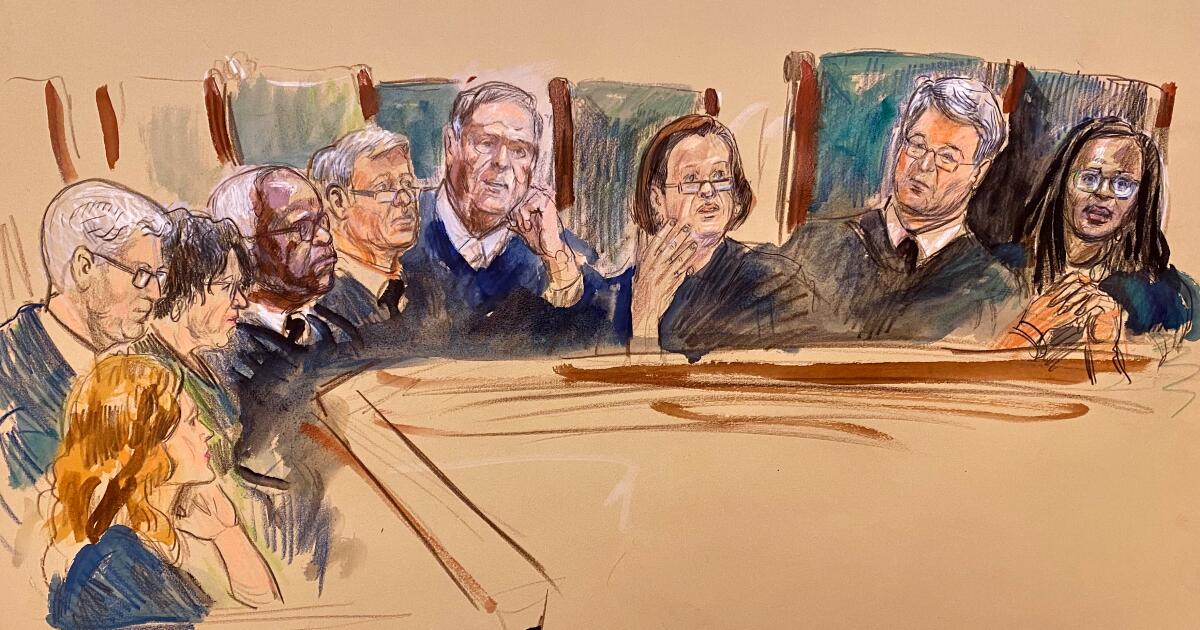
How Roberts led a fractured Supreme Court to wins for the right and defeats for Trump
-
 Science6 minutes ago
Contributor: Alcohol should be stigmatized like smoking
-
 Sports13 minutes ago
Thousand Oaks native Claire Liu finally reaches Wimbledon’s third round, will face Coco Gauff
-

 World21 minutes ago
Could water become a flashpoint between Islamabad and New Delhi?
-
 News46 minutes ago
Ukraine latest / Limits of military might / Can major powers regain dominance? : Sources & Methods
-

 Los Angeles, Ca2 hours ago
Juvenile charged with murder after 4-month-old Claremont infant thrown to her death
-

 Detroit, MI2 hours ago
Silence from Jalen Duren’s camp is what the Pistons want to hear
-

 San Francisco, CA3 hours ago
Jury deadlocked on 2 counts for Golden Gate Bridge pro-Palestinian protesters

