Oklahoma
Oklahoma Mourns the Death of Football Legend Clendon Thomas


Clendon Thomas, one of the foundational pieces of Bud Wilkinson’s 1950s dynasty at Oklahoma and one of the most versatile players in the history of the program, died Monday night.
Thomas, 90, grew up in Oklahoma City and was a standout at Southeast High School, where he stood out with tremendous speed to go with unusual size.
“I got do do what I dreamed about doing,” Thomas told the National Football Foundation in 2011.
Wilkinson mined elite talent from all over the Sooner State while also establishing recruiting roots throughout north Texas, and he certainly didn’t hesitate to scoop up Thomas, who won two national championships, made the College Football Hall of Fame and plied his skills into an 11-year career in the NFL.
Thomas played three seasons at OU under Wilkinson (1955-57) and received All-Big Seven Conference honors as a halfback in 1956 and 1957. In 1957, he earned consensus first-team All-America honors.
In 2011, Thomas was inducted into the College Football Hall of Fame. He was the 19th overall pick in the second round of the 1958 NFL Draft.
Beyond all that, Thomas starred on offense, defense and special teams for the second half of Wilkinson’s NCAA record 47-game winning streak and was part of the group that broke the color barrier in Norman.
In Gary King’s 1988 book, “An Autumn Remembered; Bud Wilkinson’s Legendary ’56 Sooners,” King references the now infamous Sports Illustrated issue explaining “Why Oklahoma Is Unbeatable,” which quoted Thomas as proud of being part of the streak — and not wanting to be a part of the team that breaks it.
“You can’t pinpoint it (OU’s winning spirit),” Thomas said. “The guys way back started it. Then it rubs off on you. We go out and we win and we play to win. None of us wants to be on the team that ends this streak. I guess no matter what else you ever did, people would remember were on the team that lost the game that ended the streak.”
The following Saturday, Notre Dame ended the streak with a 7-0 victory in Norman.
Thomas was also teammates with fellow Oklahoma City native Prentice Gautt, who in 1957 became the first black scholarship football player at the University of Oklahoma. In a time when tensions might have run hot, Thomas was one of those who always kept a cool head.
Thomas told King, “If there were problems, there were very few. I was not aware of any. Basically, we had a whole team that accepted him. He was a good guy. They couldn’t have picked a better person to be the first black player because of his personality, his ability as a student and his ability as a player.”
Even now, 70 years after his college football career began, the 6-foot-2, 195-pound Thomas — unusually big for a halfback in the 1950s — still sits at No. 23 in OU history with 2,199 rushing yards despite playing in Wilkinson’s Split T offense that was famous for spreading the football to numerous players all over the field. In his career, Thomas averaged 6.81 yards per rush, which still ranks fourth all-time at the school among OU’s top 30 rushers.
Thomas also ranks No. 25 in program history with 37 total touchdowns, and his 1956 total of 18 TDs still ranks tied for 11th in OU annals.
His 3,303 all-purpose yards (2,199 rushing, 304 receiving, 405 on punt returns, 324 on punt returns and 71 on interceptions) still ranks No. 23 in the Oklahoma history books.
As a junior in 1956, Thomas led the nation in scoring with 108 total points (18 touchdowns). Thomas led the team with 1,225 all-purpose yards, which included 878 rushing, a team-high 241 receiving yards, 178 on kickoff returns and 115 on punt returns.
As a senior, he again led Wilkinson’s squad in total offense (968 yards) and scored 10 touchdowns. He also punted 41 times and led the Sooners with a 37-yard average.
Thomas led the Sooners in kickoff returns in both ’56 and ’57, averaging 24.8 yards per runback.
He achieved two other marks that still are among the best ever at OU: Thomas’ average of 17.7 yards on punt returns (212 yards) set during his sophomore year in 1955, is tied for third as the all-time single-season mark, and his career average of 20.3 yards per punt return ranks No. 2 among the Crimson and Cream.
Thomas played in the same backfield as Gautt (a two-time All-Big Seven back and eight-year pro), Jimmy Harris (the Sooners’ winningest quarterback with a 25-0 record as the starter) and Tommy McDonald (one of just two Sooners in both the pro and college halls of fame) — and he still stood out as one of Wilkinson’s most prolific and most accomplished players.
Among Thomas’ other exploits in Norman, he rushed 13 times for 123 yards in the Sooners’ 1956 victory over Texas and finished with six career 100-yard rushing games, including a career-high 162 in the 1957 victory over Oklahoma State and 101 (on just eight carries) in a win over Nebraska.
Still, Thomas’ teams at OU combined to win 31 games and lose just once.
Thomas played defensive back for 11 seasons in the NFL for the Rams (1958-61) and Steelers (1962-68) and finished his pro career with 27 interceptions for 244 return yards to go with 10 fumble recoveries and one touchdown.
A year after picking off seven passes in 1962, Thomas was recognized in 1963 for the Pro Bowl and earned second-team All-Pro honors as he brought down eight interceptions (for 122 yards).
Thomas also landed second-team All-Pro accolades in 1962, ’63, and ’66.
He remained versatile enough in the NFL to contribute on offense as well: he caught 60 passes for 1,046 yards and four touchdowns during his career, including a career-high 431 for the Steelers in 1965, and also added 63 yards receiving, 73 yards on punt returns and 552 yards on kickoff returns. He also served one game as the Rams’ punter in 1958, averaging 33.0 yards per punt.
Following his playing career, Thomas enjoyed several business ventures in Oklahoma City.



Over the years, America has been blessed with visionaries in fitness who have reshaped how we exercise. Including one who hails from the great state of Oklahoma.
There is Arnold Schwarzenegger, who pushed bodybuilding into the mainstream. Jack LaLanne, known as the “Godfather of Fitness,” who invented exercise machines and opened one of the first gyms. Jane Fonda made aerobics accessible through her home exercise videos.
And then there’s Chuck Norris, born in Ryan, Oklahoma, who became a world-renown martial artist and rose to greater fame starting in the 1990s on the TV show “Walker, Texas Ranger.” The Oklahoma Legislature honored him after his death last month at 86.
But they passed over this epitome of strength and instead want to add President Donald Trump to the illustrious list of fitness paragons.
Oklahoma senators decided the 79-year-old should be our school-aged children’s fitness role model.
Because when asked if there wasn’t a better example of fitness, the bill’s author, Republican Sen. Dana Prieto, said he could think of no better archetype than the 75-inch tall president who, according to the White House, weighed in at 224 pounds at his physical last year. (According to the Centers for Disease Control and Prevention calculator, that gives him a body mass index that puts him in the overweight category.)
“In Oklahoma we have MOHA. We wouldn’t have MOHA unless there was a MAHA. And we wouldn’t have the MAHA unless there was a MAGA,” Prieto said. “So I believe he’s a great example.”
I actually found myself pretty impressed that Prieto managed to spout off that mouthful of Trumpy-acronyms without once stuttering. I wondered how long he’d practiced that line as he prepared to defend his plan to name the Legislature’s proposed new physical fitness test for children as the President Donald J. Trump Physical Fitness Act.
If you’re trying to wade through those acronyms too, I’ll save you some time. MOHA is short for Make Oklahoma Healthy Again, the Oklahoma take on Robert F Kennedy Jr.’s Make America Healthy Again, or MAHA, movement. MAGA, of course, is Make America Great Again.
Prieto said his plan to name the fitness test that lawmakers want all public schools to administer to school children is “a big beautiful amendment, the likes of which you’ve never seen.”
No truer words have ever been spoken on the floor of the Oklahoma Senate.
But maybe not for the reason Prieto said.
In fact, the entire concept of naming this bill after Trump is so ridiculous that some state senators were openly grinning and even chuckling, struggling to take themselves seriously as they discussed the merits of naming this after Trump instead of a physically fit Oklahoman, like say, Norris, or Erica Whitelock, an Oklahoman who was a finalist in the Ms. Health and Fitness Competition.
Based on her television interview in 2020, it looked like her fitness acumen would shame even the fittest senator.
But Prieto said he woke up at 2 a.m. one morning and decided that naming this after Trump “would be a great amendment.”
Republican Sen. Casey Murdock said that Trump deserves to have the test named after him because he plays golf regularly at 79, and is “a very active 80-year-old man.” (For the record, Trump won’t be 80 until July.)
While the details of the Trump administration’s fitness plan are still being worked out, I suspect someone whose only exercise is playing golf probably wouldn’t be able to pass the screening. The guidelines are expected to include pull-ups or push-ups, V-ups (a modified version of a sit up), a 1-mile run, and some sort of stretching component to measure how far you can reach beyond your toes.
Prieto then rattled off some random trivia about the fact that Trump sleeps only four hours a night. (That, by the way, is not considered healthy either. The National Institute on Aging recommends seven to nine hours a night for older adults, but it might explain why some people have noticed that Trump seems to be nodding off during meetings.)
Trump is a prime example of health, Prieto said, because his administration’s Make America Health Again movement has resulted in the first changes to the food pyramid in over 20 years. The Trump administration made controversial changes that shift in importance the intake of daily protein, including meat, beans, dairy, soy and nuts. Those are now included alongside fruits and vegetables in the most critical section. Grains are now the smallest portion.
When Democrat Sen. Regina Goodwin pointed out that Trump eats Big Macs and fatty foods that are far from healthy, supporters metaphorically shrugged their shoulders.
“Would you believe every once in a while we have to get over our carrot and celery diets and have a Big Mac once in a while to have a good time?” Republican Sen. Randy Grellner asked to grins from fellow senators.
But our health isn’t really a laughing matter. If this ridiculous debate highlights anything, it’s that lawmakers clearly aren’t taking it very seriously either – or have lost touch with how to measure it.
As Republican Sen. Jonathan Wingard said during discussion on the health test component, nearly 70% of Oklahoma students can’t meet the military standards to enlist, which means we’ve created a generation of children unable to defend this country, serve as firefighters, in law enforcement or in other careers that require fitness. A recently retired veteran, he supports the fitness test and voted to name it after Trump.
According to a Trump administration website, half of Americans are either diabetic or pre-diabetic. About 75% have one chronic condition, and the bulk of health care spending is used to treat those chronic diseases, which is related to “diet and lifestyle.”
But the even scarier thing is that changing the name of a program to pay homage to anyone could make the state ineligible for grant money in the future. Maybe a future administration wouldn’t be so keen on a Trump-named test. Could they try to penalize us for it by withholding funding?
Republican Sen. Kristin Thompson tried to drive that point home with her colleagues who were obsessed with paying homage to Trump.
Of the $237 million, Oklahoma is slated to receive from the Rural Health Transformation Program, which was created through Congress’ One Big Beautiful Bill Act, to offset expected Medicaid losses, about $4 million will pay for this fitness test to be administered.
“Listen, I love my cheeseburgers, I love my French fries. I love my chocolate shakes, but when we’re talking about something that is kind of meant to be something silly, we could actually affect something that is very very important,” she warned.
When Trump is no longer in office, it might not be so funny if the state loses access to this health funding.
Lawmakers in the Republican-run Senate, of course, weren’t deterred and passed the bill anyway.
Because there’s obviously no better model of health to them than a 79-year-old Florida man who loves golf.
Janelle Stecklein is editor of Oklahoma Voice.

The Texas Longhorns headed into Sunday looking for anything with the Red River Rivalry series already lost, as the No. 2 Oklahoma Sooners headed to Austin and took the first two games of the series.
The Longhorns would be shut out for the first time since 2024, dropping the first game of the series on Friday, 3-0, and dropping the series in a frustrating 4-3 loss on Saturday. Looking to avoid the sweep, headed to the diamond looking to beat both the rain and Oklahoma to salvage some momentum.
And Texas would get exactly what it needed on Sunday, getting one back on Oklahoma, taking game three in a back-and-forth 8-6 affair.
Texas Comes Up with the Clutch Hits when Needed
The Longhorns, while dropping back-to-back series this season, have put an end to a four-game losing streak.
“We lost the series, but anytime you beat an Oklahoma team, you’ve done something,” head coach Mike White said. “I think, look at the volume of the work in the three games over the weekend, I thought we played very well.”
For the second straight day, the Longhorns would strike first against the Sooners, with Texas this time flexing its power as junior Kayden Henry got the day started for the Longhorns with a three-run home run, giving Texas its biggest lead of the series.
However, the Sooners would not go away quietly as they looked to sweep their rival on their home field, with Oklahoma battling throughout the middle innings, making the Longhorns lead 3-0 to a minimal 3-2 in the top of the fifth inning.
The Longhorns hung onto a lead through the back half of the game until the seventh inning, in which Texas held a 5-3 lead. However, needing just three outs to steal the win, the lead would evaporate quickly with Oklahoma blasting a two-run home run to even things out at five, forcing extra innings.
In extras, the Sooners would flip the script of the ballgame, scoring a run and taking their first lead of the game. The Sooners are forcing the Longhorns to respond, trailing 6-5 and down to their last three outs.
And in a weekend when the Longhorns were unable to come up with the big hit, they found them on Sunday. As the rain threatened to pour down in Austin, the home runs poured at Red and Charline McCombs Field with Texas winning a slugfest that featured seven home runs, five of which came from batters in burnt orange.
“I thought that our resiliency today, after two tough losses,” White said. “It could’ve been easy just to say you know we were close, but we couldn’t have done it.”
In that eighth inning, Texas found two home runs to steal game three of the series. The first homer was brought by freshman Hannah Wells, who came into the ballgame as a pinch hitter in the crucial moment and managed to get a ball to fall right over the left field fence to even up the game at six.
Making herself the hero of the game was junior Katie Stewart. She settled into the batter’s box with a runner on base and on the third pitch of the at-bat crushed a pitch for the walk-off two-run bomb to seal the ballgame.
“I just knew it off the bat,” Stewart said. “And so knowing that the game was over and that we had won, just like a wave of emotions came over.”
The Longhorns will head back on the road, making their way up to Athens to take on the Georgia Bulldogs in their next action. The three-game tilt is set to start on Saturday April, 18 at 3:00 p.m. CT.
Sign up to our free newsletter and follow us on Facebook, X and Instagram for the latest news.

NORMAN — The transfer portal has given players a clearer view of what truly separates programs.
Even better, it lets outsiders like us — beyond the fortified walls of the sport’s football factories — gain real insight when players leave one school for another.
When players transfer away, you hope they have nothing but nice things to say following their exits. The last thing you want to hear is that the grass was in fact greener on the other side.
With Oklahoma’s new faces, the reviews thus far have been golden.
“This is the first time I’ve been in a tight end room where it’s straight family,” Hayden Hansen said on Thursday. “It’s a straight brotherhood in there. We all care about each other.”
It would be naive to hear Hansen say that and assume his three seasons at Florida were miserable. Yes, he chose to enter the transfer portal and leave the Gators — and yes, he’s thriving as a Sooner so far. Sometimes, things don’t work out.
Sign up to our free newsletter and follow us on Facebook and X for the latest news.
That doesn’t mean Florida was inherently worse, just that Hansen’s found a better fit for what makes him thrive in Norman.
But it does stoke the fire of Brent Venables’ program. A head coach whose passion burns bright is building an organization that self-sustains, and gives a true sense of belonging to a generation of players more geared to the lifestyle of the wanderer.
For Hansen, he became enticed with Oklahoma while the Sooners played their way into the College Football Playoff last season.
As he sat on the couch following the end of Florida’s season, he looked at OU and thought something most players would think — why are they there and we aren’t? He found his answer quickly upon arriving in Norman.
“And in probably about one week (after arriving) it was clear to me why they were there and we weren’t,” Hansen said. “This is a real team, a real brotherhood in the locker room. These guys go out there, and they die for each other.
All these guys, they hang out outside the game, they learn together, they suffer together—it’s a true brotherhood,” Hansen added.
Cole Sullivan can attest to the locker room vibe under Venables.
Coming from a blue-blood power himself, Sullivan already knew the aura of Owen Field from the opposite side. During Michigan’s 24-13 loss last season, Sullivan understood the Big House wasn’t the only football cathedral in college football.
“It’s a great atmosphere to be here, I love it here, but when you’re playing, for me at least, it’s just put the ball down and play,” Sullivan said on Thursday. “It could be in the parking lot, it could be here in one of the greatest stadiums in the country, but for me it’s just all about zoning in and locking into ball.”
It doesn’t hurt to have great first impressions. Nor is it a negative to be proud of building something that people feel connected to. So far, even with two bad seasons under his belt, Venables has slowly built Oklahoma as a place that attracts players from across the country.
Both from the high school ranks and from the blue bloods.

Coroner: Toddler dies after being hit by vehicle in Upstate

PBR | No. 1 John Crimber goes 4-for-4, tops final three rounds to win First PREMIER Bank PBR Sioux Falls

Tennessee immigration bill sparks nonprofit concerns over unintended impacts on vulnerable US citizens

Texas AG opens investigation into Austin over APD guidance on ICE warrants
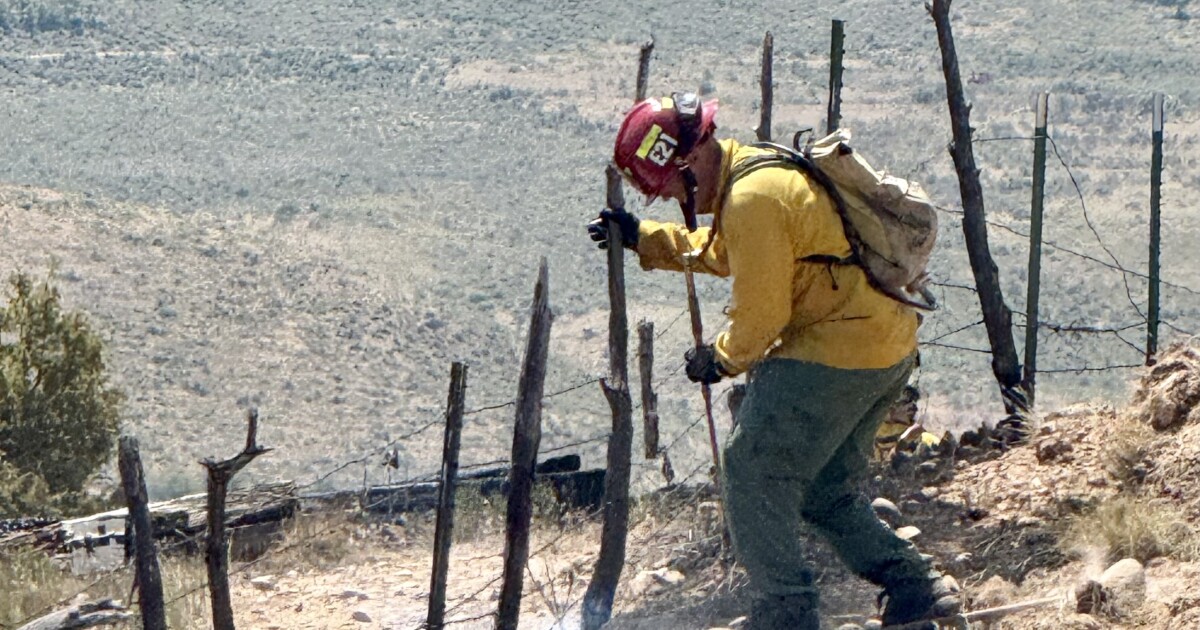
Utah delays imposing fee for wildfire mitigation program

Florida High School Football Rankings: Top 25 teams – Oct. 21

How old is Bo Nix? What to know about Oregon quarterback ahead of 2024 NFL Draft

Cleary's 21 help Le Moyne down Central Connecticut State 69-64 in OT

99th annual Pony Swim held in Virginia

Indiana Members Credit Union announced as new anchor tenant at Bottleworks District

Embattled Rep Tony Gonzales announces plans to resign amid sexual misconduct allegations

UN experts slam attacks on Gaza shelters, forced displacement in West Bank

DOJ fires at least 4 prosecutors involved in FACE Act cases during Biden administration

Melania Trump’s Epstein remarks turn up the heat on DOJ, Acting AG Todd Blanche to do more
Newsletter: Cautious optimism in Brussels as Orbán ousted in landslide Hungarian opposition win
-

 Atlanta, GA1 week ago
1 teenage girl killed, another injured in shooting at Piedmont Park, police say
-

 Georgia6 days ago
Georgia House Special Runoff Election 2026 Live Results
-

 Arkansas3 days ago
Arkansas TV meteorologist Melinda Mayo retires after nearly four decades on air
-

 Pennsylvania1 week ago
Parents charged after toddler injured by wolf at Pennsylvania zoo
-
 Milwaukee, WI1 week ago
Potawatomi Casino Hotel evacuated after fire breaks out in rooftop HVAC system
-

 Technology1 week ago
Anthropic essentially bans OpenClaw from Claude by making subscribers pay extra
-

 Austin, TX6 days ago
ABC Kite Fest Returns to Austin for Annual Celebration – Austin Today
-

 World1 week ago
Zelenskyy warns US-Iran war could divert critical aid from Ukraine