


The Oklahoma City Comets, the Dodgers’ Triple-A affiliate, unveiled their initial roster on Thursday, with opening day set for Friday night in Oklahoma City against the Albuquerque Isotopes, a Rockies’ farm team.
Oklahoma
OKC uses Ward 4 as a dumping ground. Here’s a 180° mitigation concept for the new Oklahoma County jail


As a resident of Ward 4 in Oklahoma City and as a professional land planner, I am offering a site-planning solution that can be part of mitigating the impact of the proposed detention center (jail) on Del City, on neighborhoods in Oklahoma City, and on Ward 4 in general. The SP-588 will be heard by the city council on May 21.
Gist: My proposed “180° Mitigation Treatment” first and foremost controls where detainees can be released by having a key part of the detention center campus turned 180°, having a buffer area along Grand Boulevard, and Oklahoma City closing/fencing SE 22 Street near the SP-588 southern jail entrance.
I have prepared and attached an unpolished handmade concept graphic of the “180° Mitigation Treatment” that modifies exactly what was shown at the Oklahoma City Planning Commission.
The proposed SP-588 jail location and design are just the latest example of the city of Oklahoma City’s pattern and practice of dumping unwanted and undesirable land uses into the edge area of Ward 4, where I have resided over 40 years. Some examples are an asphalt batch plant, car crushing plant, the huge Bryant landfill and more. SP-588 also unacceptably left the western 1/3 of the site vacant for future jail large-scale expansion. There appears to be no legal way to guarantee that detainees would be transported downtown for release, so an urban planning design solution can be the answer.
The proposed design mitigation solution is the “180° Mitigation Treatment” I developed and first transmitted in April to elected officials with Oklahoma City, Del City and the county commissioners.
Opinion: Mid-Del School Board member: There aren’t resources to support the jail at the proposed site.
Del Cityans have a valid set of realistic security, property value and other concerns about the county jail/detention facility being a block from Del City. My preference would be to have the new jail somehow be in the downtown OKC area or part downtown, part outside. However it seems destined to be entirely located at Grand Boulevard.
The rotating of the public parking area, public access and offices/staff-areas by 180° to the west of the jail cell “pods” means the east area is proposed to be replaced by more than a 200-foot-deep green buffer space and an attractively designed concrete wall like those along some highways, both visible along Grand Boulevard. This site plan solution would hide the planned 12-foot-tall Grand Boulevard side’s ugly chain link fence (topped by looping razor wire) behind a wall.
That way, when looked at from the east, the buffer green space and wall keep the jail out of sight, out of mind to youth of all ages. This “180° plan” makes it to where any person released from the jail would have to walk over a half mile to Eastern Avenue, then figure out how to walk over a mile to enter Del City or any other Oklahoma City neighborhood. It is highly unlikely the released detainees would want to walk so far.
This 180° plan recommends various cooperative negotiated agreements to help other fund mitigation measures for the benefit of the impacted city of Del City to be part of the solution for all parties.
More: Del City residents fear a loss of their way of life if a jail is built nearby
Finally, I have been acquainted with and affected by this site for over 50 years now, as I grew up just inside Del City, hiked the site as a boy when it was still an old growth dense woodland, watched as that was chopped down and replaced with a massive public housing project (Hamilton Courts), and went to junior high with kids from there. All that is part of why I became an urban planner, so I want to help.
Larry Hopper is a certified planner and former principal planner and planning manager for the city of Oklahoma City Public Transportation and Parking Department.


Rapper and hip hop icon Snoop Dogg is set to produce and star in a feature film that will be shot in Oklahoma this year.
“God of the Rodeo” is based on a 1998 book from New York-based journalist and author Daniel Bergner, who reported on inmates competing in a controversial rodeo inside Louisiana’s Angola Prison in the 1960s. According to Deadline, the film centers around Bucckey, an inmate serving a life sentence who “finds a glimmer of redemption” through the rodeo. Snoop’s role has not yet been announced.
The film is directed by Rosalind Ross, who is best known for writing, directing and executive producing “Father Stu.” Snoop will produce alongside Sara Ramker, Giannina Scott and Ridley Scott, Deadline reports.
The Oklahoma Department of Commerce confirmed to News 9 on Friday “God of the Rodeo” was pre-approved for the state’s film incentive program through Oklahoma Film + Music.
Filming is scheduled in Oklahoma for June 15 through July 31, according to Oklahoma Film + Music’s website. The website also lists Tulsa-based production company Rebellium Films as working on the film. Filming locations have not been announced yet.

Among the 43 players on the Dodgers 40-man roster, 10 are on the injured list (three on the 60-day IL, which expands this list to 43), and 26 are active in the majors. Six of the seven remaining 40-man players for the Comets.
River Ryan is the only unaccounted 40-man player not on the preliminary Oklahoma City roster, but he could join them soon. Ryan is slated to pitch this weekend in Arizona, Fabian Ardaya at The Athletic reported Thursday.
Hyeseong Kim lost out to Alex Freeland for a spot on the opening day roster, with the Dodgers wanting Kim to split time between second base, shortstop, and center field in Triple-A.
“There’s no doubt that Hyeseong at some point is going to come help us out. I think the driver, as far as at the outset, is giving Hyeseong an opportunity to play every day, play all over the diamond,” Dodgers manager Dave Roberts said Sunday.
Kyle Hurt is among the relievers. After an impressive spring training, the Dodgers opted to slow-play the right-hander missed all of last season after Tommy John surgery. It wouldn’t be a surprise to see him get called up as a need arises in the majors.
Paul Gervase also impressed in spring, and left-hander Ronan Kopp is in his first year on the 40-man roster. Expect a lot of strikeouts from that pair.
Ryan Ward is also on the 40-man roster for the first time, but he returns to Oklahoma City, where the reigning Pacific Coast League MVP he holds several club records in the Bricktown era, a period since the current ballpark opened in 1998. Michael Siani will patrol the outfield for the Comets, likely flanked by Zach Ehrhard and/or James Tibbs.
Ehrhard and Tibbs, acquired from the Boston Red Sox for Dustin May last July, impressed as non-roster invitees in camp and as the older and more experienced of the plethora of stellar Dodgers outfield prospects are the closest to the majors among the group.
Jack Suwinski was briefly on the Dodgers’ 40-man roster this offseason, as was utility man Ryan Fitzgerald, who will likely play all over the infield and potentially some outfield for the Comets. Defensive whiz Noah Miller will play shortstop for Oklahoma City, whose infield also has Nick Senzel and Ryan Fitgerald, all of whom were non-roster invitees this spring for the Dodgers.
Veteran pitchers Cole Irvin and Keynan Middleton are on the Comets’ staff. Other Oklahoma City pitchers with major league experience are River’s brother Ryder Ryan, Garrett McDaniels, and Carlos Duran (pitched one game for the Athletics last season).
Irvin and Ryder Ryan will start the first two games, followed by Christian Romero on Sunday, per play-by-play broadcaster Alex Freedman.
Left-hander Antoine Kelly and right-hander Chris Campos, who were the last two non-roster pitchers standing in Dodgers camp this spring, each are on the Comets preliminary roster. left-hander Logan Allen, who signed a minor league contract last week, is also with Oklahoma City.
Pitcher José Rodríguez, who was touted as a potential Rule 5 Draft pick last December but went unselected, was a non-roster invitee this spring training but did not pitch. He starts the season on the 60-day injured list, as does veteran first baseman Matt Gorski.
Oklahoma City preliminary roster
- Starting pitchers (4): Cole Irvin, Ryder Ryan, Cristian Romero, Carlos Duran
- Right-handed relievers (8): Kyle Hurt*, Paul Gervase*, Chris Campos, Keynan Middleton, Jordan Weems, Wyatt Mills, Antonio Knowles, Jerming Rosario
- Left-handed relievers (4): Ronan Kopp*, Antoine Kelly, Logan Allen Garrett McDaniels
- Catchers (2): Eliézer Alfonzo, Seby Zavala
- Infielders (4): Ryan Fitzgerald, Noah Miller, Nick Senzel, Austin Gauthier
- Outfielders (4): Michael Siani*, Ryan Ward*, Jack Suwinski, Zach Ehrhard
- Infielder/outfielders (2): Hyeseong Kim*, James Tibbs III
- Injured list (2): rhp José Rodríguez (60-day), 1b Matt Gorski (60-day)
The Comets will finalize the roster before Friday’s season opener.


Shia LaBeouf ordered to attend rehab after Mardi Gras arrest
Shia LaBeouf was ordered to take an immediate drug test and return to rehab following his arrest during Mardi Gras in New Orleans.
unbranded – Entertainment
Grammy-nominated pop-culture icon Snoop Dogg will star in and produce an upcoming movie set to film this summer in Oklahoma’s second largest city as well as one of the Sooner State’s historic Black towns.
The hip-hop legend, television personality and actor is the second A-lister to board the period piece “God of the Rodeo.” Deadline reports that Snoop has not only been cast in a starring role, but he and his Death Row Pictures partner, Sara Ramaker, also have signed on to produce the historical drama.
They are joining actress-turned-producer Giannina (Facio) Scott (“House of Gucci”), who is producing for Cara Films, and her husband, celebrated British filmmaker and four-time Oscar nominee Sir Ridley Scott (the “Gladiator” movies), who is producing via his Scott Free Productions.
“Linking up with Scott Free Productions and working with Ridley Scott and Giannina Scott on God of the Rodeo is life changing and an honor,” Snoop told Deadline.
“Me and the team at Death Row Pictures stepping in as producers, I’m acting in it, and Death Row Records is building the soundtrack — and this one got soul. … We’re bringing an important story and something special to the screen.”
Snoop joins embattled actor Shia LaBeouf (“Holes”), whom Deadline reported last year was starring in the project, in the cast of “God of the Rodeo.”
“Snoop Dogg is one of the most gifted and influential artists alive, with admirers and fans all over the world and from every generation transcending music, sports and culture,” Giannina Scott told Deadline. “Ridley and I, with our companies Scott Free and Cara Films, are so excited and blessed to have Snoop join the cast, and for him, Sara and Death Row Pictures to partner with us to produce this important and soulful project from Rosalind Ross.”
What is the upcoming movie ‘God of the Rodeo’ about?
The film is based on the work of New York City-based author and journalist Daniel Bergner, whose 1998 nonfiction book “God of the Rodeo: The Search for Hope, Faith, and a Six-Second Ride in Louisiana’s Angola Prison” was named a notable book of the year by The New York Times.
Set in 1967 inside Louisiana’s Angola Prison — now the largest maximum-security prison in the country and historically one of the most dangerous in the South — the forthcoming film centers on Buckkey, a hardened inmate serving a life sentence who finds a glimmer of redemption in an unlikely opportunity: the prison’s first-ever inmate rodeo.
As Buckkey and his fellow inmates prepare for a last grasp at glory, they’re confronted with the reality that the rodeo is nothing more than a gladiatorial showcase — a grueling fight for survival designed to satiate the public’s bloodlust and fulfill the warden’s delusion of godliness.
Rosalind Ross (“Father Stu”) is writing and directing the project, and Snoop praised her adaptation of “God of the Rodeo” as “a story with heart and grit, and that’s what I’m about” in the Deadline story.
“It’s a thrill and an honor as a filmmaker to bring the legendary swagger, soul and eccentricity of Snoop to this story in what will be a completely transformative role for him,” Ross said, according to Deadline.
“Moreover, I’m deeply gratified by the kindred artistic spirit and conviction of cause that Snoop, Sara and Death Row Pictures have for this collaboration with myself, Giannina, Ridley, and the rest of our incredible producing team.”
When and where in Oklahoma is the movie ‘God of the Rodeo’ set to film?
“God of the Rodeo” also is a project of Rebellium Films, a prolific Tulsa-based production company behind the recent Oklahoma made-movies “Brian,” a comedy that premiered earlier this month at South By Southwest (SXSW) in Austin, Texas, and “The Gates,” a thriller featuring the late James Van Der Beek’s final film role that opened this month in select theaters.
“God of the Rodeo” will film in Boley and Tulsa and use the state film incentive as well as the new Tulsa Film Incentive, Rebellium Films owner and producer Randy Wayne told The Oklahoman.
The largest and best-known of Oklahoma’s historically all-Black towns — and one of only 13 still in existence — Boley has a rich rodeo history. Since 1903, the the Okfuskee County town has hosted the Boley Rodeo, the nation’s oldest Black community-based rodeo and a longstanding Memorial Day weekend tradition.
“God of the Rodeo” is scheduled to film June 15 to July 31 in the Sooner State, according to the Oklahoma Film + Music Office.
Will Shia LaBeouf be able to star in ‘God of the Rodeo?’
While Snoop Dogg has been experiencing a career resurgence — the rapper served as Team USA’s first honorary coach for the 2026 Winter Olympics, was named one of Time magazine’s 100 Most Influential People of 2025 and recently spent two seasons as a coach on NBC’s “The Voice” — LaBeouf has been embroiled in more legal trouble since his casting in “God of the Rodeo” was announced last year.
During last month’s Mardi Gras celebrations, the controversial actor and former child star was arrested in New Orleans for a pair of alleged assaults, USA TODAY reports. A NOLA judge subsequently ordered to LaBeouf to return to rehab as well as submit to weekly drug tests.
Plus, his former partner FKA Twigs is suing LeBeouf, alleging he tried to use an “unlawful” nondisclosure agreement to silence her, years after she accused him of sexual battery and assault. In a legal complaint filed Wednesday, March 25, the British electronic pop artist set out to block LaBeouf from enforcing parts of the NDA that she claims violate California law and public policy.
She previously accused LeBeouf of sexual battery, assault and infliction of emotional distress in a 2020 lawsuit that was settled in July 2025.
LeBeouf has filmed in Oklahoma before, including on the 2016 Cannes Film Festival Jury Prize-winning road movie “American Honey,” which was partially made in Muskogee.
Sports2 minutes ago
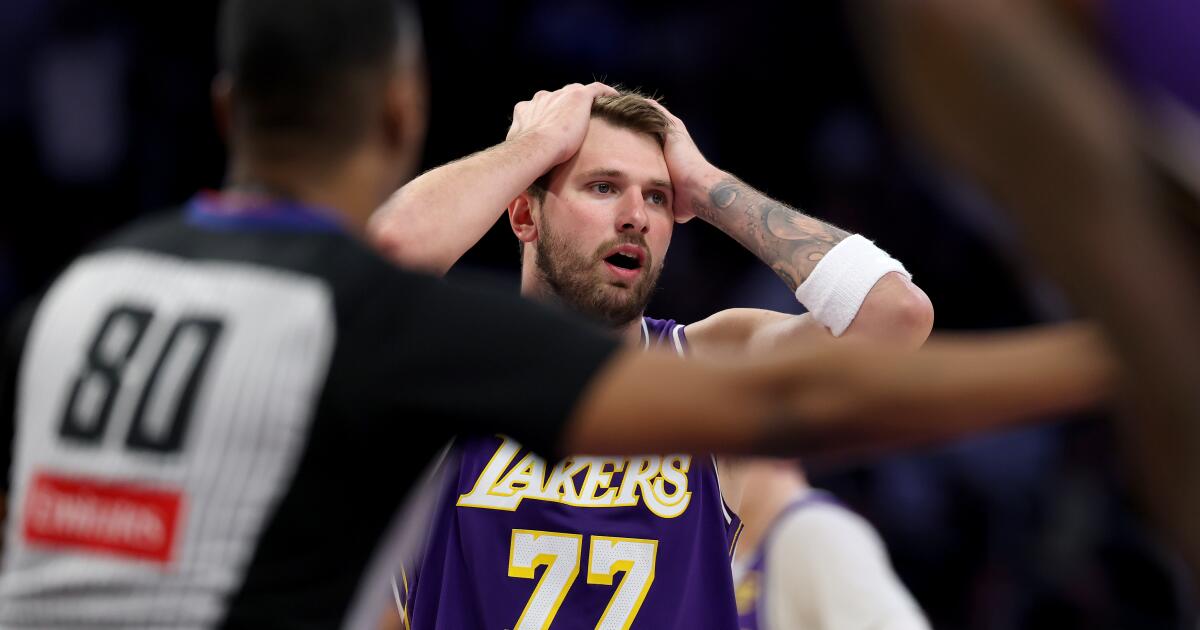
Lakers beat Nets, but Luka Doncic is facing suspension again after 16th technical

World14 minutes ago
EU Parliament unblocks key political hurdle in digital euro talks

News44 minutes ago
Man arrested in plot to firebomb Palestinian activist’s home after undercover op

New York2 hours ago
Video: We Analyzed the Deadly Crash at LaGuardia

Detroit, MI3 hours ago
PWHL players bond with women’s hockey pioneers at Detroit clinic | NHL.com

Florida1 year ago
Florida High School Football Rankings: Top 25 teams – Oct. 21

Oregon2 years ago
How old is Bo Nix? What to know about Oregon quarterback ahead of 2024 NFL Draft

Connecticut2 years ago
Cleary's 21 help Le Moyne down Central Connecticut State 69-64 in OT

Virginia2 years ago
99th annual Pony Swim held in Virginia

Indiana2 years ago
Indiana Members Credit Union announced as new anchor tenant at Bottleworks District
World14 minutes ago
EU Parliament unblocks key political hurdle in digital euro talks
News44 minutes ago
Man arrested in plot to firebomb Palestinian activist’s home after undercover op

Politics11 hours ago
WATCH: Senate hearing goes silent after Angel Father confronts top Dem over daughter’s death

World12 hours ago
US diplomat Marco Rubio denounces settler violence, tolls in Hormuz strait

News13 hours ago
Iran-linked hackers have breached FBI Director Kash Patel’s personal emails | CNN Politics
-

 Detroit, MI1 week ago
Drummer Brian Pastoria, longtime Detroit music advocate, dies at 68
-

 Movie Reviews1 week ago
‘Youth’ Twitter review: Ken Karunaas impresses audiences; Suraj Venjaramoodu adds charm; music wins praise | – The Times of India
-

 Sports7 days ago
IOC addresses execution of 19-year-old Iranian wrestler Saleh Mohammadi
-

 New Mexico5 days ago
Clovis shooting leaves one dead, four injured
-
 Business1 week ago
Disney’s new CEO says his focus is on storytelling and creativity
-

 Technology6 days ago
YouTube job scam text: How to spot it fast
-

 Tennessee4 days ago
Tennessee Police Investigating Alleged Assault Involving ‘Reacher’ Star Alan Ritchson
-

 Texas1 week ago
How to buy Houston vs. Texas A&M 2026 March Madness tickets