North Carolina
The culture war in North Carolina is playing out in the race for governor


In front of a conservative talkshow host two weeks ago, Mark Robinson, North Carolina’s Republican candidate for governor, was grousing a bit about being snubbed by the state’s Democratic governor on a matter of race.
“He talks a lot about diversity, equity and inclusion, but apparently the line for diversity, equity and inclusion stops at the Republican party,” Robinson told Lockwood Phillips. “Roy Cooper has had several chances to congratulate me on the accomplishment of being the first Black lieutenant governor, and he has never taken it.”
Phillips, who is white, chuckled, then re-introduced Robinson to the audience, “who by the way is African American, Black, whatever. But, frankly, you don’t wear that. You really do not wear that in our entire conversation.”
For a conservative speaking to a Black candidate, this is a compliment. For others, it is a jarring illustration of Robinson’s comfort with accommodating the racial anxieties of white Republicans and with the problematic – and at times inflammatory – rhetoric of the far right.
But sitting for interviews and being perceived at all as a Black candidate is a different universe compared to the relative obscurity of Robinson’s life six years ago, before a viral video created his fateful star turn into the conservative cosmos. The former factory worker is now a national name, and drawing national attention, for his flame-throwing slurs against the LGBTQ+ community, antisemitic remarks and derision of other Black people.
“The same people who support Robinson are the people who support Trump,” said Shelly Willingham, a Black state legislator from Rocky Mount. “It’s a cult. It’s not necessarily citizens supporting a candidate but following a cult leader.”
Robinson’s political career began in an inspired four-minute flash in 2018 in front of the Greensboro city council, as he argued against the city’s effort to cancel a gun show in the wake of the Stoneman Douglas high school shooting in Parkland, Florida.
“I’ve heard a whole lot of people in here talking tonight about this group, that group, domestic violence, Blacks, these minorities, that minority. What I want to know is, when are you going to start standing up for the majority? Here’s who the majority is. I’m the majority. I’m a law-abiding citizen and I’ve never shot anybody,” he said.
Robinson, now 55, invoked images of gang members terrorizing people who have given up their weapons under gun-control laws. He said he was there to “raise hell just like these loonies on the left do”.
The speech became a social media hit after being shared by Mark Walker, the former North Carolina representative. Robinson drew the attention of the NRA, which was under fire for its callous response to the Parkland shooting and looking for champions.
Born into poverty and working in a furniture factory while attending college, Robinson quit his job and dropped out of school to begin speaking at conservative events. (Robinson, if he wins, would be the first North Carolina governor without a college degree elected since 1937.)
Robinson beat a host of competitors for the Republican nomination for lieutenant governor in 2020, winning about a third of the primary vote. He faced the state representative Yvonne Holley, an African American Democrat from Raleigh. Holley’s campaign focused on North Carolina’s urban territory while largely ignoring rural areas of the state, while Robinson barnstormed through each of the state’s 100 counties. He won narrowly but outperformed Trump’s margin over Biden by about 100,000 votes.
At a rally in Greensboro in March before the state’s primary election this year, Trump endorsed Robinson, referring to Robinson as “Martin Luther King on steroids”. But try to imagine King saying something like: “Racism is a tool used by the evil, to build up the ignorant, to try and tear down the strong,” as Robinson wrote in 2017.
That sentiment helps explain his initial appeal to white conservatives in a political moment in which rolling back racial justice initiatives has become central to the Republican brand. The right had found the face of a man who could not be easily accused of bigotry, at least not until people began to pay attention to what he said.
“He should not be governor of North Carolina or any other place,” said Shirl Mason, who was attending a Black fraternity invocation and scholarship ceremony by Omega Psi Phi for her grandson in Rocky Mount. Her nose wrinkled and her posture shifted at the thought, as she fought for composure in a way people conversant in the manners of church folks would recognize.
“He really should not be a politician. Anybody who can say that race did not play a part in the political arena, they should not be in politics at all,” Mason said.
Like Trump, Robinson has a litany of provocative outrages in speeches and on social media that have been resurfacing, from referring to school shooting survivors advocating for gun control reforms as “prosti-tots” and “spoiled little bastards”, to describing gay and transgender people as “filth”.
Robinson has shared conspiracist comments about the moon landing and 9/11. He has attacked the idea of women in positions of leadership. His swipes at Black culture and public figures are talk-radio fodder, describing Barack Obama as a “worthless anti-American atheist” and suggesting Michelle Obama is a man.
“Half of black Democrats don’t realize they are slaves and don’t know who their masters are. The other half don’t care,” he wrote in one Facebook post. He described the movie Black Panther in another as the product of “an agnostic Jew and put to film by satanic marxist”, and wrote: “How can this trash, that was only created to pull the shekels out of your schvartze pockets, invoke any pride?”, using a derogatory Yiddish word to refer to Black people.
The antisemitism of that comment is not singular. He has repeated common antisemitic tropes about Jewish banking, posted Hitler quotes on Facebook and suggested the Holocaust was a hoax. “There is a REASON the liberal media fills the airwaves with programs about the NAZI and the ‘6 million Jews’ they murdered,” wrote Robinson, with scare quotes around the figure.
Robinson’s campaign has pushed back on accusations of antisemitism, citing his support for Israel and criticism of protests against the war in Gaza. But his past comments are likely to be revisited throughout the campaign in no small part because his opponent, Josh Stein, could be the first Jewish governor of North Carolina.
The two present a sharp contrast in policy, temperament and experience. After graduating from both Harvard Law and the Harvard Kennedy school of government, Stein managed John Edwards’ successful Senate campaign. Stein then served in the statehouse before winning the attorney general’s race in 2016, becoming the first Jewish person elected to statewide office in North Carolina.
Stein, 57, is running as a conventional center-left Democrat. At a stump speech in pastoral Scotland county near the South Carolina line, Stein focused on fighting the opioid-addiction epidemic, the state’s backlog of untested rape kits, clean drinking water and early childhood education. But he had some words about Robinson’s rhetoric.
“The voters of North Carolina have an unbelievably stark choice before them this November, between two competing visions,” Stein said in an interview. “Mine is forward and it’s inclusive. It’s about tapping the potential of every person so that they have a chance to succeed where we have a thriving economy, safe neighborhoods, strong schools.
“My opponent’s vision is divisive and hateful, and would be job-killing. I mean, he mocks school-shooting survivors. He questions the Holocaust. He wants to defund public education. He wants to completely ban abortion. And he speaks in a way that, frankly, is unfitting of any person, let alone a statewide elected leader.”
Is Robinson an antisemite? “There are certainly people who are Jewish who feel that he does not like them,” Stein replied.
after newsletter promotion
“He says vile things. He agreed that Jews were one of the four horsemen of the apocalypse. It’s unfathomable to me that someone would hold those beliefs and then feel comfortable saying them out loud.”
North Carolina has a relationship with bilious conservatives; this is the state that produced Jesse Helms and Madison Cawthorn. But voters here have a temperamentally moderate streak and a long history of split-ticket voting that also produces the occasional John Edwards or Roy Cooper.
In six of the last eight general elections, voters here chose a Democratic governor and a Republican president. Though every lieutenant governor in the last 60 years has run for governor, only three of 11 have won, each a Democrat. The last two attorneys general of North Carolina also have subsequently been elected governor, also both Democrats.
But the margins are always maddeningly close. Stein won his first race for attorney general in 2016 – a Trump year – by about 25,000 votes. He won re-election four years later by about half that margin.
Cooper, a Democratic moderate, has been a political fixture in North Carolina politics for a generation, and has been able to fend off some of the more radical impulses of Republicans over the years with a combination of veto power and moral suasion.
But while Democrats hold the North Carolina governor’s mansion today, Republicans achieved a veto-proof majority in both legislative chambers in 2022 after Tricia Cotham, the newly elected state representative, switched parties shortly after winning an otherwise safely Democratic seat. Since that political shock, Cooper’s vetoes have been routinely overcome by a Republican supermajority.
North Carolina’s political maps are also notoriously gerrymandered – manipulated in favor of Republicans – but winning two-thirds of house seats in the legislature is an open question in a year where abortion rights are emerging as a driving political issue. As of 1 May, North Carolina will be the only southern state remaining where an abortion can be obtained after six weeks of pregnancy.
Given the stakes, Stein’s campaign hopes to avoid the pratfall of tradecraft that led to Robinson’s victory in the lieutenant governor’s race four years ago. For the moment, the tables have turned on the campaign trail in their favor.
In one of Robinson’s three bankruptcy filings, reporters discovered that he had failed to file income taxes between 1998 and 2002. Questions have been raised about personal expenses charged to campaign funds from the 2020 race.
His wife shuttered a nutrition non-profit after a conservative blogger began to raise questions about the Robinson family’s financial dependence on government contracts. Reporters later learned that the North Carolina department of health and human services is investigating the firm for questionable accounting.
In the hothouse of abortion politics this year, video also surfaced of Robinson at a rally in February calling for an eventual ban on abortion. “We got to do it the same way they rolled it forward,” Robinson said. “We got to do it the same way with rolling it back. We’ve got it down to 12 weeks. The next goal is to get it down to six, and then just keep moving from there.”
His campaign spokesperson later re-characterized those remarks as support for a ban beyond the six-week “heartbeat” stage of a pregnancy.
Robinson acknowledged in 2022 paying for an abortion for his wife 33 years earlier.
The question is whether Robinson’s full-throated anti-abortion stance hinders not just his own candidacy but that of Trump. Planned Parenthood plans to double its spending in North Carolina, to $10m, with an eye on defending the governorship and ending a veto-proof Republican legislative majority. Trump, meanwhile, has backed away from publicly endorsing the most extreme abortion bans.
Down in the polls, Robinson has until this week apparently kept a light campaign schedule and stayed away from places where a reporter might pick up yet another unscripted comment. With the exception of an appearance at the Carteret County Speedway on 3 April and the radio interview on 9 April, there is scant evidence that Robinson has been campaigning at all since the March primary. A request to his campaign for a list of his recent campaign stops went unanswered, as did requests for an interview or comment for this story.
Stein, meanwhile, has been averaging a campaign stop every two days – 22 events since the March primary – showing up in small towns and rural counties across the state. Stein’s father founded North Carolina’s first integrated law firm, and he spent many years in consumer protection and racial equity roles as a lawyer, a point he raises in rural Black communities.
“I think his coming here alone says that he understands that he needs rural communities in order to be successful,” said Darrel “BJ” Gibson, vice-chair of the board of commissioners in Scotland county. “And I say it because so many times we get left out of these gatherings, and state candidates don’t understand that.”
The question for both Stein and Robinson is whether the bombast of Robinson’s life as a self-described social media influencer will overshadow substantive policy discussions.
When Phillips, the conservative talkshow host, asked Robinson in April about how his approach has changed over time, he described Robinson as more Trumpian than Trump.
“My message has not changed,” Robinson replied. “Now, I can tell you clearly that my methods have, because I’ve switched buckets. I’ve gone from social media influencer to advocate, to now elected official. But my heart is still in the same place.”



![!$+∇√$[+[!LIVESTREAMs!]+] Minnesota Wild vs Boston Bruins Live Free Streams On Tv Channel 2026-03-29](https://i3.wp.com/encrypted-tbn0.gstatic.com/images?q=tbn:ANd9GcReQZPBURuIIuh0fPF6YTAqOY-y1_BeWJWzPA&s&w=400&resize=400,240&ssl=1 "!$+∇√$[+[!LIVESTREAMs!]+] Minnesota Wild vs Boston Bruins Live Free Streams On Tv Channel 2026-03-29")


A North Carolina legislative committee is drawing passionate support — and criticism — as it pushes forward with recommendations to inject more secrecy and politics into a group tasked with disciplining lawyers across the state.
The committee plans to meet again this week, fresh off a dramatic hearing Tuesday, during which members of the committee sniped at one another, at least one appeared to have had no idea they’d be asked to vote on one particularly contentious item, and security had to forcibly eject a former state lawmaker who had refused to stop yelling accusations from a podium.
The target of that speaker, as well as the committee he was addressing: the North Carolina State Bar, a regulatory board in charge of licensing and disciplining North Carolina’s lawyers.
It’s the central focus of the State Bar Grievance Review Committee, which has tussled with the Bar and its supporters in the state’s legal community as it has sought to investigate allegations of cancel culture against politically outspoken lawyers and as it has recommended other reforms or demanded political inquisitions.
The committee, created in 2024, is a rarity in North Carolina: It consists of zero members of the state legislature. It’s led by Larry Shaheen and former state Sen. Woody White, two GOP insiders close with Republican state Senate leader Phil Berger. It can’t make changes on its own but can recommend them to the state legislature for approval.
Some previous suggestions by the committee have won broad and bipartisan approval at the state legislature, such as limiting who can report lawyers to the Bar.
But its most recent proposals — including making lawyer discipline a more secretive process, controlled entirely by political appointees — has raised concerns inside the Bar, as well as with some of the lawyers who make a living fighting the Bar on behalf of their clients.
Some of the new changes Shaheen and others on the committee are backing would ban non-lawyers from being involved in hearings of the Bar’s Disciplinary Hearing Commission, which is tasked with deciding whether — and how harshly — to crack down on lawyers accused of things such as stealing clients’ money, sleeping with clients or abusing drugs or alcohol.
The committee also wants to staff the Disciplinary Hearing Commission entirely with political appointees — almost all of them Republicans — and decrease transparency in the process, making more details confidential.
The Bar has deep reservations about those and other proposed changes, saying they’ll harm its goal of protecting members of the public from predatory or simply bad lawyers. The committee has not asked for the Bar’s input during this process, and relations between the two groups have become strained.
State Bar Executive Director Peter Bolac told WRAL he questions the need for these changes, which he said appear to have been put together “without broader input or a comprehensive understanding of the State Bar’s work.”
Bolac was at the most recent hearing on the changes, but he wasn’t invited to speak — whether to provide his own presentation, or to answer questions and concerns. He told WRAL the committee should attempt to learn how the Bar works, first, before trying to change it.
“Without a clear and shared understanding of how the current system functions, it is difficult to engage in a meaningful discussion about potential improvements,” Bolac said. “Nevertheless, we remain willing to participate in thoughtful, good-faith dialogue aimed at strengthening the system.”
Shaheen says he knows firsthand how the process works, having served on Disciplinary Hearing Commission he and his committee are now targeting. And he sees it as his mission to drastically change the way it operates, saying he has lost friends because of his association with it. “I have several lawyers, who have been long term friends of mine, who have come to me and, because of some of the things said to them, feel like I’m the devil,” Shaheen said.
‘Radical changes’
The committee’s most recent meeting was just the latest in the committee’s years-long attempt to make reforms to the Bar.
Alan Schneider, who has represented more lawyers facing disciplinary hearings than perhaps anyone else in North Carolina, often finds himself at odds with the Bar. He previously gave a formal presentation to this same committee on suggestions to reform it.
But he says the latest suggestions, to ramp up the political appointments, go too far.
“There were problems in the past in terms of maybe old cases weren’t heard as quickly as they could,” Schneider said. “But the changes were made. The State Bar heard, and the State Bar has acted. What I’d like this panel to understand is the necessity for all these radical changes. I believe it is unnecessary.”
White and Shaheen said the changes are necessary. Shaheen said increasing political control over the Bar would increase accountability, by making members of the Bar answer to politicians who ultimately answer to the people.
Under the new proposal, 19 of its 26 members would be chosen by various Republican politicians and the remaining seven would be chosen by Democratic Gov. Josh Stein.
“To have more folks appointed by public officials, we want to create more accountability, to make sure that the process is not weaponized against attorneys,” Shaheen said at the committee’s meeting on Tuesday.
White defended the push for less transparency.
“Nowadays when you can weaponize allegations in a nanosecond and publish them, put them out in a political context … that is unfair, for a lawyer to be accused of something before he or she is convicted of it,” he said.
‘Such sweeping reforms’
The committee is set to meet again Wednesday. The committee hadn’t released information on what issues it plans to discuss, but it’s expected to be closely watched by the state’s legal community.
The relative lack of public notice on what this committee is considering also raised the ire of interested parties at last week’s meeting.
Jane Meyer, a Tharrington Smith attorney in Raleigh who also chairs the Bar’s disciplinary group, questioned why the proposals voted on Tuesday were only made public a few days beforehand, and with no opportunity for the Bar — or the general public — to respond.
White had originally attempted pushing through a vote Tuesday without allowing members of the public to speak. But he relented after Andrew Heath, a conservative lobbyist who serves on the committee, urged him to allow Meyer and other members of the public to have two minutes each to give brief comments.
“That troubles me — that such sweeping reforms are being considered without much study, and without asking for input,” Meyer told the committee.
Given the sweeping nature of their recommendations, Wake County District Attorney Colon Willoughby suggested the committee should “do a little bit more study and maybe get a little bit more information.”
Willoughby specifically criticized the proposal to make it harder for members of the public to learn about accusations against attorneys.
“We should not be trying to restrict and make things more confidential,” he said. “We should make it more open. The public needs to have quicker and more complete access. I think people find their lawyers now, not from their Sunday school class or their bowling league or their Lions Club, but through the internet searches. They want information.”
They were among the passionate speakers at the hearing, but perhaps not the most passionate.
Two-plus hours into its most recent hearing on Tuesday, former state Rep. Edwin Hardy had his mic cut off and then was escorted out of the room by security. He was several minutes into speaking during the open public comment period as his comments turned into a rant involving former President Barack Obama, the late Gov. Jim Hunt, allegations of political favoritism, cocaine usage and more.
Hardy, a Republican who used to represent Beaufort County in the state House, was the only one ejected — even though he was also one of the few speakers who appeared to support the committee’s goal of major overhauls to the Bar. His comments were in line with the allegations White, Shaheen and others have been claiming for years about cancel culture.
“I got very vocal online because Obama won,” Hardy told the committee. “… Well guess what: I was very vocal, and the day after Obama won reelection, I got a phone call and the Bar told me I had been randomly picked for an audit.”
State records show that that 2012 audit found Hardy had been using poor accounting practices with trust accounts where he held onto money for clients — including taking actions that “allowed entrusted funds to be disbursed in a manner not authorized by or for the benefit of the client.”
However, the Bar found he didn’t steal any of the money, and that there wasn’t any evidence of his clients being harmed by his trust fund missteps. It allowed him to continue practicing law.

RALEIGH — NC State replaced Kevin Keatts with Will Wade in March 2025, introducing him 368 days ago in front of the Wolfpack community at Reynolds Coliseum. A little over a year later, Wade decided to leave his new program to return to LSU, the school that fired him for cause in 2022, beginning a long journey back to Power Four basketball.
Now, athletic director Boo Corrigan and the rest of the NC State administration must find a new leader for the men’s basketball program. To make matters more complicated, they won’t have a lot of time to do so, as the new head coach needs to be in place firmly before April 7, the day the transfer portal opens. However, early noise indicates the group in charge has eyes on two candidates.
Who are the candidates?
According to multiple reports, Corrigan and other power brokers at NC State zeroed in on Saint Louis head coach Josh Schertz and Tennessee associate head coach Justin Gainey as the primary two candidates for the opening. Both names were expected to be in the mix as soon as the Wade exit became more and more likely, although Corrigan shared no specific names during his Thursday press conference.
The NC State University Board of Trustees hosted an emergency meeting on Friday, with the primary subject being Wade’s buyout negotiation. Of course, speculation began quickly that there were discussions about the next coach of the Wolfpack, but that’s been confirmed not to be the case in the behind-closed-doors meeting for the board.
NC State Board of Trustees emergency meeting related to change in term of Will Wade’s buyout (from $5M to $4M, as AD Boo Corrigan said yesterday) not a new coach hire. Quickly went into closed session. No public business.
— Brian Murphy (@murphsturph) March 27, 2026
Even so, it seems as though NC State plans on making a strong push for Schertz first, despite his status as head coach at Saint Louis still and his recent agreement to a contract extension. That certainly makes things more complicated, but hiring Schertz would allow NC State to maintain any sort of positive momentum established by Wade and his regime in Raleigh. Still, Corrigan isn’t totally committed to a sitting head coach.
“I don’t think it has to be a sitting head coach at this point,” Corrigan said. “I think we want to find someone that knows how to coach and is a great coach, and has the ability to connect with people, both internal and external, with the players, be able to recruit. You have to be a good recruiter in this day and age.”
NC State will move as quickly as it possibly can, with Gainey and Schertz atop the list. That doesn’t rule out other options entirely, but all signs point to one of them being the most likely to be the next coach of the Wolfpack, ending the Will Wade era as quickly as it started.

A planned offshore wind project off North Carolina’s coast that could have powered roughly 300,000 homes has been scrapped after the federal government agreed to spend nearly $1 billion to halt its development, a decision that is drawing sharp reactions and raising questions about future energy costs in the state.
Under the agreement, the French energy company TotalEnergies will be reimbursed for leases it purchased in federal waters near Bald Head Island. In exchange, the company will redirect that investment into oil and natural gas projects, including liquefied natural gas (LNG) production.
The move comes as electricity demand in North Carolina and across the Southeast is rising, driven by population growth and the rapid expansion of energy-intensive data centers.
Energy analysts say removing a major potential source of power from the pipeline could have lasting implications.
“I think folks are trying to figure out how to reconcile this with the fact that we do need more electrons on the grid,” said Katharine Kollins, president of the Southeastern Wind Coalition. “Every state right now is looking at how we can develop more energy, not how we should be taking options off the table.”
The canceled project, known as Carolina Long Bay, was one of two offshore wind developments TotalEnergies had planned along the East Coast. The North Carolina portion alone would have generated about 1,300 megawatts of electricity and brought significant economic development to the region.
State leaders were quick to criticize the decision. In a post on X, Gov. Josh Stein said the Trump administration is “spending nearly $1 billion in taxpayer money to pay off a company to stop investments in the clean energy we need,” calling it “a terrible deal for the people of North Carolina and our country.”
The Interior Department, which negotiated the agreement, defended the move, saying offshore wind projects are too costly and unreliable to meet the nation’s energy needs. In a statement, officials said redirecting investment toward natural gas would provide “affordable, reliable and secure energy” while strengthening grid stability.
The debate reflects a broader divide over how to meet growing electricity demand while keeping costs down.
Offshore wind projects typically require high upfront investment but have no fuel costs once operational. Fossil fuel plants rely on fuel that can fluctuate in price.
“Using a billion dollars of taxpayer money to remove an option for North Carolina and then require that company to invest in LNG just doesn’t feel right,” Kollins said.
She and other advocates argue that offshore wind could help stabilize energy prices over time by diversifying the state’s power mix, particularly during periods of high demand or fuel volatility.
The federal government and industry leaders backing the deal say natural gas offers a more dependable source of power, especially as the grid faces increasing strain.
Part of that shift now points to LNG, which is traded on a global market. That means prices can rise or fall based on international demand, geopolitical tensions and export levels — dynamics that do not affect wind energy.
The cancellation also highlights uncertainty around offshore wind development in North Carolina. Duke Energy, the state’s largest utility, holds a neighboring lease in the same area but paused development last year as it reevaluated costs and policy conditions.
As state regulators and utilities map out how to meet future demand, the loss of Carolina Long Bay narrows the range of options.
For residents, the stakes may ultimately show up in monthly bills.
“When we limit our choices,” Kollins said, “we limit our ability to control costs.”

The onlookers who stumble upon a No Kings Day protest in Michigan

Get out of the house with these SF events

Inside the Dallas furry convention drawing thousands and sparking culture battles

Jannik Sinner’s Girlfriend Laila Hasanovic Stuns in Skirt Before Miami Open Final
![!$+∇√$[+[!LIVESTREAMs!]+] Minnesota Wild vs Boston Bruins Live Free Streams On Tv Channel 2026-03-29](https://i3.wp.com/encrypted-tbn0.gstatic.com/images?q=tbn:ANd9GcReQZPBURuIIuh0fPF6YTAqOY-y1_BeWJWzPA&s&w=80&resize=80,80&ssl=1 "!$+∇√$[+[!LIVESTREAMs!]+] Minnesota Wild vs Boston Bruins Live Free Streams On Tv Channel 2026-03-29")
!$+∇√$[+[!LIVESTREAMs!]+] Minnesota Wild vs Boston Bruins Live Free Streams On Tv Channel 2026-03-29

Florida High School Football Rankings: Top 25 teams – Oct. 21

How old is Bo Nix? What to know about Oregon quarterback ahead of 2024 NFL Draft

Cleary's 21 help Le Moyne down Central Connecticut State 69-64 in OT

99th annual Pony Swim held in Virginia

Indiana Members Credit Union announced as new anchor tenant at Bottleworks District

JD Vance says he was ‘obsessed’ with UFOs, believes aliens are actually ‘demons’
The EU's recipe for trade deals : easy on beef, tough on wine
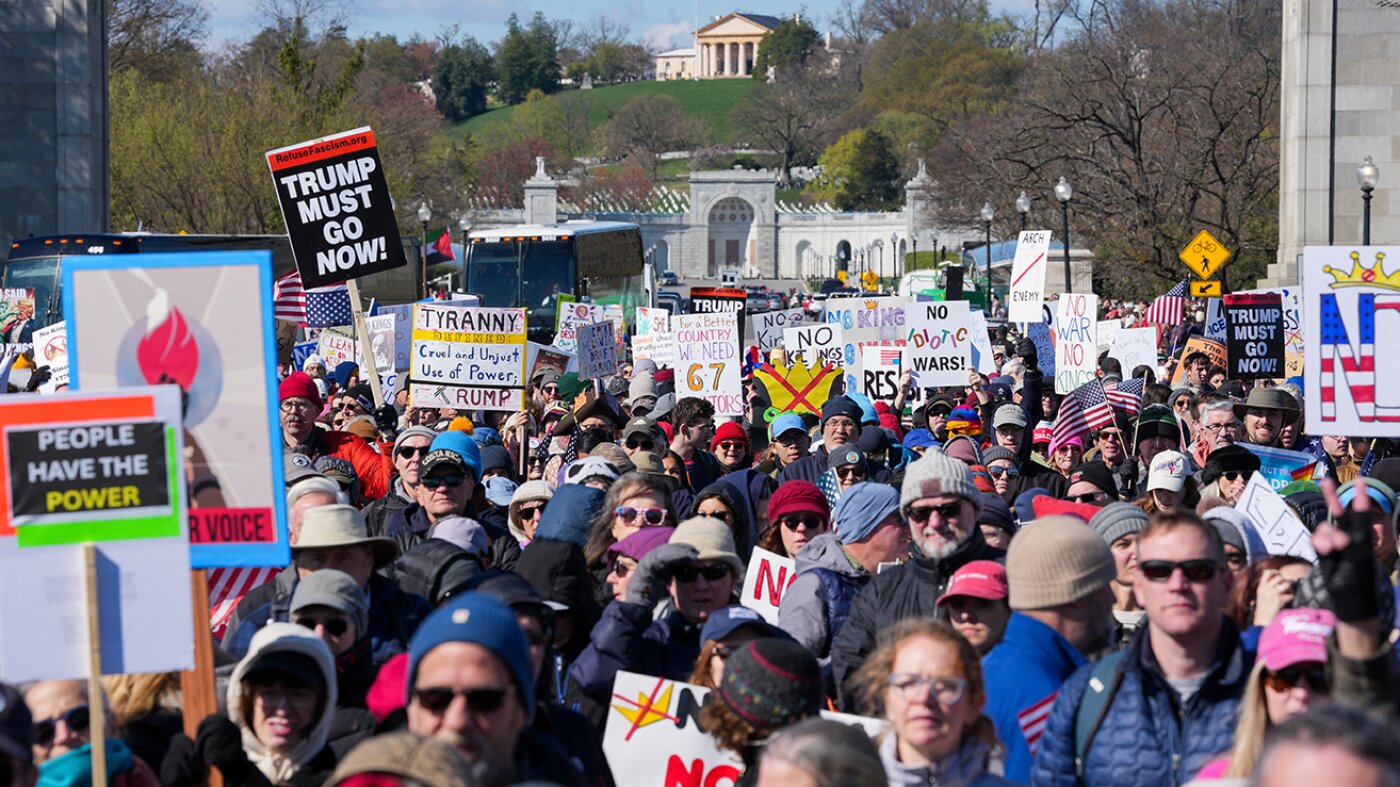
Photos: ‘No Kings’ protests across the country

Jeffries declines to break with indicted Democrat after ethics panel’s guilty verdict

Hundreds of thousands march through London in stand against the far right
-

 Sports1 week ago
IOC addresses execution of 19-year-old Iranian wrestler Saleh Mohammadi
-

 New Mexico7 days ago
Clovis shooting leaves one dead, four injured
-

 Miami, FL3 days ago
Jannik Sinner’s Girlfriend Laila Hasanovic Stuns in Ab-Revealing Post Amid Miami Open
-

 Tennessee6 days ago
Tennessee Police Investigating Alleged Assault Involving ‘Reacher’ Star Alan Ritchson
-

 Minneapolis, MN3 days ago
Boy who shielded classmate during school shooting receives Medal of Honor
-

 Technology7 days ago
YouTube job scam text: How to spot it fast
-

 Science1 week ago
Record Heat Meets a Major Snow Drought Across the West
-

 Politics1 week ago
Schumer gambit fails as DHS shutdown hits 36 days and airport lines grow