North Carolina
Rip currents, bacterial threats among summer concerns at NC beaches

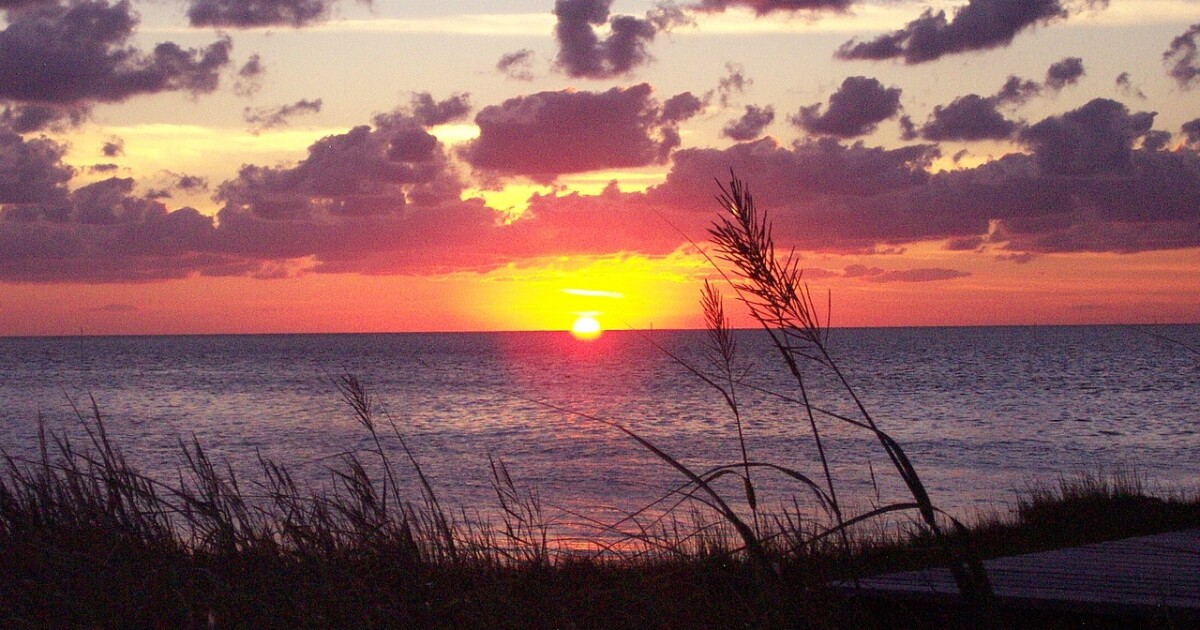
Now that summer is here, hordes of people are flocking to the North Carolina coast, looking to pause life’s hustle and bustle in exchange for a few relaxing days filled with cool breezes and feet-lapping waves.
But for some who visited the coast in June, the experience was anything but relaxing.
According to reports, more than 100 people were rescued from rip currents at North Carolina beaches last month during a 7 to 10-day period.
In some locations, the rescues started piling up even earlier.
“Since May 31, we’re probably easily close to 100 rescues for the season for our squad,” said Shawn Kelly, ocean rescue captain for Carolina Beach.
“Rip currents are the leading weather-related killer in North Carolina,” said Rohan Jain, National Weather Service meteorologist. “Rip currents take the lives of more than 100 people annually in the U.S. and are linked to hurricanes.”
State and federal officials are working to protect the public from potential dangers, including rip currents and bacterial infections. However, the safety of the millions of beachgoers who visit the North Carolina coast falls squarely on the shoulders of lifeguards and ocean rescue staff — and not every beach has lifeguards on duty. According to Visit North Carolina, an online travel information site, 17 North Carolina beaches have lifeguards on duty through Labor Day.
What are rip currents?
Signs at beaches and information provided by the National Weather Service warn visitors of rip currents and other dangers during high-risk days. But the high number of rip-current rescues in June indicates that more may need to be done to educate the public.
The National Oceanic and Atmospheric Association defines rip currents as powerful, narrow channels of fast-moving water prevalent along the East, Gulf and West coasts of the U.S., as well as along the shores of the Great Lakes. They tend to form near the shore where waters with less wave-breaking action are “sandwiched between water with greater wave breaking.” Additionally, rip currents “are found on almost any beach with breaking waves and act as ‘rivers of the sea’, moving sand, marine organisms, and other material offshore,” according to NOAA.
The agency helps inform beachgoers by tracking hurricanes and rip currents. The Atlantic hurricane season began June 1 and runs through Nov. 30; it is the period in which tropical storms and hurricanes are likely to form in the Atlantic Ocean. Tropical Storm Alberto, the season’s first named storm, claimed the lives of four people and flooded parts of Mexico and Texas, according to reports, and Hurricane Beryl is churning through the Caribbean.
What’s more, the National Oceanic and Atmospheric Association forecasts an above-average 2024 Atlantic hurricane season, projecting 17 to 25 named storms — with eight to 13 that could become hurricanes.
This suggests that there likely will be more instances of rip currents forming along the coast this season.
How can I tell if there’s a rip current nearby?
Rip currents are powerful, channeled currents of water flowing away from shore. They typically extend from the shoreline, through the surf zone, and past the line of breaking waves. Rip currents can occur at any beach with breaking waves, including the Great Lakes.
Rip currents form as incoming waves create an imbalance of water piling up in the surf zone. To stay in balance, the water seeks the path of least resistance back through the surf, which is typically a break in the sandbar; this is where the rip current is the strongest. Once the flowing water passes through the narrow gap, it begins to spread out considerably — weakening the velocity and strength of the rip current circulation.
From the shore, the rip current might look like a gap of darker water that appears calm and is flanked on either side by breaking waves and whitewater, according to NOAA. A rip current could also appear like water that’s churning more than the surrounding area, and it could be darker, as the current stirs up more sediment and sand.
Surf Forecast is a service NOAA provides to keep the public informed about the risk of rip currents. North Carolina beachgoers can use the online resource to track areas along the coast that have a high probability of rip currents.
‘Part of the puzzle’
Meteorologists use the term teleconnections to describe the cause and effect relationship between hurricanes and rip currents: Hurricanes can be hundreds of miles or more away from shore and still trigger rip currents.
“When a lot of the [North Carolina] beaches had those rescues […] there was a tropical wave that was nearing South Carolina and Georgia,” said National Weather Service meteorologist Olivia Cahill. “So that was increasing the swell along the beaches. When that happens, a lot of times, we can have an increased rip current risk.”
Jain said a contributing factor to the above-average forecast for the 2024 hurricane season is that we’re experiencing a La Niña weather pattern. That means, in part, that there are fewer high winds or less wind shear in the Atlantic Ocean.
“Hurricanes don’t like wind shear, so reduced wind shear makes it easier for hurricanes to form in the Atlantic basin this year, compared to a El Niño year, where there’s more wind shear in the Atlantic Ocean, and that would help suppress hurricane formation.”
Storm ratings categories can be misleading
The National Weather Service’s Saffir-Simpson Hurricane Wind Scale rates storms 1 to 5, depending on wind speed. Storms rated a 3 or higher are considered major events because of their potential to cause significant property damage and death.
However, the storm rating system does not provide a complete picture of the risks associated with hurricanes, especially with lower category storms, said Erik Heden, warning coordination meteorologist for the National Weather Service in Morehead City.
Heden said information about potential rainfall amounts, how fast a storm is moving or how long it may hover over an area are also important factors that need to be considered in order to stay safe.
“Remember Irene in 2011 and Florence in 2018 were just category 1 storms. The category of the storm is part of the puzzle, not the whole puzzle!”
‘Know before you go’
Wyatt Werneth, public service spokesperson for the American Lifeguard Association, said beachgoers should avoid locations that don’t have a lifeguard on duty.
“Your chances of drowning in front of a lifeguard are 1 in 18 million,” Werneth said. “We call it, ‘know before you go’ — go to the internet and research where lifeguards are [in relation] to those locations that you’re visiting.”
However, Werneth acknowledges that not all beaches are staffed with lifeguards. In Florida, an initiative started by the Cocoa Beach Rotary Club called Drown Zero is aimed at providing protection at beaches without lifeguards on duty.
Werneth said the Drown Zero project consists of a series “flotation rescue stations” spaced along stretches of beach that include a flotation device and a shepherd’s hook that can be deployed if someone needs rescuing.

“If someone gets caught in a rip current and they’re struggling, and if we can provide them with flotation, they’re going to be okay.”
Beyond needing to increase flotation stations on beaches, Werneth also said that more information about rip currents should be placed in welcome centers, restaurants and lodging facilities.
Other water safety advocates agree that local communities need to beef up public service announcements, including going as far as posting information on billboards and on hotel television network channels.
But ocean rescue captain Kelly says that there’s plenty of information provided about rip currents to Carolina Beach visitors, and that people need to be more vigilant.
“When you’re on vacation, you’re on break mode. You’re not paying much attention, you don’t care what the signs mean.”
Fecal bacteria indicator
While rip currents have dominated the news cycle thus far, officials are also concerned about bacterial infections.
Recently, the Environmental Protection Agency announced $9.75 million in funding aimed at protecting beachgoers in coastal and Great Lake communities.
“Protecting water quality at beaches is a priority for EPA, and with these grants we are helping our state, Tribal, and local partners monitor water quality to ensure it is safe for residents and visitors,” Bruno Pigott, acting assistant EPA administrator, said in part.
The Beaches Environmental Assessment and Coastal Health Act, also known as the BEACH Act, amended the Clean Water Act in 2000. The act requires the EPA to provide funding for microbial testing “and monitoring of coastal recreational waters, including the Great Lakes and waters adjacent to beaches or similar points of access used by the public,” according to information provided by the EPA.
North Carolina will receive $293,000 to support ongoing testing for enterococci, bacteria that live in the intestines of warm-blooded animals and humans. Enterococci is not known to be harmful, but it is a fecal bacteria indicator and may signal the presence of other, harmful, bacteria, such as E. coli, in local waterways.
According to the EPA, the presence of enterococci and other fecal bacteria indicators in water can stem from several sources, such as stormwater runoff, sewage discharged from recreational boats, malfunctioning septic systems, runoff from agricultural fields, and wild and domestic animal waste.
The North Carolina Recreational Water Quality Program started testing coastal waters for enterococci in 1997 and alerts the EPA if levels exceed federal standards. The program monitors 221 locations in the 20 coastal counties along the Virginia and North and South Carolina borders.
“We sample all of these locations year round, just on a reduced schedule during the non-swimming season,” said Erin Bryan-Millush, environmental program supervisor, Division of Marine Fisheries, North Carolina Department of Environmental Quality.
Testing frequency
Weekly sampling of enterococci levels in swimming areas along the coast — also known as daily use sites, and biweekly in sections along the sound and estuarine rivers — began on April 1 and run through October, according to Bryan-Millush.
“If these samples exceed the swimming standard, then we issue public notification via press release and social media to notify the public that these areas are under advisory,” she said. “We also place a sign at the beach access point […].”
Enterococci levels for a daily use site should not exceed 104 enterococci per 100 milliliters, which equates to about 104 microscopic enterococci per half a cup, according to state and federal standards.
“If you’re a person who is immune compromised […] you’re [at] great risk if you swim in waters that exceed the standard for fecal indicator bacteria,” Bryan-Millush said.
This article first appeared on North Carolina Health News and is republished here under a Creative Commons license.

North Carolina
North Carolina Republican operative shaping the state’s early voting plans is reassigned

North Carolina state Auditor Dave Boliek has reassigned a staffer working on state election preparations following reporting illustrating how the longtime Republican operative was using his position to shape county’s early voting plans.
North Carolina
North Carolina man accused of shooting and killing another tourist inside of a Broward Airbnb, police say

A Fourth of July trip to South Florida ended in tragedy after a 21-year-old North Carolina man was shot and killed inside a Hollywood Airbnb, according to police.
Investigators say Jaydon Williams, 21, was shot multiple times early Saturday morning at a vacation rental in the 1900 block of Funston Street. Hollywood police have arrested 21-year-old Devian Blount, also of North Carolina, and charged him with first-degree murder.
Officers responded to the home around 1 a.m. Saturday, following reports of a shooting. They arrived to find Williams suffering from multiple gunshot wounds. He was transported to Memorial Regional Hospital, where he died.
According to the arrest report, Williams was on a FaceTime call with his girlfriend at the time of the shooting. She told investigators she heard someone accuse Williams of stealing, followed by a verbal argument and several gunshots.
The incident has left neighbors shaken in the typically quiet Hollywood community. While some residents noted they were aware that the home operated as a short-term rental, others expressed concerns about the property’s transient nature.
“That’s a bad idea to me to have an Airbnb in this neighborhood where so many people and kids live,” said neighbor Dorell Green. “Different types of people come and go. You don’t know who is coming or leaving.”
Ivette Santana, another resident, said her primary concern is the violence. “I don’t care about the Airbnb,” Santana said. “My problem is the shooting over there.”
Blount is being held without bond at the Broward County Jail.
CBS News Miami has contacted Airbnb to determine if the property remains in operation. We are also working to contact the property’s owners.

The video above is a live stream of WBTV and affiliated programming, and may not be directly related to the article below.
CHARLOTTE, N.C. (WBTV) – A sickness causing explosive diarrhea across the United States has been reported in North Carolina.
State health officials confirmed on Tuesday, July 7, that at least 145 cases of cyclosporiasis had been reported in North Carolina since May 1.
According to the state’s health website, cyclosporiasis is an intestinal illness caused by a parasite known as cyclospora. Sickness is often brought on by consuming food or water that is contaminated with the parasite.
The state’s website says it usually takes a week for symptoms to show up after consuming the contaminated food or water.
Among the symptoms are:
- Watery diarrhea with frequent, sometimes explosive bowel movements
- Loss of appetite
- Weight loss
- Stomach cramps/pain
- Bloating
- Increased gas
- Nausea
- Fatigue
Health officials said cyclospora is often associated with fresh herbs and produce that are served uncooked. They said because those items often go uncooked, it is imperative for them to be cleaned prior to eating.
According to the CDC, healthy people who contract cyclosporiasis usually recover without treatment but may have symptoms for a few days to a month or longer. In other cases, the sickness can be treated with antibiotics.
As of mid-June, the CDC reported cyclosporiasis cases in 17 states. At that point, no deaths had been reported.
Also Read: One US state is now reporting 700+ cases of ‘explosive’ diarrhea linked to parasite
Copyright 2026 WBTV. All rights reserved.
-
 Alabama2 minutes ago
Mac Jones asked who was his craziest teammate at Alabama
-

 Alaska9 minutes ago
Climate Change Is Helping an Invasive Predator Wreak Havoc on Iconic Alaskan Fish
-

 Arizona12 minutes ago
Arizona man pleads guilty after illegally living in forest for years among ‘1,000lbs of trash’
-

 Arkansas17 minutes ago
Army names intelligence facility for Arkansas Tech graduate
-

 California24 minutes ago
How California Effectively Legalized an Open-Air Sex Market
-

 Colorado27 minutes ago
Julian Lewis Says Deion Sanders’ Colorado ‘Wasn’t Really Looking at Defenses Much’ Last Season
-
 Idaho32 minutes ago
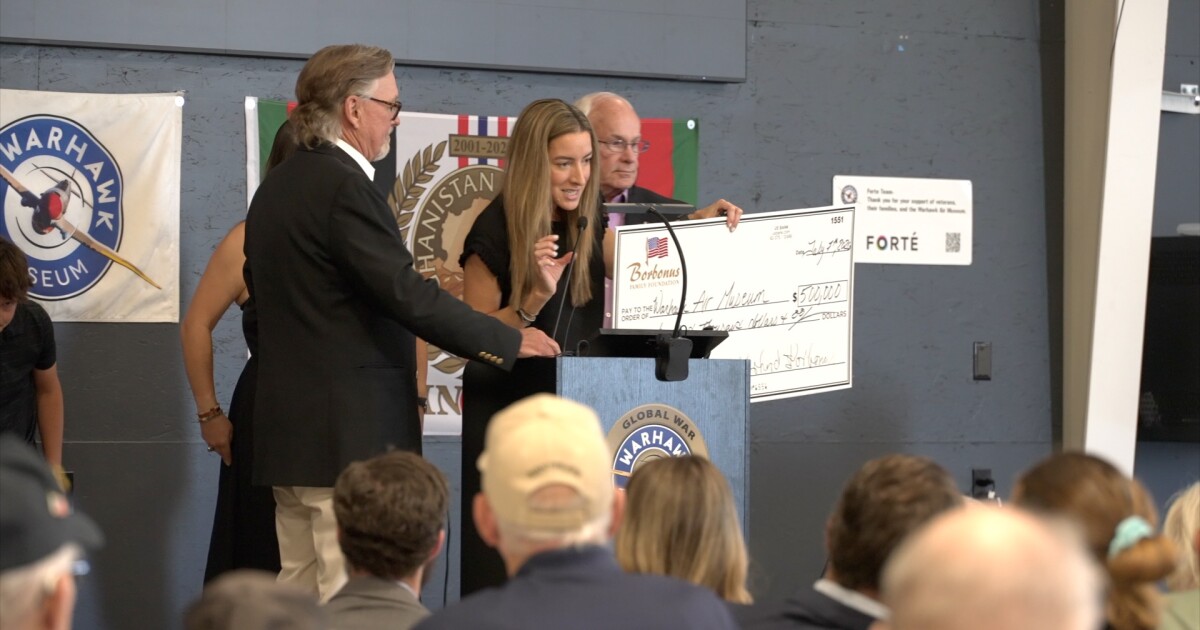
Warhawk Air Museum receives $500K grant honoring fallen Idaho soldier
-

 Connecticut32 minutes ago
Several beaches closed to swimming due to potential bacteria in the water

