North Carolina
North Carolina sheriff steps down after sexual misconduct charges


BRYSON CITY, N.C. (AP) — The longtime sheriff of a western North Carolina county whom some women accused of sexual misconduct has quit before he could be permanently removed.
Curtis Cochran, who was first elected Swain County sheriff in 2006, retired from the post effective July 1, according to a statement from the county Board of Commissioners. The chief deputy is performing the sheriff’s duties while the commissioners decide who will serve out the remainder of Cochran’s four-year term through late 2026, the statement said.
Cochran, 72, was charged in state courts with felonious restraint and misdemeanor sexual battery, soliciting prostitution and assault on a female, according to June 27 arrest warrants. The same day, Ashley Hornsby Welch, the district attorney for Swain and six other far western counties, filed a petition seeking to remove Cochran from office for “willful misconduct and maladministration in office.”
A Superior Court judge immediately suspended Cochran from office pending a final court ruling. But the removal petition becomes moot with Cochran’s retirement. A petition-related hearing set for Monday in adjoining Graham County was canceled, online court data said.
Welch’s removal petition included signed affidavits by two women who allege Cochran made separate unwanted sexual advances on them while he drove on land held by the Eastern Band of Cherokee Indians. The Eastern Band’s reservation, known as Qualla Boundary, is in portions of Swain County.
The county of 14,000 people is about 300 miles (483 kilometers) west of Raleigh and includes much of the Great Smoky Mountains National Park that straddles the Tennessee border.
Cochran was released on bond on the state criminal charges and faces an Aug. 5 court hearing. He is also charged under Eastern Band tribal law with two counts of oppression in office and one count of abusive sexual contact, Cherokee Indian Police Department Chief Carla Neadeau said in a news release.
Cochran’s attorney didn’t respond Monday or Tuesday to a phone message and emails seeking comment and additional details.
The Associated Press generally does not name people who say they have been sexually assaulted.
The petition alleges that on June 22 one woman — an Eastern Band member — flagged down what she believed to be a law enforcement vehicle. She was upset and crying because she and her boyfriend had been fighting verbally, and she accepted an invitation into the SUV from the driver — whom authorities identified as Cochran — because she believed it would diffuse the situation, the petition says.
The petition alleges that when Cochran started driving he began touching the woman despite her objections and asked her to perform a sexual act, but she refused. He later pulled the SUV off the road, got out and positioned himself so the woman couldn’t get out of vehicle and asked again, according to the petition. Cochran told the woman if “there was a time that I got in trouble, all I would have to do is say his name and he would help me,” the woman’s affidavit read. She again declined, ultimately was dropped off at her house and contacted tribal police.
The affidavit signed by the other woman said that on June 23 — soon after being released from the tribal jail — she accepted a ride from what looked like a government vehicle that she said turned out to be driven by Cochran. She said Cochran starting touching her — doing so even as she pulled away — and she ultimately got out of the vehicle.
The FBI and State Bureau of Investigation also participated in the criminal investigation, which included video footage, according to the petition.
Cochran, a Republican, had no law enforcement experience before his first sheriff’s election victory, having previously been Swain County’s maintenance director.


RALEIGH, N.C. (WNCN) — The National Weather Service issued several severe thunderstorm warnings for various areas of central North Carolina on Sunday afternoon.
The final warning was allowed to expire at 4:45 p.m. for Northwestern Harnett County, Northeastern Lee County, Southwestern Wake County, and Southeastern Chatham County, according to the National Weather Service office in Raleigh.
Forecasters said the warning was triggered by a severe thunderstorm east of Sanford, moving east at 10 mph.
The warning said the main threats from the storm are 60 mph wind gusts and nickel-sized hail.
Scroll below for the latest central North Carolina weather warnings and advisories:

FAYETTEVILLE, N.C. — A man was found dead and a juvenile was injured after a shooting early Sunday morning in Fayetteville, police said.
According to the Fayetteville Police Department, officers responded around 4:03 a.m. to multiple ShotSpotter alerts in the area of Newark Avenue.
While investigating the reports and searching for evidence, officers found numerous shell casings and discovered a man suffering from a gunshot wound in the 700 block of State Avenue.
Emergency medical personnel pronounced the man dead at the scene.
Police said a juvenile male later arrived at Cape Fear Valley Medical Center with non-life-threatening gunshot injuries connected to the incident. He is listed in stable condition.
The Fayetteville Police Department’s Homicide Unit has taken over the investigation.
Police said the shooting appears to be an isolated incident and there is no ongoing threat to the public.
Anyone with information is asked to contact Detective E. Alrafai at 910-723-0327 or submit an anonymous tip through Fayetteville/Cumberland County Crime Stoppers.
The NC Lottery offers several draw games for those aiming to win big.
Here’s a look at Saturday, July 4, 2026 results for each game:
Winning Powerball numbers from July 4 drawing
17-38-46-50-69, Powerball: 20, Power Play: 2
Check Powerball payouts and previous drawings here.
Winning Pick 3 numbers from July 4 drawing
Day: 0-2-0, Fireball: 8
Evening: 3-0-5, Fireball: 0
Check Pick 3 payouts and previous drawings here.
Winning Pick 4 numbers from July 4 drawing
Day: 1-1-9-3, Fireball: 9
Evening: 7-0-2-1, Fireball: 5
Check Pick 4 payouts and previous drawings here.
Winning Cash 5 numbers from July 4 drawing
11-22-24-25-29
Check Cash 5 payouts and previous drawings here.
Winning Double Play numbers from July 4 drawing
13-20-28-32-43
Winning Millionaire for Life numbers from July 4 drawing
17-20-37-40-43, Bonus: 04
Check Millionaire for Life payouts and previous drawings here.
Feeling lucky? Explore the latest lottery news & results
Are you a winner? Here’s how to claim your lottery prize
All North Carolina Lottery retailers will redeem prizes up to $599.
For prizes over $599, winners can submit winning tickets through the mail or in person at North Carolina Lottery Offices. By mail, send a prize claim form, your signed lottery ticket, copies of a government-issued photo ID and social security card to: North Carolina Education Lottery, P.O. Box 41606, Raleigh, NC 27629. Prize claims less than $600 do not require copies of photo ID or a social security card.
To submit in person, sign the back of your ticket, fill out a prize claim form and deliver the form, along with your signed lottery ticket and government-issued photo ID and social security card to any of these locations:
- Asheville Regional Office & Claim Center: 16-G Regent Park Blvd., Asheville, NC 28806, 877-625-6886 press #1. Hours: 9 a.m. to 5 p.m. Monday through Friday. This office can cash prizes up to $99,999.
- Greensboro Regional Office & Claim Center: 20A Oak Branch Drive, Greensboro, NC 27407, 877-625-6886 press #2. Hours: 9 a.m. to 5 p.m. Monday through Friday. This office can cash prizes up to $99,999.
- Charlotte Regional Office & Claim Center: 5029-A West W. T. Harris Blvd., Charlotte, NC 28269-1861, 877-625-6886 press #3. Hours: 9 a.m. to 5 p.m. Monday through Friday. This office can cash prizes up to $99,999.
- NC Lottery Headquarters: Raleigh Claim Center & Regional Office, 2728 Capital Blvd., Suite 144, Raleigh, NC 27604, 877-625-6886 press #4. Hours: 9 a.m. to 5 p.m. Monday through Friday. This office can cash prizes of any amount.
- Greenville Regional Office & Claim Center: 2790 Dickinson Avenue, Suite A, Greenville, NC 27834, 877-625-6886 press #5. Hours: 9 a.m. to 5 p.m. Monday through Friday. This office can cash prizes up to $99,999.
- Wilmington Regional Office & Claim Center: 123 North Cardinal Drive Extension, Suite 140, Wilmington, NC 28405, 877-625-6886 press #6. Hours: 9 a.m. to 5 p.m. Monday through Friday. This office can cash prizes up to $99,999.
Check previous winning numbers and payouts at https://nclottery.com/.
When are the North Carolina Lottery drawings held?
- Powerball: 10:59 p.m. Monday, Wednesday, and Saturday.
- Mega Millions: 11 p.m. Tuesday and Friday.
- Lucky for Life: 10:38 p.m. daily.
- Pick 3, 4: 3:00 p.m. and 11:22 p.m. daily.
- Cash 5: 11:22 p.m. daily.
- Millionaire for Life: 11:15 p.m. daily.
This results page was generated automatically using information from TinBu and a template written and reviewed by a Carolina Connect editor. You can send feedback using this form.
-
 Sports4 minutes ago
‘I wish she was alive.’ Eliezer Alfonzo has emotional day as Dodgers lose to Padres
-

 World12 minutes ago
Photos: Khamenei funeral procession under way in Tehran
-
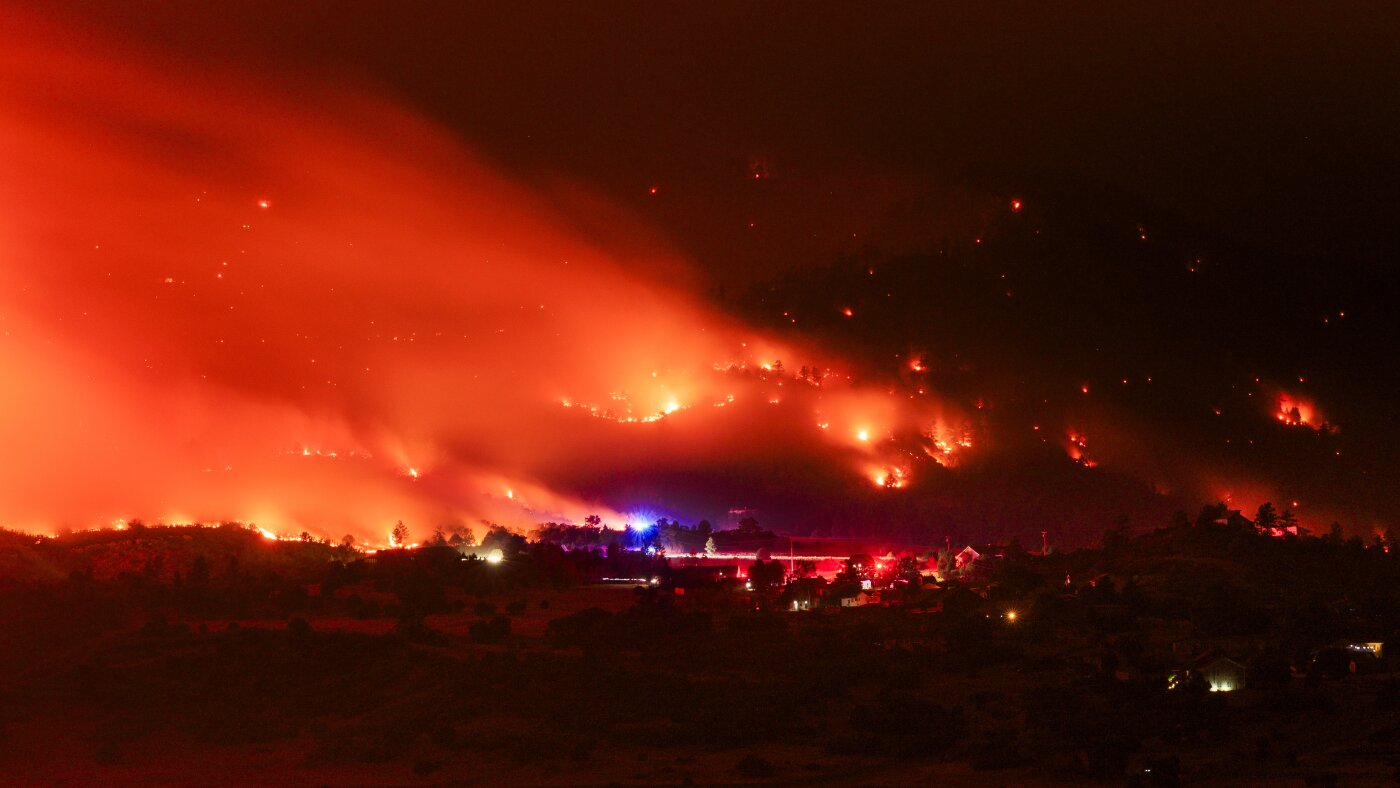 News37 minutes ago
Thunderstorms, heat and wind will hamper efforts to contain Colorado wildfires
-

 New York2 hours ago
10-Minute Challenge: The Ceiling at Grand Central
-

 Los Angeles, Ca2 hours ago
1 killed, multiple people injured in Tarzana 4-car crash
-

 Detroit, MI2 hours ago
Power outage forces flaring at Marathon’s Detroit refinery; portion of Schaefer Road closed
-

 San Francisco, CA3 hours ago
San Francisco’s fireworks show ends in hours of gridlock involving Waymo cars
-

 Dallas, TX3 hours ago
FIFA Fan Fest in Dallas paused due to lighting in the area Sunday evening

