North Carolina
North Carolina GOP's legislative priorities for this year inch closer to becoming law

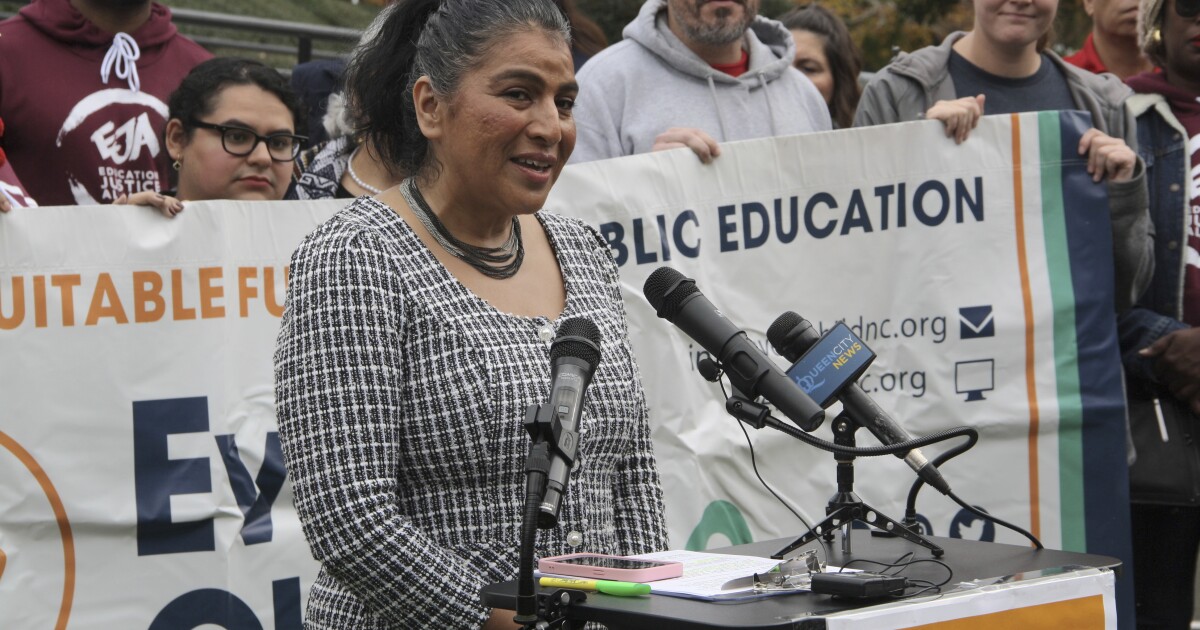
North Carolina GOP lawmakers are one step closer to rolling out their legislative-session priorities into law before the year’s end after the state House opted to override one of Democratic Gov. Roy Cooper’s vetoes on Tuesday.
The vetoed bill contains significant funding for private school scholarship grants and a law compelling local sheriffs to comply with U.S. Immigration and Customs Enforcement — two issues that Republican leaders have repeatedly emphasized throughout this year’s session. The House’s override, which took place largely along party lines, is part of the General Assembly’s multiday session this week that includes work such as providing more relief to western North Carolina communities still grappling with Hurricane Helene’s aftermath.
About $463 million will go toward the state’s Opportunity Scholarship program under the legislation. It also includes $160 million to address enrollment growth in K-12 public schools and community colleges.
Most House Democrats railed against the private school scholarships and called on Republicans to focus on funding public schools and Helene recovery efforts. In a letter to lawmakers on Monday, Cooper, who is term-limited and leaves office come January, urged GOP legislators to do the same.
“The economy of Western North Carolina needs an infusion of funding now, not months from now,” he said in the letter.
But Republicans say the legislation is necessary to quell lengthy waitlists. Last year, the GOP-controlled General Assembly removed income caps for the Opportunity Scholarship program, which led to skyrocketing demand and 55,000 waitlisted children. Both legislative chambers eventually agreed on a spending deal — the bill Cooper vetoed — in September to eliminate the state’s waitlist.
“We do not need to set up a false choice between hurricane relief and public school funding and funding for the Opportunity Scholarship program,” Mecklenburg County Republican Rep. Tricia Cotham said in support of the bill.
The bill also incorporates language to force North Carolina sheriffs to comply with ICE detainers — requests to hold inmates believed to be in the country illegally — and notify federal immigration agents. Under the new law, those inmates would be held up to 48 hours under a judicial official’s order so they can be picked up by ICE agents.
The legislation comes on the back of President-elect Donald Trump’s electoral victory earlier this month. His campaign stressed illegal immigration as a safety issue and promised mass deportations during his second term — which was referenced during House debate as a reason to support the bill.
“I hope you will take into consideration the overwhelming opinion shown by the voters again of this state and country in this past national election,” Caldwell County Republican and bill sponsor Rep. Destin Hall said.
Opponents to the bill, such as several advocates at an Every Child NC news conference earlier on Tuesday, voiced concern that the law would unfairly target immigrant communities in North Carolina.
“HB 10 is extremely harmful for the undocumented community, and especially children who are attending our public schools here, going to school in fear that their parents might be detained,” said Brandy Sullivan, Southern Wake Liberal Ladies co-founder and a naturalized citizen from Mexico.
The Senate also needs to override Cooper’s veto to have the legislation go into effect.


AVERY COUNTY, N.C. (WLOS) — Former Madison County Sheriff’s Chief Deputy Bronis Coy Phillips was processed on Thursday, June 25, in a North Carolina county, according to court documents.
The warrants were served in Avery County on behalf of Madison County. He is now being held without bond, according to the court paperwork.
SBI ARRESTS FORMER MADISON CO. CHIEF DEPUTY FOR CRIMINAL ACTIVITY INVOLVING INMATES, STAFF
The North Carolina State Bureau of Investigation announced that Phillips was arrested on June 14 in Maricopa County, Arizona. He’s expected to face charges in N.C., as News 13 previously reported.
According to court records, Phillips faces multiple felony charges, including:
- Furnishing controlled substances to inmates
- Furnishing deadly weapons to inmates
- Involuntary servitude
- Two counts of assault with a firearm on a detention facility employee
COURT RECORDS REVEAL NEW DETAILS IN FORMER MADISON CO. CHIEF DEPUTY ARREST
He was also charged with two misdemeanors:
- Furnishing alcoholic beverages to inmates
- Furnishing tobacco products to inmates
BE THE FIRST TO COMMENT
The NCSBI said the charges stem from an investigation into alleged criminal activity involving inmates and detention facility staff.

North Carolina and NC State, scheduled to meet just once in the men’s basketball regular season for the second consecutive season, are working to schedule a nonconference meeting in Greensboro in December, WRAL has learned.
The Atlantic Coast Conference rivals had played annual games in Raleigh and in Chapel Hill for more than 100 years before last season when the teams met just once in Raleigh. This season, the ACC scheduled just one meeting between the schools in Chapel Hill.
The additional meeting, which is not finalized, would be played Dec. 15 in Greensboro, according to a source.
The 18-team ACC moved from 20 conference games to 18 before last season in an attempt to improve the league’s NCAA Tournament credentials. It worked as the league received eight bids to the NCAA Tournament in 2026, but it also created some scheduling changes, including the elimination of a second game between NC State and UNC in most seasons.
The current conference schedule dictates that each school plays two teams twice (a primary partner and a variable partner), plays 14 teams once and misses one school altogether. In 2026-27, UNC will play Duke (primary) and Louisville (variable) twice and won’t play Clemson. NC State will play Wake Forest (primary) and California (variable) twice and won’t play Syracuse.
Greensboro was the longtime home of the conference office. The ACC men’s basketball tournament has been held at First Horizon Coliseum, formerly the Greensboro Coliseum, 29 times – the most in league history.
For decades, the ACC played a true round robin among its members — a format that became unworkable as the league grew to 12, 15 and, now, 18 basketball-playing schools.
State lawmakers have pursued various measures to force schools in the UNC System to play each other, citing the economic impact of such meetings. North Carolina and NC State are UNC System schools.
A 2024 bill would have required the two ACC schools to play each other and other in-state public universities in football and basketball. A 2025 bill, aimed at potential conference realignment, would have required that NC State and UNC play each annually in football, men’s and women’s basketball, baseball and softball. The Senate’s 2025 budget proposal would have required more basketball games between UNC, NC State and smaller schools across the state. The budget would have added UNC and NC State to the schools that receive annual distributions from sports betting tax revenue.
None of those measures have become law.
NC State and North Carolina have been conference mates since 1911, first in the South Atlantic Intercollegiate Athletic Association, then in the Southern Conference and now the ACC. Both have been members of the ACC since its 1953 founding.

There is some sad news from the North Carolina Wildlife Resources Commission’s popular Barn Owl Live Cam.
Wildlife officials say a Great Horned Owl entered the barn Wednesday around midnight and killed one of the barn owl owlets. Biologists have not been able to determine which owlet was lost.
They have confirmed it was one of the three youngest birds in the nest. The Wildlife Commission says the incident is heartbreaking but also a natural part of life in the wild.
Great Horned Owls are one of the main predators of Barn Owls, and encounters between the two species do happen. The attack was captured on the live camera.
Officials say the video also shows an extremely rare moment when the adult female Barn Owl fought the Great Horned Owl on top of the nest box. Despite the loss, the surviving owlets are expected to continue growing over the coming weeks.
They will lose their fluffy down feathers, begin exploring outside the barn, and continue developing hunting skills.
The Wildlife Commission says some of the young owls could leave the nest as early as July.
After leaving the nest, they usually travel alone and may eventually move hundreds of miles from where they hatched. The Barn Owl Live Cam remains available for the public to watch.
-

 Arizona3 minutes ago
Arizona Lottery Pick 3 Evening, Fantasy 5 results for June 25, 2026
-

 Arkansas5 minutes ago
DeGray Lake Resort State Park offers a week’s worth of summer fun in Arkansas
-

 California11 minutes ago
This 1947 adobe home has found a new life as a ‘modern California hacienda’
-

 Colorado18 minutes ago
Colorado Springs police searching for missing 11-year-old
-

 Connecticut20 minutes ago
Opinion: More to do on gun violence prevention in CT
-

 Delaware26 minutes ago
After changing Delaware’s library system forever, she’s stepping away
-

 Florida33 minutes ago
Florida tattoo shop refuses service to military and veterans for being ‘war criminals’
-

 Georgia36 minutes ago
What would it take for Missouri football to stun Georgia in 2026?

