North Carolina
North Carolina Drone Photographer Seeks Supreme Court Support for First Amendment Rights


 Michael Jones asks the court to uphold his right to provide aerial information to clients.
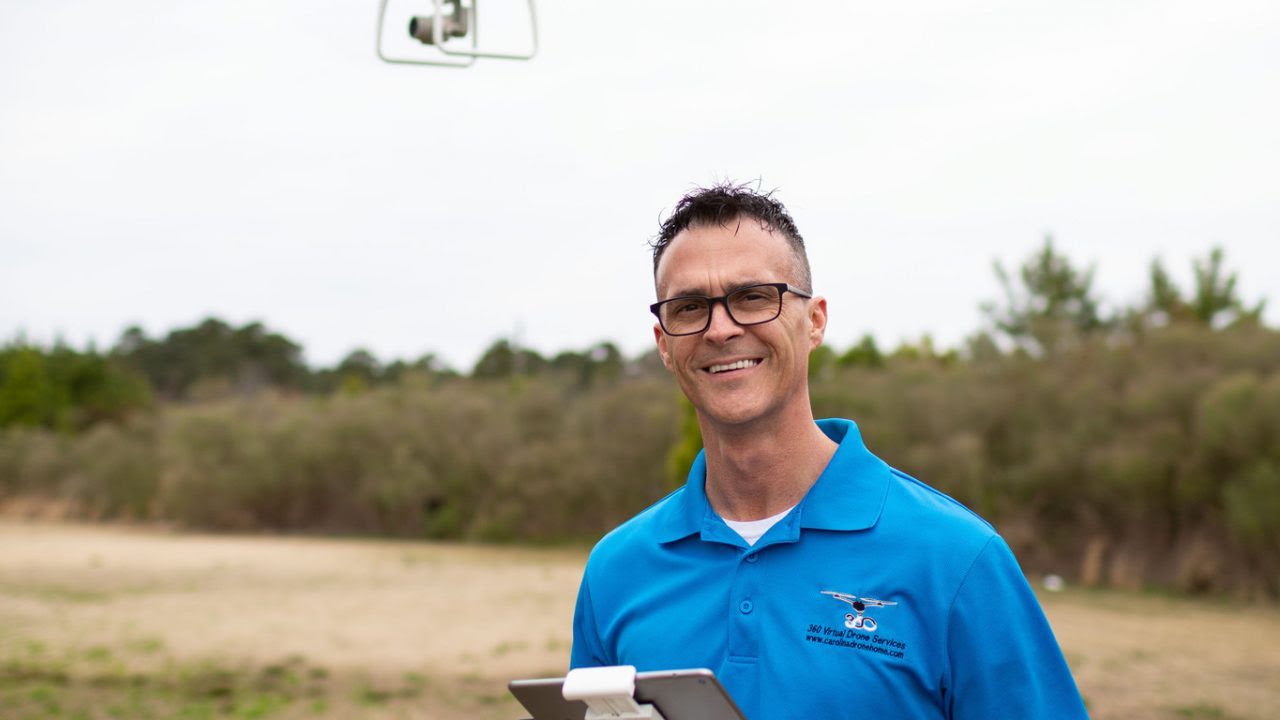 Michael Jones asks the court to uphold his right to provide aerial information to clients.
Yesterday, the Institute for Justice (IJ) filed a petition with the United States Supreme Court on behalf of Michael Jones, a drone photographer in North Carolina. The case brings forward an important question: does providing data and information through aerial photographs qualify as speech that the First Amendment fully protects, or do state licensing boards have the authority to censor it?
For several years, North Carolina’s land-surveying board has targeted small drone operators, including Michael Jones, claiming that their aerial maps amount to illegal land surveying. Unlike many states, North Carolina classifies even basic aerial mapping as surveying. This requires operators to hold a full surveyor’s license, which demands years of education and experience. The state has enforced this law rigorously, threatening drone businesses with severe penalties.
Jones’ Legal Battle
Michael Jones, based in Goldsboro, North Carolina, is an FAA-licensed drone operator who sought to build an aerial-mapping business. His goal was to provide landowners with aerial perspectives, which they often find useful without needing a full land survey. He wanted to use his drone to capture images and create maps or 3D models using publicly available tools.
However, in 2019, the North Carolina surveying board issued a cease-and-desist letter. The board ordered Michael to shut down his operations or face civil and criminal penalties. In response, Michael sued the board, arguing that his maps and photographs are forms of speech protected by the First Amendment.
“I’ve always been clear what I’m doing isn’t setting property lines. It’s simply providing pictures and information,” said Michael. “I even included a big red disclaimer on my website saying I’m not a licensed surveyor, but the board shut me down anyway. I don’t know of any surveying company that was using drones like I was.”
The Fourth Circuit Court Decision
In May, the Fourth U.S. Circuit Court of Appeals rejected Michael’s case. Although visual information and images have long received First Amendment protection, the court ruled that Michael’s creation of maps was “conduct” and not speech. The court’s reasoning was partly based on the fact that Michael’s work takes place on private property, which it claimed gives the government more leeway to regulate.
IJ Senior Attorney Sam Gedge criticized the ruling, stating, “Drone technology may be new, but the principles at stake in Michael’s case are as old as the nation itself. Taking photos and providing information to willing clients is speech, and it’s fully protected by the First Amendment. Only by badly misapplying the First Amendment could the Fourth Circuit hold differently.”
The Fourth Circuit’s ruling conflicts with decisions made in other federal courts. The Fifth Circuit, covering Texas, Mississippi, and Louisiana, and the Eleventh Circuit, covering Florida, Alabama, and Georgia, have issued rulings that favor the protection of such activities under the First Amendment.
A Call for Supreme Court Intervention
With the split between the circuits, Michael is now asking the Supreme Court to take up his case. His petition argues that if the government can stop someone from communicating aerial photographs simply because they contain specific information, First Amendment rights are at risk. “When a government agency sends a cease-and-desist letter telling you to stop communicating photographs containing specific types of ‘data’ and ‘information,’ that’s a red flag that serious First Amendment interests are in play,” said IJ Attorney James Knight.
This is not the first time the Institute for Justice has faced such a challenge. IJ has successfully defended similar cases, including a mapping company in Mississippi that faced similar accusations of unlicensed practice. Michael’s case joins others, including a map maker in California.
The Supreme Court’s decision on whether to hear Michael’s case could have far-reaching implications for First Amendment rights, particularly in an era when technology like drones is rapidly evolving. The outcome may determine whether state licensing boards can regulate new technologies in ways that limit both entrepreneurship and free speech.
Read more:

Miriam McNabb is the Editor-in-Chief of DRONELIFE and CEO of JobForDrones, a professional drone services marketplace, and a fascinated observer of the emerging drone industry and the regulatory environment for drones. Miriam has penned over 3,000 articles focused on the commercial drone space and is an international speaker and recognized figure in the industry. Miriam has a degree from the University of Chicago and over 20 years of experience in high tech sales and marketing for new technologies.
For drone industry consulting or writing, Email Miriam.
TWITTER:@spaldingbarker
Subscribe to DroneLife here.



It was an eventful offseason in Chapel Hill, but the North Carolina Tar Heels recovered quite nicely, incorporating a formidable coaching staff and roster in just a few months.
Upon his arrival, head coach Michael Malone was faced with an uphill battle to revamp a roster, but he passed that test with flying colors. North Carolina’s style of play will look vastly different from last season, based on the players it acquired this offseason.
With that in mind, here are predictions for the five most efficient scorers on the Tar Heels’ 2026-27 roster. It is important to note that efficient scoring doesn’t necessarily mean each and every player on this list will also lead the team in scoring.
1. Matt Able
The 6-foot-6, 211-pound forward shot 41.6 percent from the field and 35.5 percent from three-point range last season at North Carolina State. That efficiency is a high baseline, as Able will be surrounded by more talent and placed in more advantageous spots in Malone’s system.
At North Carolina, Able could eclipse 40 percent from three-point range and near 50 percent from the field. Able doesn’t require a high volume of shot attempts to produce, which is why he is one of the most exciting players for me to watch next season.
2. Sayon Keita
Again, this doesn’t mean I expect Keita to emerge as one of the leading scorers on the roster. That being said, the former Barcelona center should be operating exclusively near the basket, and the majority of his shot attempts should come from close proximity.
Keita’s offensive production, for the most part, will generate from lobs, put-back dunks, and layups. There will be times Keita will be asked to create his own points in the post, but he will predominantly operate in the paint.
3. Jarin Stevenson
Malone prioritized retaining Stevenson, and the Alabama transfer’s role will expand in 2026. The 6-foot-9, 216-pound forward was an afterthought at the beginning of last season, but in ACC play, Stevenson’s production and efficiency took a major leap.
In the final nine games of the season, with Caleb Wilson out of the lineup, Stevenson averaged 10.4 points and 6.4 rebounds while shooting 50 percent from the field. When Stevenson officially re-signed with North Carolina, Malone stated that he envisions the senior forward fulfilling a role similar to Aaron Gordon when Malone coached in Denver. With a potentially elite backcourt, Stevenson will have ample space to drift into, providing manageable looks at the basket.
4. Terrence Brown
Last season at Utah, the 6-foot-3, 174-pound guard shot 45.3 percent from the field, which is very impressive considering that he was a ball-dominant guard in the Big 12. However, Brown struggled from three-point range, shooting 32.7 percent from beyond the arc.
While I expect that to improve under Malone, Brown still expects to be shooting a handful of low-percentage shots along the perimeter. This is not to say that Brown will struggle; rather, it reflects where his shots will come from on the floor.
5. Neoklis Avdalas
The Virginia Tech transfer possesses a versatile skill set and can play both backcourt positions and on the wing. The 6-foot-9, 216-pound guard is a legitimate point guard option, according to his former coaches, and Malone is obviously aware of that.
Last season, Avdalas shot 38.6 percent from the field and 31.4 percent from three-point range, which was a disappointing output. However, those percentages should improve at North Carolina.
Add us as a preferred source on GoogleFollow

RALEIGH, N.C. (WNCN) — The North Carolina Department of Environmental Quality’s Division of Waste Management is providing up to $18 million in grants to help clean up additional debris from Hurricane Helene in the western region, state officials said Friday.
According to NCDEQ, applications are being accepted for the Debris Recovery & Disposal grant program, which is funded by the U.S. Environmental Protection Agency (EPA) through the American Relief Act of 2025.
The program provides up to $18 million in grants to local governments, councils of government, and nongovernment organizations, according to NCDEQ.
State officials said applications are being accepted through Sept. 14. The maximum award is $3 million. The grants may be used for up to three years.
Counties, municipalities, councils of government, and nongovernmental organizations in FEMA-declared disaster areas due to Helene are eligible for the grants, according to NCDEQ.
According to NCDEQ, eligible projects include collecting and disposing of non-hazardous debris from private or public properties, clearing and managing debris at streambanks, floodplains, farmland, and local park lands, and removing debris to improve solid waste and recycling infrastructure.
Applications may be emailed to Chris Hollinger with the Division of Waste Management at chris.hollinger@deq.nc.gov.
State officials advise applicants to email or call Hollinger at 919-707-8284 or contact Jason Watkins at jason.watkins@deq.nc.gov or 336-776-9674 to discuss the eligibility of their project before applying.
More information about applying can be found on the NCDEQ website.
North Carolina
‘Infuriating, heartbreaking’: Raccoon recovering after getting caught in leg trap at Mecklenburg County park

The video above is a live stream of WBTV and affiliated programming, and may not be directly related to the article below.
CHARLOTTE, N.C. (WBTV) – A raccoon is fighting for its life after it got caught in a leg trap at a Mecklenburg County park this week.
North Carolina Wildlife Rehab said a group of children found the raccoon stuck in a leg trap at a Mecklenburg County park on Thursday, June 18, but did not specify which park.
“This is absurd, infuriating, and heartbreaking,” a spokesperson said. “Just think about how many animals may have already been harmed—and how many babies may have been orphaned because of this.”
Raccoon had heat stroke, front legs trapped
Wildlife Rehab said it’s unclear how long the raccoon was trapped, but both of his front legs were caught.
Thankfully, his legs were not broken; however, he suffered heat stroke and had a body temperature of 105.4 degrees.
“Please keep this sweet boy in your thoughts and prayers as he fights to recover,” a spokesperson said.

Multiple traps found on property
The children reportedly found the trap attached to a fence on an adjoining property, and investigators said officers found several more during their search.
“Thankfully, the kids did not attempt to free the raccoon themselves, though that easily could have happened,” a spokesperson said. “Instead, they immediately got their parents, who then contacted Animal Control.”

Officials said the raccoon was the second animal caught in a leg trap, and both incidents occurred at parks in Mecklenburg County.
Wildlife Rehab said the traps are illegal and cited animal cruelty. In North Carolina, however, foothold traps aren’t entirely illegal, but they’re strictly regulated by state law. They can be used in Mecklenburg County if they comply with state guidelines for trap size, jaw type, and proper tagging.
–> Also read: Trio stole donated blankets, beds from Cabarrus County animal shelter, director says
As of this writing, no arrests have been made, and no charges have been filed.
Copyright 2026 WBTV. All rights reserved.
-

 Los Angeles, Ca5 minutes ago
Armed home invasion in L.A.’s Fairfax District leaves resident assaulted
-

 Detroit, MI23 minutes ago
Tigers top Chicago White Sox 4-1; Detroit pitcher Troy Melton allows 1 hit in 6 innings
-

 San Francisco, CA35 minutes ago
MLB Rumors: Latest Intel on Potential Matt Chapman Trade for San Francisco Giants
-

 Dallas, TX37 minutes ago
Dallas’ Fair Park to Get $2.5M Boost From McKesson – Dallas Weekly
-

 Miami, FL43 minutes ago
Air quality alert in effect in Miami-Dade and Broward counties: National Weather Service
-

 Boston, MA50 minutes ago
Boston Signs Big Blueliner Rylind MacKinnon To One-Year Extension
-

 Denver, CO53 minutes ago
Fire destroys home under construction in northwest Denver
-

 Seattle, WA58 minutes ago
We can stop pretending that a suburban stadium would be better for soccer in Seattle

