North Carolina
How Kamala Harris Hopes to Take North Carolina Back for the Democrats


At 10 A.M. on the Tuesday after Labor Day, the traditional start of the final sprint to Election Day, ten people in the eastern North Carolina town of Wilson sat in folding chairs, typing numbers into their phones and waiting to see if anyone answered. Many didn’t, and some who did had little time for what the callers were offering. The pitch was for the campaign of Kamala Harris, who, until two months ago, was the largely undefined understudy to an unpopular President. “O.K., so you’re definitely a strong Trump supporter?” Ruth Thorne, a volunteer, said into her phone. The woman on the other end said yes. Thorne resumed her pitch, but the woman hung up. “She said we’re going to Hell,” Thorne reported, “and ‘I’m not going to listen to your bullshit.’ ” But earlier, as the negative responses had piled up, Jill Ortman-Fouse, a regional organizing director for the Harris campaign, had reassured her, saying, “Every so often, you get a win.”
It’s the occasional wins that are driving the Harris campaign to pour money into an effort to attract voters in rural areas of North Carolina, part of a national strategy to mobilize neglected pockets of Democrats and peel away Republican and independent voters in battleground states. Simply the fact that so many volunteers were willing to work the phones on a Tuesday morning, beyond the cities and the suburbs where Democrats have drawn their greatest strength in the state, inspires a quiet confidence in the Harris camp that the effort might work. Twenty minutes into the session, Thorne, who retired from a corporate-lending job in New York and moved to Wilson eighteen months ago, ended a call, smiled, and said, “She’s at work, but she’s going to vote for Kamala.”
In a race that, according to current state polls, could go either way, the potential payoff for Harris is large. Not only is the effort pushing Donald Trump to spend time and money in a state where he once felt sure of victory; there is also the fact that a Harris win there, capturing sixteen electoral votes, would make it highly probable that she would win the Presidency. As a Harris staff member put it in a training Webinar for about fifty volunteers last month, “There is really no way that Donald Trump can make it to the White House if Democrats win North Carolina.”
Barack Obama, who won North Carolina in 2008 by a scant fourteen thousand votes, is the only Democrat to win the state since Jimmy Carter did it, in 1976, and Obama failed to repeat the victory in 2012. North Carolina also happens to be the only one of the seven battleground states that Trump won in 2020. But optimists note that Democrats have held the governor’s mansion for twenty-seven of the past thirty-one years, and that this year’s G.O.P. gubernatorial candidate is Mark Robinson, who has described homosexuality as “filth,” while saying that abortion “is about killing the child because you weren’t responsible enough to keep your skirt down.” Trump endorsed Robinson this year, explaining to a crowd in Greensboro that he told him, “I think you’re better than Martin Luther King. I think you’re Martin Luther King times two.” (On Thursday, CNN reported a host of offensive and lewd comments that Robinson allegedly made some years ago on a porn site, including calling King a “huckster” and a “maggot.” Robinson denied making the remarks.)
Supporters upbeat about Harris’s chances also point out that Joe Biden lost to Trump by just seventy-four thousand votes out of more than five million cast. “If you’re talking about a half point among white non-college voters, and you pick up a third of a point with Black mobilization, and you slightly overperform with suburban voters, which is very likely, that’s winning and losing in North Carolina,” Michael Halle, a senior organizer in Obama’s campaigns in North Carolina, told me. He admires the Harris campaign’s emphasis on hiring local organizers who know their communities, and he thinks that it’s wise to avoid talking about gender, race, and polarizing cultural themes in favor of discussing values and practical issues that make voters say, “It seems like she’s talking to me about that.”
There is no clearer sign that Harris believes North Carolina is in play than her decision to hold her first post-debate rallies in Charlotte and Greensboro, Democratic strongholds where she hopes to run up the score. “It’s going to be a very tight race until the end, and we are the underdogs,” she said in Charlotte, before a crowd of about seventy-five hundred people, urging her supporters to press ahead and “fight.” A few hours later, in front of seventeen thousand supporters at the Greensboro Coliseum, she touted her proposals to give tax breaks to the parents of newborns and to people starting small businesses, while mocking Trump’s comment that, nine years after first calling for the repeal of the Affordable Care Act, he only has “concepts of a plan.”
North Carolina has the country’s second-largest rural population, behind Texas. East of Raleigh’s Democratic precincts, where the increasingly rural territory turns light blue and then red, lie Nash County and Wilson County (with a combined population of about a hundred and seventy-five thousand). Each went narrowly for Biden during the Covid-hampered election of 2020, when Democrats did little in-person campaigning until the final days. David Berrios oversaw the North Carolina Democratic Party’s ground game. One of his biggest regrets, he told me, was the failure to make a broad statewide push for rural voters who might have tipped the state to Biden.
Matt Hildreth, the Harris campaign’s new national rural-outreach director, has spent the past dozen years leading Rural Organizing, a progressive nonprofit that develops strategies for communities where Republicans have repeatedly triumphed. “Sometimes I think we have had a message that’s too narrow,” he told me, pointing out that millions of Democrats of all races and ethnicities live in rural America. “There has been a temptation to run campaigns based on stereotypes. Agriculture is a cornerstone of the economy, but most people work in education, in health care, in manufacturing.” How can Harris win people over? “First, we need to show up,” he said. He added that the messenger is almost as important as the message, which means recruiting local organizers. “People in these areas know who is gettable. They know what messages work.”
The Harris campaign now has more than two hundred and thirty paid staff members in North Carolina, including at least a hundred and seventy assigned to twenty-six field offices around the state. One person who has noticed their activities is Thom Tillis, the Republican senator, who told Semafor, “What we’re seeing in North Carolina that we haven’t seen for a time, though, is a really well organized ground game by the Democrats.” Among the rural counties where the campaign has opened offices is Nash, where the popular Democratic governor, Roy Cooper, spent summers working on his family’s tobacco farm and later raised his own family. When organizers launched an office in Wilson County, after Harris entered the race, sixty volunteers showed up.
On the day I visited, amid memorabilia from past campaigns, including an old bumper sticker reading “Gimme Jimmy. Vote Democratic,” Thorne and the other volunteers were making phone calls. They wore T-shirts in pastel colors that read “Vote.” They had been given scripts and talking points that described Harris as a loyal partner to Joe Biden who has helped produce millions of jobs and lower drug costs while investing in roads and bridges. The sheets suggested ways to reply if a voter they reached raised character, abortion, January 6th, or the economy. There was also an entire page of pointers on Project 2025, covering topics from book banning and Head Start to abortion pills. Nancy Hawley, the former president of Democratic Women of Wilson County, started a call by describing Harris as a proven leader, a “protector of our American freedoms,” and someone who worked side by side with Biden to deliver large sums for infrastructure. The verdict? “She said that she and her husband would have to talk about it. She said, ‘He may vote for one, and I may vote for another.’ And I wanted to say, ‘Yay! Halfway there!’ ”



Police shot and killed an armed man outside a gay bar in Asheville, North Carolina.
Shakey’s staff said in a social media post that police were called after a man who had been ejected from the bar earlier that night for concerning behavior was seen in the parking lot brandishing a gun, according to ABC affiliate WLOS. The Instagram post is no longer publicly available.
Asheville police officers responded to the dive bar around 1:57 a.m. Wednesday after receiving a report that a person had discharged a firearm, according to the department. Officers arrived to find the man firing a gun in the parking lot and returned fire, striking him. When Asheville Fire personnel arrived at the scene, the man was pronounced dead.
Phoenix man arrested for allegedly threatening to shoot up LGBTQ+ bar over Charlie Kirk killing
Asheville Police Department
“No officers were injured during the incident,” the police release states.
The North Carolina State Bureau of Investigation will investigate the officer-involved shooting. The bureau has not released further information. The name of the man killed has not been released.
Interim Police Chief Jackie Stepp told reporters, “There is no evidence at this time that suggests the shooter had any type of bias or hate motive.”
Witness Taylor Pace told WLOS that he watched the man firing from inside the bar. “I was in the window watching, and then he started firing at the building where the window was,” Pace said. “He literally pulls the gun up and starts shooting at the building. You hear them hitting the bricks, and at that point, I’m like, ‘Everyone get down.’ Everyone’s screaming. Panic, chaos, and fight or flight set in.”
Related: Shots fired at Myrtle Beach gay nightclub, one detained
According to the bar’s social media post, staff members called 911 and were advised to lock all doors to prevent the man from entering. No one else was struck by gunfire.
“There are no words to fully express how grateful we are for our staff and patrons. In a moment of fear and uncertainty, everyone came together, stayed calm, looked out for one another, and followed directions without hesitation. Watching people care for each other in the middle of such a terrifying situation is something we’ll never forget,” the bar wrote in its Instagram stories.
“Because of everyone’s quick actions, cooperation, and concern for one another, every customer and every employee inside Shakey’s made it home safely. We are incredibly thankful.
“We also want to thank the Asheville Police Department, emergency dispatchers, EMS, and every first responder who responded so quickly and professionally.
North Carolina
North Carolina’s Charming Raleigh Suburb Is A Fast-Growing Town With River Views And A Historic Downtown – Islands

As North Carolina’s capital, Raleigh attracts no shortage of visitors each year for its downtown museums, historic sites, and restaurants. But about 20 miles southeast of downtown Raleigh, there’s another destination travelers might not think to explore: Clayton. With a thriving historic downtown and access to the scenic Neuse River, this often-overlooked Raleigh suburb is growing rapidly, its population increasing by nearly 27% since 2020 (according to World Population Review).
Downtown Clayton centers around Main Street, where restored commercial buildings now house restaurants, bars, and entertainment venues. Visitors can also follow the town’s outdoor sculpture trail, take a stroll through the Clayton River Walk on the Neuse, or get out on the river for some kayaking. With enough to see and do for a full day, Clayton makes an easy road trip from Raleigh and remains accessible to those coming from farther away.
Travelers visiting Clayton from outside the immediate region can fly into Raleigh–Durham International Airport (RDU) or take an Amtrak train to Raleigh Union Station. Overnight options within town are limited to places such as the Clayton Magnolia Inn, a bed-and-breakfast offering seven guest rooms in a restored 1885 home, and the budget-friendly Comfort Suites Clayton–Garner, a practical hotel with free breakfast. However, travelers looking for a wider selection of hotels can stay in Raleigh or along the I-40 corridor near Garner.
The Clayton River Walk provides the town’s best river views
Begin your trip to Clayton by exploring the Clayton River Walk on the Neuse, a 4-mile trail open to walkers and cyclists, with the trailhead located just a five-minute drive from downtown. Much of the trail passes through forested areas along the Neuse River. You can expect to see wildlife, such as ospreys, along the route, which adds to the trail’s appeal for nature lovers. However, one Google reviewer notes that locals have also spotted bears in the area, making it worth reviewing what to do in the event of an encounter before hitting the trail. You can never be too sure, after all.
The main trailhead for Clayton River Walk includes a parking lot for visitors and is also near a boat access ramp for paddlers. If you’d like to enjoy the calm, peaceful waters but don’t have a personal canoe or kayak, you can rent one or book a group river excursion with Neuse Adventures Canoe & Kayak Rentals, located a 10-minute walk from the parking lot. The company’s FAQ recommends bringing essentials such as water, sunscreen, and extra clothes for the best experience on the river. For another underrated Neuse River destination in North Carolina, consider adding Smithfield to the itinerary.
Clayton’s historic downtown is filled with art and local landmarks
After spending time along the Neuse River, travelers can explore the Clayton Historic District, which is listed on the National Register of Historic Places. Along East Main Street, you’ll find preserved 19th- and 20th-century buildings that now hold locally owned businesses. Fare Game, an arcade and bar known for its inventive pizzas, occupies the ground floor of the restored Carroll Building, a former family-owned dry goods store which dates back to 1915. A few doors down, Revival 1869 serves craft cocktails and hosts live jazz shows inside a restored commercial building.
In addition to historic buildings, a must-see while exploring downtown is the Clayton Sculpture Trail. This free outdoor art exhibition features more than a dozen works, most of which are located along East Main Street, with additional pieces on East Front Street and at the Clayton Community Center. Travelers can use the town’s online sculpture map to identify each installation and follow the recommended route. If you’re interested in viewing more public art in North Carolina, Rocky Mount is another town with artsy vibes you’ll want to visit.
Travelers should also check out the schedule at The Clayton Center, a former school complex just one block from Main Street that now serves as a 600-seat entertainment venue. Visitors can purchase tickets to a wide range of events, including comedy shows, live concerts, and theater. In addition to visitors praising the center’s friendly staff, one Google reviewer highlighted the building’s “beautiful architectural details” and the way its vintage auditorium contrasts with the “modern loft-like reception space.”


How to protect yourself against a shark
A safety diver calmly pushes away a shark, explaining how to stay safe if approached. (Credit: @mermaid.kayleigh/@andriana_marine via Storyful)
Claire Hardwick, Storyful
The Atlantic Ocean’s largest tagged great white shark in history recently resurfaced off the coast of North Carolina near the Outer Banks, scientists said.
At nearly 14 feet long, the big fish named “Contender” appears to be heading toward Cape Cod and the eastern coast of Canada, according to a OCEARCH, a global non-profit marine research group tracking shark sightings and migration.
Researchers first tagged the massive great white shark on Jan. 17, 2025 off the Florida-Georgia coast, according to online data from the non-profit.
Most recently Contender breached the surface just before 2 p.m. ET on July 10.
Prior to that, the shark had pinged several times including on April 14 and on April 23.
A ping means the Smart Position and Temperature Transmitting tag attached to the fish’s dorsal fin was spotted above the surface for a brief period as it swam, transmitting a near-live location signal to the OCEARCH shark tracker.
The visit comes at the time of year when great white sharks start migrating north to warmer waters for a larger food supply, as previously reported by USA TODAY.
How much does the largest great white shark tagged weigh?
According to OCEARCH’s shark tracker page, Contender weighs 1,653 pounds.
An adult male, the shark believed to be just over 30 years old.
“Contender’s name is in honor of Contender Boats, a longtime OCEARCH partner, whose industry-leading sport fishing and pleasure boats enable our research missions,” the non-profit wrote on its website.
See live view of tagged sharks that are tracked:
To track Contender and other tagged marine life online, download the OCEARCH Global Shark Tracker App, available on iOS, Android, and on desktop at ocearch.org.
Natalie Neysa Alund is a senior reporter for USA TODAY. Reach her at nalund@usatoday.com and follow her on X @nataliealund.
-
 Business6 minutes ago
Netflix reports higher profits as investors worry about growth
-
 Entertainment12 minutes ago
Kris Jenner’s mom, beloved matriarch Mary Jo ‘MJ’ Shannon, dies at 91
-
 Politics24 minutes ago
Trump repeats debunked claims about voting vulnerabilities in prime-time speech
-
 Science30 minutes ago
Bass administration quietly replaced chief heat officer a month ago
-
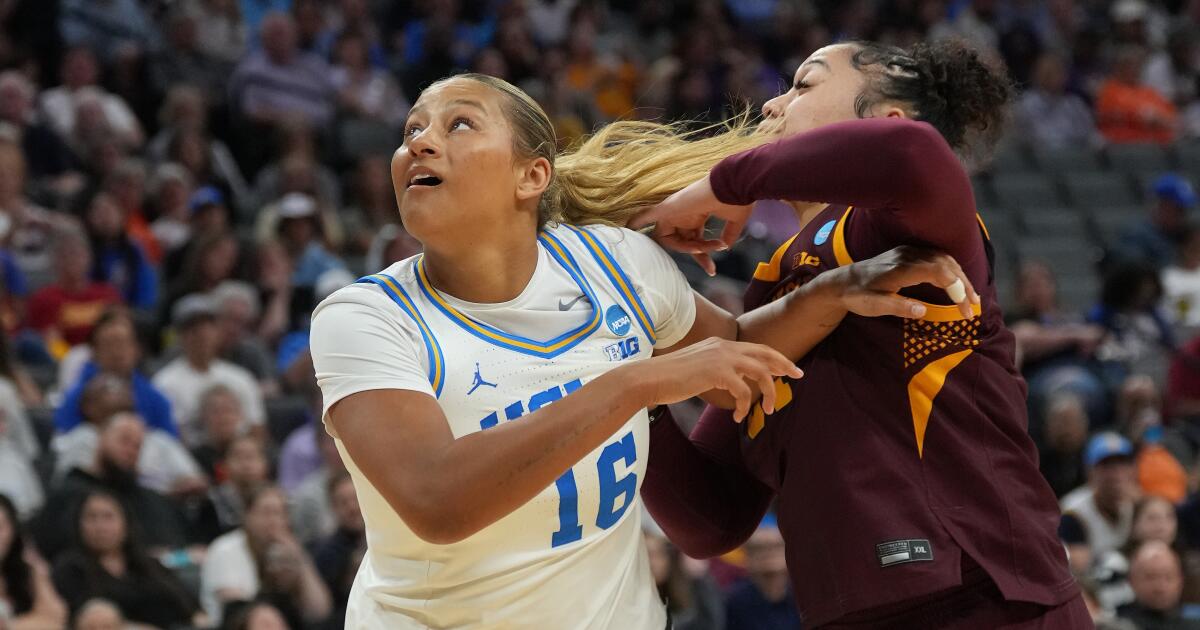 Sports36 minutes ago
UCLA women embrace new players, tougher standards in bid to repeat as champs
-

 World48 minutes ago
China rebukes UK over nationalisation of British Steel
-
 News1 hour ago
Flood sirens blare in South Central Texas as rivers reach perilous heights
-

 Los Angeles, Ca3 hours ago
Arrest made in deadly shooting at 4th of July gathering in Compton; search for 2nd suspect continues

