Mississippi
University of Mississippi “SouthTalks” Continue Theme of Creativity in the South


Spring slate of events begins February 6, 2024
The SouthTalks series continues the “Creativity in the South” programming focus this spring at the University of Mississippi, with lectures, performances, and film screenings examining the interdisciplinary nature of Southern studies.
The series is sponsored by the university’s Center for the Study of Southern Culture. All events are free and open to the public and, unless otherwise noted, take place in the Tupelo Room of Barnard Observatory.
“We are looking forward to continuing our ‘Creativity in the South’ theme,” said Afton Thomas, associate director for programs.
“Our schedule of events include book talks on the ‘Tacky South’ and Appalachia; a film screening about Black inheritance and Gullah/Geechee culture in South Carolina; how the faith-healing leader Charles Manuel Grace adapted the ‘badman’ archetype of the blues to inform his ministry; a conversation between photographer Margo Cooper and father-son blues musicians Joe and Trent Ayers; and much more.”
The series opens Tuesday (Feb. 6) with filmmaker Yaphet Smith and independent arts administrator Annalise Flynn presenting “The Creative Legacy of the Unusual Artist Ms. L.V. Hull.” In their 4 p.m. session, they will discuss the role of storytelling, particularly the need for new narratives, in the various efforts to share Hull’s artful life.
These efforts include a documentary film; preserving her home, which was listed as one of America’s 11 Most Endangered Places by the National Trust in 2023; and repurposing structures on Hull’s street in Kosciusko to create the L.V. Hull Legacy Center, which will open in November in conjunction with an exhibit of her work at the Mississippi Museum of Art.
At noon Wednesday (Feb. 7), DeLisa Hawkes presents “Into the ‘Glades: Zora Neale Hurston and African American Indigenization.” Hawkes will discuss how Zora Neale Hurston presents African Americans’ indigenization within the United States through literary reflections on their relationships with the land and its peoples.
Hawkes is an assistant professor of Africana studies and an affiliate faculty of the Department of English and the Women, Gender and Sexuality Program at the University of Tennessee, specializing in 19th to 21st-century African American literature.
Katharine A. Burnett and Monica Carol Miller present “The Tacky South” at noon Feb. 14. They will highlight the essays featured in their collection, “The Tacky South,” which range from discussions of 19th-century local-color fiction and the television series “Murder, She Wrote” to red velvet cake and the ubiquitous influence of Dolly Parton.
At 5 p.m. Feb. 22 in the Barnard Observatory Gammill Gallery, Cuban American artist Ivette Spradlin gives a gallery talk about her photographs “The Warehouses,” about tenants of four warehouses, including punks and artists, in the West End of Atlanta, which is on display now through Feb. 23.
Black Southern multidisciplinary artists and UM alumnae Daniela Griffin, Princeton James, and Zaire Love showcase their creativity at 4 p.m. March 2 in the exhibition “Our Turn.” Together, these three multidisciplinary artists reclaim their space in art creation and showcase their talent and creativity powered by the gift of Blackness nurtured in the South.
“The exhibition promises to be a captivating and immersive experience for witnesses,” said Love, Pihakis Documentary Filmmaker for the Southern Foodways Alliance.
A virtual SouthTalk is set for noon March 20 when Neema Avashia presents “Amplifying ‘Anotherness’: Disrupting Dominant Narratives about Appalachia.” She will explore what happens when writers publish and amplify narratives that complicate understanding of place and people, especially around Appalachia and the South. Register here for this session.
Xavier Sivels, a doctoral candidate in history at Mississippi State University and the 2023 Study the South Research Fellow, presents “‘Ain’t I Pretty?’: Sweet Daddy Grace and the Sacred Blues of the Badman” at noon March 27. Sivels will discuss how Charles Manuel Grace made a name for himself as the faith-healing leader of the United House of Prayer for All People.
At 5 p.m. April 9 in the Overby Center Auditorium, visiting documentarian Jon-Sesrie Goff presents “After Sherman.” Goff returns to the coastal South Carolina land that his family purchased after emancipation and explores his Gullah/Geechee roots, a journey that transformed into a poetic investigation of Black inheritance, trauma and generational wisdom amid the violent tensions that define America’s collective history.
Darren E. Grem, UM associate professor of history and Southern studies, presents “Good Night, New Deal: ‘The Waltons’ and the South’s Great Depression in American Memory” at noon April 10. This talk will consider what regional, racial and rural storylines “The Waltons” offered Americans reeling during the recessionary 1970s.
More broadly, Grem’s discussion will use the popular television show as a springboard for considering the memories and myths audiences allow to be aired when capitalism falters or fails, whether derived from the distant hard times of the 1930s or ’70s or the recent hard times of the Great Recession and COVID-crash.
In the “Deep Inside the Blues” SouthTalk at 5 p.m. April 16, photographer and author Margo Cooper will talk with blues musicians Joe Ayers and his son Trent Ayers. Cooper interviewed both Ayers for her book “Deep Inside the Blues.”
She describes Joe Ayers as kind, wise and passionate about playing guitar. Trent Ayers grew up listening to a variety of blues music with his father – tapes of Arthur “Big Boy” Crudup, Muddy Waters, R.L. Burnside, and Junior Kimbrough – and and they recently worked on an album together called “A Father Son Legacy.” Joe and Trent Ayers will perform during this SouthTalk.
At noon April 24, Joseph M. Thompson, assistant professor of history at Mississippi State University, presents “Cold War Country: Music Row, the Pentagon and the Sound of American Patriotism.” Thompson explores how country music’s Nashville-based business leaders created partnerships with the Pentagon to sell their audiences on military service while selling country music to U.S. servicemembers and international audiences.
Phillip “Pip” Gordon, UM visiting assistant professor of gender studies in the Sarah Isom Center for Women’s and Gender Studies, discusses “Faulkner’s Enduring Queerness” at noon May 1. Gordon discusses Faulkner’s relevance to broadening fields of trans and ace studies and the value such approaches have to our understanding of Faulkner and the South.
The spring schedule concludes with the spring documentary showcase, which is a celebration of the work by Ole Miss Southern studies documentary students. It is slated for 6 p.m. May 3.
By Rebecca Lauck Cleary




GPS data from the Mississippi Department of Marine Resources, obtained by CBS News, tracks the movements of the boat that carried Nolan Wells to Horn Island on July 4. Wells was found dead after going missing following an outing on the island.
The vessel left a dock at approximately 9:56 a.m. that morning and arrived at Horn Island at 11:14 a.m. CBS News has previously reported that Wells was not on the boat when it departed the island.
According to the GPS data, the boat left Horn Island at 4:31 p.m. and returned to its original departure dock. It then traveled into Fort Bayou around 5:52 p.m. before returning to the dock at 6:06 p.m.
Later that evening, the boat went to the Fort Bayou boat launch at 7:19 p.m., according to the MSDMR report. From there, it traveled over land — presumably towed by a vehicle — to the Biloxi, Mississippi, residence of the boat’s owners.
The MSDMR report indicates that the boat’s owner, his mother and one other individual who was reportedly with Wells on the day of the incident have cooperated with the investigation.
The department’s report ends on July 5, following notification that the Jackson County Sheriff’s Office would take over as the lead investigative agency.
Wells, 18, was last seen on July 4 on Horn Island, where he had taken a boat trip with friends to celebrate the holiday, officials said. Wells traveled to the island with his friends but did not return to the mainland with them that afternoon, Jackson County Sheriff John Ledbetter has said.
He was last seen on the island at 3 p.m., according to attorney Ben Crump’s office. His mother reported him missing later that night and a search began.
His body was discovered July 6 off the coast of the island, which is about 10 miles south of the Mississippi mainland, following a search that involved the U.S. Coast Guard, the Mississippi Department of Marine Resources and the National Park Service.
Dental records confirmed the body was Wells, Jackson County coroner Bruce Lynd told CBS News. An autopsy took place on July 7, Lynd said, but the results were not immediately made public. Wells’ body was flown to Washington, D.C., for an independent autopsy, according to Crump.
Wells’ parents have said they don’t believe their son would’ve stayed behind on the island by choice when his friends left by boat.
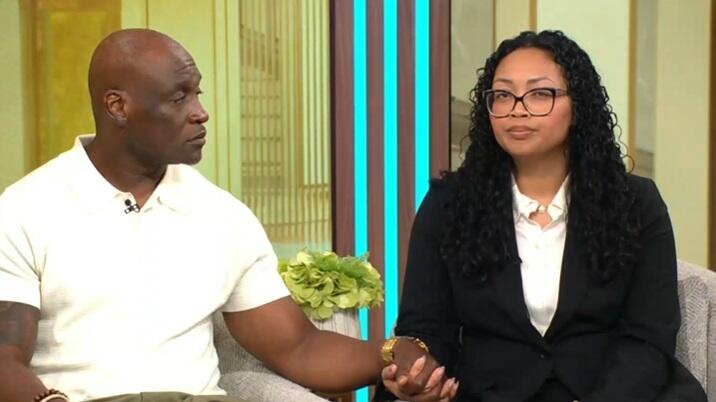
“No, he wouldn’t. Nolan always stays with the group,” Elmore Wonsley, Nolan’s father, told “CBS Mornings” last week. “If you be with me, you come back with me. So that I don’t understand, and with me being a parent, if I was in that situation, I would have told them, ‘You’re going to get back on this boat with me because I don’t want to answer to your parents if something happens to you.’”
When directly asked if he believed Nolan was left behind on the island, his father responded, “Yes. I don’t believe he decided to stay on the island by himself. It just doesn’t — that’s not his character.”
Wells went to Ocean Springs High School and was a rising sophomore on Southwest Mississippi Community College’s football team. Crump said Wells was a good swimmer.


Permanent daylight saving time in New Jersey
House approves permanent DST: NJ gets later sunsets year-round but darker winter mornings; sunrise could be ~8:25 a.m.
Are Americans finally done changing the clocks twice a year? Congress moved a step closer to ending the ritual after the U.S. House passed legislation that would make daylight saving time permanent.
It hasn’t been approved by the Senate yet, but it did pass the House with broad support (308-117). If it passes the Senate, it could be signed by President Donald Trump or become law without his signature, unless he vetoes it.
Trump has previously backed ending twice-a-year time changes.
“I am going to work very hard to see The Sunshine Protection Act signed into Law. It’s time that people can stop worrying about the ‘Clock,’” he wrote in a May Truth Social post.
A few versions of the Sunshine Protection Act were introduced in Congress. Rep. Vern Buchanan, R-Florida, introduced the one that’s gaining ground last year.
Here’s what to know about daylight saving time and the move to change it.
What is daylight saving time and why do we use it?
Daylight saving time is the practice of setting clocks forward an hour from March until November in an effort to gain more sunlight during the summer months.
According to the Library of Congress, it was first enacted in 1918 as a fuel cost-saving measure during World War I.
Daylight saving time became federal law under the Uniform Time Act of 1966. Under the law, some states can opt to exempt themselves from daylight saving time.
Would Mississippi keep daylight saving time year-round?
In 2021, the Mississippi Legislature passed a law saying the state plans to stick with daylight saving time year-round. But that only takes effect if Congress changes the federal law to let states adopt it all the time. A bill updating the effective date died in committee in the 2026 session.
Nineteen states, including Mississippi, are ready to make daylight saving time permanent if Congress changes the law to make the twice-a-year time shift optional, according to the National Conference of State Legislatures (NCSL).
How later sunrises would affect Mississippi
Sunrise and sunset times in summer would look the same.
But the period from November to March would be different. The amount of daylight would be the same, just shifted an hour later than usual.
Mississippi could expect the latest winter sunrises around 7:59 a.m. in mid-January. The earliest sunsets would shift from about 4:46 p.m. in early December to 5:46 p.m., according to timeanddate.com.
Why permanent daylight saving time failed before
Yes. Congress did drop Daylight Saving Time before.
The move failed in 1974 after parents worried about kids going to school before dawn, risking more vehicle crashes.
Some parts of the country, like Michigan or Indiana, don’t see sunrise until after 9 a.m. with the permanent daylight saving time.
When clocks fall back in 2026
Clocks will “fall back” from 2 a.m. to 1 a.m. on Sunday, Nov. 1, 2026, unless Congress changes the law.
Daylight saving time ends on the first Sunday in November each year, under current law. That’s when we get back that missing hour of sleep from the spring time change.
Does Mississippi change clocks twice a year?
Yes. Mississippi, which is in the Central time zone, observes daylight saving time.
What time is it in Mississippi?
Visit timeanddate.com to see the current time in Jackson.
Which states don’t observe daylight saving time?
Most of the U.S. participates in daylight saving time except for Hawaii and most of Arizona. The Navajo Nation in the northeast corner of the state does participate.
Bonnie Bolden is the Deep South Connect reporter for Mississippi with USA TODAY Network. Email her at bbolden@usatodayco.com.
Melina Khan is a national trending reporter for USA TODAY. Keep up with her on X @melinakh and Instagram @bymelinakhan.
Mississippi
Mississippi teen accused of killing elderly couple had worked for them before shooting: family

A teenager in Mississippi knew the elderly couple he’s accused of killing before sparking a standoff with law enforcement, according to new testimony in court.
Cordarius Hobbs, 17, is charged with killing 74-year-old Billy Blair and his 71-year-old wife Virginia Carol Blair during a home break-in on June 3 in Mendenhall, Mississippi.
Family members of Hobbs testified during the Thursday preliminary hearing that he knew the couple.
Family members testified that Hobbs did work for the Blairs for things like cleaning around the house before the alleged shooting, according to WAPT.
Billy Newsome, Hobbs’ grandfather, said he believes his grandson was called to work on the day of the alleged shooting but believes he’s innocent.
“My grandson used to work for the man, why you gone rob a man that you work for,” Newsome said. “Why you gone stay there that long and you know the police out there, and then you gone wait until everybody gets there to run, it just ain’t adding up, something just ain’t right here.”
On June 3, three contractors installing a generator at the Blairs’ home discovered Carol Blair’s car door open with several guns on the seats around 10 a.m., prompting them to call the Simpson County Sheriff’s Department for a welfare check at 11:30 a.m, according to a Mississippi Bureau of Investigation investigator.
By noon, the investigator said that officers arrived and were met with shots fired at them, starting a nearly two-hour-long standoff.
Hobbs was captured after trying to run away from officers, the official said, adding that the teen was unarmed when he was caught.
Carol Blair was found in a bedroom curled in the fetal position and had three gunshots to the back of her head. Bill Blair was found lying on his back in the kitchen with three gunshot wounds to his face.
The state investigator said three firearms were found inside the home as well as 280 shell casings, all owned by Bill Blair.
Hobbs’ defense attorney, Zachary Vaugh, argued that there’s a lack of direct forensic evidence connecting the teenager to the shooting.
“There was nothing to say he’s a principal, he’s the one that pulled the trigger on these things,” Vaugh said. “One of the things alone was, one of the victims was shot twice on one side of the head and once on the other. I think that’s pretty compelling that somebody else may have been in there. There’s a lot of things that are possible, just a tremendous amount of things.”
“When you have an officer say there’s no one that can identify him at the time of the shooting, I just don’t see how that adds up,” he said.
Hobbs is charged with two counts of capital murder and one count of burglary, in addition to 10 other charges. He was denied bond.
In a statement on Facebook, the couple’s family previously said, “We are crushed in spirit, bruised, and brokenhearted, but we are not alone.”
Jason Busby, who was friends with the couple, remembered them as being extremely selfless when speaking with WLBT.
“The man would’ve given you the shirt off his back, his wife is the same, and they’re just great people. It’s just a tragedy,” Busby said. “Everybody around here is still in shock. They were just good people.”
-

 Michigan5 minutes ago
Michigan health expert talks impact of Canadian wildfire smoke: There’s really a long list of who is at risk”
-

 Massachusetts11 minutes ago
The science behind Massachusetts’ wildfire smoke-darkened skies
-

 Minnesota17 minutes ago
Minnesota United Statement on International Friendly | Minnesota United FC
-

 Mississippi23 minutes ago
GPS data tracks boat Mississippi teen Nolan Wells was on before he went missing
-

 Missouri30 minutes ago
Missouri teen Gabbriana Boyster shot dead in home as mom makes horrifying discovery; 3 friends charged
-

 Montana36 minutes ago
Photos: Helena Senators sweep home doubleheader from Billings Royals
-

 Nebraska41 minutes ago
Omaha hospice nurse speaks out after Nebraska AG disciplinary action
-

 Nevada48 minutes ago
Sparks weekend road closures are slated

