Mississippi
Saltwater intrusion in Mississippi River threatens livelihood of residents south of New Orleans


Communities along the freshwater Mississippi River are facing a growing threat from an intrusion of saltwater moving the wrong way up the river from the Gulf of Mexico. It has wreaked havoc on public drinking water infrastructure for thousands of people, decimated a once-thriving local seafood industry, and has raised concerns about the future safety of New Orleans’ drinking water.
“This is our main water source,” said Mitch Jurisich, a third-generation oysterman and a local councilman in Plaquemines Parish, Louisiana’s southernmost parish located an hour’s drive outside New Orleans, where he says damage from saltwater is a daily problem.
“It’s wiped out our public oyster grounds east of the river and put a lot of people in poverty,” Jurisich said.
Jurisich says saltwater intrusion issues used to only happen once a decade, but he says it’s occurred the last three summers in a row, and now the parish is gearing up for it to potentially happen again.
As a result of the last three salty summers, Plaquemines Parish’s fresh water supply for approximately 23,000 of its residents has been compromised, and even though saltwater levels have been low for in the parish the last few months, Jurisich says the salt has left behind lasting and frustrating damage.
The salt is corroding the parish’s water supply pipes, causing them to rust and burst underground — creating frequent muddy messes for parish workers to fix and reducing water pressure for residents in various neighborhoods across the parish. Jurisich says sometimes it’s difficult to even shower, because there’s only a slow drip out of the tap.
Another concern is the potential for lead pipes to corrode and leach dangerous lead levels into the water supplies of homes in the parish that have lead pipe connections. It’s something Jurisich says the parish continues to monitor.
Fixing broken pipes and building stronger infrastructure to make this tiny parish more resilient to the problem would cost an estimated $200 million dollars, Jurisich says.
The parish has become an unfortunate case study of just how serious the issue of saltwater intrusion can be. Other coastal cities around the world and the U.S. are currently facing the threat of what Plaquemines Parish has been subject to over the last few summers, including most recently in Philadelphia.
Asked what his advice would be to other cities, Jurisich said, “You’re not ready till you get hit, you know, it’s just like some people don’t worry about a snake until it bites them … don’t wait to get prepared if you’re starting to see this trend. They need to start preparing for this.”
He says Plaquemines Parish has drafted a 10-year upgrade plan to address the saltwater problem, but acquiring grant money to pay for all of the projects has been difficult, especially at a time when the federal government has made significant spending cuts, including a freeze on promised grant money across the country.
“Power is a luxury. Water is a need,” Jurisch said.
Various studies from researchers around the world, including experts at the University of Arizona and Tulane University say drought, sea level rise, severe storms and dredging are partly to blame for the increase in frequency and swatch of saltwater intrusion.
A spokesperson for the U.S. Army Corps of Engineers says saltwater intrusion began happening regularly in the 1980s in southern Louisiana about once every decade following a dredging project of the Mississippi River to make the port of New Orleans more accessible to trade ships.
In 2023, saltwater in the Mississippi River advanced dangerously close to New Orleans, threatening the city’s water supply and sending the city into a state of emergency. The National Oceanic and Atmospheric Administration said the saltwater intrusion along with severe drought was “an unprecedented double water crisis.”
The Corps of Engineers, which is responsible for managing the river, built an underwater barrier called a “sill” that year to stop the saltwater from flowing further north.
“And that prevents the water from getting up to the water intakes for the major metropolitan areas New Orleans, Saint Bernard,” Corps of Engineers spokesperson Ricky Boyett said.
However, Boyett says the sill wears down over time, leading the Corps to rebuild the sill in the fall of 2024 to prevent another water scare in New Orleans.
For New Orleans, the threat is serious. In public comments to the federal agency, city leaders stressed how the Big Easy’s already fragile, aging drinking water infrastructure would have trouble withstanding the impacts if the 2024 sill were to breach.
Just a week before tens of thousands of Super Bowl visitors flocked to the city for football’s biggest night, neighborhoods across downtown New Orleans experienced yet another boil water notice due to frequent water treatment energy surges and outages.
A spokesperson for the city of New Orleans wrote the following comment in part to the Corps: “There is an urgent need for data collection and model development to develop a risk assessment for drinking water resilience … we know that this threat will continue in the future and it would be extremely disruptive. We request that you study solutions to protect our municipal water supply including a desalination facility that could serve the greater New Orleans region.”
With an estimated $9 billion in annual tourist spending that pours into the Big Easy, Louisiana Lt. Governor Billy Nungesser says the city’s water and infrastructure must be protected with a more permanent solution.
“It washes away in six months. We need to build land ridges and islands out there and give the coast a chance to survive, because we know these hurricanes are getting worse every year,” Nungesser said.
Nungesser added that if saltwater levels were to hit New Orleans as high as they have hit Plaquemines Parish, “it would be a catastrophe, it would shut down the city.”
Another issue with the sill, Nungesser said, is that it’s located higher up the river, where the river is narrower, thus leaving Plaquemines Parish vulnerable and exposed to saltwater whenever the intrusion occurs.
That’s why Boyett says the Corps helped provide special reverse osmosis water filtration systems for Plaquemines Parish’s water supply.
Jurisich says because the filtration systems are remarkably expensive, his community desperately needs money to pay for long-term infrastructure upgrades.
“It’s very costly, very expensive, and also high maintenance. You have to have specialized people ready to clean the filters and be on hand when something may not be working properly,” Jurisich said.
But Nungesser argues a better option is to strengthen the Mississippi River’s flow by filling crevasses along the river’s edge that have widened over the years. He says state and local officials have been pushing the Corps to do that for more than decade.
Just this month, the Corps announced it plans to fill one of the crevasses, because they have found that it has grown so large that it started pulling trade ships as they head towards the port of New Orleans.
When asked what was the turning point for the Corps to take action, Boyett said: “We looked at it as soon as it started impacting navigation, that’s where our authority comes in.”
In a statement to CBS News, Boyett explained more about the proposal, which is set to start construction this summer: “in short, we will return (Neptune Pass) to the flow of 2018, before it began rapidly expanding in 2019.
A satellite image comparison of Neptune Pass by NASA showed how the it had widened overtime between 2019 and 2023.
With 40 million metric tons of exports from New Orleans traveling down the Mississippi River each year, Boyett says the region is the largest shipping channel in the U.S., which requires a careful balance of addressing the saltwater threat and drinking water needs, while also ensuring the river is accessible to ships.
That’s why Boyett says the Corps is investing $20 million on a five-year study that has three years to go to analyze the entire Mississippi River from top to bottom. One significant section of the Lower Mississippi River Comprehensive Management Study will examine the best long-term solutions to the saltwater intrusion phenomenon.
“Today, we are evaluating the large suite of alternatives to determine which to carry forward in the study or which may need their own study to determine feasibility,” Boyett said.
But Lt. Governor Nungesser says southern Louisiana doesn’t have time to wait for researchers to finish the study.
“People ought to be outraged,” Nungesser said of the corps’ response thus far.
Byron Marinovich, the owner of Black Velvet Oyster Bar & Grill, a local restaurant in Plaquemines Parish, said he won’t be waiting around. He says the salt has corroded his restaurant appliances, killed his plants, and led to rips his clothing, among other issues.
“We’re looking to move,” Marinovich said. “Not having clean water is really like at the top of the list.”
Marinovich said he recently had to buy a new ice machine for a third time in 15 years, with the latest one costing him about $5,600.
But unlike the restaurateur, Jurisch said he’s staying put.
“I’m not moving, this is my home,” he said.



From Mississippi to the moon.
That’s one way to characterize the career trajectory of Matthew Ramsey, a DeSoto County native who is helping to guide Artemis II, the NASA space mission now on its way to Earth’s natural satellite.
A veteran aerospace engineer and 1993 Mississippi State graduate who pitched for the university’s “Diamond Dawgs” baseball team while studying the science and design principles that would prove invaluable to NASA, Ramsey, who hails from Hernando, is “mission manager” for the expedition that is taking astronauts around the moon for the first time since Apollo 17 in 1972.
Working largely out of NASA’s Marshall Space Flight Center in Huntsville, Alabama, Ramsey was responsible for ensuring the safety and efficiency of the hardware and technology for the flight, while also helping to define the priorities of the mission.
Launched April 1 from the Kennedy Space Center in Florida, the Artemis II mission consists of four astronauts inside an Orion rocket on a 10-day, 685,000-mile “flyby” around the moon. The crew will test life-support systems, engineering maneuverability and other aspects of space travel in preparation for the return of astronauts to the lunar surface — and beyond.
“For me, it’s all about the crew and ensuring their safety as they venture to the Moon and come home,” said Ramsey, in a statement released by NASA. “Sending people thousands of miles from home and doing it in a way that sets the stage for long-term exploration and scientific discovery is an incredibly complex task.”
Referencing his college career with the Mississippi State Bulldogs, or “Diamond Dawgs,” he said: “There are a lot of similarities between mission management and pitching. You control many aspects of the tempo, and there’s a lot of weight on your shoulders.”
Ramsey worked in both private and government sectors of the tech industry before joining the National Aeronautics and Space Administration in 2002, working on the design of guidance, navigation and control systems for various rocket programs. For Artemis I, the uncrewed moon-orbiting mission of 2022, he coordinated the work of multiple engineering teams.
Ramsey and his colleagues already are preparing for Artemis III, which will conduct tests in Earth’s orbit, and Artemis IV, scheduled for the spring of 2028, which will return astronauts to the lunar surface.
As a NASA press release states, Ramsey is helping to get the space agency “primed for what lies ahead: sending humans back to the Moon for the first time in more than 50 years and laying the foundation for future missions that will ultimately enable human exploration of Mars.”

JACKSON, Miss. (WLBT) – More than 100 judges could soon receive pay raises exceeding $10,000 under legislation now awaiting the governor’s signature.
In all, 128 judges would receive raises ranging from $11,404 to $13,877.
“We’re doing that for judges to retain good judges, to attract better lawyers to the bench to serve as judges,” said Rep. Robert Johnson, who voted in favor of the pay raise.
Proposed raises by position
Circuit and chancery court judges would receive a pay raise of $13,063, bringing their new salary to $171,063.
Presiding justices of the Supreme Court would receive a pay raise of $13,877, bringing their new salary to $190,614.
Associate justices of the Supreme Court would receive a pay raise of $13,825, bringing their new salary to $187,625.
The chief justice of the Supreme Court would receive a pay raise of $12,680, bringing the new salary to $194,171.
The chief judge of the Court of Appeals would receive a pay raise of $13,275, bringing the new salary to $182,624.
Associate judges of the Court of Appeals would receive a pay raise of $11,404, bringing their new salary to $179,871.
“We want the best people in those jobs. To attract them, you got to pay them,” Johnson said.
Teacher pay comparison
While Johnson supported the judicial pay raises, he said teachers should have also received a significant pay increase.
Lawmakers approved giving teachers and assistant teachers a $2,000 raise.
Special education teachers would get an additional $2,000, for a total raise of $4,000.
Mississippi ranks last in the country when it comes to teacher pay.
According to the National Education Association, the average teacher salary in Mississippi is $53,704.
Johnson said state leaders should find funding to give educators a thriving wage, the same way they did for judges.
“We ought to have that same philosophy, and I have that same philosophy, and I think most people do with teachers, we need to do the same thing,” Johnson said. “Now, arguably, a teacher pay raise I’m talking about would be 10 to 20 times larger because there are more teachers than there are judges. But the philosophy is the same. If you want to attract the best people, you’ve got to pay the best people.”
The bill now heads to the governor’s desk. If signed into law, the new raises would take effect July 1.
Want more WLBT news in your inbox? Click here to subscribe to our newsletter.
See a spelling or grammar error in our story? Please click here to report it and include the headline of the story in your email.
Copyright 2026 WLBT. All rights reserved.

(Photo from Shutterstock)
- Mitigation grants could soon be available for Mississippi homeowners looking to fortify their roofs. The grants are not to exceed $10,000 and awards will be made through a lottery.
The Legislature has sent a bill to the governor that establishes the “Strengthen Mississippi Homes Program” to aid homeowners across the state in retrofitting insurable property to resist loss due to hurricane, tornado, hail, or other catastrophic windstorm events.
Both the state Senate and House unanimously passed the conference report creating the mitigation program on Wednesday.
The program outlined in SB 2409 will be administered by the Mississippi Insurance Department. It will provide grants to retrofit dwellings to resist loss from windstorms. The retrofits must meet or exceed the FORTIFIED roof standard of the Insurance Institute for Business and Home Safety (IBHS).
While the program is being established for homeowners in all areas of the state, the Coast delegation was a driving force behind the measure authored by State Senator Walter Michel (R), chairman of the Senate Insurance Committee.
Jackson County State Senator Jeremy England (R) celebrated the legislation late Tuesday after it cleared his chamber, saying the goal of the bill is to lower insurance costs not only on the Coast, but for all of Mississippi.
“Today, we sent a bill to the Governor setting up a program that will allow incentives to homeowners to fortify to new requirements to ‘mitigate’ damage from wind storms (like stronger roofing and water protection),” England shared on social media. “Once enough homes on our coast and in our state take advantage of this program, we will see insurance rates start to drop.”
England added that the program is one “we all should be very proud of, and that we all should take advantage of.”
State Senator Scott DeLano (R) played a key role in getting the program through the Legislature. His Coast colleague England said DeLano “led the way” as he planned meetings with engineers and specialists in preparation for the legislation and setting up the grant program.
Eligible dwellings to be considered for a retrofit grant from the Strengthen Mississippi Homes Program must be a single-family residence, not a condominium or manufactured home. The dwelling must be the applicant’s primary residence and it must be insured for windstorm loss, and if necessary, flood loss. In addition, the dwelling must be in “good repair” and has not previously been retrofitted to meet the IBHS FORTIFIED roof standard. An inspection will be performed to verify the application and condition of the dwelling.
Grants are not to exceed $10,000 per recipient and awards will be made “through a lottery or other allocation mechanism established by the Mississippi Department of Insurance for eligibility requirements by source of funds and subject to the availability of funds.”
The state Insurance Department is allowed to contract out the implementation and management of the program at a cost of no more than 5% of annual deposits into the Strengthen Mississippi Homes Program Fund. An annual report on the program is to be submitted by the department to the governor and the Legislature each December 1.
Lawmakers also established an advisory council to meet three times a year “for the purpose of advising the Mississippi Department of Insurance in performance, efficiency, and operations of the Strengthen Mississippi Homes Program.” The advisory council will consist of three state senators, three members of the state House of Representatives, and the Executive Director of the Mississippi Windstorm Underwriters Association.
“Lower insurance rates for homeowners are right around the corner,” Senator England said. “This is going to be one of the unheralded wins of the 2026 legislative session.”

Puppy rescued after getting stuck on chimney in Detroit

Headlines, April 3 – Streetsblog San Francisco

Refreshed and Reinforced: FC Dallas returns from break to battle D.C. United

2026 NFL mock draft 3.0: Miami Dolphins land T/G in Round 1 | Schad

Boston archbishop joins Good Friday walk through Dorchester

Florida High School Football Rankings: Top 25 teams – Oct. 21

How old is Bo Nix? What to know about Oregon quarterback ahead of 2024 NFL Draft

Cleary's 21 help Le Moyne down Central Connecticut State 69-64 in OT

99th annual Pony Swim held in Virginia

Indiana Members Credit Union announced as new anchor tenant at Bottleworks District

Video: Trump Struck Iran. Now Farmers Are Paying the Price.

What B-52 bombers bring to Iran fight — and what it means for the war now

Podcast: Hungary elects: what is at stake and who is likely to win?
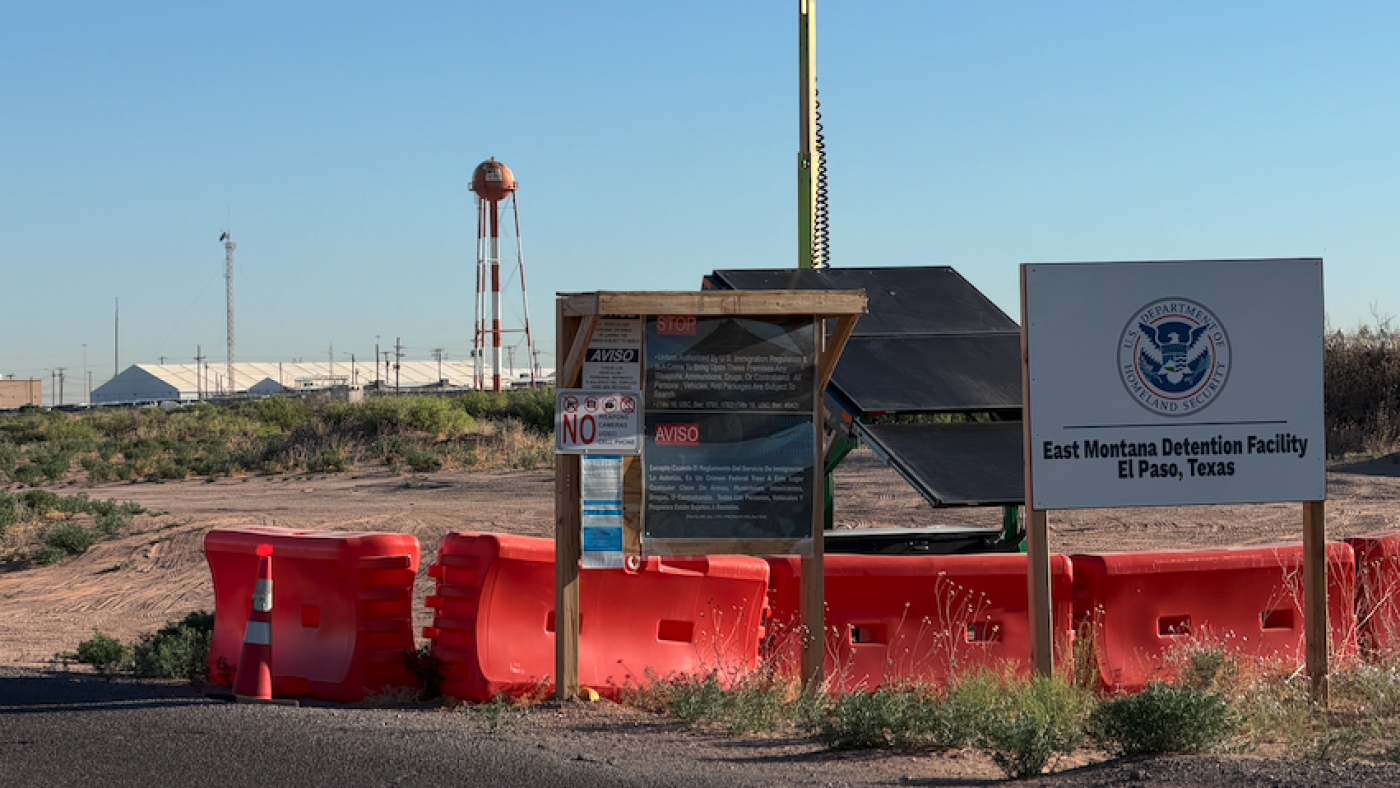
ICE detention deaths are on a record pace. One Texas facility bears the brunt

GOP rails against ‘s— sandwich’ deal as all eyes turn to House to end DHS shutdown
-

 Culture1 week ago
Wil Wheaton Discusses ‘Stand By Me’ and Narrating ‘The Body’ Audiobook
-

 South-Carolina5 days ago
South Carolina vs TCU predictions for Elite Eight game in March Madness
-

 Miami, FL1 week ago
Jannik Sinner’s Girlfriend Laila Hasanovic Stuns in Ab-Revealing Post Amid Miami Open
-

 Culture1 week ago
What Happens When We Die? This Wallace Stevens Poem Has Thoughts.
-

 Minneapolis, MN1 week ago
Boy who shielded classmate during school shooting receives Medal of Honor
-

 Vermont5 days ago
Skier dies after fall at Sugarbush Resort
-

 Education1 week ago
Video: Transgender Athletes Barred From Women’s Olympic Events
-

 Politics5 days ago
Trump’s Ballroom Design Has Barely Been Scrutinized