Mississippi
Mississippi State’s Jessika Carter selected by New York Liberty in 2024 WNBA Draft


Mississippi State women’s basketball forward Jessika Carter was selected with the 23rd pick by the New York Liberty in the 2024 WNBA Draft on Monday. She is the ninth player in program history to be drafted and the first since Teaira McCowan and Anriel Howard in 2019.
Carter’s six-year career at Mississippi State came to an end in March when the Bulldogs were eliminated in the WBIT quarterfinals.
She joined MSU in 2018 as a product of Waverly Hall, Georgia. Playing behind Howard and McCowan, Carter appeared in 36 games as a freshman without any starts. However, she jumped into a starting role the following season under coach Vic Schaefer.
As a sophomore, Carter averaged 13 points and 8.7 rebounds per game. Her scoring average jumped to 14.3 points the following season after Schaefer departed for Texas and the late Nikki McCray-Penson took over.
Carter didn’t play during the 2021-22 campaign due to personal reasons and opened up via social media about her mental health battles. Her absence from the court came as Doug Novak served as the program’s interim head coach following McCray-Penson’s sudden departure before the season.
She returned to action the following season after coach Sam Purcell was hired. She started 30 of her 31 games, helping lead Mississippi State back to the NCAA Tournament. Carter earned All-SEC honors after averaging 14.8 points and 7.7 rebounds per game.
MSU IN THE PORTAL: Former LSU star Hailey Van Lith visiting Mississippi State women’s basketball
She again earned All-SEC honors in the 2023-24 season after averaging 15.2 points and 9.7 rebounds. Carter finished her MSU career with 1,125 rebounds, ranking second in program history.
Stefan Krajisnik is the Mississippi State beat writer for the Clarion Ledger. Contact him at skrajisnik@gannett.com or follow him on the X platform, formerly known as Twitter, @skrajisnik3.



GPS data from the Mississippi Department of Marine Resources, obtained by CBS News, tracks the movements of the boat that carried Nolan Wells to Horn Island on July 4. Wells was found dead after going missing following an outing on the island.
The vessel left a dock at approximately 9:56 a.m. that morning and arrived at Horn Island at 11:14 a.m. CBS News has previously reported that Wells was not on the boat when it departed the island.
According to the GPS data, the boat left Horn Island at 4:31 p.m. and returned to its original departure dock. It then traveled into Fort Bayou around 5:52 p.m. before returning to the dock at 6:06 p.m.
Later that evening, the boat went to the Fort Bayou boat launch at 7:19 p.m., according to the MSDMR report. From there, it traveled over land — presumably towed by a vehicle — to the Biloxi, Mississippi, residence of the boat’s owners.
The MSDMR report indicates that the boat’s owner, his mother and one other individual who was reportedly with Wells on the day of the incident have cooperated with the investigation.
The department’s report ends on July 5, following notification that the Jackson County Sheriff’s Office would take over as the lead investigative agency.
Wells, 18, was last seen on July 4 on Horn Island, where he had taken a boat trip with friends to celebrate the holiday, officials said. Wells traveled to the island with his friends but did not return to the mainland with them that afternoon, Jackson County Sheriff John Ledbetter has said.
He was last seen on the island at 3 p.m., according to attorney Ben Crump’s office. His mother reported him missing later that night and a search began.
His body was discovered July 6 off the coast of the island, which is about 10 miles south of the Mississippi mainland, following a search that involved the U.S. Coast Guard, the Mississippi Department of Marine Resources and the National Park Service.
Dental records confirmed the body was Wells, Jackson County coroner Bruce Lynd told CBS News. An autopsy took place on July 7, Lynd said, but the results were not immediately made public. Wells’ body was flown to Washington, D.C., for an independent autopsy, according to Crump.
Wells’ parents have said they don’t believe their son would’ve stayed behind on the island by choice when his friends left by boat.
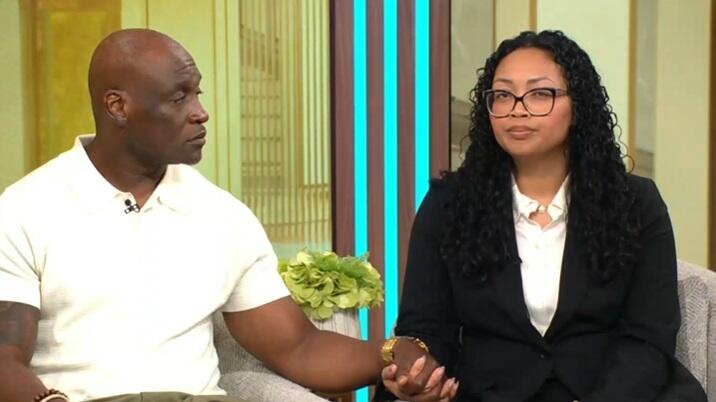
“No, he wouldn’t. Nolan always stays with the group,” Elmore Wonsley, Nolan’s father, told “CBS Mornings” last week. “If you be with me, you come back with me. So that I don’t understand, and with me being a parent, if I was in that situation, I would have told them, ‘You’re going to get back on this boat with me because I don’t want to answer to your parents if something happens to you.’”
When directly asked if he believed Nolan was left behind on the island, his father responded, “Yes. I don’t believe he decided to stay on the island by himself. It just doesn’t — that’s not his character.”
Wells went to Ocean Springs High School and was a rising sophomore on Southwest Mississippi Community College’s football team. Crump said Wells was a good swimmer.


Permanent daylight saving time in New Jersey
House approves permanent DST: NJ gets later sunsets year-round but darker winter mornings; sunrise could be ~8:25 a.m.
Are Americans finally done changing the clocks twice a year? Congress moved a step closer to ending the ritual after the U.S. House passed legislation that would make daylight saving time permanent.
It hasn’t been approved by the Senate yet, but it did pass the House with broad support (308-117). If it passes the Senate, it could be signed by President Donald Trump or become law without his signature, unless he vetoes it.
Trump has previously backed ending twice-a-year time changes.
“I am going to work very hard to see The Sunshine Protection Act signed into Law. It’s time that people can stop worrying about the ‘Clock,’” he wrote in a May Truth Social post.
A few versions of the Sunshine Protection Act were introduced in Congress. Rep. Vern Buchanan, R-Florida, introduced the one that’s gaining ground last year.
Here’s what to know about daylight saving time and the move to change it.
What is daylight saving time and why do we use it?
Daylight saving time is the practice of setting clocks forward an hour from March until November in an effort to gain more sunlight during the summer months.
According to the Library of Congress, it was first enacted in 1918 as a fuel cost-saving measure during World War I.
Daylight saving time became federal law under the Uniform Time Act of 1966. Under the law, some states can opt to exempt themselves from daylight saving time.
Would Mississippi keep daylight saving time year-round?
In 2021, the Mississippi Legislature passed a law saying the state plans to stick with daylight saving time year-round. But that only takes effect if Congress changes the federal law to let states adopt it all the time. A bill updating the effective date died in committee in the 2026 session.
Nineteen states, including Mississippi, are ready to make daylight saving time permanent if Congress changes the law to make the twice-a-year time shift optional, according to the National Conference of State Legislatures (NCSL).
How later sunrises would affect Mississippi
Sunrise and sunset times in summer would look the same.
But the period from November to March would be different. The amount of daylight would be the same, just shifted an hour later than usual.
Mississippi could expect the latest winter sunrises around 7:59 a.m. in mid-January. The earliest sunsets would shift from about 4:46 p.m. in early December to 5:46 p.m., according to timeanddate.com.
Why permanent daylight saving time failed before
Yes. Congress did drop Daylight Saving Time before.
The move failed in 1974 after parents worried about kids going to school before dawn, risking more vehicle crashes.
Some parts of the country, like Michigan or Indiana, don’t see sunrise until after 9 a.m. with the permanent daylight saving time.
When clocks fall back in 2026
Clocks will “fall back” from 2 a.m. to 1 a.m. on Sunday, Nov. 1, 2026, unless Congress changes the law.
Daylight saving time ends on the first Sunday in November each year, under current law. That’s when we get back that missing hour of sleep from the spring time change.
Does Mississippi change clocks twice a year?
Yes. Mississippi, which is in the Central time zone, observes daylight saving time.
What time is it in Mississippi?
Visit timeanddate.com to see the current time in Jackson.
Which states don’t observe daylight saving time?
Most of the U.S. participates in daylight saving time except for Hawaii and most of Arizona. The Navajo Nation in the northeast corner of the state does participate.
Bonnie Bolden is the Deep South Connect reporter for Mississippi with USA TODAY Network. Email her at bbolden@usatodayco.com.
Melina Khan is a national trending reporter for USA TODAY. Keep up with her on X @melinakh and Instagram @bymelinakhan.
Mississippi
Mississippi teen accused of killing elderly couple had worked for them before shooting: family

A teenager in Mississippi knew the elderly couple he’s accused of killing before sparking a standoff with law enforcement, according to new testimony in court.
Cordarius Hobbs, 17, is charged with killing 74-year-old Billy Blair and his 71-year-old wife Virginia Carol Blair during a home break-in on June 3 in Mendenhall, Mississippi.
Family members of Hobbs testified during the Thursday preliminary hearing that he knew the couple.
Family members testified that Hobbs did work for the Blairs for things like cleaning around the house before the alleged shooting, according to WAPT.
Billy Newsome, Hobbs’ grandfather, said he believes his grandson was called to work on the day of the alleged shooting but believes he’s innocent.
“My grandson used to work for the man, why you gone rob a man that you work for,” Newsome said. “Why you gone stay there that long and you know the police out there, and then you gone wait until everybody gets there to run, it just ain’t adding up, something just ain’t right here.”
On June 3, three contractors installing a generator at the Blairs’ home discovered Carol Blair’s car door open with several guns on the seats around 10 a.m., prompting them to call the Simpson County Sheriff’s Department for a welfare check at 11:30 a.m, according to a Mississippi Bureau of Investigation investigator.
By noon, the investigator said that officers arrived and were met with shots fired at them, starting a nearly two-hour-long standoff.
Hobbs was captured after trying to run away from officers, the official said, adding that the teen was unarmed when he was caught.
Carol Blair was found in a bedroom curled in the fetal position and had three gunshots to the back of her head. Bill Blair was found lying on his back in the kitchen with three gunshot wounds to his face.
The state investigator said three firearms were found inside the home as well as 280 shell casings, all owned by Bill Blair.
Hobbs’ defense attorney, Zachary Vaugh, argued that there’s a lack of direct forensic evidence connecting the teenager to the shooting.
“There was nothing to say he’s a principal, he’s the one that pulled the trigger on these things,” Vaugh said. “One of the things alone was, one of the victims was shot twice on one side of the head and once on the other. I think that’s pretty compelling that somebody else may have been in there. There’s a lot of things that are possible, just a tremendous amount of things.”
“When you have an officer say there’s no one that can identify him at the time of the shooting, I just don’t see how that adds up,” he said.
Hobbs is charged with two counts of capital murder and one count of burglary, in addition to 10 other charges. He was denied bond.
In a statement on Facebook, the couple’s family previously said, “We are crushed in spirit, bruised, and brokenhearted, but we are not alone.”
Jason Busby, who was friends with the couple, remembered them as being extremely selfless when speaking with WLBT.
“The man would’ve given you the shirt off his back, his wife is the same, and they’re just great people. It’s just a tragedy,” Busby said. “Everybody around here is still in shock. They were just good people.”
-

 Washington, D.C4 minutes ago
Calls grow for Green to recall Hawaii National Guard from DC | Honolulu Star-Advertiser
-

 Cleveland, OH10 minutes ago
19 First Alert Days: Smoke in the air today; severe storms possible Saturday
-

 Austin, TX16 minutes ago
Live updates: Flash Flood emergency in Kerr County as rain continues to pound Texas
-

 Alabama22 minutes ago
These 3 questions could define Alabama football 2026 tight ends room
-

 Alaska28 minutes ago
ICE: Alaska state attorney arrested by immigration officials, held in Tacoma detention center
-

 Arizona34 minutes ago
Arizona Lottery Powerball, The Pick results for July 15, 2026
-

 Arkansas40 minutes ago
AGFC proposes WMA regulation | Arkansas Democrat Gazette
-

 California46 minutes ago
Becerra leads Hilton by wide margin in California governor’s race, new poll finds

