Mississippi
Mississippi Preseason All-State: Pitcher Reports

.png?ssl=1 "Mississippi Preseason All-State: Pitcher Reports")
March 4, 2024
CLINTON, MS – The Mississippi Preseason All-State was held on Saturday, January 27th at Clinton High School in Clinton, MS. This event was an invote-only event that consisted of some prospects from the 2024-2028 classes across all parts of Mississippi. These players went through extended pro-style workout that included batting practice using Trackman, and much more. Pitchers were able to throw bullpens and were able to get numbers and metrics via TrackMan. There were some players who showed up and continued to build off of prior performances, but there were also some new names who jumped onto our radar with a strong showing at the event.
Concluding our post-event coverage for this event, we take a look back at the scouting reports from the event. Lastly, we look at all pitchers who attneded the Mississippi Preseason All-State.
View all positional stats HERE.
PITCHER REPORTS
Rece Atkinson, Leake Academy (MS), 2027
Positional Profile: RHP/3B
Body: 6-3, 192-pounds.
Delivery: Smooth and synced up tempo.
Arm Action: RH. Long arm action.
FB: T85, 83-85 mph. Arm side run. T2054, 1978 average rpm.
SL: 72-73 mph. Good sweeping action. T1933, 1893 average rpm.
CH: 80-82 mph. Plus change. Really solid pitch for him. T1546, 1464 average rpm.
Sawyer Bates, Canton Academy (MS), 2025 East Central CC
Positional Profile: LHP/1B
Body: 6-0, 191-pounds.
Delivery: Easy tempo.
Arm Action: LH. More of a 3/4 strike.
FB: T81, 77-80 mph. Arm side run. T1800, 1736 average rpm.
SL: 67-71 mph. Good bite on the slider. T2179, 2051 average rpm.
CH: 73-74 mph. Starting to develop feel but still working on command. T1549, 1470 average rpm.
ATH: 7.01 runner in the 60. 1.74 and 3.92 in the 10 and 30 yard splits.
Cayden Berryhill, Pearl (MS), 2026
Positional Profile: OF/RHP
Body: 6-0, 146-pounds.
Delivery: Smooth tempo. Slightly off line to 1B side.
Arm Action: RH. Loose arm action out of the 3/4 slot.
FB: T80, 78-80 mph. Good arm side run. T2401, 2240 average rpm.
CB: 67-69 mph. Good spin on the pitch. T1908, 1565 average rpm.
CH: 76-77 mph. Dies at the plate. Still needs a little more command. T1710, 1609 average rpm.
ATH: 7.18 runner in the 60. 1.77 and 4.03 in the 10 and 30 yard splits. 27.70 max vertical.
Corbyn Clayton, Pontotoc City (MS), 2026
Positional Profile: SS/RHP
Body: 5-8, 128-pounds.
Delivery: Smooth and synced up delivery.
Arm Action: RH. Quick arm.
FB: T84, 83-84 mph. Plus fastball. T2144, 2081 average rpm.
SL: 72-77 mph. Good spin on the slider with excellent command. T2396, 2316 average rpm.
CH: 78-80 mph. Good change with arm side drop. T2114, 1908 average rpm.
ATH: 7.24 runner in the 60. 1.79 and 4.01 in the 10 and 30 yard splits.
Drew Davis, Sumrall (MS), 2027
Positional Profile: RHP/SS
Body: 5-10, 165-pounds.
Delivery: Quicker tempo with good direction to the plate.
Arm Action: RH. Quick arm out of a high 3/4 slot.
FB: T88, 85-87 mph. Plus fastball with good velocity for a still developing arm. T2400, 2338 average rpm.
CB: 74-75 mph. Good bite on the curveball. T2939, 2731 average rpm.
CH: 79-81 mph. Still getting a feel for this pitch. T1814, 1723 average rpm.
ATH: 7.00 runner in the 60. 1.73 and 3.90 in the 10 and 30 yard splits.
Kaleb Dunn, Magnolia Heights (MS), 2027
Positional Profile: 3B/RHP
Body: 6-3, 183-pounds.
Delivery: Easy tempo
Arm Action: RH. Longer arm action
FB: T76, 75-76 mph. Some arm side run with developing command. T1521, 1407 average rpm.
SL: 65-69 mph. Still feeling out the slider. T1987, 1625 average rpm.
CH: 68-69 mph. Dies at the plate but still getting a feel for the pitch. T1706, 1665 average rpm.
ATH: 7.39 runner in the 60. 1.83 and 4.12 in the 10 and 30 yard splits.
Kevin Landry Farr, Northpoint Christian (AR), 2025 Arkansas
Positional Profile: RHP/OF
Body: 6-2, 183-pounds.
Delivery: Smooth and synced deliver with good direciton to the plate.
Arm Action: RH. Quick, 3/4 arm slot.
FB: T87, 86-87 mph. Plus fastball with solid run. T2542, 2448 average rpm.
SL: 78-80 mph. Good spin and feel on slider. T2547, 2523 average rpm.
CH: 80-82 mph. Good arm side action. Could use more work on command. T1747, 1590 average rpm.
Tyner Flynt, Presbyterian Christian (MS), 2026
Positional Profile: OF/LHP
Body: 5-11, 170-pounds.
Delivery: Smooth and synced up deliver.
Arm Action: LH. Long arm action.
FB: T85, 82-85 mph. Solid arm side run on fastball. T1891, 1845 average rpm.
CB: 71-72 mph. Good movement. Developing command. T1918, 1755 average rpm.
CH: 73-75 mph. Good pitch for him. Dies at the plate with some arm side run. T1790, 1773 average rpm.
ATH: 7.36 runner in the 60. 1.83 and 4.13 in the 10 and 30 yard splits.
Kellen Garcia, Sumrall (MS), 2025
Positional Profile: SS/RHP
Body: 5-11, 139-pounds.
Delivery: Easy tempo with good direction.
Arm Action: RH. Loose arm action with good extension.
FB: T82, 79-81 mph. Arm side run. T1986, 1887 average rpm.
SL: 67-72 mph. Good feel for the slider. T2273, 2253 average rpm.
CH: 75-77 mph. Still working on command but shows it can be a plus pitch for him. T1714, 1537 average rpm.
ATH: 6.93 runner in the 60. 1.73 and 3.91 in the 10 and 30 yard splits.
Brady Holmes, Clinton (MS), 2027
Positional Profile: RHP/3B
Body: 5-10, 152-pounds.
Delivery: Slightly choppy tempo but good direction and extension to the plate.
Arm Action: RH. Long, loose arm action.
FB: T78, 75-77 mph. Solid arm side run but needs work with command. T1903, 1657 average rpm.
SL: 64-67 mph. Good movement on the breaking ball. T1902, 1816 average rpm.
CH: 71-72 mph. Still working on feel for the change. T1201, 1144 average rpm.
Matthew McKinley, Jackson Prep (MS), 2025
Positional Profile: LHP/1B
Body: 5-9, 213-pounds.
Delivery: Easy tempo, cuts off finish.
Arm Action: LH. Short, quick arm action.
FB: T78, 77-78 mph. Arm side run T1801, 1701 average rpm.
CB: 63-66 mph. Good movement, still trying to get a feel for command. T1952, 1826 average rpm.
SL: 68-68 mph. Good bite and feel. T1859, 1843 average rpm.
CH: 70-71 mph. Showed good control. Good pitch for him. T1321, 1253 average rpm.
Jackson Meehan, Northwest Rankin (MS), 2026
Positional Profile: RHP/SS
Body: 6-1, 179-pounds.
Delivery: Smooth and synced up delivery. Falls off some towards 1B.
Arm Action: RH. Long, loose arm action wit some whip.
FB: T84, 81-84 mph. Plus fastball. Showed excellent command. T2115, 2056 average rpm.
SL: 71-74 mph. Good bite and feel for the breaking ball. T2205, 2082 average rpm.
CH: 77-77 mph. Dies at the plate but still working on feel. T1618, 1467 average rpm.
ATH: 7.26 runner in the 60. 1.76 and 4.03 in the 10 and 30 yard splits.
Samuel Miller, Jackson Prep (MS), 2027
Positional Profile: 3B/RHP
Body: 5-9, 157-pounds.
Delivery: Slightly choppy delivery with some fall off to 1B side.
Arm Action: RH. Short, quick arm action.
FB: T80, 78-80 mph. Good fastball with a developing arm. T2095, 1971 average rpm.
CB: 66-69 mph. Good spin on the breaking ball. T2332, 2284 average rpm.
CH: 72-74 mph. Complements the fastball well. Still feeling for command. T1679, 1605 average rpm.
CUT: 75-77 mph.
ATH: 7.84 runner in the 60. 1.92 and 4.36 in the 10 and 30 yard splits.
Aiden Peets, Madison-Ridgeland Academy (MS), 2026
Positional Profile: OF/RHP
Body: 5-11, 173-pounds.
Delivery: Slightly choppy delivery. Falls off some towards 1B side.
Arm Action: RH. Quick, loose arm action.
FB: T83, 80-82 mph. Good fastball. Mostly straight with a little bit of cut late. T2057, 1973 average rpm.
CB: 70-72 mph. Good bite with excellent feel. T1872, 1819 average rpm.
CH: 72-74 mph. Still developing feel for the change. T1282, 1212 average rpm.
ATH: 7.18 runner in the 60. 1.75 and 4.00 in the 10 and 30 yard splits.
Cayden Prestage, Itawamba (MS), 2026
Positional Profile: OF/LHP
Body: 5-7, 168-pounds.
Delivery: Easy tempo.
Arm Action: LH. Loose arm action. Cuts off finish.
FB: T85, 80-84 mph. Plus fastball and solid feel for command. T1899, 1746 average rpm.
CB: 69-71 mph. Good downward motion. T2004, 1897 average rpm.
CH: 71-73 mph. Plus change. Will complement fastball well with good command. T1354, 1272 average rpm.
KN: 66-69 mph.
ATH: 7.29 runner in the 60. 1.77 and 4.04 in the 10 and 30 yard splits.
Wes Pritchard, Lamar School (MS), 2024 East Central CC
Positional Profile: LHP/1B
Body: 6-3, 155-pounds.
Delivery: Easy tempo. Falls off towards 3B side.
Arm Action: LH. Loose arm action from 3/4 slot.
FB: T81, 79-80 mph. Good fastball with some arm side run. T2240, 2061 average rpm.
CB: 64-67 mph. Plus curve. T2137, 2076 average rpm.
CH: 71-72 mph. Dies at the plate. Showed good feel for the pitch. T2050, 1749 average rpm.
Wyatt Pyron, Biloxi (MS), 2025
Positional Profile: 3B/RHP
Body: 6-0, 198-pounds.
Delivery: Smooth tempo.
Arm Action: RH. Long arm action with good extension to the plate.
FB: T83, 81-83 mph. Mostly straight fastball. T2139, 2040 average rpm.
CB: 71-73 mph. Showed good command with bite. T2360, 2199 average rpm.
CH: 76-77 mph. Plus change with good command. T1357, 1323 average rpm.
ATH: 7.36 runner in the 60. 1.86 and 4.15 in the 10 and 30 yard splits.
Tucker Rice, Madison Central (MS), 2027
Positional Profile: RHP/3B
Body: 5-11, 151-pounds.
Delivery: Quick, synced up tempo.
Arm Action: RH. Long arm action with good extension to the plate.
FB: T87, 83-87 mph. Solid fastball with slight run to the arm side. T2229, 2179 average rpm.
CB: 72-73 mph. Exceptional feel for the breaking ball. Good bite to the glove side. T1980, 1812 average rpm.
CH: 78-80 mph. Still feeling out change but still a good pitch to complement fastball. T1663, 1565 average rpm.
ATH: 7.01 runner in the 60. 1.69 and 3.90 in the 10 and 30 yard splits.
Brody Roberts, Manchester Academy (MS), 2025
Positional Profile: RHP/OF
Body: 5-10, 203-pounds.
Delivery: Slightly choppy, quick tempo.
Arm Action: RH. Loose arm action out of the 3/4 slot.
FB: T83, 81-82 mph. Arm side run. T1922, 1805 average rpm.
SL: 73-76 mph. Good spin on the slider. Showed good command. T2494, 2397 average rpm.
CH: 73-75 mph. Solid arm side drop on the change. Will work well with FB and against LH hitters. T1912, 1850 average rpm.
ATH: 7.83 runner in the 60. 1.84 and 4.30 in the 10 and 30 yard splits.
Austin Sanders, Pisgah (MS), 2026
Positional Profile: RHP/1B
Body: 5-10, 175-pounds.
Delivery: Worked out of the stretch. Pulled off slightly towards 1B.
Arm Action: RH. Short, quick arm action out of the high 3/4 slot.
FB: T79, 75-78 mph. Mostly straight fastball with slight arm side run. T2146, 2062 average rpm.
CB: 64-65 mph. Good bite on breaking ball with good command. T1928, 1884 average rpm.
CH: 69-71 mph. Still feeling out change. T1338, 1222 average rpm.
ATH: 7.84 runner in the 60. 1.91 and 4.36 in the 10 and 30 yard splits.
Ryan Saxton, Clinton (MS), 2026
Positional Profile: RHP/C
Body: 5-10, 190-pounds.
Delivery: Smooth tempo
Arm Action: RH. Long, loose arm action.
FB: T79, 77-79 mph. Still feeling out command for this pitch. T1966, 1830 average rpm.
SL: 68-71 mph. Good slider. Releasing a little high but good pitch when he finds command. T1952, 1902 average rpm.
CH: 74-75 mph. Developing command. T1717, 1619 average rpm.
ATH: 7.99 runner in the 60. 1.89 and 4.36 in the 10 and 30 yard splits.
Aidan Strong, Itawamba Agricultual (MS), 2026
Positional Profile: RHP/3B
Body: 6-1, 183-pounds.
Delivery: Smooth and synced up delivery.
Arm Action: RH. Loose arm action out of a high 3/4 slot.
FB: T83, 78-82 mph. Struggled with command but has good arm side run. T2098, 2016 average rpm.
CB: 63-64 mph. Good 11-5 movement. T2164, 2069 average rpm.
SL: 66-68 mph. Showed comforatbility with this pitch. Good command and movement. T1938, 1882 average rpm.
CH: 71-74 mph. Complements fastball well. T1597, 1459 average rpm.
ATH: 7.63 runner in the 60. 1.83 and 4.19 in the 10 and 30 yard splits.
Cadyn Williamson, Sumrall (MS), 2025
Positional Profile: OF/LHP
Body: 5-9, 144-pounds.
Delivery: Easy tempo
Arm Action: LH. Long arm action.
FB: T80, 75-79 mph. Solid fastball with some arm side run. T1994, 1911 average rpm.
CB: 63-64 mph. Still feeling out the breaking ball. T1682, 1574 average rpm.
CH: 69-71 mph. Showed good feel and command. Works with fastball well. T1547, 1521 average rpm.
ATH: 7.03 runner in the 60. 1.69 and 3.93 in the 10 and 30 yard splits.
Follow on Twitter: @PBR_Mississippi
Follow on Instagram: @PBRMississippi
Follow on Facebook: Prep Baseball Report – MS
Upcoming Events
+ Click HERE to purchase a subscription which gives you access to additional information on the site.
Related Content:


GPS data from the Mississippi Department of Marine Resources, obtained by CBS News, tracks the movements of the boat that carried Nolan Wells to Horn Island on July 4. Wells was found dead after going missing following an outing on the island.
The vessel left a dock at approximately 9:56 a.m. that morning and arrived at Horn Island at 11:14 a.m. CBS News has previously reported that Wells was not on the boat when it departed the island.
According to the GPS data, the boat left Horn Island at 4:31 p.m. and returned to its original departure dock. It then traveled into Fort Bayou around 5:52 p.m. before returning to the dock at 6:06 p.m.
Later that evening, the boat went to the Fort Bayou boat launch at 7:19 p.m., according to the MSDMR report. From there, it traveled over land — presumably towed by a vehicle — to the Biloxi, Mississippi, residence of the boat’s owners.
The MSDMR report indicates that the boat’s owner, his mother and one other individual who was reportedly with Wells on the day of the incident have cooperated with the investigation.
The department’s report ends on July 5, following notification that the Jackson County Sheriff’s Office would take over as the lead investigative agency.
Wells, 18, was last seen on July 4 on Horn Island, where he had taken a boat trip with friends to celebrate the holiday, officials said. Wells traveled to the island with his friends but did not return to the mainland with them that afternoon, Jackson County Sheriff John Ledbetter has said.
He was last seen on the island at 3 p.m., according to attorney Ben Crump’s office. His mother reported him missing later that night and a search began.
His body was discovered July 6 off the coast of the island, which is about 10 miles south of the Mississippi mainland, following a search that involved the U.S. Coast Guard, the Mississippi Department of Marine Resources and the National Park Service.
Dental records confirmed the body was Wells, Jackson County coroner Bruce Lynd told CBS News. An autopsy took place on July 7, Lynd said, but the results were not immediately made public. Wells’ body was flown to Washington, D.C., for an independent autopsy, according to Crump.
Wells’ parents have said they don’t believe their son would’ve stayed behind on the island by choice when his friends left by boat.
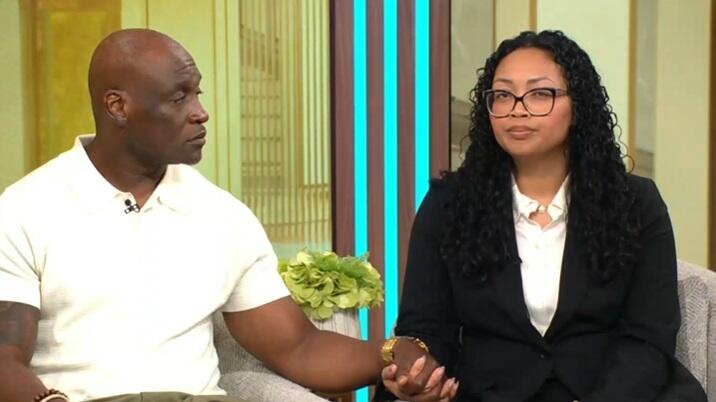
“No, he wouldn’t. Nolan always stays with the group,” Elmore Wonsley, Nolan’s father, told “CBS Mornings” last week. “If you be with me, you come back with me. So that I don’t understand, and with me being a parent, if I was in that situation, I would have told them, ‘You’re going to get back on this boat with me because I don’t want to answer to your parents if something happens to you.’”
When directly asked if he believed Nolan was left behind on the island, his father responded, “Yes. I don’t believe he decided to stay on the island by himself. It just doesn’t — that’s not his character.”
Wells went to Ocean Springs High School and was a rising sophomore on Southwest Mississippi Community College’s football team. Crump said Wells was a good swimmer.


Permanent daylight saving time in New Jersey
House approves permanent DST: NJ gets later sunsets year-round but darker winter mornings; sunrise could be ~8:25 a.m.
Are Americans finally done changing the clocks twice a year? Congress moved a step closer to ending the ritual after the U.S. House passed legislation that would make daylight saving time permanent.
It hasn’t been approved by the Senate yet, but it did pass the House with broad support (308-117). If it passes the Senate, it could be signed by President Donald Trump or become law without his signature, unless he vetoes it.
Trump has previously backed ending twice-a-year time changes.
“I am going to work very hard to see The Sunshine Protection Act signed into Law. It’s time that people can stop worrying about the ‘Clock,’” he wrote in a May Truth Social post.
A few versions of the Sunshine Protection Act were introduced in Congress. Rep. Vern Buchanan, R-Florida, introduced the one that’s gaining ground last year.
Here’s what to know about daylight saving time and the move to change it.
What is daylight saving time and why do we use it?
Daylight saving time is the practice of setting clocks forward an hour from March until November in an effort to gain more sunlight during the summer months.
According to the Library of Congress, it was first enacted in 1918 as a fuel cost-saving measure during World War I.
Daylight saving time became federal law under the Uniform Time Act of 1966. Under the law, some states can opt to exempt themselves from daylight saving time.
Would Mississippi keep daylight saving time year-round?
In 2021, the Mississippi Legislature passed a law saying the state plans to stick with daylight saving time year-round. But that only takes effect if Congress changes the federal law to let states adopt it all the time. A bill updating the effective date died in committee in the 2026 session.
Nineteen states, including Mississippi, are ready to make daylight saving time permanent if Congress changes the law to make the twice-a-year time shift optional, according to the National Conference of State Legislatures (NCSL).
How later sunrises would affect Mississippi
Sunrise and sunset times in summer would look the same.
But the period from November to March would be different. The amount of daylight would be the same, just shifted an hour later than usual.
Mississippi could expect the latest winter sunrises around 7:59 a.m. in mid-January. The earliest sunsets would shift from about 4:46 p.m. in early December to 5:46 p.m., according to timeanddate.com.
Why permanent daylight saving time failed before
Yes. Congress did drop Daylight Saving Time before.
The move failed in 1974 after parents worried about kids going to school before dawn, risking more vehicle crashes.
Some parts of the country, like Michigan or Indiana, don’t see sunrise until after 9 a.m. with the permanent daylight saving time.
When clocks fall back in 2026
Clocks will “fall back” from 2 a.m. to 1 a.m. on Sunday, Nov. 1, 2026, unless Congress changes the law.
Daylight saving time ends on the first Sunday in November each year, under current law. That’s when we get back that missing hour of sleep from the spring time change.
Does Mississippi change clocks twice a year?
Yes. Mississippi, which is in the Central time zone, observes daylight saving time.
What time is it in Mississippi?
Visit timeanddate.com to see the current time in Jackson.
Which states don’t observe daylight saving time?
Most of the U.S. participates in daylight saving time except for Hawaii and most of Arizona. The Navajo Nation in the northeast corner of the state does participate.
Bonnie Bolden is the Deep South Connect reporter for Mississippi with USA TODAY Network. Email her at bbolden@usatodayco.com.
Melina Khan is a national trending reporter for USA TODAY. Keep up with her on X @melinakh and Instagram @bymelinakhan.
Mississippi
Mississippi teen accused of killing elderly couple had worked for them before shooting: family

A teenager in Mississippi knew the elderly couple he’s accused of killing before sparking a standoff with law enforcement, according to new testimony in court.
Cordarius Hobbs, 17, is charged with killing 74-year-old Billy Blair and his 71-year-old wife Virginia Carol Blair during a home break-in on June 3 in Mendenhall, Mississippi.
Family members of Hobbs testified during the Thursday preliminary hearing that he knew the couple.
Family members testified that Hobbs did work for the Blairs for things like cleaning around the house before the alleged shooting, according to WAPT.
Billy Newsome, Hobbs’ grandfather, said he believes his grandson was called to work on the day of the alleged shooting but believes he’s innocent.
“My grandson used to work for the man, why you gone rob a man that you work for,” Newsome said. “Why you gone stay there that long and you know the police out there, and then you gone wait until everybody gets there to run, it just ain’t adding up, something just ain’t right here.”
On June 3, three contractors installing a generator at the Blairs’ home discovered Carol Blair’s car door open with several guns on the seats around 10 a.m., prompting them to call the Simpson County Sheriff’s Department for a welfare check at 11:30 a.m, according to a Mississippi Bureau of Investigation investigator.
By noon, the investigator said that officers arrived and were met with shots fired at them, starting a nearly two-hour-long standoff.
Hobbs was captured after trying to run away from officers, the official said, adding that the teen was unarmed when he was caught.
Carol Blair was found in a bedroom curled in the fetal position and had three gunshots to the back of her head. Bill Blair was found lying on his back in the kitchen with three gunshot wounds to his face.
The state investigator said three firearms were found inside the home as well as 280 shell casings, all owned by Bill Blair.
Hobbs’ defense attorney, Zachary Vaugh, argued that there’s a lack of direct forensic evidence connecting the teenager to the shooting.
“There was nothing to say he’s a principal, he’s the one that pulled the trigger on these things,” Vaugh said. “One of the things alone was, one of the victims was shot twice on one side of the head and once on the other. I think that’s pretty compelling that somebody else may have been in there. There’s a lot of things that are possible, just a tremendous amount of things.”
“When you have an officer say there’s no one that can identify him at the time of the shooting, I just don’t see how that adds up,” he said.
Hobbs is charged with two counts of capital murder and one count of burglary, in addition to 10 other charges. He was denied bond.
In a statement on Facebook, the couple’s family previously said, “We are crushed in spirit, bruised, and brokenhearted, but we are not alone.”
Jason Busby, who was friends with the couple, remembered them as being extremely selfless when speaking with WLBT.
“The man would’ve given you the shirt off his back, his wife is the same, and they’re just great people. It’s just a tragedy,” Busby said. “Everybody around here is still in shock. They were just good people.”
-

 Milwaukee, WI1 minute ago
MPS students repair bikes for free through WI Bike Federation program
-

 Atlanta, GA7 minutes ago
World Cup isn’t over: Best places to watch the final matches in Atlanta
-

 Minneapolis, MN13 minutes ago
Federal lawsuit raises questions about culture at prior job of Minneapolis mayor’s nominee for fire chief
-

 Indianapolis, IN19 minutes ago
See ‘The Odyssey’ as Nolan intended at one Indiana IMAX theater
-

 Pittsburg, PA25 minutes ago
2 arrested following Downtown Pittsburgh drug bust, police say
-
Augusta, GA31 minutes ago
Augusta, GA Weather Forecast
-

 Washington, D.C37 minutes ago
Calls grow for Green to recall Hawaii National Guard from DC | Honolulu Star-Advertiser
-

 Cleveland, OH43 minutes ago
19 First Alert Days: Smoke in the air today; severe storms possible Saturday

