The Baltimore Banner thanks its sponsors. Become one.
Maryland
Maryland lawmakers will weigh legalizing internet gambling. How would it work?


As Maryland lawmakers look for ways to raise money to close a budget gap and fund the state’s priorities, some are looking to online gambling as part of the solution.
Lawmakers again will consider allowing Marylanders to legally play poker, blackjack, roulette and other forms of gambling — with the state taking a hefty cut, primarily to fund education programs.
The proposal, dubbed “iGaming” in Annapolis, will get its first airing at the General Assembly on Wednesday. Lawmakers have wrestled with the idea of internet gambling multiple times but never settled on a plan. Last year, an internet gambling measure passed the House of Delegates but went nowhere in the Senate.
Sen. Ron Watson, one of the measure’s sponsors, said he hopes now is the year, given the state’s budget picture and the momentum of internet gambling in other states. Under the bill he is sponsoring along with Del. Vanessa Atterbeary, a Howard County Democrat, most of the proceeds would be directed to pay for the state’s ambitious education plan, the Blueprint for Maryland’s Future.
“Everybody makes such a big deal out of the Blueprint, and now we want to slow the rollout and push things back — and nobody wants to experience this revenue,” said Watson, a Prince George’s County Democrat.
Here’s how the internet gambling proposal would work.
Voters get a say
Maryland voters would get an up-or-down vote on internet gambling during the 2026 election, in the form of an amendment to the state constitution.
That’s how the existing forms of gambling — slot machines, followed by casino table games and then sports betting — became legal in the state.
That means it would take some time to get internet gambling up and running, because the state would have to solicit applicants for licenses and pick who would get to participate in the industry.
The Baltimore Banner thanks its sponsors. Become one.
Money for education
The state government would take a cut of each internet gambling company’s profits, plowing most of that money into the Blueprint for Maryland’s Future Fund.
Nonpartisan analysts estimate that once the internet gambling companies are up and running, the state would bring in $225 million in the first full year — a number that would grow in future years.
The state’s cut would be 20% of the proceeds from live dealer games and 45% of the proceeds from other types of gambling.
A small portion of the money would be sent to the state’s problem gambling fund, state regulators, horse racing subsidies and local governments. There also would be a fund set up to assist casino workers who lose their jobs due to internet gambling.
The bill has a complicated licensing regime that offers opportunities for existing casinos to gain licenses, as well as opportunities for minority and disadvantaged businesses to get into the industry. Casinos could gain additional licenses if they launch joint ventures with minority companies.
The Baltimore Banner thanks its sponsors. Become one.
An inevitable gambling expansion?
Supporters of internet gambling argue that millions of Marylanders are gambling online already, but they’re doing it illegally.
“Just type, ‘Can I play online poker?’ or ‘Can I play online slots?’ while sitting in Maryland and you’ll be directed to dozens of websites that say they are legal and legitimate. But the reality is they are not licensed and they are not regulated and the state gets zero revenue,” said John Pappas with iDEA Growth, a nonprofit that represents companies involved with internet gambling.
Pappas said seven states already have internet gambling, including nearby Pennsylvania and New Jersey.
Cannibalizing existing gambling?
One of the arguments against online gambling — at least the one made by some casino operators — is that it would take away business from the existing forms of gambling.
Nonpartisan state analysts estimate that once internet gambling is fully operational, the state’s six casinos could see a 10% loss of profits from their slot machines and table games. If that plays out, there would be a corresponding loss in money going to the state funds that casinos support, including education, horse racing subsidies and aid to local governments.
The Baltimore Banner thanks its sponsors. Become one.
Baltimore-based Cordish Companies, which owns the Live! Casino Hotel in Hanover, opposed internet gambling last year, with the company’s top lawyer saying it would a “jobs killer” that could end up causing losses in important revenues from the state.
Mark Stewart, Cordish’s general counsel, wrote to lawmakers last year that they should study the issue more to understand the possible consequences. “There is too much at stake for the State in terms of jobs, comprehensive tax revenues and potential social costs to rush this important public policy decision,” he wrote. (The Baltimore Banner leases an office in a Cordish-owned building.)
Proponents say the concerns about internet gambling cannibalizing bricks-and-mortar gambling are overblown. Pappas points to an analysis his organization did using data from Pennsylvania, where revenue from slots and table games have rebounded to pre-pandemic levels and overall gambling revenue has increased since internet gambling was legalized in 2019.
Concerns have also been raised that the ease of internet gambling — having access in one’s phone in the palm of their hand — may drive problem gambling. Republicans voiced opposition to internet gambling last year citing worries over problem gambling, with one lawmaker calling it a “bad bet” for Maryland.
Uncertain prospects
Internet gambling has been debated multiple times in Annapolis, where there is more interest in the House of Delegates than in the state Senate.
The Baltimore Banner thanks its sponsors. Become one.
The House approved internet gambling last year and included it in their version of the state budget, but the Senate did not go along with it.
Senate President Bill Ferguson, a Baltimore Democrat, did not predict good odds this year.
“I think there are a lot of issues when it comes to internet gaming that we have to work through,” Ferguson told reporters Tuesday. “I don’t know that there’s been a significant change for members of the [Budget and Taxation] committee from last year.”
Ferguson said lawmakers should be thoughtful in their approach to the issue.
“Just because we are in need of new revenues doesn’t mean that everything all of a sudden makes sense,” he said.



Calling all outdoorsmen and women — Maryland’s Lower Shore is home to some of the best hiking, walking and running trails on the East Coast.
Here’s a closer look at four picturesque parks and preserves with nature trails in the Berlin, Salisbury and Ocean City area.
Assateague Island
Assateague Island offers a wide variety of paved and unpaved trails open for hiking and 37 miles of flat beach terrain for wandering and beachcombing. Assateague Island’s Maryland District features a Life of the Dunes trail, Life of the Forest trail, Life of the Marsh trail.
Furnace Town
Furnace Town is nestled between the Pocomoke State Forest and Nature Conservancy’s Nassawango Creek Preserve. The popular historical site offers three Nature Conservancy Trails, three Maryland Forest service Trails, and a 26-acre outdoor museum and recreation area.
Pemberton Historical Park
Pemberton Historical Park, a 262-acre area featuring a trail system, outdoor amphitheater and more, was created in the 1980s. The park offers 4.5 miles of nature trails for walking and hiking only, allowing visitors to explore wetlands, forests and more of the natural world.
Nassawango Creek Preserve
Nassawango Creek Preserve’s primeval forest has an abundance of bald cypress and black gum trees. Visitors are invited to indulge in its four trails, the Nassawango Joe, Prothonotary Warbler, Ron Wilson Memorial Trail and Leifer Trail, as well as self-guided audio tours.
Olivia Minzola covers communities on the Lower Shore. Contact her with tips and story ideas at ominzola@delmarvanow.com.

The 21-year-old second baseman and 11th overall pick in the 2026 MLB Draft has deep ties to the D.C. region.
(Courtesy Washington Nationals)
Courtesy Washington Nationals

(Courtesy Washington Nationals)
Courtesy Washington Nationals
(Courtesy Washington Nationals)
Courtesy Washington Nationals
(Courtesy Washington Nationals)
Courtesy Washington Nationals
(Courtesy Washington Nationals)
Courtesy Washington Nationals
(Courtesy Washington Nationals)
Courtesy Washington Nationals
Washington Nationals’ first-round draft pick Chris Hacopian inked his first professional contract Wednesday, a moment made sweeter by the fact it was just a 30-minute drive from home to get to Nationals Park and put pen to paper.
The 21-year-old second baseman and 11th overall pick in the 2026 MLB Draft has deep ties to the D.C. region. He’s from Potomac, Maryland, and played his high school ball at Winston Churchill, where he was named the 2022 Maryland Gatorade Player of the Year and a 2022 Washington Post All-Met selection.
According to MLB.com, Hacopian grew up a Nationals fan, admiring the likes of Ian Desmond, Danny Espinosa and others. He also played his first two collegiate seasons at the University of Maryland, where his father Derek played before him, before transferring to Texas A&M for his junior season.
With the Aggies, Hacopian hit .319 with 11 home runs and 41 RBI across 42 games en route to being named First-Team All-Southeastern Conference and a Third-Team All-American by Baseball America, the Nationals said in a news release.
After inking his contract Wednesday, Hacopian donned his new jersey and ball cap and stepped onto D.C.’s beloved diamond as a part of the Nationals organization for the first time.
“That was so cool, oh my gosh. I’ve been in the stands like, 100 times, but being on the field is so different,” he said.
Hacopian was ranked 14th among MLB Draft prospects by MLB.com. The 6-foot-1-inch, 210-pound second baseman boasted one of the best bats in college baseball, according to MLB.com, with excellent control over the strike zone and feel for the barrel, along with solid pop.
Get breaking news and daily headlines delivered to your email inbox by signing up here.
© 2026 WTOP. All Rights Reserved. This website is not intended for users located within the European Economic Area.

The state said the five recently traveled together to “a location in the U.S. experiencing an active measles outbreak.”
Maryland health officials confirmed five more measles cases, all in Carroll County.
“These individuals recently traveled together to a location in the U.S. experiencing an active measles outbreak,” the state Department of Health said in a release.
The agency said others may have been exposed on the afternoon of July 13 in the emergency department waiting room at Carroll Hospital Center in Westminster.
Another measles case recently prompted warnings from health officials in Maryland, Virginia and the District. On June 17, a Maryland resident traveled through Dulles International Airport and visited a D.C. urgent care clinic.
Measles is highly contagious. It can spread through the air through coughs, breathing, and sneezes. Early symptoms can include fevers of over 101 degrees, coughs, runny noses, watery eyes and face or body rashes.
It can take up to 21 days after exposure for the first symptoms to appear, and those who are not fully vaccinated or otherwise immune to measles are especially vulnerable.
The five new measles cases in Maryland bring the state’s year-to-date total to nine. The state health department confirmed three cases in 2025, and one in each of the previous two years.
“All Marylanders should review potential exposure times, watch for symptoms, and confirm they are up to date on their measles, mumps and rubella (MMR) vaccinations,” the health department said.
Get breaking news and daily headlines delivered to your email inbox by signing up here.
© 2026 WTOP. All Rights Reserved. This website is not intended for users located within the European Economic Area.
-

 Los Angeles, Ca12 minutes ago
LADWP begins long-term repairs after West Hollywood water main rupture
-

 Detroit, MI36 minutes ago
Livestream: Mayor Sheffield, Detroit health chief to address wildfire smoke threat
-
 San Francisco, CA48 minutes ago
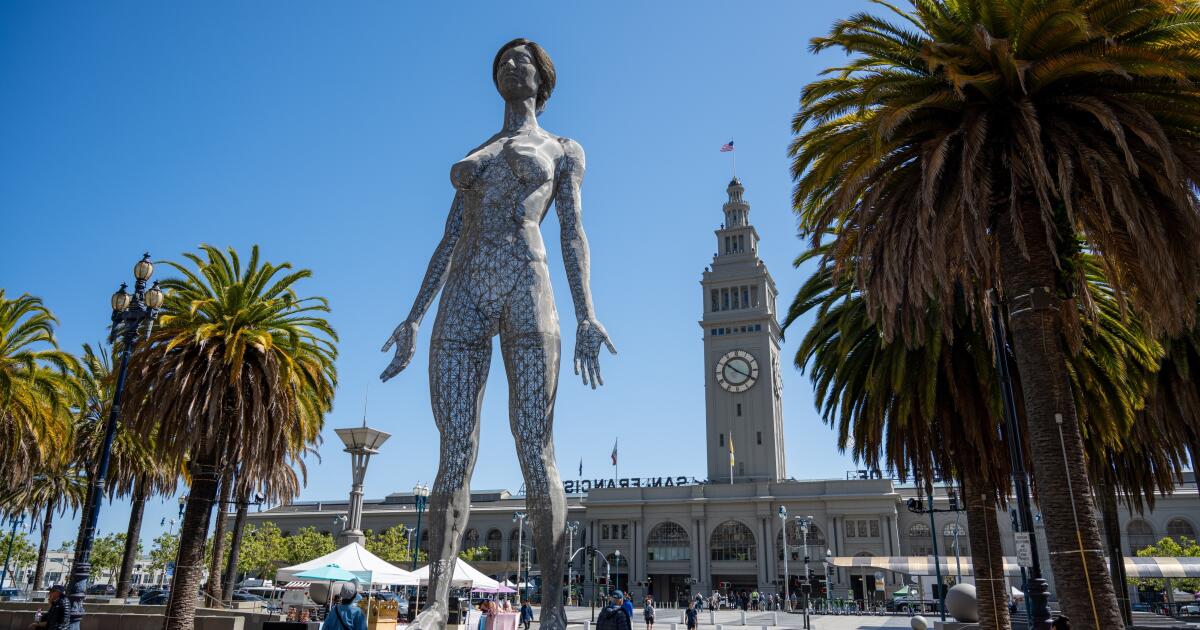
A sculpture of a giant naked woman goes on sale in San Francisco. Bring a crane
-

 Dallas, TX54 minutes ago
No ‘straight answer’: Why Pioneer Cemetery is the latest battleground at City Hall
-

 Miami, FL1 hour ago
TSA hosts news conference ahead of World Cup third place match at Miami Stadium
-

 Boston, MA1 hour ago
ICE Boston arrests Barbados national during targeted operations in Attleboro
-

 Denver, CO1 hour ago
Denver Broncos training camp is 2 weeks away
-

 San Diego, CA1 hour ago
Daily Business Report: July 17, 2026, San Diego Metro Magazine

