Last month, Gov. Jeff Landry (R) signed a bill that made Louisiana the only state that requires public schools to display the Ten Commandments in every classroom — a move that quickly prompted a group of parents to file a lawsuit alleging the new law is unconstitutional.
Louisiana
Some Louisiana schools can’t post Ten Commandments while law is challenged


But while the law is tested in court, Louisiana has to hold off on posting biblical signs in the five parishes where the plaintiffs’ children attend school, according to an agreement approved Friday by a federal judge.
In an order, U.S. District Judge John deGravelles of Louisiana’s Middle District set a hearing for Sept. 30 with a ruling expected by Nov. 15. Until then, the Ten Commandments can’t be displayed in schools located in the parishes of East Baton Rouge, Livingston, Orleans, St. Tammany and Vernon. Additionally, the state’s Board of Elementary and Secondary Education cannot “promulgate advice, rules or regulations regarding proper implementation” of the new law until Nov. 15, the agreement states.
Under the new law, public K-12 schools and college classrooms must display the Ten Commandments — religious and ethical directives that in the Bible are handed down to the prophet Moses — on posters measuring at least 11 by 14 inches and featuring “large, easily readable font.” Schools are also required to post a three-paragraph statement that explains how the texts were “a prominent part of American public education” from the late 17th century through the late 20th century. The law gives schools until Jan. 1 to put up the Ten Commandments, and requires them to use donated posters or spend donated money, rather than public funds, to buy the displays.
Since it overwhelmingly passed in the Republican-controlled state legislature, the law has drawn national attention and become the latest example of lawmakers undertaking efforts that blur the lines between church and state — a battle that has particularly been brewing in public schools.
Five days after Landry signed the bill, on June 24, a coalition of advocacy groups, including the Freedom From Religion Foundation, Americans United for the Separation of Church and State, and the American Civil Liberties Union’s national and state offices, filed a federal lawsuit. The plaintiffs in the case are nine Louisiana families of different faiths — among them four members of the clergy — who allege the law violates First Amendment language forbidding government establishment of religion and guaranteeing religious liberty.
“Permanently posting the Ten Commandments in every Louisiana public-school classroom — rendering them unavoidable — unconstitutionally pressures students into religious observance, veneration, and adoption of the state’s favored religious scripture,” says the suit, which charges that there is no long-standing tradition of hanging the commandments in classrooms and that courts have already ruled against the practice.
On July 8, the groups filed a motion for a preliminary injunction, asking the court to refrain from imposing the law or allowing any related enforcement of it during pending legal proceedings. The move, said Rev. Darcy Roake, a plaintiff in the case, sought to “ensure that our family’s religious-freedom rights are protected from day one of the upcoming school year.”
“The Ten Commandments displays required under state law will create an unwelcoming and oppressive school environment for children, like ours, who don’t believe in the state’s official version of scripture,” Darcy said in a statement this month. “We believe that no child should feel excluded in public school because of their family’s faith tradition.”
However, under the terms of the agreement, only students in five Louisiana parishes won’t see the Ten Commandments when they return to school next month.
The latest pushes to post the Ten Commandments in schools comes after similar — albeit failed — attempts throughout decades. In 1980, the Supreme Court ruled that a similar law in Kentucky violated the establishment clause of the Constitution, which bars the federal government from favoring any one religion. Other proposals to display the Ten Commandments in schools have been introduced — but have not become law — in Texas, Oklahoma, Mississippi and South Carolina.
Yet, recent Supreme Court rulings have been more lenient toward religion in schools. In 2022, the court ruled in favor of a Washington state football coach who knelt at midfield to pray and was joined by student-athletes. The prayers were protected by the Constitution’s guarantees of free speech and religious exercise, the court ruled.
The Louisiana law has already been praised by members of the religious right and has found the support of Republican presidential nominee Donald Trump.
During a gathering of the evangelical Faith and Freedom Coalition, Trump endorsed the Ten Commandments law, telling attendees: “Has anyone read the ‘Thou shalt not steal?’ I mean, has anybody read this incredible stuff? It’s just incredible. They don’t want it to go up. It’s a crazy world.’’
At the Republican National Convention on Thursday, the law was once again touted — this time by Landry, who connected it with the assassination attempt against Trump.
“I would submit that maybe if the Ten Commandments were hanging on [Thomas Matthew Crooks’] wall at the school that he was in, maybe he wouldn’t have took a shot at the president,” Landry said in an interview with Nexstar, the Louisiana Illuminator reported.
Anumita Kaur and Michelle Boorstein contributed to this report.



Louisiana
Unauthorized drones detected over US Air Force base housing nuclear-capable B-52 bombers: military

NEWYou can now listen to Fox News articles!
A U.S. Air Force Base that houses B-52 bombers capable of carrying nuclear weapons detected “multiple unauthorized drones” in its vicinity earlier this month, a base official confirmed to Fox News Digital.
“Barksdale Air Force Base detected multiple unauthorized drones operating in our airspace during the week of March 9th,” a Barksdale AFB spokesperson told Fox News Digital on Friday.
The spokesperson added: “Flying a drone over a military installation is not only a safety issue, it is a criminal offense under federal law.”
Base officials are working closely with federal and local law enforcement agencies to investigate the drone sightings, the spokesperson said.
MYSTERY DRONES FLY NEAR DC-AREA MILITARY BASE AS IRAN TENSIONS ESCALATE
A U.S. Air Force Base that houses B-52 bombers capable of carrying nuclear weapons detected “multiple unauthorized drones” in its vicinity earlier this month, a base official confirmed to Fox News Digital. (Mario Villafuerte/Getty Images)
“The security of our installation and the safety of our people are top priorities, and we will continue to vigilantly monitor our airspace,” the official added.
Barksdale is east of Shreveport in Louisiana and encompasses 22,000 acres with a population of around 15,000.
The drone detections come amid heightened security at Air Force bases in the U.S. as the war in Iran continues.
A shelter-in-place order was issued on March 9 at the base that was lifted shortly after, but the drone sights continued through the week.
US DIPLOMATIC FACILITY IN IRAQ STRUCK BY DRONE
US Air Force B-52H long range strategic bombers sit on the tarmac at Barksdale Air Force Base in 2007. (Paul J. Richards/AFP via Getty Images)
CLICK HERE TO DOWNLOAD THE FOX NEWS APP
Mick Mulroy, former deputy assistant secretary of defense for the Middle East, told ABC News it didn’t look like an average drone enthusiast.
Bombs wait to be loaded on to a B-52H long range bomber at Barksdale Air Force Base in 2007. (Paul J. Richards/AFP via Getty Images)
“It looked like this was deliberate and intentional to see just how they would react,” he said. “Seeing this probe on a base in the United States is very troubling.”


WACTH: Louisiana softball HC Alyson Habetz talks tourney play, LSU loss
Hear from UL softball HC Alyson Habetz following a 4-2 week plus an extra innings 2-1 loss vs No. 17 LSU.
After dropping its opening Sun Belt Conference series, Louisiana softball is eager to get back to Lamson Park.
The Ragin’ Cajuns (17-12, 1-2) are back home this week searching for some more consistency and to get back into the win column, hosting Texas State for their final SBC series against the Bobcats. Last time out, UL struggled offensively, getting outhit against Southern Mississippi. Second-year head coach Alyson Habetz is hopeful that being in front of Cajun Nation will help her team get back to playing to UL standard.
For the Bobcats, this marks their second SBC series after taking their first against the University of Louisiana Monroe. Texas State (19-10, 2-1) followed that up with a non-conference win over Houston, then a five-inning run-rule loss against Lamar. With both squads coming into the series with a loss, each game will be close between the Cajuns and Bobcats.
Here’s how to watch Ragin’ Cajun softball in its SBC series vs Texas State this weekend, including time, TV schedule, and streaming information.
Watch Louisiana softball vs Texas State on ESPN+
Louisiana softball vs Texas State live score updates
What channel is Louisiana softball vs Texas State on?
Livestream: ESPN+
Louisiana vs. Texas State will be available live on ESPN+ for the teams’ second SBC weekend of play in the 2026 college softball season. Dan McDonold and Yvette Girouard will provide commentary from Lamson Park. Streaming options for the game include ESPN+.
What time does Louisiana softball play Texas State today?
- Date: Friday, March 20, Saturday, March 21 and Sunday, March 22
- Start time: 6 p.m. Friday; 2 p.m. Saturday and 1 p.m. Sunday
The Louisiana vs. Texas State game starts at 6 p.m. Friday at Lamson Park in Lafayette, followed by its second game on Saturday at 2 p.m. The Cajuns and Bobcats will close out the three-game series on Sunday at 1 p.m.
Louisiana softball vs Texas State history
Series record: Louisiana leads 40-10
In Lafayette: Louisiana leads 17-4
In San Marcos: Louisiana leads 14-6
Louisiana’s last win: April 27, 2025 (4-3)
Texas State’s last win: April 26, 2025 (3-2)
Shannon Belt covers high school sports and the Louisiana Ragin’ Cajuns for The Daily Advertiser as part of the USA TODAY Network. Follow her high school and Cajuns coverage on Twitter: @ShannonBelt3. Got questions regarding HS/UL athletics? Send them to Shannon Belt at sbelt@gannett.com.
Louisiana
Indivisible North Louisiana organizers announce speakers for ‘No Kings’ rallies in Ruston and Monroe

MONROE & Ruston, La. (KNOE) – Indivisible North Louisiana announced the speakers for both of their upcoming ‘No Kings’ rallies on Saturday, March 28 in Ruston and Monroe.
Ruston Rally
Time: 10–11 a.m.
Location: Railroad Park, 101 E. Park Ave, Ruston, LA
Speakers:
- MC: Joel Sharpton
- Veda Brown Emerson (Indivisible North LA Co-Director)
- Rev. Terence Flucas
- Dustin Granger (Louisiana State Democratic Party Treasurer)
Monroe Rally
Time: 2–3 p.m.
Location: Ouachita Parish Courthouse, 300 St. John St, Monroe, LA
Speakers:
- MC: Joel Sharpton
- Opening Prayer: Pastor Quincy D. Knox
- Amber Perez (President and Community Accountability Network)
- Lynnetta Whitehurst (Vice President and NAACP LA State Conference)
- Betty Ward-Cooper (Indivisible North LA and Citizen advocate)
Organizers of the event note that the theme this year is:
“They’ve Gone Too Far. Enough is Enough. Vote, Volunteer, Do Something”
Attendees will be able to register to vote, check their status, and get info about the May 16 primary.
“Louisiana isn’t a red or blue state, it is a non-voting state,” said organizer Joel Sharpton. “We want to give people the tools and education they need to express themselves through their vote.”
Indivisible North Louisiana says it is made up of non-partisan group of volunteers and concerned citizens, they host:
- Rallies
- Meet-Ups
- Voter education events
For more information on the event, click here.
Copyright 2026 KNOE. All rights reserved.

Detroit, MI5 minutes ago
Farmington, Farmington Hills push for revitalization of Grand River

San Francisco, CA17 minutes ago
Elderly driver sentenced to probation in West Portal crash that killed family of 4

Dallas, TX23 minutes ago
Dallas Police tweak off-duty job rule after saying man impersonated police

Miami, FL29 minutes ago
Fire tears through longtime Miami Gardens home of retired teacher

Boston, MA35 minutes ago
National Park Service removes historic films about mill workers in Lowell

Florida1 year ago
Florida High School Football Rankings: Top 25 teams – Oct. 21

Oregon2 years ago
How old is Bo Nix? What to know about Oregon quarterback ahead of 2024 NFL Draft

Connecticut2 years ago
Cleary's 21 help Le Moyne down Central Connecticut State 69-64 in OT

Virginia2 years ago
99th annual Pony Swim held in Virginia

Indiana2 years ago
Indiana Members Credit Union announced as new anchor tenant at Bottleworks District

Politics9 hours ago
Pritzker pushes prosecutions of Trump officials as part of Dem ‘Project 2029’ agenda

World10 hours ago
Iran’s Khamenei says enemy ‘defeated’ in written Nowruz message

News10 hours ago
Gold Trump coin moves forward after Treasury invokes rare authority

Politics21 hours ago
Meet the longtime biz partner of Ilhan Omar’s husband as questions swirl over her skyrocketing net worth

World22 hours ago
‘Nobody can blackmail us’: Leaders excoriate Orbán’s veto
-

 Detroit, MI2 days ago
Drummer Brian Pastoria, longtime Detroit music advocate, dies at 68
-

 Oklahoma6 days ago
Family rallies around Oklahoma father after head-on crash
-

 Nebraska1 week ago
Wildfire forces immediate evacuation order for Farnam residents
-

 Georgia5 days ago
How ICE plans for a detention warehouse pushed a Georgia town to fight back | CNN Politics
-

 Massachusetts1 week ago
Massachusetts community colleges to launch apprenticeship degree programs – The Boston Globe
-

 Alaska6 days ago
Police looking for man considered ‘armed and dangerous’
-

 Colorado1 week ago
‘It’s Not a Penalty’: Bednar Rips Officials For MacKinnon Ejection | Colorado Hockey Now
-
 Southwest1 week ago
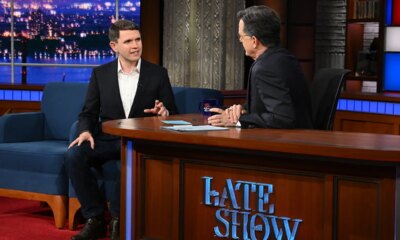
Talarico reportedly knew Colbert interview wouldn’t air on TV before he left to film it