Louisiana
Louisiana marshes bury carbon in the muck. Could they help fight climate change?


Gathered on a strip of salt marsh bordering the Gulf of Mexico, Tim Carruthers and his team of scientists huddle around a patch of soil marked by protruding PVC pipes.
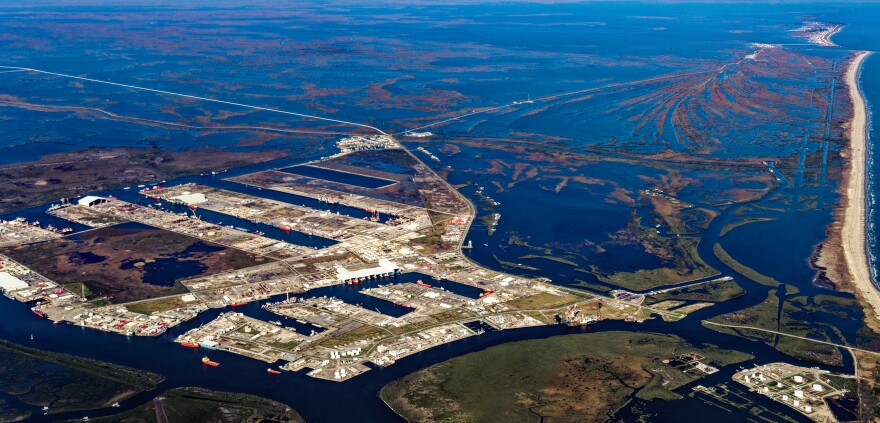
Pelicans soar overhead and massive ocean-going ships cruise by, heading toward the neighboring oil and gas seaport of Port Fourchon. But Carruthers’ team has their eyes fixed on the ground.
The group works a thick pipe into the soft dirt and releases liquid nitrogen, letting it flow into the ground with a loud hiss. The process results in a long tube of frozen mud — a sample they can take back to the lab.
“What we like to call a sediment popsicle,” said Carruthers, director of coastal ecology at the Water Institute of the Gulf.
The sediment popsicle is at the center of his research into something hard to see — carbon dioxide.
Water Institute of the Gulf
Carruthers’ research is part of an effort to understand how big a role Louisiana marshes can play in the fight against climate change. The larger the role, the more money they could be worth.
Marshes can act as“carbon sinks,” or natural spaces that absorb and store more carbon than they release. In fact, coastal wetlands are among the best habitats on Earth at sequestering carbon. Louisiana is rich in them.
The state holds almost two-thirds of all the carbon stored in coastal marshes along the Gulf Coast. The reason is twofold: Louisiana has far more wetlands than its Gulf neighbors and its soil accumulates carbon at a faster rate.
Louisiana marshes’ knack for capturing carbon could allow the state to eventually create a new market for carbon credits, where companies invest in the restoration of coastal ecosystems as a way to offset their greenhouse gas emissions.
Carruthers said the arrangement presents the chance for a “triple win:” reducing planet-warming emissions, enhancing knowledge of marshes and creating a new way to fund coastal restoration.
“All of these efforts are trying to see if we can get to a point that it’s financially viable,” he said.

But the carbon equation for this dynamic habitat is complicated.
Depending on how salty the marsh is, methane-burping bacteria in the soil can thrive, negating some of the carbon stored by marsh grasses and mangroves. The bacteria is less tolerant to salty water, but Carruthers said the salinity of Louisiana marshes can vary widely.
“There are just some uncertainties,” he said. “So we have to make very conservative assumptions.”
The constant flux makes it hard to estimate a marsh’s capacity to store carbon. So far, Carruthers said that’s made selling carbon credits for marshes financially inviable.
Based on current models, Carruthers said a marsh-building project covering almost 3,500 acres would only offer up to $1 million in return over 30 years. To put that into perspective, the state’s largest marsh restoration project — the Upper Barataria Marsh Creation project — was a third of that size and cost $181 million to build.
Even still, the state and companies continue to be enthusiastic about the market’s potential.
Carruthers’ research is in partnership with Chevron, which owns the strip of land outside of Port Fourchon that hosts his study site.
Chevron environmental geoscientist Cas Bridge said the research presents an exciting opportunity to look into nature-based climate solutions.
“I think there’s this acknowledgment that there’s going to be this sort of an amount of emissions that are hard or impossible to abate, and so that’s where offsets come in,” she said.
PETER_D_JANSEN
/
Greater Lafourche Port Commission
Even if carbon credits aren’t in the cards, Bridges said the study is also a way to look at the potential for habitat restoration to increase Port Fourchon’s resiliency against rising sea levels and storms that have grown stronger due to climate change. In a way, a carbon market would be a bonus.
“There is an element of playing the long game,” she said. “And nothing in the research so far indicates that we should stop.”
Isabel Englehart, a policy advisor for the Governor’s Office of Coastal Activities, said there has always been uncertainty around how large of a role marshes can play.
She said Carruthers’ research sheds light on one of the state’s most valuable resources. But the extent to which marshes may play a role in the state’s plan to reach carbon neutrality by 2050 is still a question mark.
“Natural sequestration is not going to be the silver bullet for reducing our statewide emissions,” Englehart said. “But it could be a big part of it.”


MONROE, La. (KNOE) – Early voting has begun for Louisiana voters as the state holds its first closed primary runoff.
Deborah Smith said the process has been stressful.
“It’s so confusing. It is so I don’t know. It’s very stressful. It is so stressful right now,” Smith said.
“If you chose Democrat or Republican the first time, then you have to vote Democrat or Republican the second time. You can’t change it now. But if you stay no party during the first party primary, then you have the option,” Isabella Butler, a certified elections registration administrator, said. “Only the people that have the option now are people who didn’t make a selection in the first party primary, they remained a no party voter, or they didn’t vote the first party primary, or they just registered to vote.”
Election officials said voters might be confused with new laws underway. This is Louisiana’s first year with closed primaries.
Early voting starts at 8:30 a.m. to 6 p.m. To learn about early voting and Election Day locations, click here.
Smith said she wanted to ensure her vote counted.
“I want to make sure that my vote counts. I wanted to make sure that no matter what I was able to cast my ballot,” Smith said.
Early voting will continue through June 20, except on June 14 and 19. Election Day is June 27.
To learn what is on the ballot, click here.
Copyright 2026 KNOE. All rights reserved.

Louisiana’s friendliest small towns tend to make their welcome visible through food, music and festivals. Historic streets and public spaces still bring people together in many of these towns. A town feels especially welcoming when the places visitors enjoy are also where residents gather and celebrate. Each one offers a different version of welcome. Cajun music, arts festivals, historic districts and harvest celebrations all show up in different ways across the ten towns.
Natchitoches
Natchitoches gives visitors one of Louisiana’s most welcoming downtown experiences because so much of the town gathers around Front Street and Cane River Lake. The historic district has restaurants, shops, museums, river views, and old buildings close together, which makes the town feel easy to settle into. The Natchitoches Area Convention & Visitors Bureau describes the city as Louisiana’s original French colony, which was established in 1714, with architecture, cultural heritage, museums, plantations, and year-round festivals still shaping the visit.
The town’s best-known community tradition is the Natchitoches Christmas Festival held downtown along Front Street. The visitors bureau notes that the festival is always held on the first Saturday in December. The season brings more than 300,000 lights, holiday decorations, food booths, carolers, and activities along Front Street. Louisiana Sports Hall of Fame and Northwest Louisiana History Museum, Cane River carriage tours, and local restaurants add more ways to spend time downtown. Natchitoches feels friendly because the town’s biggest traditions are not tucked away from visitors. They happen in the middle of town.
Breaux Bridge

Breaux Bridge feels welcoming because its identity is built around food, music, and Bayou Teche, all of which are easy for visitors to experience. St. Martin Parish tourism notes that Breaux Bridge is known as the “Crawfish Capital of the World” and traces the town’s roots to Acadian exile Firmin Breaux, who bought land along Bayou Teche in the late 1700s and built a bridge that helped connect the settlement. That origin still fits the town well, since the bayou and downtown remain part of the same visit.
The Breaux Bridge Crawfish Festival gives the town its biggest moment of friendliness each May. Explore Louisiana says thousands come to the city for the festival, while its festival guide points to crawfish, music, Cajun dance lessons, cooking demonstrations, an étouffée cook-off, and a crawfish-eating contest. Downtown antique shops, the Bayou Teche Visitor Center, Bayou Teche paddling, and nearby Lake Martin swamp tours give visitors several ways to connect with the area outside festival weekend. Breaux Bridge’s welcome comes through in the way local food and Cajun culture stay at the center of town life.
St. Francisville
St. Francisville has a slower kind of friendliness shaped by historic homes, small shops, gardens, and art events that bring people into the middle of town. Explore Louisiana points visitors toward The Myrtles, Rosedown Plantation State Historic Site, Audubon State Historic Site, Tunica Hills Wildlife Management Area, and Cat Island National Wildlife Refuge, giving the town a strong mix of history and outdoor access. Variety helps St. Francisville feel like more than a preserved historic stop. It gives visitors several ways to experience the town’s pace.
The Yellow Leaf Arts Festival is the best example of how St. Francisville turns that hospitality into a community event. The festival takes place in October at Parker Park on Commerce Street and brings more than 50 artists and craftspeople, live music, and children’s activities into town. The event’s scale supports the town’s art, history, and small-business feel without overwhelming it. Between the festival, historic sites, local restaurants, and walkable streets, St. Francisville feels friendly because visitors can step into the town’s rhythm almost immediately.
Abita Springs
Abita Springs makes friendliness feel casual and creative. The town is small, but the area around the trailhead gives visitors a compact place to find local history, music, markets, and community events. The Abita Springs Trailhead Museum, located on Main Street, describes its mission as celebrating and supporting the history and culture of Abita Springs. The museum is also attached to an outdoor performance stage where the town hosts festivals and special events.
The Abita Springs Busker Festival brings that personality into public space with live music and vendors around the Abita Springs Trailhead. The museum’s own calendar also lists the Abita Springs Art and Farmers Market every Sunday, providing the town with a regular gathering point rather than relying solely on annual events. Visitors can also spend time at the Abita Mystery House, use the nearby Tammany Trace, or stop at downtown shops and restaurants. Abita Springs’ creative side is easy to find, whether someone arrives for music, a market, local history, or one of the town’s stranger and more memorable attractions.
Eunice
Eunice belongs on this list because its hospitality is rooted in Cajun music and traditions that still bring people together in public. The Liberty Theater is one of the town’s most recognizable cultural spaces, and Explore Louisiana notes that the historic theater airs a live Cajun radio show on Saturday evenings. The same source points to the Cajun Music Hall of Fame and Museum and the Prairie Acadian Cultural Center, where National Park Service rangers and Cajun cultural programming help tell the broader story of the region.
The town’s biggest community tradition is Courir de Mardi Gras. The Eunice Chamber of Commerce describes the event as a reenactment of the old “feast of begging” tradition from medieval France, with riders and revelers collecting ingredients for a community gumbo on Mardi Gras Day. That tradition gives Eunice a friendliness rooted in participation, music, food, and shared local memory. Visitors can build a trip around the Liberty Theater, Cajun music sites, the Prairie Acadian Cultural Center, and Mardi Gras events, which makes Eunice feel like a town that welcomes people through culture rather than surface-level charm.
Rayne
Rayne is friendly in a way that is immediately visible. The town embraces its title as the Frog Capital of the World and Louisiana’s City of Murals, with frog statues, public art, and downtown murals that turn local history into something visitors can actually walk around and see. Rayne’s mural identity came through a partnership between the city and the Rayne Beautification Board, which helped turn local history into public art. The annual Rayne Frog Festival, held each May, brings that same frog theme into the center of town with music, food, vendors, and community events.
That festival is the town’s main community event. The murals offer visitors a year-round experience. Southern Living notes that Rayne’s frog history goes back to its days as a top exporter of bullfrogs, and the town now honors that history through murals by artists such as Robert Dafford, frog statues, parades, music, and festival traditions. Local restaurants, frog-themed stops, and nearby Cajun Country lodging round out the visit. Rayne feels welcoming because it does not treat its unusual identity like a joke. It turns it into public art, community pride, and a townwide invitation to look closer.
Minden
Minden brings a north Louisiana version of friendliness, with historic streets, local festivals, and downtown traditions that feel different from those of the Cajun Country towns farther south. Explore Louisiana describes Minden’s events as a mix of German roots, Carnival traditions, Celtic influences, and holiday lights. That gives the town a festival calendar with more personality than a standard small-town lineup.
The Minden Mardi Gras Fasching Parade is the town’s most distinctive event, blending German Fasching with Louisiana Carnival. In spring, the Scottish Tartan Festival adds bagpipes, traditional dancing, and Celtic cultural demonstrations. The holiday season connects Minden to the Louisiana Holiday Trail of Lights. Downtown shops, historic buildings, and Webster Parish events keep the town active between those larger weekends. Minden feels friendly because its community traditions are specific and easy to join, whether visitors come for Carnival season, spring festivals, or the holiday lights. The town’s welcome is not only about Southern charm. It comes through in traditions that show how many different cultural threads have shaped the area.
Donaldsonville
Donaldsonville’s friendliness comes through history, food, faith, and River Road culture. Explore Louisiana lists several historic sites in town, including B. Lemann & Bro. Department Store Building, Church of the Ascension of Our Lord, and Donaldsonville’s Historic Portal to the Past. Visitors have access to a downtown and historic-district experience tied to the Mississippi River corridor, not just a quick stop between Baton Rouge and New Orleans.
The River Road African American Museum is one of the most important places to understand Donaldsonville’s welcome. Visit Louisiana’s Sweet Spot notes that the museum collects, preserves, and exhibits art, artifacts, and buildings related to African American history and culture. Country Roads also describes Donaldsonville as a place where a long African American heritage is preserved through the museum, especially its role in the decades after emancipation. Local restaurants, historic churches, and River Road drives give visitors more to do around town. Donaldsonville invites people into a deeper story of Louisiana history, one tied to community memory, preservation, and the river corridor around it.
Covington
Covington has one of the more active downtown scenes on this list, which makes its friendliness feel visible rather than vague. The City of Covington says its cultural arts office presents public events including block parties, farmers markets, art openings, festivals and live music, many of which take place along the streets of the downtown historic district. That gives the town a regular rhythm of gatherings, not just one large annual event.
The Covington Three Rivers Art Festival is the downtown’s biggest arts gathering, taking over several blocks of Columbia Street with about 200 juried artists working in ceramics, painting, photography, fiber art, woodworking, metalwork, sculpture, jewelry, and more. Downtown restaurants, galleries, shops, and the St. Tammany Art Association add to the town’s creative feel while the Columbia Street Block Party keeps the downtown tied to local life during much of the year. Covington feels friendly because visitors can experience the town through the same streets residents use for art, food, music, markets, and weekend gatherings.
Ponchatoula
Ponchatoula’s friendliness is closely tied to strawberries, local shops, and a spring festival that turns the town into one of Louisiana’s most welcoming seasonal gatherings. The City of Ponchatoula points to its famous strawberry festival, local shops, art galleries, and outdoor adventures as part of the town’s appeal. Explore Louisiana also notes that Ponchatoula is the oldest incorporated city in the parish and hosts the popular Strawberry Festival every spring.
The Ponchatoula Strawberry Festival is the town’s signature event. Festival organizers describe it as the largest free harvest festival in Louisiana, celebrating local strawberry farmers, nonprofits, and the community with three days of food, drinks, live music, rides, and family activities. Downtown Ponchatoula gives visitors antiques, local restaurants, art galleries, and a small-town shopping experience before or after festival time. Ponchatoula feels friendly because its best-known tradition is built around local growers, volunteers, families, and a downtown that knows exactly what it wants to celebrate.
Why These Louisiana Towns Feel So Welcoming
Louisiana’s friendliest small towns are not welcoming in only one way. Natchitoches and St. Francisville use history, art, and festivals to bring people into their downtowns, while Breaux Bridge, Eunice, and Rayne build their hospitality around Cajun food, music, murals, and public traditions. Abita Springs, Minden, Donaldsonville, Covington, and Ponchatoula show how much a town can do with a museum, market, parade, historic district, art festival, or harvest celebration placed at the center of local life. These towns stand out because friendliness is not just something they claim; it’s part of who they are. It shows up in the way people cook, play music, preserve history, sell art, welcome festival crowds, and keep their downtowns active.

NEW ORLEANS (WVUE) – The oil and gas industry is a huge part of Louisiana’s economy, and state government is taking more steps to protect it.
With oil company executives and others looking on, Gov. Jeff Landry signed HB 804 into law. It creates the Louisiana Energy Protection Act.
“In signing that bill, basically says that, look, people can’t theorize the fact that climate change is manmade and then take that as a theory and hold those companies that are producing energy liable for that,” Landry told FOX 8 immediately after signing the bill.
The goal is to make it more difficult for groups or individuals to sue the industry.
“Absolutely, that’s absolutely what it is all about, closing the door to frivolous litigation,” Landry said.
The industry applauded the Legislature’s passage of the new law.
“The Energy Protection Act is important piece of legislation for this past session. It’s going to protect not only oil and gas companies but all businesses in Louisiana from lawsuits based on climate change,” said Tommy Faucheux, president of the Louisiana Mid-Continent Oil and Gas Association, or LMOGA.
He said the new law does not eliminate the possibility of all lawsuits.
“The industry is too important to be brought down by frivolous litigation, and this bill protects that. It doesn’t mean if there’s a legitimate claim that people won’t be able to bring them but they’re not going to be able to do it saying that climate change was impacted or created by the oil and gas industry or any other business that touches fossil fuels,” said Faucheux.
Environmentalists say greenhouse gas emissions trap heat and make the planet hotter.
And the EPA says the largest source of greenhouse gas emissions comes from human activities such as burning fossil fuels for electricity, heat and transportation.
Landry called the new law a big deal.
“We’ve seen a lot of what I call a public nuisance laws that are used to basically weaponize or used as a weapon against the oil and gas industry, and, look, we recognize that Louisiana wouldn’t be Louisiana without that industry,” he said.
The oil and gas industry fuels thousands of direct and indirect jobs in Louisiana.
“The Louisiana oil and gas industry is doing extremely well,” Faucheux said.
Landry also signed other bills to support the oil and gas industry.
“All of those bills are designed to continue to help the industry move along, and the state of Louisiana is open for business. We’ve been knocking down bureaucratic red tape and regulations and pulling back statutes that really impede the industry’s ability to move energy to market in an extremely timely manner,” said Landry.
Landry also presented Shell Oil with a commendation for its Mars platform in the Gulf. It reached a major milestone earlier this year, becoming the first offshore asset in the U.S. to produce 1 billion barrels of oil.
“The commendation basically is a tribute to the men and women who have helped us to reach the billion barrel mark, which again I think it’s important for everyone out there who’s listening and watching this is that no other company has produced a billion barrels in America,” said Landry.
The platform was damaged by Hurricane Katrina.
“Twenty years ago when Hurricane Katrina hit, it devastated Mars, brought her to her knees. We didn’t know how we were going to get her back online, but we did,” said
Colette Hirstius, president of Shell USA.
See a spelling or grammar error in our story? Click Here to report it. Please include the headline.Subscribe to the Fox 8 YouTube channel.Copyright 2026 WVUE. All rights reserved.
————————————————————
Stay in touch with us anytime, anywhere.
To reach the newsroom or report a typo/correction, click HERE.
Sign up for newsletters emailed to your inbox. Select from these options: Breaking News, Evening News Headlines, Latest COVID-19 Headlines, Morning News Headlines, Special Offers
Like us on Facebook
Follow us on Instagram
Subscribe to our Youtube channel
-

 Los Angeles, Ca42 minutes ago
Traffic and pricey parking don't deter World Cup fans in Los Angeles
-

 Detroit, MI1 hour ago
I-94 ramp closures, I-96 shutdown expected to snarl travelers flying out of DTW this weekend
-

 San Francisco, CA1 hour ago
SF Castro remembers victims of Orlando nightclub shooting 10 years later
-

 Dallas, TX1 hour ago
Dallas Schedules Additional Mosquito Control Spraying This Weekend
-

 Miami, FL1 hour ago
Miami International Airport unveils $14 billion investment in major makeover ahead of World Cup
-

 Boston, MA2 hours ago
Kennedy says Boston 'may have to pivot' if improvement doesn't come soon
-

 Denver, CO2 hours ago
E-bike cyclist dies after crash in Denver’s Elyria Swansea neighborhood
-

 Seattle, WA2 hours ago
VIDEO: West Seattle High School celebrates student-athletes at big College Signing Day ceremony

