Louisiana
Louisiana executes Jessie Hoffman by nitrogen gas in 1st use of death penalty in 15 years

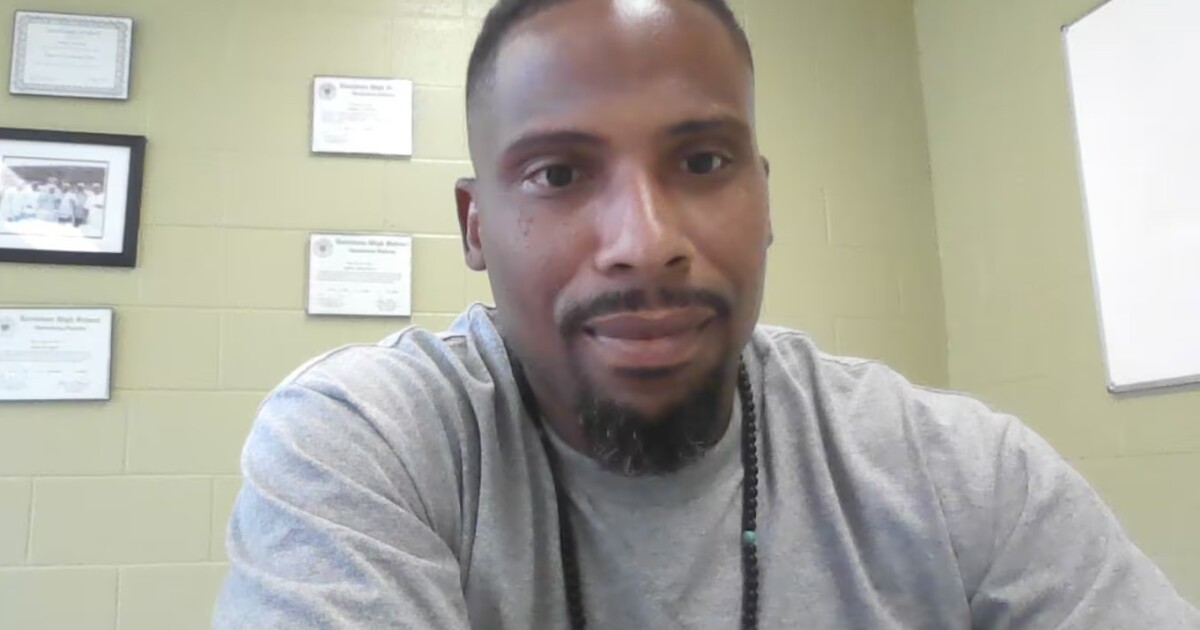
Louisiana has carried out its first execution in more than a decade, killing Jessie Hoffman Jr. with a new nitrogen gas method that unlatches possibilities for the state to someday carry out the sentences of 55 people now living on death row.
With Tuesday night’s execution, Louisiana becomes the second state to use the gas method, which has stoked controversy among some experts and horrified death penalty opponents and other advocates. It also demarcates an aggressive new era of punishment in a state already known for high imprisonment rates.
Gov. Jeff Landry says the resumption of executions is necessary to fulfill a “contractual promise” to crime victims. Speaking on the Talk Louisiana radio program Tuesday morning, he took issue — as he has publicly before — with a “focus on the criminal, rather than the victims and the families.”
“When death row is empty, we don’t have to fill it or put another person on it,” he said. “But that’s going to depend upon the conduct of individuals, not on society as a whole.”
The state plans to use nitrogen hypoxia for the first time Tuesday when it’s scheduled to put Jessie Hoffman to death.
Media witnesses said Hoffman clenched his fists and twitched as the gas flowed. They said most of his body was obscured by a thick gray blanket, with the exception of his forearms and head. Hoffman’s Buddhist spiritual advisor chanted before the execution and following his death.
He declined a final meal at the Louisiana State Penitentiary — the prison commonly referred to as Angola — and did not offer a final statement before the execution. He was pronounced dead by the West Feliciana Parish coroner’s office at approximately 6:50 p.m.
“The State of Louisiana took the life of Jessie Hoffman, a man who was deeply loved, who brought light to those around him, and who spent nearly three decades proving that people can change,” Caroline Tillman, one of Hoffman’s attorneys, said in a statement Tuesday evening.
“It took his life not because justice demanded it, but because it was determined to move forward with an execution.”
Hoffman was strapped to a gurney and inhaled pure nitrogen gas through a mask on his face for 19 minutes. Media witnesses to the execution said Hoffman shook for a few minutes, followed by shallowing breathing indicated by the rising and falling of the blanket for several minutes before he died.
Nitrogen gas executions cause hypoxia, depriving the body of the oxygen needed to maintain its functions.
Attorney General Liz Murrill said after the execution that her office aimed to start reviewing other capital cases, though she could not estimate how many executions might take place in Louisiana this year.
“We’re going to start working our way through motions and begin to clear the underbrush and move these cases forward,” she said. “Everybody deserves the justice that the state promised to them.”
Murrill did not personally witness the execution, nor did Landry, per reports.
Kat Stromquist
/
Gulf States Newsroom
Last-minute legal challenges fail
Hoffman, 46, was convicted in a case involving the 1996 rape and murder of Mary “Molly” Elliott, an advertising executive. Originally from New Orleans, he was 18 years old at the time of the crime.
In court filings, his attorneys argued that the gas method violated Hoffman’s Buddist meditative breathing practices — his religious freedom — and that associated “terror and pain” could violate Constitutional protections against cruel and unusual punishment.
Attorneys for Louisiana disagreed, writing in various filings that courts have upheld gas executions in Alabama and that Hoffman can’t use religious freedom protections to stop his execution — only make accommodations during it.
Lawyers were filing challenges and motions in multiple state and federal courts in the days before the execution in an urgent bid for his life. But judges were not receptive, culminating in a 5-4 decision from the U.S. Supreme Court denying a request to stay the execution, published to the court’s online docket minutes before the execution window began.
Justices Sonia Sotomayor, Elena Kagan, and Ketanji Brown Jackson dissented, wanting to grant a stay of execution. Justice Neil Gorsuch wrote a dissenting opinion, wanting to grant a stay based on a religious claim.
People still say, “That’s not the Jessie I knew.” But most didn’t know what he endured at home – and that’s likely what drove him on that day, psychiatrists say.
Andy Elliott, Mary Elliott’s widower, told the New Orleans Times-Picayune that he’d “become indifferent” to the difference between the death penalty and a life-without-parole sentence after so many years, but he appreciated the governor’s “urgency toward a final resolution.”
“The pain is something we simply have learned to live with,” he told the newspaper last week. “That pain cannot be decreased by another death, nor by commuting the sentence of Molly’s assailant to life in prison.”
Hoffman’s wife, Ilona Hoffman, described him as a good dad, a “loyal friend” and “the most amazing husband” in her statement following the execution. Other survivors include his son, Jessie Smith.
At a demonstration in Baton Rouge earlier this week, Smith said his father does not resemble the person who appears in news articles about the crime that led to his incarceration and death.
“The person I see and the person I read in the articles are two different people,” Smith said. “I just wish other people would see the same.”

Kat Stromquist
/
Gulf States Newsroom
Vigils held around Louisiana
People gathered outside of the Angola prison by mid-afternoon Tuesday to protest Hoffman’s execution, including Alison McCrary, director of Louisiana InterFaith Against Executions. She has served as a spiritual advisor to people on death row.
Under a nearby tree, a woman McCrary said is Hoffman’s sister audibly sobbed.
McCrary called Tuesday a “sad day” for the state, pointing to Louisiana’s high rate of reversals in cases where a death sentence was handed down.
“Death is an irreversible punishment. Once you take a life, you can’t take it back,” she said. “And knowing that we get it wrong 80% of the time, the state of Louisiana is determined to take this risk of getting it wrong.”
Protesters also gathered around New Orleans to object to the execution and hold vigils at several places of worship, including First Grace United Methodist Church on Canal Street.
“I think our governor really has to feel that he has made a personal decision to take another person’s life,” Shawn Anglim, First Grace’s pastor, said. “I hope he sleeps heavy with that and wakes up tomorrow and feels the presence of God.”

Further challenges ahead
Alabama first used nitrogen gas to execute Kenny Smith in January 2024. Witnesses to that execution described a process in which Smith “appeared to convulse” and seemed to take several minutes to die.
Three further gas executions in Alabama over the course of the past year also involved people being executed who appeared to shake or who struggled to breathe.
Alabama officials, however, say those executions have gone as anticipated and the gas method “has been proven to be constitutional and effective.”
On Tuesday night, Louisiana Department of Public Safety and Corrections Secretary Gary Westcott said the state had followed Alabama’s lead and made improvements.
“We actually probably did a little bit better than they did with some of the equipment,” he said. “We’ve made some tweaks to what they did. [The execution] was flawless. It went about as good as we can expect.”
Along with Alabama and Louisiana, Mississippi, Oklahoma and Arkansas have approved the gas method. Arkansas approved the method on Tuesday, with Gov. Sarah Huckabee Sanders signing it into law before Hoffman’s execution in Louisiana.
Death Penalty Action executive director Abraham Bonowitz said earlier this week that he foresees further court challenges to the nitrogen gas method.
“I’m hopeful that sooner or later, a court is going to hear the witnesses who are not state officials about the torture that suffocation execution is — and at that point it will be found to be — cruel and unusual, a violation of the Eighth Amendment,” he said.
WWNO reporter Eva Tesfaye contributed to this report.
This story was produced by the Gulf States Newsroom, a collaboration between Mississippi Public Broadcasting, WBHM in Alabama, WWNO and WRKF in Louisiana and NPR.


A private organization entrusted with money intended to protect Louisiana from the cost of abandoned oil and gas wells used funds to make below-market loans benefiting a senior state regulator, his re…
Already an INSIDER? Sign in.


NEW ORLEANS (WVUE) – A driver died from a gunshot wound after a Louisiana State Police car chase in New Orleans Saturday evening (June 20), but troopers say they did not fire the gun.
Troop NOLA confirmed the car chase ended near Franklin Avenue and North Miro Street Saturday. Troopers said they found the driver shot and brought them to the hospital, where that person died.
The driver’s identity has not been released.
A Troop NOLA spokesperson said he could not confirm if anyone else was in the car, if anyone has been arrested, or if troopers found a gun.
A spokesperson said more details will be released as a state police force investigation continues.
Troop NOLA is a special investigation unit tasked with proactive policing, traffic enforcement and crime reduction.
See a spelling or grammar error in our story? Click Here to report it. Please include the headline.
Subscribe to the Fox 8 YouTube channel.
Copyright 2026 WVUE. All rights reserved.

MONROE, La. (KNOE) – Shelby Bordelon of Iberville Parish was crowned Miss Louisiana 2026 Saturday night in Monroe, earning the title and a $15,000 scholarship. Bordelon, a graduate student at Southeastern Louisiana University, said the role is about more than pageantry, emphasizing the yearlong service mission tied to the crown.
“Part of the mission of this organization is the service behind it,” Bordelon said. “And the service is so important, you are serving your state for a year… having the opportunities to connect with others… to continue making an impact and leaving my mark on others as well.”
Bordelon, who finished first runner-up in last year’s competition, said the moment her name was called as the winner still hasn’t fully sunk in.
“It was every emotion you could think of that was running through my mind at that moment,” she said, adding she focused on preparation and perspective this year. “I really wanted to go into this year with no regrets… just really trusting in that mindset and that plan.”
Bordelon said she hopes to use her platform to raise awareness for her nonprofit, Claire’s Promise, which focuses on combating drunk driving.
You can learn more about the nonprofit here. She will now represent Louisiana at the Miss America Pageant, which begins in late August in West Palm Beach, Florida.
Copyright 2026 KNOE. All rights reserved.
-
 Lifestyle2 minutes ago
Did you know? Alan Greenspan and Ayn Rand were close friends
-

 Education9 minutes ago
The Man of Faith Who Heard a Righteous Call in the Founding Credo
-

 Technology12 minutes ago
Nvidia says its AI data center design runs hotter to use a lot less water
-

 World17 minutes ago
Trump says Colombia’s ‘El Tigre’ will be a ‘great president’ as socialist opponent launches legal challenge
-

 Politics24 minutes ago
DOJ investigating NYC coffee shop over hostile social post about pro-Israel politician
-

 Health27 minutes ago
Popular mommy blogger dies at 48 two years after devastating cancer diagnosis
-

 Sports32 minutes ago
2026 World Cup Goals: Every Group-Stage Score Ranked From Best To Worst
-
 Business39 minutes ago
Bed Bath & Beyond begins reopening in California with a bonus: Old coupons will be honored

