Louisiana
Louisiana executes Jessie Hoffman by nitrogen gas in 1st use of death penalty in 15 years

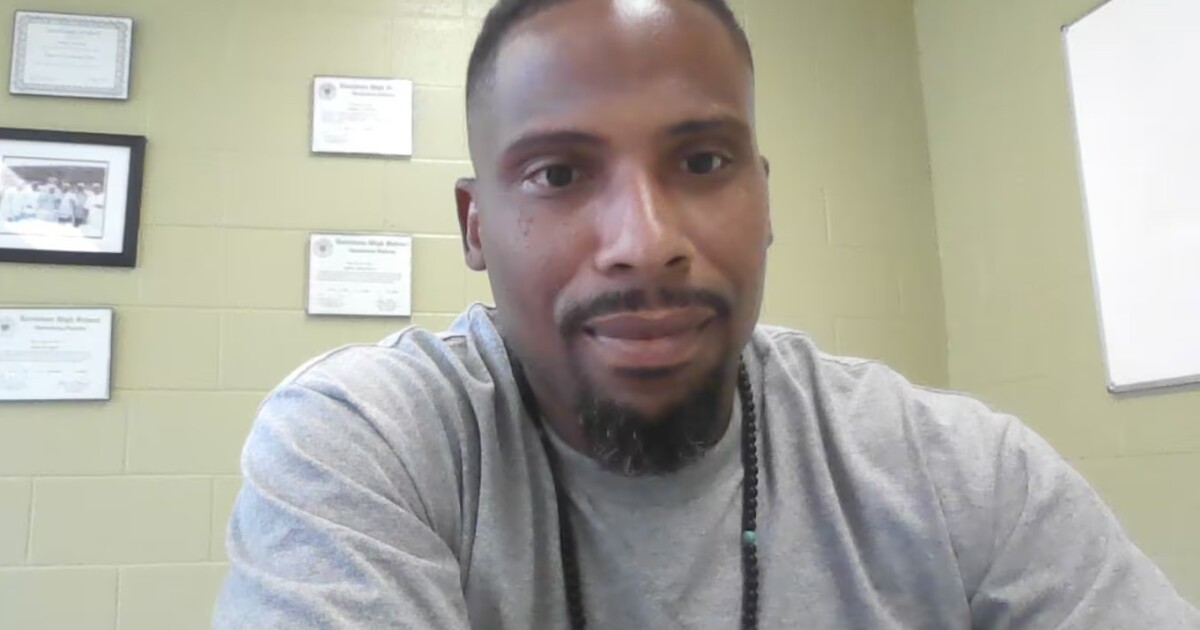
Louisiana has carried out its first execution in more than a decade, killing Jessie Hoffman Jr. with a new nitrogen gas method that unlatches possibilities for the state to someday carry out the sentences of 55 people now living on death row.
With Tuesday night’s execution, Louisiana becomes the second state to use the gas method, which has stoked controversy among some experts and horrified death penalty opponents and other advocates. It also demarcates an aggressive new era of punishment in a state already known for high imprisonment rates.
Gov. Jeff Landry says the resumption of executions is necessary to fulfill a “contractual promise” to crime victims. Speaking on the Talk Louisiana radio program Tuesday morning, he took issue — as he has publicly before — with a “focus on the criminal, rather than the victims and the families.”
“When death row is empty, we don’t have to fill it or put another person on it,” he said. “But that’s going to depend upon the conduct of individuals, not on society as a whole.”
The state plans to use nitrogen hypoxia for the first time Tuesday when it’s scheduled to put Jessie Hoffman to death.
Media witnesses said Hoffman clenched his fists and twitched as the gas flowed. They said most of his body was obscured by a thick gray blanket, with the exception of his forearms and head. Hoffman’s Buddhist spiritual advisor chanted before the execution and following his death.
He declined a final meal at the Louisiana State Penitentiary — the prison commonly referred to as Angola — and did not offer a final statement before the execution. He was pronounced dead by the West Feliciana Parish coroner’s office at approximately 6:50 p.m.
“The State of Louisiana took the life of Jessie Hoffman, a man who was deeply loved, who brought light to those around him, and who spent nearly three decades proving that people can change,” Caroline Tillman, one of Hoffman’s attorneys, said in a statement Tuesday evening.
“It took his life not because justice demanded it, but because it was determined to move forward with an execution.”
Hoffman was strapped to a gurney and inhaled pure nitrogen gas through a mask on his face for 19 minutes. Media witnesses to the execution said Hoffman shook for a few minutes, followed by shallowing breathing indicated by the rising and falling of the blanket for several minutes before he died.
Nitrogen gas executions cause hypoxia, depriving the body of the oxygen needed to maintain its functions.
Attorney General Liz Murrill said after the execution that her office aimed to start reviewing other capital cases, though she could not estimate how many executions might take place in Louisiana this year.
“We’re going to start working our way through motions and begin to clear the underbrush and move these cases forward,” she said. “Everybody deserves the justice that the state promised to them.”
Murrill did not personally witness the execution, nor did Landry, per reports.
Kat Stromquist
/
Gulf States Newsroom
Last-minute legal challenges fail
Hoffman, 46, was convicted in a case involving the 1996 rape and murder of Mary “Molly” Elliott, an advertising executive. Originally from New Orleans, he was 18 years old at the time of the crime.
In court filings, his attorneys argued that the gas method violated Hoffman’s Buddist meditative breathing practices — his religious freedom — and that associated “terror and pain” could violate Constitutional protections against cruel and unusual punishment.
Attorneys for Louisiana disagreed, writing in various filings that courts have upheld gas executions in Alabama and that Hoffman can’t use religious freedom protections to stop his execution — only make accommodations during it.
Lawyers were filing challenges and motions in multiple state and federal courts in the days before the execution in an urgent bid for his life. But judges were not receptive, culminating in a 5-4 decision from the U.S. Supreme Court denying a request to stay the execution, published to the court’s online docket minutes before the execution window began.
Justices Sonia Sotomayor, Elena Kagan, and Ketanji Brown Jackson dissented, wanting to grant a stay of execution. Justice Neil Gorsuch wrote a dissenting opinion, wanting to grant a stay based on a religious claim.
People still say, “That’s not the Jessie I knew.” But most didn’t know what he endured at home – and that’s likely what drove him on that day, psychiatrists say.
Andy Elliott, Mary Elliott’s widower, told the New Orleans Times-Picayune that he’d “become indifferent” to the difference between the death penalty and a life-without-parole sentence after so many years, but he appreciated the governor’s “urgency toward a final resolution.”
“The pain is something we simply have learned to live with,” he told the newspaper last week. “That pain cannot be decreased by another death, nor by commuting the sentence of Molly’s assailant to life in prison.”
Hoffman’s wife, Ilona Hoffman, described him as a good dad, a “loyal friend” and “the most amazing husband” in her statement following the execution. Other survivors include his son, Jessie Smith.
At a demonstration in Baton Rouge earlier this week, Smith said his father does not resemble the person who appears in news articles about the crime that led to his incarceration and death.
“The person I see and the person I read in the articles are two different people,” Smith said. “I just wish other people would see the same.”

Kat Stromquist
/
Gulf States Newsroom
Vigils held around Louisiana
People gathered outside of the Angola prison by mid-afternoon Tuesday to protest Hoffman’s execution, including Alison McCrary, director of Louisiana InterFaith Against Executions. She has served as a spiritual advisor to people on death row.
Under a nearby tree, a woman McCrary said is Hoffman’s sister audibly sobbed.
McCrary called Tuesday a “sad day” for the state, pointing to Louisiana’s high rate of reversals in cases where a death sentence was handed down.
“Death is an irreversible punishment. Once you take a life, you can’t take it back,” she said. “And knowing that we get it wrong 80% of the time, the state of Louisiana is determined to take this risk of getting it wrong.”
Protesters also gathered around New Orleans to object to the execution and hold vigils at several places of worship, including First Grace United Methodist Church on Canal Street.
“I think our governor really has to feel that he has made a personal decision to take another person’s life,” Shawn Anglim, First Grace’s pastor, said. “I hope he sleeps heavy with that and wakes up tomorrow and feels the presence of God.”

Further challenges ahead
Alabama first used nitrogen gas to execute Kenny Smith in January 2024. Witnesses to that execution described a process in which Smith “appeared to convulse” and seemed to take several minutes to die.
Three further gas executions in Alabama over the course of the past year also involved people being executed who appeared to shake or who struggled to breathe.
Alabama officials, however, say those executions have gone as anticipated and the gas method “has been proven to be constitutional and effective.”
On Tuesday night, Louisiana Department of Public Safety and Corrections Secretary Gary Westcott said the state had followed Alabama’s lead and made improvements.
“We actually probably did a little bit better than they did with some of the equipment,” he said. “We’ve made some tweaks to what they did. [The execution] was flawless. It went about as good as we can expect.”
Along with Alabama and Louisiana, Mississippi, Oklahoma and Arkansas have approved the gas method. Arkansas approved the method on Tuesday, with Gov. Sarah Huckabee Sanders signing it into law before Hoffman’s execution in Louisiana.
Death Penalty Action executive director Abraham Bonowitz said earlier this week that he foresees further court challenges to the nitrogen gas method.
“I’m hopeful that sooner or later, a court is going to hear the witnesses who are not state officials about the torture that suffocation execution is — and at that point it will be found to be — cruel and unusual, a violation of the Eighth Amendment,” he said.
WWNO reporter Eva Tesfaye contributed to this report.
This story was produced by the Gulf States Newsroom, a collaboration between Mississippi Public Broadcasting, WBHM in Alabama, WWNO and WRKF in Louisiana and NPR.



Bill Advances Honoring Shreveport Civil Rights Icons
Louisiana lawmakers move forward with bill honoring Shreveport civil rights icons Reverend Harry Blake Senior and Virginia Green Evans.
(The Center Square) − Louisiana lawmakers have filed more than 20 bills this session touching on artificial intelligence, but only a narrow slice of them has moved so far.
The clearest momentum has come on bills dealing with child exploitation. Senate Bill 42 by Sen. Rick Edmonds, R-Baton Rouge, which prohibits using artificial intelligence to create child sexual abuse materials, passed the Senate 36-0 and was sent to the House the next day.
Senate Bill 110 by Sen. Heather Cloud, R-Turkey Creek, bars using a child’s image to train an artificial intelligence model to produce child sexual abuse materials, also advanced out of the Senate and is now pending in the House Administration of Criminal Justice Committee. But the broader regulatory push has moved far more slowly.
Rep. Josh Carlson, R-Lafayette, told The Center Square the efforts have run into familiar resistance from business groups wary of state-by-state regulation.
“Anything that effects business they say is bad for business,” Carlson told The Center Square.
Carlson has a bill that would create a Louisiana AI Bill of Rights, restrict certain chatbot uses involving minors, create disclosure rules for bots and AI-generated advertising, and bar the state from contracting for AI products tied to foreign countries of concern. Carlson is still working to get his bill added to the Commerce committee’s agenda.Another bill that has managed to make progress is HB190 by Rep. Laurie Schlege, R-Metarie. It passed the House 98-0. Two days after, an op-ed submitted to The Center Square from Citizens for a New Louisiana charged the law as “one that threatens to stifle innovation, burden small businesses and startups.” The op-ed suggested amending the bill, but Schlegel hasn’t budged so far.
Senate Bill 246 by Sen. Jay Luneau, D-Alexandria, was scheduled for Senate floor debate Monday but was postponed twice, first to Tuesday and then to Wednesday. The delay followed Luneau’s promise to the Louisiana Association of Business and Industry that he would amend the bill after the group sent a memo warning it could create “unnecessary compliance burdens for businesses operating across the state.”
“AI systems are inherently interstate and global, making them better suited for a consistent federal framework rather than fragemented state oversight,” the memo continued. “SB246 risks placing Louisiana at a competitive disadvantage while duplicating efforts more appropriately handled by Congress.” The memo mentioned a December executive order from the Trump administration which instructed federal officials to identify “onerous” state AI laws and said states with such laws could be barred from receiving certain remaining BEAD broadband funds, to the maximum extent allowed by federal law.
Louisiana has $800 million in Broadband Equity, Access, and Deployment program funding that could be revoked. Responding to questions about concerns that his bill might violate that order, Edmonds told The Center Square, “I don’t see this as over regulation.” He said that, so far, he has heard no concerns with his bill.
Edmonds acknowledged concerns that overregulation could inhibit the use and development of AI, but said that his bill was specific and would not.

LAKE CHARLES, La. (KPLC) – The Venture Global CP2 construction site in Cameron has been cleared after a bomb threat was made Sunday, according to a spokesperson from Venture Global.
The bomb threat came in around noon on Sunday, according to officials. Louisiana State Police hazmat and bomb squads were called to investigate.
No shelter in place was deemed necessary and no roads were closed, according to the Cameron Parish Sheriff’s Office.
A Venture Global spokesperson released the following statement:
“Venture Global was made aware of a bomb threat at our CP2 site and immediately activated our established emergency response protocols. We are coordinating closely with state and local authorities as they investigate. The safety and security of our employees and the surrounding community remain our highest priority.”
Copyright 2026 KPLC. All rights reserved.

NEW ORLEANS (WGNO) — For the fifth consecutive year, the Louisiana Children’s Museum hosted its annual environmental festival, Mud Fest, on Saturday, March 28.
From 10 a.m.-4 p.m., parents and their little ones had the opportunity to have fun in the sun and enjoy the “highlight” of the museum’s spring season.
This event was inspired by the iconic New Orleans festival culture which includes good food, live music and a nice, high-energy atmosphere. Mud Fest is tailored for the “youngest environmental stewards” to have fun and make all the mess they want with mud.
Due to the Crescent City being surrounded by wetland habitats, we interact with water daily in both our rural and urban communities.
The festival generates positive associations with our region and also builds critical thinking skills for future educators, engineers, fishermen and farmers. According to LCM, engaging with nature, water and plants “builds a child’s confidence and fosters a lifelong connection to the Earth.”
“As the Louisiana Children’s Museum celebrates its 40th anniversary, events like Mud Fest reflect our long-standing commitment to hands-on learning that sparks curiosity and connects children to the world around them,” LCM CEO Tifferney White said.
This year, Mud Fest had performances from young musicians of the School of Rock, the Louisiana Sunspots and more. There were also a storytelling stage and various family-friendly activities for visitors to engage in.
Mud Fest partnered with Pontchartrain Conservancy, STEM NOL, Whimscapes and Sugar Roots to put on the event.
Stay up to date with the latest news, weather and sports by downloading the WGNO app on the Apple or Google Play stores and by subscribing to the WGNO newsletter.
Latest Posts

Could Miami Dolphins trade up in first round of 2026 NFL Draft?

Tech entrepreneur Paul English gives $1m to kick-start AI program in Boston Public Schools – The Boston Globe

Three former Denver mayors urge a “yes” vote on license plate cameras (Opinion)

The Man Behind Saint Bread, the Wayland Mill, and Tivoli

Deputy ID’d Who Died In Baker Run | Jeep Launches Off Bridge | Protest Turns Violent: SoCal In Brief

Florida High School Football Rankings: Top 25 teams – Oct. 21

How old is Bo Nix? What to know about Oregon quarterback ahead of 2024 NFL Draft

Cleary's 21 help Le Moyne down Central Connecticut State 69-64 in OT

99th annual Pony Swim held in Virginia

Indiana Members Credit Union announced as new anchor tenant at Bottleworks District

Video: Iran to Allow More Oil Ships Through Strait of Hormuz, Trump Says

Dem senator warns deportation could let Virginia woman’s illegal immigrant killer ‘escape accountability’

Newsletter: G7 ministers to hold talks on war’s economic fallout
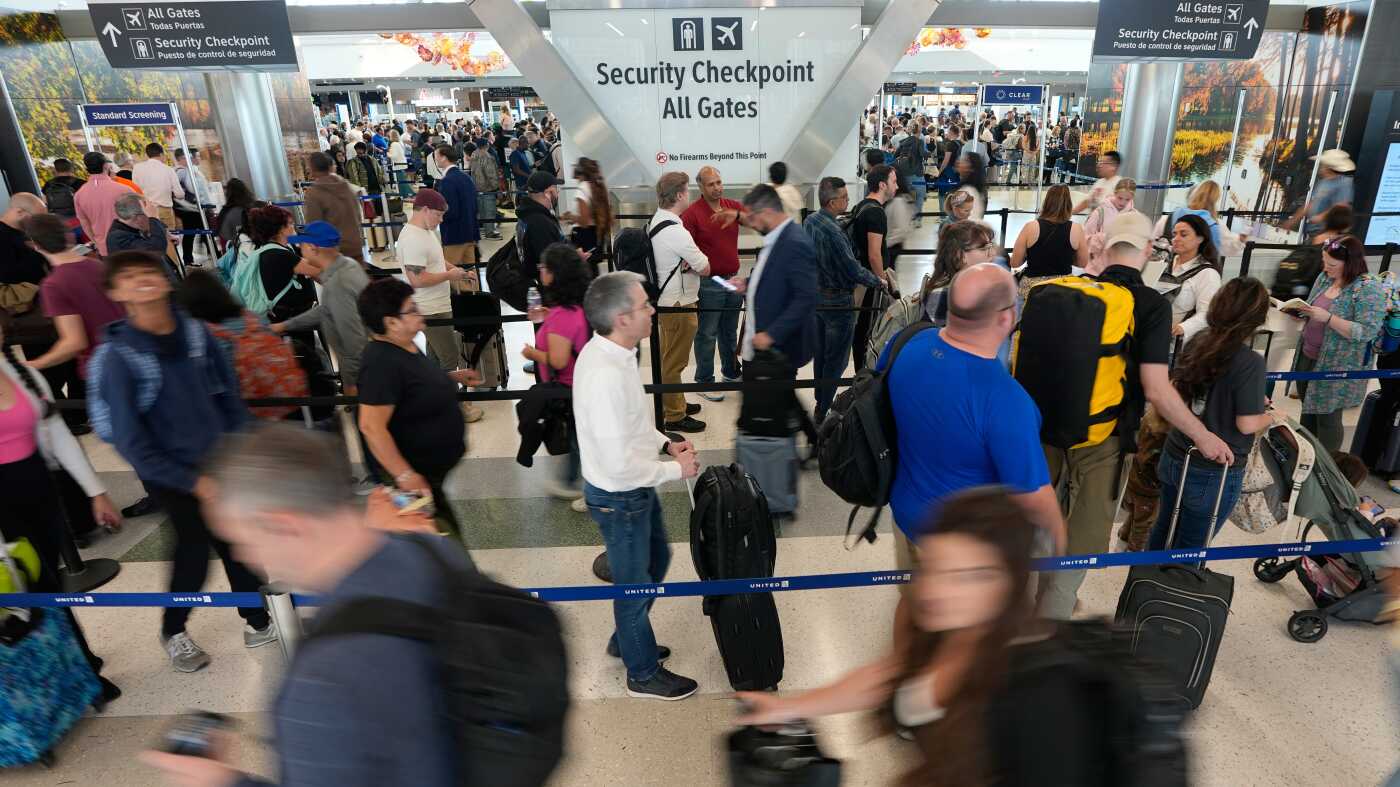
ICE officers could remain at airports after TSA workers are paid

Scathing report claims nation’s oldest labor union ‘betrayed’ MAGA members through ‘shocking’ spending
-

 Sports1 week ago
IOC addresses execution of 19-year-old Iranian wrestler Saleh Mohammadi
-

 Miami, FL4 days ago
Jannik Sinner’s Girlfriend Laila Hasanovic Stuns in Ab-Revealing Post Amid Miami Open
-

 New Mexico1 week ago
Clovis shooting leaves one dead, four injured
-

 Politics1 week ago
Schumer gambit fails as DHS shutdown hits 36 days and airport lines grow
-

 Tennessee7 days ago
Tennessee Police Investigating Alleged Assault Involving ‘Reacher’ Star Alan Ritchson
-

 Minneapolis, MN4 days ago
Boy who shielded classmate during school shooting receives Medal of Honor
-

 Science1 week ago
Record Heat Meets a Major Snow Drought Across the West
-

 Politics1 week ago
Trump gives Iran 48-hour ultimatum to reopen Strait of Hormuz or face strikes on power plants