Kentucky
A new Kentucky law will send more youth to adult court — Black kids face highest risk

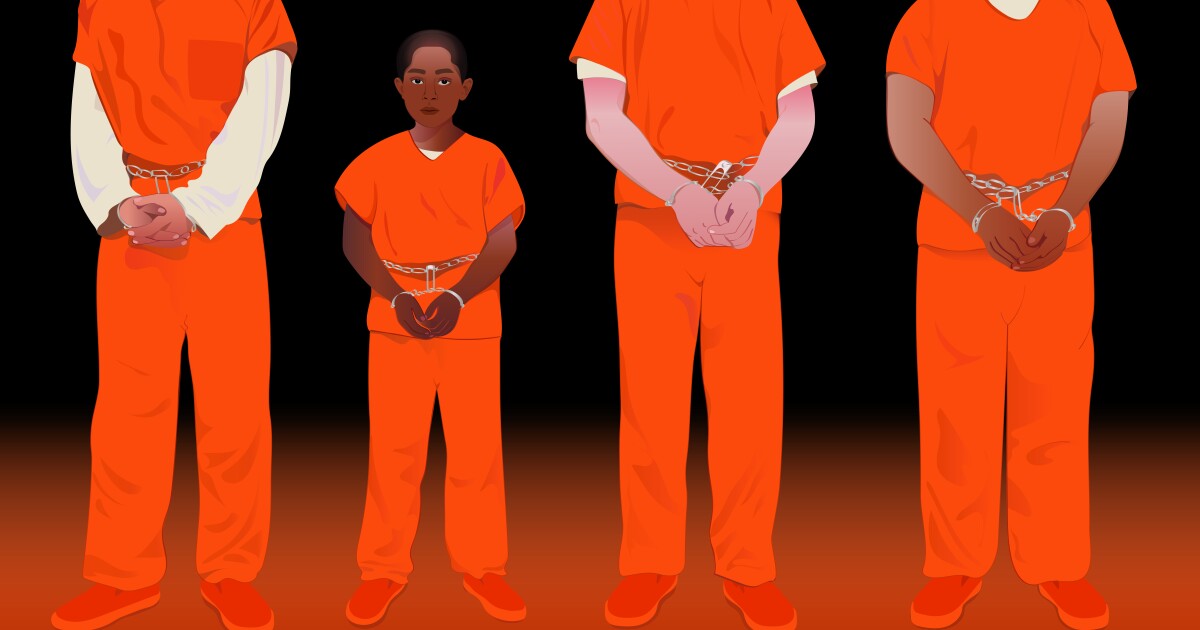
During a legislative committee meeting in February, Sen. Matthew Deneen introduced a bill that he said would address an important issue in Kentucky — violent crime committed by kids.
The solution, he said, is to start treating them as adults.
“If you’re a juvenile and you pick up a gun to commit a crime, you’re committing an adult crime, and you need to be tried as an adult,” said Deneen, a Republican from Elizabethtown.
The bill passed the full Kentucky legislature in April and will officially become law next month. When it does, any juvenile at least 15 years of age who commits a class A, B or C felony using a gun, whether the gun works or not, will be automatically sent to adult circuit court. A child convicted as an adult would receive the same penalties as an adult offender, except they’d be housed with other juveniles until their 18th birthday.
Youth advocates say the policy won’t address the root of the problem and will instead perpetuate a harmful cycle of inequity in the justice system.
And in Louisville, it will likely be Black children that bear the burden.
KyCIR analyzed ten years of Louisville Metro Police data and found that between January 2014 and February 2024 local police reported 331 felony arrests of teens aged 15 or older who also had a gun or deadly weapon — offenses that would lead them to adult court under the new law.
Three out of every four of those kids are Black.
In that same time, Louisville police handed out 965 criminal charges to juveniles for possession of a handgun. More than 80% of those charges went to Black kids.
Youth advocates and anti-violence experts say the disparities stem, in part, from being young and Black in Louisville — a city where teens say they carry a gun to protect themselves — and from a pattern of discriminatory over-policing of the city’s predominately Black West End.
“If they’re gonna go look for guns, they’re not gonna go out to the suburbs. They’re not gonna go stop a group of white kids,” said Todd Dunbar, an outreach coordinator for YouthBuild Louisville, a local nonprofit focused on giving low-income kids opportunities to be successful.
“This isn’t anything new,” he said.
In the past decade, Louisville police made 3,000 arrests and issued more than 10,000 citations to kids between 15 and 17 years old. Kids caught charges for violating ATV laws, abusing teachers and rape. They got caught with weed, they ran from police, they stole.
The most common charge: driving without a license.
And although Black kids make up a quarter of the city’s youth population, they accounted for half of all the charges filed against juveniles in the past decade.

Black kids account for just 9% of the state’s youth population, but last year made up 45% of juveniles prosecuted as adults statewide — a disparity that experts said will certainly grow wider under the new law.
Rashaad Abdur-Rahman, a former director of Louisville’s Office for Safe and Healthy Neighborhoods and founder of the Racial Healing Project, said “simplistic, cruel laws” won’t solve the underlying issues that contribute to youth crime.
“As a society, it’s easy for us to blame young people, while ignoring the fact that we haven’t facilitated conditions and communities that make young people feel safe, especially Black and Brown kids,” Abdur-Rahman said. “The indictment is on us.”
A spokesperson for Louisville’s mayor said the city is focused on reducing youth violence through intervention and outreach programs and investments in community infrastructure.
“Our gun violence crisis is tearing families apart and, unfortunately, far too many of the people involved as victims and perpetrators are kids,” said Kevin Trager, the mayor’s spokesperson. “It is up to all of us, including metro government, community leaders, parents, JCPS, and law enforcement to prevent kids from carrying guns and using them to hurt others.”
Mayor Craig Greenberg proposed spending cuts this year for the Office for Safe and Healthy Neighborhoods, the city’s primary anti-violence agency. The Louisville Metro Council passed the final budget last week, slashing $1.5 million from the agency’s budget.
Just trying to survive
The new law fails to recognize why kids are carrying guns in the first place or how they are getting access to them, said Kimberly Moore, the CEO of Joshua Community Connectors, a local nonprofit that provides mental health, housing and employment support for young adults.
Moore said she agrees that there are certain cases where teenagers might need to be tried as an adult, but she thinks that lumping them all together is problematic and harmful.
“I know young boys that are taking guns to school, hiding them outside, and then when they come out to get on the bus they pick up the gun. Because they’re afraid,” she said. “Some of these kids are honor roll students. All these kids with guns ain’t bad kids.”
Dunbar agrees.
He’s no stranger to Kentucky’s criminal justice system. At just 18-years-old, he was arrested on gun charges and has been in and out of jail for much of his adult life. But he turned his life around after his sister was killed in a drive-by shooting in Louisville’s Smoketown neighborhood on May 30, 2020.
“It tore me apart,” he said. “I felt like I needed help. I felt like I was gonna go down a road of destruction if I didn’t change my thoughts.”
After going to therapy for a year, he said he wanted to help address the cycle of violence in the community he grew up in.
Now Dunbar, 32, helps run an after-school program for kids aged 12 to 18, as well as a mentorship program for boys.
For some of the boys, carrying a gun is just part of growing up in Louisville.
“They tell me ‘I have to make it home. I want to try to make it home. I don’t want my mom to have to bury me. I just want to make sure I got this for protection.’”

The fear is justified, too. More than a third of the victims from the 1,114 fatal shootings across Louisville in the past decade were under 24 years old, according to the city’s online gun violence dashboard.
And many young people, Dunbar said, don’t trust the police to keep them safe.
The U.S. Department of Justice, following their investigation into the Louisville Metro police last year, said the agency “practiced an aggressive style of policing that it deploys selectively, especially against Black people.” The report cited more than a dozen instances of alleged police abuse or misconduct involving a minor or young adult.
Dunbar said the lack of trust in police means more and more young people take their protection into their own hands — and do what they think they need to do to survive.
“That’s not something you can solve through punishment,” he said.
Instead of locking them up, Dunbar said kids need resources to help them make better choices.
“At the end of the day, they’re still kids. Kids are gonna make mistakes,” he said. “And for your mistakes to follow you all the way from 15 years old? I’m not the same person I was when I was 15.”
Kids will (not) be kids
Despite research that urges against it, the new law will automatically prosecute certain juveniles as adults, which advocates said can severely impact their health and long-term success.
“This is just another example of making decisions around public safety that are not supported by science or evidence or data,” Abdur-Rahman said.
According to the Children’s Law Center of Kentucky, kids transferred to adult court are 34% more likely to commit additional felonies than children retained in the juvenile system for similar offenses. They also experience higher re-arrest rates than their peers who remained in juvenile court after committing the same crime.
“If legislation like this is poised to actually create more risk factors for young people, then we should not be surprised when it has no effect on reducing violence, and in fact, precipitates more violence,” Abdur-Rahman said.

Administrative Office of the Courts
/
Kentucky Court of Justice
Having a felony conviction also comes with a slew of negative consequences that will last long after a child “learns their lesson,” he said. These kids will have trouble finding a job, pursuing education, finding housing and being economically stable.
Young people are also still developing. A person’s prefrontal cortex, which is the part of the brain that’s responsible for executive decision making and for understanding consequences, isn’t even fully developed until at least 25 years old.
“To try a child as an adult doesn’t have any kind of developmental benefit. It doesn’t have any type of behavioral change benefit, because none of those interventions are going to be appropriate for how the child’s brain has developed,” Abdur-Rahman said. “That’s an immutable scientific fact which no one’s paying attention to.”
‘It takes the humanity out of it’
As the state prepares to issue harsher penalties for young people, more kids will need to be housed in Kentucky’s juvenile detention facilities — which are currently under federal investigation.
The DOJ will investigate the facilities for excessive use of force, prolonged isolations, a lack of protection from violence and sexual assault, as well as mental health and educational resources.
The investigation follows years of reports of violent riots, sexual assaults and deaths in state run juvenile detention facilities.
Advocates say the state’s detention centers are not prepared to care for an influx of kids or keep them safe.
Children have only been protected from being tried as adults in Kentucky for three years. The passage of SB 36 in 2021, sponsored by Sen. Whitney Westerfield, completely eliminated automatic transfers — the term for sending a kid to adult court — until the new law was passed this year.
The legislators who led the charge, Sen. Deneen and Sen. Greg Elkins, did not respond to requests for comment. But in legislative meetings, they said that they hope harsher punishments will deter youth crime.
“A lot of times, juveniles know they’re going to be treated as a juvenile in the court system, so they’re not as afraid to commit that crime or to pick up that gun,” Elkins said during a legislative meeting. “Hopefully, this bill will be a deterrent to that.”
Westerfield, a Republican from Fruit Hill, said the law takes humanity out of the court process. The mandatory transfer occurs without any action by the county attorney and removes the discretion of the district court judge, who could previously evaluate the unique circumstances of the child’s case before deciding to transfer to an adult court.
Once the case is transferred to adult court, the Commonwealth’s Attorney will be allowed to transfer the case back to juvenile court if they believe it is in the best interest of the public and child to do so. But Westerfield, a former assistant Commonwealth’s Attorney, said this practice is exceedingly rare.

“Now, every child who is charged with these crimes will be tried as an adult, no matter the circumstances of their background, no matter the circumstances of the incident, no matter the circumstances of their record, or even regarding whether or not they have developmental disability,” he said. “ I mean that is just stunningly callous.”
Westerfield, one of the few Republicans who voted against the bill in April, said this is a “shameful attempt” at reversing the progress that has been made for Kentucky’s troubled juvenile justice system.
“For most of these kids, all this is gonna do is make them worse,” he said. “It’s going to remove them from any positive influence that we could have in their lives, and put them with some of the worst influences we could possibly give them. And we’re gonna drive them deeper into a system.”


LEXINGTON, Ky. (WKYT) – Recent heavy rainfall has left soil across the state completely soaked, contributing to localized flooding in some areas.
When rain falls, some water soaks into the ground through a process called percolation.
Soil can only hold a limited amount of water. Once the small air spaces within the soil fill with water, the ground becomes saturated and additional rainfall has nowhere to go.
Soil type plays a role in how quickly water drains.
Much of Kentucky has clay-heavy soil, which is made up of very small, flat particles packed tightly together.
That composition makes it harder for water to move through. In clay soil, water may drain at a rate of only 0.02 to 0.17 inches per hour.
When rainfall comes down faster than the ground can absorb it and water cannot drain into a stream or storm drain quickly enough, it begins to build up.
That buildup is what leads to localized flooding.
Copyright 2026 WKYT. All rights reserved.

BOWLING GREEN, Ky. (WBKO) – Cyclosporiasis is a microscopic parasite that can contaminate food and water — is making people sick across several states, including Kentucky.
Dr. Patricia Tellez-Watson said, the illness is caused by Cyclospora cayetanensis and spreads when someone ingests contaminated food or water. “It is an intestinal infection caused by this water-borne, food-borne microscopic parasite,” she said.
Symptoms can include diarrhea, nausea and vomiting.
Tellez-Watson said, cases are often sporadic, but outbreaks can happen — especially during hot, wet months, when the parasite can survive in the environment long enough to become infectious.
Health experts recommend taking extra precautions with food and water. Washing hands and thoroughly rinsing produce before eating or cooking can reduce risk.
Watson also urged people to be cautious with fresh produce, particularly pre-packaged items, and to consider using bottled water.
Officials have confirmed cases in Bowling Green, though it’s unclear how many.
Copyright 2026 WBKO. All rights reserved.


What will Moeller’s Matt Ponatoski bring to Kentucky football, baseball?
Hear what Moeller senior had to say about signing to play football and baseball at the University of Kentucky.
Dual-sport star and Moeller alum Matt Ponatoski’s final decision still awaits, but signs are pointing towards Lexington, KY.
After committing to the University of Kentucky as both a quarterback and pitcher, Ponatoski was selected in the 18th round (No. 542 overall) of the 2026 MLB Draft by the hometown Cincinnati Reds. While Ponatoski was ranked No. 208 on the MLB’s draft board and expected to be selected higher, doubts around whether he intended to go pro this year caused his stock to fall.
Ponatoksi has until the MLB’s signing deadline on July 27 to make a final decision, but the Moeller product has seemingly signaled his intention to stick with the University of Kentucky. He enrolled at the University of Kentucky on Wednesday, July 15, per a Kentucky Sports Radio report, indicating he will join the Wildcats football team in the fall.
The Man of Moeller was just the third player in the history of the Gatorade Player of the Year award to win for two different sports in the same season. Doing so in his junior year, he joined Pro Football Hall of Fame receiver Randy Moss and National Baseball Hall of Fame catcher Joe Mauer.
For Wildcats football, Ponatoski would come in as a four-star quarterback prospect and helped give new head coach Will Stein a top-25 recruiting class in the nation. He threw just one interception in his senior season for the Moeller Crusaders, completing 66% of his passes for 2,395 yards and 28 touchdowns.
For Kentucky baseball, Ponatoski would join up with fellow freshman and former Louisville Trinity pitcher Grayson Willoughby, who won Kentucky Mr. Baseball and withdrew his name from the draft. Willoughby, a top-rated pitching prospect, felt MLB teams were attempting to low-ball him and thus chose to stick with the Wildcats. Ponatoski is fresh from a season leading Moeller to the state championship game, recording a 1.37 ERA on the year.
-
 News11 seconds ago
Flood sirens blare in South Central Texas as rivers reach perilous heights
-

 Los Angeles, Ca2 hours ago
Arrest made in deadly shooting at 4th of July gathering in Compton; search for 2nd suspect continues
-

 Detroit, MI2 hours ago
Detroit crime hits decades-low as Michigan governor candidates debate how to keep progress going
-

 San Francisco, CA2 hours ago
Operator of boat that capsized near Alcatraz mourns brother as search continues
-

 Dallas, TX2 hours ago
Mavericks vs Thunder Game Preview and Injury Update
-

 Miami, FL2 hours ago
Miami Dolphins Fans Vs. The Media
-

 Boston, MA3 hours ago
Man who allegedly shot at Boston Police officers arrested after foot chase in Dorchester
-

 Denver, CO3 hours ago
Swan, dragon and duck boats are back pedaling around City Park

