Georgia
LSU basketball blows a 15-point lead in first half and falls to Georgia at home


The LSU basketball team’s hopes for an NCAA Tournament at-large berth are slipping away quickly.
The Tigers were unable to capitalize on a big opportunity as they fell 83-71 to Georgia on Saturday at the Pete Maravich Assembly Center. The Bulldogs snapped their three-game losing streak in the process.
Max Mackinnon had 26 points, five rebounds, four assists and made all 10 of his free throws for LSU.
LSU point guard Dedan Thomas missed a second straight contest and his seventh game overall. He reaggravated a left foot injury Jan. 28.
Coach Matt McMahon was pleased with his team’s strong start, leading by as many as 15 points in the first half. He mentioned how it had nine assists to only two turnovers after the first 10 minutes.
The fast start would not last, though.
“I thought the difference in the game, two things,” McMahon said. “Number one, after the nine-to-two assist-to-turnover ratio, we were three (assists) to 12 (turnovers) the rest of the game. And then, after only giving up four (offensive) boards in the first half, we give up 12 in the second half. A lot of them led to dagger threes, and they made us pay in the fight and pursuit for those 50-50 plays.”
Mackinnon started the game aggressively, taking four shot attempts in the first three minutes. He made three shots, with two coming from downhill drives for scoop layups and one 3-pointer.
The Portland transfer also drove and passed to a cutting Pablo Tamba, who made a layup. Mackinnon scored or assisted on the first nine points for LSU (14-9, 2-8 SEC).
The senior’s strong opening helped LSU take a 13-4 lead at the first media timeout. Mackinnon didn’t cool off after the break as he came off a screen to make a 3-pointer. A couple of minutes later, he dribbled through a full-court press, drove to the hoop, spun in the paint and kicked the ball out to Marquel Sutton for a corner 3-pointer. The Omaha transfer finished with 14 points and five rebounds.
PJ Carter, a 6-foot-4 senior guard, then made back-to-back 3-pointers early in possessions. The second 3 was a few feet above the arc and was spurred by a recovery block from behind by Robert Miller. The field goal gave LSU a 31-16 advantage, its largest lead, with 9:47 remaining in the first half.
Georgia (16-7, 5-5) started to play a full-court press to disrupt LSU’s comfort offensively around the 12-minute mark. That helped the Bulldogs match the intensity as they fought back.
Kanon Catchings was the early go-to option for the Bulldogs. The 6-8 wing made his first four shots, including three 3-pointers. He closed the game with 22 points.
Georgia entered halftime making seven of its last 10 shots. It forced a few LSU turnovers and had two consecutive steals that led to transition dunks, giving the Bulldogs a three-point lead with 25 seconds left before halftime, and Georgia entered the break up 42-37 after an 11-0 run.
Senior Rashad King replaced Thomas in the starting lineup. In his fifth game as a starter, the transfer from Northeastern has averaged 11.3 points, 3.2 rebounds and shot 53.6% overall.
The senior didn’t have as strong of an outing against Georgia. King had zero points, four assists and three turnovers.
The Bulldogs continued applying full-court pressure and remained more physical in their half-court defense. LSU had chances to push after stops, but it had self-inflicted mistakes. One example was an alley-oop miss from Georgia, but King threw an outlet pass to a guarded Tamba for a turnover. That mishap led to a 3-pointer by Georgia’s Blue Cain, who gave his team a 48-41 lead with 17:42 left.
Other times, LSU didn’t stay as connected on cutters and allowed more offensive rebounds with Miller playing center. Georgia had four offensive boards in the first seven minutes of the second half. It had that amount in the entire first half.
“Sometimes people were put in rotations and missed box outs,” Mackinnon said about the poor rebounding. “I know I miss box outs. They’re good athletes. Sometimes can’t win a jumping contest. You gotta hit first. “
Starting LSU center Mike Nwoko played only 15 minutes as he battled foul trouble. He fouled out with 5:22 left in the game and had eight points and five rebounds.
After Nwoko fouled out, Georgia pummeled LSU on the offensive glass. The extra chances energized the Bulldogs, who expanded their lead to 77-60 with 4:15 remaining. McMahon said Nwoko’s foul trouble “made it tough” for the Tigers. The junior was coming off a 21-point outing in LSU’s previous five-point overtime win at South Carolina.
LSU’s next game will be its second meeting against No. 21 Arkansas at 8 p.m. Tuesday. In the first contest at Arkansas, the Tigers lost 85-81.



The Georgia Bulldogs are expected to have one of the country’s best defenses again in 2026. Georgia has a lot of continuity from the 2025 defense and should be able to dominate many of their opponents this fall.
The Bulldogs defense will be led by potential All-American defensive backs KJ Bolden and Ellis Robinson. Georgia appears to be set at inside linebacker with the likes of Raylen Wilson, Chris Cole, Justin Williams and Zayden Walker forming a formidable group.
Georgia’s defense is not without questions. The Bulldogs need defensive tackle Elijah Griffin to play like a star as a sophomore. Georgia has to get more pass rush production. UGA managed only 20 sacks a year ago and their top defensive transfer addition, Amaris Williams of Auburn, is expected to be out for the season. Georgia fans can all remember Ole Miss quarterback Trinidad Chambliss running circles around the Georgia defense in crucial moments of the Sugar Bowl.
Outside of the pass rush, Georgia’s depth at outside cornerback is probably the Bulldogs’ second-biggest weakness. If Ellis Robinson gets hurt, then Georgia could be in trouble. Despite these concerns, Georgia’s defense should overwhelm weaker SEC opponents this fall.
Nose tackle
- Jordan Hall
- Xzavier McLeod
- Nnamdi Ogboko
Georgia defensive tackle Jordan Hall is a former five-star recruit with a significant injury history. His snaps will probably be limited at times this fall. Xzavier McLeod has improved in each of his two seasons at Georgia and should be one of Georgia’s top depth options in the defensive line rotation. Nasir Johnson is another big body to know up front at nose tackle.
Defensive tackle
- Elijah Griffin
- Josh Horton
- Nasir Johnson/London Seymour/Valdin Sone
Five-star defensive lineman Elijah Griffin is entering his second season and is looking to have a big year after making an impact as a true freshman. Josh Horton has plenty of experience, but Bulldog fans would like to see a bit more production. Another defensive lineman to know is freshman Valdin Sone, who is a five-star recruit.
Defensive end
- Gabe Harris
- Joseph Jonah-Ajonye
- Justin Greene/JJ Hanne
Gabe Harris has the size to play both defensive end and outside linebacker. Georgia needs him as a pass rusher. He missed the Bulldogs’ Sugar Bowl loss and spring practice due to a turf toe injury. Joseph Jonah-Ajonye is a former elite recruit.
Outside linebacker
- Quintavius Johnson
- Chase Linton/Isaiah Gibson
- Darren Ikinnagbon/Khamari Brooks/PJ Dean
Quintavius Johnson is expected to start after a promising 2025 season. Gabe Harris and Chris Cole will also see action at outside linebacker. One of these second-year players needs to step up: Isaiah Gibson, Chase Linton and/or Darren Ikinnagbon. All have a lot of talent and are in for bigger roles after Auburn transfer Amaris Williams suffered an ACL injury in the spring. Freshmen Khamari Brooks and PJ Dean were both four-star signees.
Inside linebacker
- Raylen Wilson
- Chris Cole
- Justin Williams
- Zayden Walker
Once again, Georgia and coach Glenn Schumann have a stacked inside linebackers room. The Bulldogs will start two inside linebackers, but their backups will all play key roles. Chris Cole led UGA in sacks during the 2025 season. Cole and Zayden Walker are important pieces in Georgia’s pass rush. Raylen Wilson (knee) and Walker (shoulder) both missed the spring.
Georgia freshmen Nick Abrams has a lot of talent and veteran Terrell Foster is reliable, but they’re expected to be buried on Georgia’s depth chart along with redshirt freshman AJ Kruah.
Outside cornerback
- Ellis Robinson IV
- Demello Jones
- Braylon Conley/Gentry Williams
- Jontae Gilbert/Caden Harris/Justice Fitzpatrick
Georgia’s outside cornerback room is led by Ellis Robinson, who should be an All-SEC pick. The spot opposite Robinson should go to Demello Jones, but don’t rule out experience transfers Braylon Conley (USC) and Gentry Williams (Oklahoma). There is some concern about Georgia’s outside cornerback depth this season. Jontae Gilbert, Caden Harris and Justice Fitzpatrick all have talent, but Fitzpatrick did suffer a torn ACL in December.
Slot cornerback
- Khalil Barnes
- Rasean Dinkins
- Zech Fort
Rasean Dinkins did well in the SEC championship against Alabama, but not as strong in the Sugar Bowl. Clemson transfer Khalil Barnes is projected to start over him with Tyrique Green being another name to watch at star.
Free safety
- KJ Bolden
- Tyrique Green
- Jaylan Morgan/Jordan Smith
Georgia junior KJ Bolden should be an All-SEC pick. Four-star signee Tyrique Green is going to find a way on to the field this season.
Strong safety
- Rasean Dinkins
- Zion Branch/Ja’Marley Riddle/Kyron Jones
- Todd Robinson/Blake Stewart
Dinkins and Barnes will both likely start for UGA. Zion Branch, Ja’Marley Riddle and Kyron Jones should all see snaps with Jones’ health being a question.

Georgia
How Georgia’s economy drew the World Cup—and how the World Cup will strengthen Georgia’s economy

Illustration by Dan Matutina
It’s the $1 billion dollar question: What prompted FIFA to choose Atlanta as one of the host cities for this summer’s FIFA World Cup 2026™? The answer is the same one that lures companies from all over the world to Georgia: the state’s robust economy, strong infrastructure, and cooperative culture.
Since the Olympics, Georgia has positioned itself as the Gateway to the South for global business. It has built a diverse industry base in fields such as agriculture, manufacturing, logistics, film and television, technology, and aerospace. Direct foreign investment is strong here: Atlanta is home to more than 70 foreign consulates, trade missions, and bi-national chambers of commerce.
One of Georgia’s biggest assets is global connectivity—by air, rail, road, and waterways, says Pat Wilson, commissioner of the Georgia Department of Economic Development. Eighty percent of the U.S. population is within a two-hour direct flight from Hartsfield-Jackson Atlanta International Airport, the world’s busiest passenger hub. Georgia’s interstate system provides 20,000 miles of federal and state highways, and the Port of Savannah is the fastest-growing container terminal on the East Coast. All of this allows sports fans, foreign dignitaries, and corporate executives to get in and out of Atlanta very easily. “And business follows connectivity,” Wilson says.
These factors, combined with Georgia’s long history of cooperation between the private and public sectors, helped seal its position as a host city. And that, in turn, will pay dividends.
Courtesy of Georgia Ports Authority
Courtesy of Stone Mountain
Photograph by GenePage/ AMC


Take, for example, tourism. Explore Georgia, the state’s tourism arm, is betting big that FIFA World Cup 2026™ could potentially catapult the state’s visitor numbers to unprecedented levels. To maximize the possibilities, it has launched a global marketing campaign in conjunction with the tournament, including ads on stadium and railway-station billboards in the United Kingdom. “We want visitors to make Georgia their home-away-from-home during the World Cup,” Wilson says.
Katie Kirkpatrick, president and CEO of the Metro Atlanta Chamber, is similarly bullish. Much like after the Olympics 30 years ago, she expects the city and state to leverage the global soccer tournament’s effects for decades to come. Economic-impact estimates range from $500 million to over $1 billion. “Atlanta does ‘big’ well,” she says. “And I’m confident that we will see increased foreign direct investment and show the world once again that here in Georgia, business culture and innovation naturally converge.”
Advertisement
-

 Technology26 seconds ago
Humanoid robots perform live surgery in world first
-
 Business6 minutes ago
A ‘next generation studio’ for YouTube creators
-
 Entertainment12 minutes ago
Finn Wolfhard is taking ‘control of the narrative’
-
 Lifestyle18 minutes ago
What are your most cherished memories of the 2026 World Cup in L.A.?
-
 Politics24 minutes ago
Commentary: Two Lorenzos from Mexico. One fulfilled his American dream. ICE killed the other
-
 Sports36 minutes ago
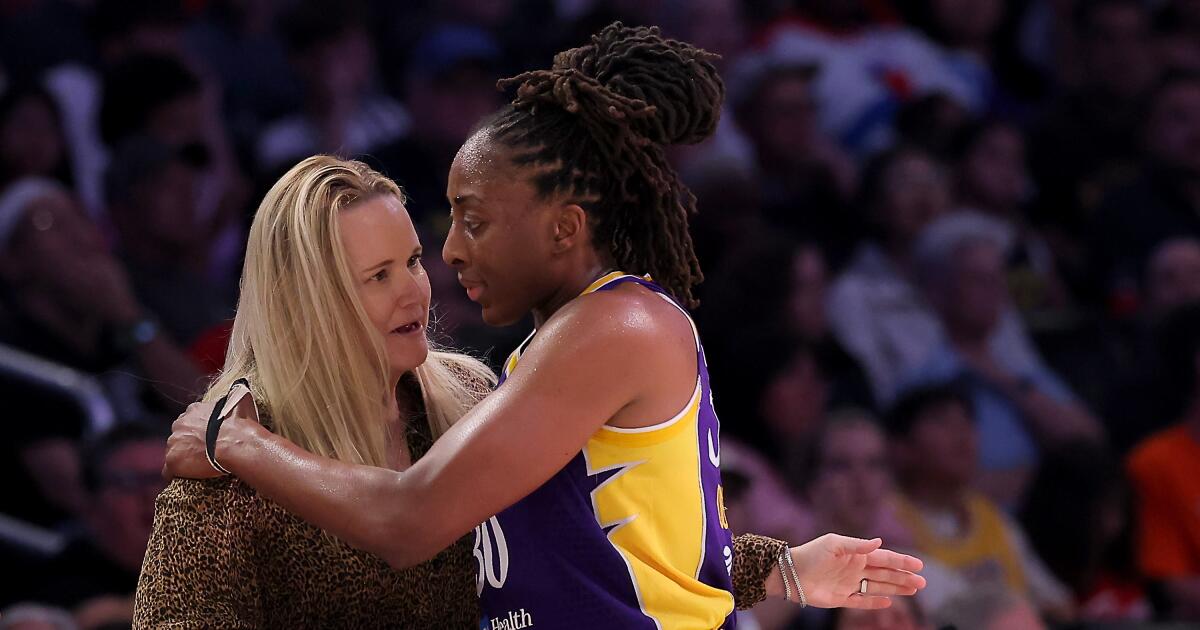
What will the Sparks do next? The franchise is at a crossroads after firing its GM
-
World48 minutes ago
Euronews explains: can Hungary's PM Magyar really remove president Sulyok from office?
-

 News1 hour ago
Mexico files criminal complaints in US over migrant deaths in custody

