Georgia
Georgia Allows Schools to Directly Pay Athletes for NIL


Whether or not the House settlement is fully approved, Georgia’s colleges and universities can begin paying their athletes for their name, image and likeness immediately.
On Tuesday, Georgia Gov. Brian Kemp (R) signed an executive order that prohibits the NCAA or any athletic conference from punishing schools that directly compensate student-athletes for their NIL.
Currently, the NCAA does not allow schools to directly pay their athletes for the rights to their NIL use. However, the organization has agreed to remove the edict as part of a pending settlement that is still working its way toward court approval.
In a joint statement emailed to Sportico, Josh Brooks and J Batt, the respective athletic directors for Georgia and Georgia Tech, expressed their thanks to the governor for signing the order. “In the absence of nationwide name, image and likeness regulation, this executive order helps our institutions with the necessary tools to fully support our student-athletes in their pursuit of NIL opportunities, remain competitive with our peers and secure the long-term success of our athletics programs,” they said in the statement.
Georgia has joined Virginia in explicitly allowing colleges to compensate athletes for their NIL—a concept that is contemplated in the proposed but not-yet-approved settlement between the NCAA and attorneys for athletes to resolve the House, Carter and Hubbard antitrust litigations.
The Georgia law is less transformative than it might have been before the proposed settlement and before the NCAA announced it would no longer enforce amateurism restrictions in the context of NIL. The NCAA took that step during the spring after U.S. District Judge Clifton Corker, in Tennessee and Virginia v. NCAA, issued a preliminary injunction prohibiting the NCAA from enforcing rules that preclude college athletes and recruits from negotiating compensation for NIL with collectives and boosters.
As the NCAA moves toward a model where colleges in power conferences can directly pay college athletes for media rights, ticket sales sponsorships and NIL, the Georgia law seems to codify a concept that will soon be in play.
The Georgia law is also consistent with U.S. District Judge Claudia Wilken’s concerns about restricting NIL opportunities for college athletes. She stressed in a recent hearing that she would not approve a settlement that takes away NIL opportunities for college athletes. The settlement currently contemplates a distinction between NIL deals that draw from use of athletes’ right of publicity versus those deals that are connected to collectives and boosters and appear to be more in line with pay-for-play. One proposed mechanism to enforce that distinction is the use of fair market value analysis in review of NIL deals. Whether that distinction can be consistently and logically applied is a source of industry debate.
It’s possible Wilken could cite the Georgia law in further deliberations with the attorneys. The parties have until Sept. 26 to send her a revised settlement. Should the settlement collapse or be rejected, the cases would return to the docket.
Kemp’s order comes as the University of Tennessee, an SEC rival of the defending football champion Georgia Bulldogs, announced that it will tack on a “talent fee” onto football tickets next season to help fund its revenue-sharing pool for athletes.



A Georgia woman facing a rare murder charge tied to an alleged abortion has been granted bond.
Alexia Moore, 31, was granted bond Monday by a judge in Camden County, according to the Georgia Public Defender Council. The court set bond at $1 on the malice murder charge and $2,000 total for two drug-related charges.
Prosecutors agreed Moore was entitled to bond and to an amount she could reasonably pay, the public defender’s office said.
Moore had been jailed since early March after police accused her of taking pills to end a pregnancy in violation of Georgia law, which bans most abortions after about six weeks.
Authorities allege Moore was about 22 to 24 weeks pregnant when she went to a hospital in late December, reporting abdominal pain. According to an arrest warrant, she told medical staff she had taken misoprostol, a drug commonly used in medication abortions, along with oxycodone. Investigators said the fetus was delivered alive and survived for about an hour.
The case has drawn national attention because it could be one of the first times a woman in Georgia is prosecuted for murder in connection with ending a pregnancy since the state’s 2019 abortion law took effect.
In a statement, the Georgia Public Defender Council said the bond decision reflects the importance of due process.
“Today’s decision is a reminder that justice is not served by accusation alone,” the agency said. “Our system works best when courts carefully weigh the facts, uphold constitutional protections, and safeguard the rights of every person.”
Moore also faces charges of possessing controlled substances, including oxycodone and misoprostol.
The case comes as states across the country navigate legal questions following the U.S. Supreme Court’s 2022 decision overturning Roe v. Wade, which allowed states like Georgia to enforce stricter abortion laws.
Moore’s attorneys have also filed motions seeking a speedy trial as the case moves forward.

ATLANTA – A proposal to mandate weapons-detection systems at every public school entrance in Georgia is one step closer to becoming law following an emotional hearing at the State Capitol on Monday.
What we know:
The State Senate Public Safety Committee on Monday unanimously approved House Bill 1023. The move comes in response to the Sept. 4, 2024, shooting at Apalachee High School that killed two students and two teachers.
“A place of nightmare”
What they’re saying:
The committee heard harrowing testimony from Apalachee High School students who survived the gunfire.
Daria Lezczynska, a junior, and Sasha Contreras, a senior, are members of “Change for Chee,” a group advocating for increased school safety measures.
READ APALACHEE SHOOTING COVERAGE HERE
“The place where we used to feel safe, turned into a place of nightmare,” Lezczynska said through tears.
She told the committee that the gunfire erupted directly outside her classroom.
“The fear, the blood and the chaos that is burned into my memory,” she said.
Contreras, who was locked down inside the school with her mother during the attack, remembered a teacher who was gunned down that day.
“I left feeling happy, not knowing it would be that last time,” she said. “No child should step into school anxious about coming out alive.”
A proactive step
The legislation, originally introduced by Georgia House Majority Leader Chuck Efstration, R-Dacula, seeks to create a physical barrier against firearms entering school buildings.
“Ensuring that weapons cannot come into our public schools is a first step to make sure that students are safe,” Efstration said. “Georgia students deserve to know that they’re going to be safe at school. Parents need to know when they drop their kids off at school in the morning, they’re going to be able to pick them up safe at the end of the day.”
The student advocates believe the technology would have changed the outcome at Apalachee, where investigators say a student killed four people and injured seven others.
“If there had been weapons-detection systems in every place at every entry of the school on that day, that rifle never would have reached our hallways,” Lezczynska said, calling the proposal a “very good bill.”
Contreras added that the unanimous committee vote was a necessary step forward.
“This is a proactive measure that I think is necessary,” she said. “I’m glad that people today stepped up and were able to pass it.”
What’s next:
The bill now moves to the full Georgia Senate. Lawmakers have just over a week to pass the measure before the legislative session concludes.
The Source: This is a FOX 5 original report where Christopher King gathered information from Georgia State Capitol legislative proceedings, the text of House Bill 1023, and public testimony from students and state representatives.

Rep. Buddy Carter warned a crowd of Republicans in Roberta, Georgia, in January that he faced an uphill battle in November to unseat Democrat Sen. Jon Ossoff in the purple state, if he becomes the Republican nominee.
“Look, this guy’s no slouch,” the Georgia congressman said, according to a recording of the remarks obtained by The Washington Post. “He’s pretty sharp, he’s articulate, he’s young, he’s handsome, he talks well. You better have somebody who can go toe to toe with him.”
Publicly, Republicans in the state and in Washington continue to list Georgia as their top pickup opportunity in the Senate as they defend their 53-seat majority in a midterm year in which their party faces fierce political headwinds. Donald Trump won the state by more than two percentage points in 2024, and Republicans have painted Ossoff as too liberal for Georgia.
But behind closed doors, Republicans have tamped down their hopes of unseating the 39-year-old powerhouse fundraiser as he seeks another term. They’re lamenting their bitterly divided primary field made worse by a recruiting failure when popular Republican Gov. Brian Kemp declined to run for the seat. Carter, Rep. Mike Collins and Derek Dooley, a former college football coach endorsed by Kemp, are the main competitors in the May 19 GOP primary.
Collins – a close Trump ally with a blisteringly MAGA social media presence that could alienate moderate voters – leads in most polls of the Republican primary. The Cook Political Report rates the general election as a toss-up.
“I’m not feeling bullish about it,” said one Republican strategist who was granted anonymity to provide a more candid assessment. “[Ossoff] has wisely avoided the temptation of going on cable news for six years and playing to the base for social media likes. … I think he’s going to reap the benefits of that.”
Sen. Thom Tillis, a Republican retiring from his North Carolina seat this year, said Ossoff has done “a good job presenting as a moderate candidate,” although Tillis does not believe he actually is moderate.
Republicans risked ceding crucial independent and moderate Republican voters to Ossoff if they nominate a more hard-right candidate, Tillis said.
“If these people want a purity test and they put somebody forth that’s the darling of the MAGA base, but doesn’t resonate with unaffiliated [voters] and right of center fiscal Republicans, that’s a recipe for losing,” said Tillis, whose neighboring state shares similar political characteristics to Georgia.
The skinny former House staffer who won his Senate seat in a runoff election in 2021 did not always inspire the same fear from his opponents. Republicans believed Ossoff, then a political neophyte, had ridden the coattails of Sen. Raphael G. Warnock (D-Georgia), a charismatic preacher he shared the ticket with, and also benefited from an odd election season in which Trump depressed Republican turnout by falsely claiming widespread voter fraud. Just a couple of years earlier, Ossoff had lost a House special election that took place shortly after Trump was first sworn in, disappointing Democrats across the country.
“The first time I ever saw him was when he was running in that Georgia 6 special election and I was like, ‘Oh God, just what we need: Another former staffer,’” recalled Caitlin Legacki, a Democratic strategist. “But he has got game.”
When he got to Washington, Ossoff built a Senate office that prioritized responsiveness to constituents and a hyper focus on local Georgia issues. Inspired by the late Republican senator Johnny Isakson, Ossoff said he wanted his office to provide excellent constituent services to any Georgian, regardless of their political affiliation. In 2025, he joined the powerful Senate Appropriations Committee, allowing him to steer more money to projects back home.
“I don’t crave attention. I’m not doing this for the spotlight,” Ossoff said in a brief interview in the Capitol. “I want to do a great job for the state.”
Attention is exactly what the senator has been getting, however, as he’s broken from his hyper-local focus in recent months to deliver stinging attacks on Trump and his administration that have won him admiration from national Democrats. A speech he gave in suburban Atlanta excoriating Trump for empowering a wealthy “Epstein class” to rule the country while slashing public services went viral. And in recent remarks at a Black church, Ossoff lashed out at the Trump administration’s actions as evil, criticizing Republicans from a biblical perspective.
“There’s a wickedness to the program,” he said earlier this year. “I don’t know, pastor, where it is in scripture that it says deny care to the sick, take from those with the least to give to those with the most, violate the house of worship to hunt down the refugee. Where in the scripture are those lessons taught?”
The rhetoric is not the standard, careful stump speeches many vulnerable lawmakers up for reelection in purple or red states stick to to avoid missteps or alienating middle-of-the-road voters. And it could add another element of risk to his strategy of winning over moderate voters in the state.
It’s also sparked speculation that he has an eye on a future presidential run that may be taking precedence over his reelection bid. But Ossoff’s fans believe his fiery approach makes him seem more authentic to voters in Georgia, who wouldn’t buy an election-year makeover from the senator.
“One of the biggest mistakes that vulnerable members make is that in an election year they all of a sudden start tacking to the middle, and that’s just transparently obvious to all the voters,” said Dan Pfeiffer, a longtime former Barack Obama aide who now co-hosts the “Pod Save America” podcast popular among liberals. “He’s standing strong.”
Pfeiffer called Ossoff “one of the best communicators in the Democratic Party.”
At a recent event Ossoff held in Savannah, several fans in the audience said they hoped Ossoff would consider a presidential run in the future.
“In his recent speeches, he’s sounded very presidential,” noted Ray Mosley, a Bulloch County commissioner.
But Ossoff brushed off that speculation as a “curse,” and said he is remaining focused on what he believes will be a bruising race in the state.
“The Republican field is a mess, but I’m running every day like I’m behind and I expect this to be an extremely close and competitive race,” he said.
Republicans are planning to pour millions into the race, and have already attacked him in ads on illegal immigration and for “chaos” at Hartsfield-Jackson Atlanta International Airport, blaming the long security lines on his votes against funding the Department of Homeland Security.
They believe Ossoff has not broken enough from Democrats on key votes to adequately distance himself from the party in a purple state that voted for Trump just over a year ago. Ossoff broke with Democrats to support the Laken Riley Act on final passage, which expanded detention for immigrants accused of some crimes. (The bill is named after a college student in Georgia who was murdered by an undocumented immigrant.) But he usually votes with his party.
“His record is Joe Biden’s record,” said Rep. Brian Jack (R-Georgia), who added Georgians found Biden toxic. “I’m not sure what legislation he could advocate for that wasn’t a Biden priority.”
Ossoff is known to be extremely deliberative about votes – to the point of hand-wringing – and discusses legislation extensively with colleagues before making a decision.
“He’s incredibly methodical, but also thoughtful about the impact that the policies we pass or don’t pass have on the people he represents,” said Sen. Mark Kelly (D-Arizona), another swing state politician who campaigned with Ossoff in Georgia earlier this year.
Shortly after Trump’s election in 2024, Ossoff voted for a Sen. Bernie Sanders-backed resolution to block some arms transfers to Israel as the war in Gaza had devolved into a humanitarian crisis. Just 19 members of the Democratic caucus backed the resolution, and Ossoff faced a fierce backlash back home for his vote.
Jeremy Ben-Ami, the leader of the liberal Jewish group J Street, said he spoke with Ossoff ahead of the vote, and that the senator was under intense pressure to vote against the resolution. “He knew what he was getting himself into and he took a principled stand,” Ben-Ami said of the Jewish senator. Now, Ben-Ami said, as public opinion has turned against Israel’s actions in the war, “time has proven him right and the wind has shifted.”
Republicans in Georgia hope that the MAGA base will show up for whichever Republican emerges from their primary in the fall. “We won the state of Georgia for President Trump, proving that it is indeed a red state,” Rep. Andrew Clyde (R-Georgia) said. “We just need to do the same thing for whoever our Senate candidate is going to be.”
Ossoff and his allies say he has the support of a coalition that extends beyond the Democratic base, however. Trump’s approval rating was only 43 percent in Georgia in a 2025 Atlanta Journal-Constitution poll.
“In order to win in Georgia, you need a coalition,” Warnock said. “The Democratic faithful, the base and reasonable people in the middle who want to see us focus not so much on the politics and more on the everyday concerns of ordinary people. That’s what Jon Ossoff is doing.”

Hawaii launches emergency relief program for farmers, businesses | Honolulu Star-Advertiser

Crash blocking eastbound lanes on Idaho Route 24

Lottery-winning ticket worth $5.6 million sold in downstate Illinois

International academy proposes tennis center in Noblesville

USA TODAY Sports Network picks for Iowa vs Nebraska in Sweet 16

Florida High School Football Rankings: Top 25 teams – Oct. 21

How old is Bo Nix? What to know about Oregon quarterback ahead of 2024 NFL Draft

Cleary's 21 help Le Moyne down Central Connecticut State 69-64 in OT

99th annual Pony Swim held in Virginia

Indiana Members Credit Union announced as new anchor tenant at Bottleworks District

Video: Passengers Wait in Long Security Lines at LaGuardia After Deadly Crash

King Charles to address Congress in historic first state visit to Washington

Iran names successor to security chief killed in US-Israeli attack

See How the LaGuardia Plane Crash Unfolded

Mullin confirmed as DHS chief as lawmakers near solution on shutdown standoff
-

 Detroit, MI6 days ago
Drummer Brian Pastoria, longtime Detroit music advocate, dies at 68
-

 Georgia1 week ago
How ICE plans for a detention warehouse pushed a Georgia town to fight back | CNN Politics
-

 Movie Reviews6 days ago
‘Youth’ Twitter review: Ken Karunaas impresses audiences; Suraj Venjaramoodu adds charm; music wins praise | – The Times of India
-

 Alaska1 week ago
Police looking for man considered ‘armed and dangerous’
-

 Education1 week ago
Video: Turning Point USA Clubs Expand to High Schools Across America
-
 Science1 week ago
Long COVID leaves thousands of L.A. county residents sick, broke and ignored
-

 Sports3 days ago
IOC addresses execution of 19-year-old Iranian wrestler Saleh Mohammadi
-
 Science1 week ago
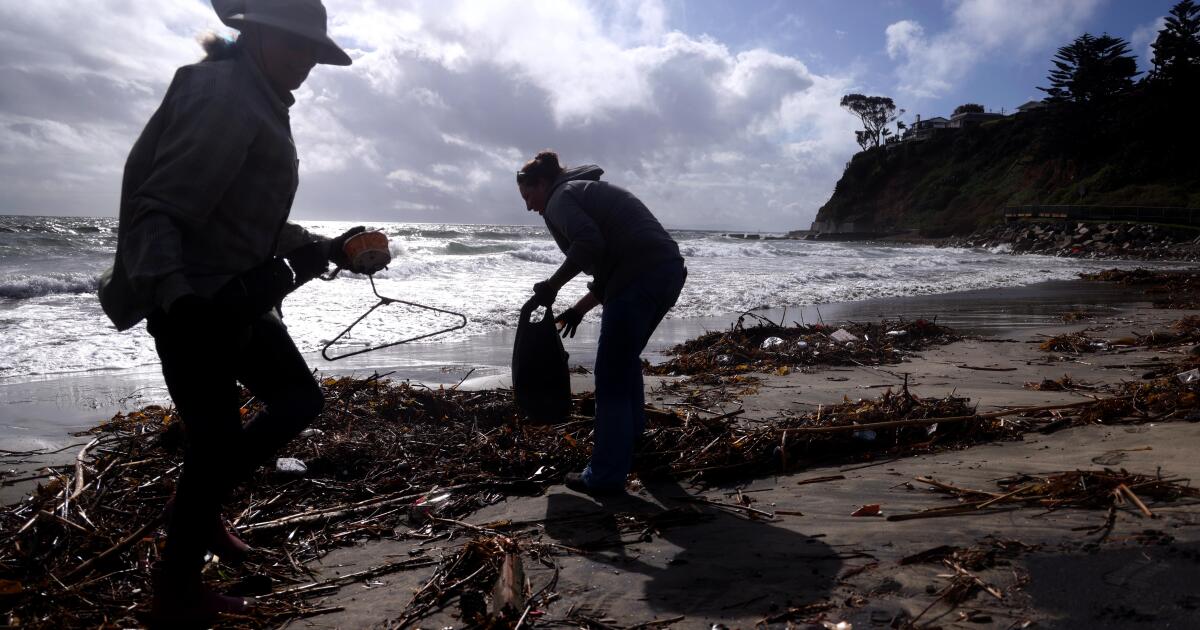
Industrial chemicals have reached the middle of the oceans, new study shows