Florida
Florida lawmakers agree to fully fund advanced education programs


TALLAHASSEE, Fla. – In a major breakthrough after months of debate, the U.S. House and Senate have reached an agreement to fully fund advanced education programs, including Advanced Placement (AP), International Baccalaureate (IB), and AICE courses.
The decision comes as a relief to students and educators across Florida, where more than 90 schools offer IB and similar programs to approximately 16,000 students each year.
But at Cypress Creek High School in Orange County, uncertainty remains. Despite the federal funding agreement, the IB program at Cypress Creek may not be offered next school year. The district cites a lack of interest as the reason for phasing out IB and replacing it with the AICE curriculum. However, students say they were left out of the decision-making process and dispute the district’s claims.
“Pre-IB was taken out of our school before IB was taken out, which means that students were not put in classes that are meant to prepare them for the IB program,” said Zoey Salah, a current Cypress Creek student. “This decision was already made before this, before we found out in May and before we could do anything about it.”
Students, staff and alumni, who organized a protest at the Ronald Blocker Educational Leadership Center, urged district officials to reconsider during a public comment of a Orange County Commision Board Meeting on Tuesday.
“I’m advocating for IB at Cypress Creek High School. Especially because of the opportunity you get to connect with other like-minded individuals academically. It really pushes you to do your best,” said Andres Rodriguez, a Cypress Creek IB alumnus.
If the IB program is eliminated, the nearest high school offering it is 20 miles away, a distance that could put the program out of reach for many Cypress Creek families.
While both IB and AICE are recognized by colleges nationwide, IB is often seen as offering more opportunities, especially for students aiming to study abroad for higher education.
“Especially those who are seeking higher education, like out of state or internationally, that is a huge loss of opportunity for them,” Rodriguez said. “Not just like, oh, this class is a college-level class, or you get college credit from it, you truly do some college-level research—it’s true prep in my opinion.”
As the district weighs its options, Cypress Creek students and supporters say they will continue to fight for a program they believe changes lives.
Copyright 2025 by WKMG ClickOrlando – All rights reserved.



Both men were in their 20s.
Two men are dead following a shooting early July 19 in Port St. Lucie, police said.
Officers responded at about 3:30 a.m. to the 1300 block of Southeast Rivergreen Circle and found two men suffering from bullet wounds in a driveway of a home.
The men were taken to separate hospitals where they died, according to police. Dead are 24-year-old Carl Loubeau and 22-year-old Juliun Stokes, police said.
Loubeau and Stokes were apparently arguing outside the home over a key and entrance to the home when they exchanged gunfire, according to police. Loubeau and Stokes knew each other and neither lived at the home, police said.
The shooting was an isolated event, and no threat to the public exists, according to police.
Keith Burbank is TCPalm’s watchdog reporter covering Martin County. He can be reached at keith.burbank@tcpalm.com.

For the first time since the end of 2024, Florida’s unemployment rate went down last month.
A report released Friday by the Department of Commerce shows the state’s jobless rate for June at 4.7%, a reduction from 4.8% the prior two months. The rate is still 0.5 percentage points higher than the national average.
Driven by increases in restaurant, hotel, health care, transportation, and warehousing jobs last month, the state saw an 11,100 increase, 0.1%, in overall new positions from May to June.
The June numbers show 525,000 Floridians qualified as out-of-work, up 107,000 from a year earlier, from a workforce of 11.14 million, up 56,000 in the same time.
The state’s unemployment rate had been on a gradual upward trend since ticking down from 3.5% in November 2024 to 3.4% in December 2024.
Nationally, the jobless rate stands at 4.2%, up from 4.1% a year earlier.
Even with the one-month decline, the state’s unemployment rate stands 0.9 percentage points higher than a year ago.
Construction jobs have decreased by 3,200 over the past year, including a 900 drop from May to June. Positions in the retail trade were up 100 from May to June but still are down 5,900 from a year earlier.
The field of finance and insurance reported adding 1,600 positions in the past month, but is still down 8,700 over the year.
Real estate jobs dropped by 1,000 and are down 4,200 over the last 12 months.
Governments in Florida shed 900 jobs in the past month and 10,500 over the year, with the federal government accounting for 7,700 of the decrease over the past year.
The biggest gain over the past year involved health care and social assistance, adding 5,500 in the past month and 32,400 on the year.
The area of transportation, warehousing, and utilities grew by 4,100 in June, which put the field at a positive 900 over the past year.
Manufacturing is up 400 on the year after reporting the addition of 600 positions in June.
Educational services, which are up 6,600 jobs on the year, posted a drop of 500 jobs in the June report.
Hotel and food service jobs grew by 4,000 in the June report but remain down 2,700 from a year earlier.
South Florida continues to have the lowest unemployment rate, with the Miami-Fort Lauderdale-West Palm Beach metropolitan statistical area at 3.9%, up from a revised 3.7% in May and 3.3% in June 2025.
The Orlando and Panama City regions were next at 4.6%.
The Tampa-St. Petersburg-Clearwater area was at 4.7%. Jacksonville, Naples and Melbourne were at 4.8%. Pensacola and Sarasota both stood at 4.9%.
Tallahassee has a 5 % unemployment rate, followed by Daytona Beach at 5.3%, Gainesville at 5.5%, Vero Beach at 5.6% and Lakeland at 5.7%.
The Wildwood region, including The Villages has the highest unemployment rate at 7.8%, followed by Homosassa Springs at 6.7% and Sebring at 6.6%.
Copyright 2026 WUWF

The Florida Lotto jackpot has been climbing steadily for weeks. On Saturday, July 18, 2026, the prize had grown to $2.75 million.
Recently, a trip to the grocery store really paid off: A $2 Florida Lotto ticket made someone a multimillionaire.
Because as they say in the lottery business, “it could happen to you.”
One ticket matched all six numbers in the $6.75 million Florida Lotto drawing on Wednesday, July 1, 2026, a few days before July Fourth.
After four rollovers, including the most recent one on Wednesday, July 15, the Florida Lotto has grown to $2.75 million for Saturday, July 18. That follows the National Lottery Day holiday, which was Friday, July 17. Check back after 11:15 p.m. ET for Saturday’s winning numbers. We’ll see if there’s a winner or another rollover.
In case you’re wondering, Wednesday’s winning Florida Lotto numbers were 13-17-31-37-38-45. Double Play numbers were 3-8-18-22-35-38.
Who won $6.75 million Florida Lotto drawing Wednesday, July 1, 2026?
Was it you?
The Wednesday, July 1, 2026, winning Florida Lotto numbers were 4-5-25-33-42-52. Double Play numbers were 7-17-22-44-46-47. According to the Florida Lottery’s site, there was another perfect match in Fort Lauderdale just before the July Fourth holiday.
The quick pick ticket was purchased from Publix, 1415 E. Sunrise Blvd., Fort Lauderdale, Florida, and is worth $6,750,000. On Saturday, July 11, the ticket was reported as claimed with the Fort Lauderdale winner opting for the one-time lump sum of $3.6 million, the state’s lottery posted on its site.
Below is what to know about lottery odds, how long to claim the cash option if you bought a ticket in Florida, and what happens to unclaimed prize money, according to the Florida Lottery.
Winning Florida Lotto numbers for Saturday, July 18, 2026?
Florida Lotto drawings are at 11:15 p.m. ET every Wednesday and Saturday, including holidays. Check back for Saturday, July 18, winning Florida Lotto numbers. We’ll see if there’s a winner or another rollover.
How do you play the Florida Lotto?
According to Florida Lottery game rules, Florida Lotto players pick 6 numbers between 1 and 53 or select a Quick Pick ticket. There are prizes for matching three to six numbers. Players who match two of 6 winning Florida Lotto numbers get a free ticket.
The Florida Lottery site states game add-ons include Double Play for $1, a bonus drawing where players could win up to $250,000 using the same numbers (Double Play drawings are held immediately after Florida Lotto drawings). Another Florida Lotto game add-on is EZmatch for $1 per play. If players match any EZmatch number to their Florida Lotto numbers, they instantly win that prize.
Tickets start at $2. Good luck!
When was the last Florida Lotto won? How long has the jackpot rolled over?
Florida Lotto drawing for the 2026 July Fourth holiday started fresh at $1 million after a ticket from a Fort Lauderdale Publix store won the Wednesday, July 1, 2026, drawing.
The new streak for Florida Lotto reset to $1 million for the Saturday, July 4, 2026, drawing. Below is a recap of lottery drawings for the latest streak.
When is the next Florida Lotto drawing? What are the odds, chances of winning Florida Lotto lottery?
Florida Lotto drawings are held at 11:15 p.m. ET on Wednesdays and Saturdays, including holidays. According to floridalottery.com, players have a 1 in 22,957,480 chance to match all six numbers whether the jackpot is $1 million or $36 million. Prizes range from $2 to the grand prize jackpot, which varies.
The next Florida Lotto drawing will be on Wednesday, July 22.
How long do you have to cash in a Florida Lottery ticket?
Prizes for Florida Lottery must be claimed within 180 days (six months) from the date of the drawing. To claim a single-payment cash option, a winner has within the first 60 days after the applicable draw date to claim it.
Does the Florida Lottery reveal lottery winners? Can you stay anonymous if you win lottery in Florida?
According to Florida Lottery’s website, winners cannot remain anonymous: “Florida law mandates that the Florida Lottery provide records containing information such as the winner’s name, city of residence; game won, date won, and amount won to any third party who requests the information.”
However, the site states, the “names of lottery winners claiming prizes of $250,000 or greater will be temporarily exempt from public disclosure for 90 days from the date the prize is claimed, unless otherwise waived by the winner.”
Does Walmart sell lottery tickets? Where to buy lottery tickets in Florida
In Florida, most gas stations and some grocery stores sell lottery tickets. It’s harder to find a gas station that doesn’t sell Powerball, Mega Millions, Florida Lottery and scratch-off tickets than it is to find one that does.
Publix also sells lottery tickets and is known for selling many winning tickets. A lesser-known location is Walmart. Whether the Walmart location closest to you sells lottery tickets depends on your state and the store. Many Walmart locations in Florida have self-service lottery ticket vending machines or sell lottery tickets at the customer service desk.
You can use the “Where to Play” search tool on the Florida Lottery website to find a grocery store or gas station near you that sells lottery tickets.
(This story will be updated to include new information.)
Lianna Norman and Jennifer Sangalang are trending reporters for the USA TODAY NETWORK-Florida, covering pop culture, lotteries, rocket launches, Florida wildlife, breaking news and more. You can get all of Florida’s best content directly in your inbox each weekday by signing up for the free newsletter, Florida TODAY, at https://floridatoday.com/newsletters.
-
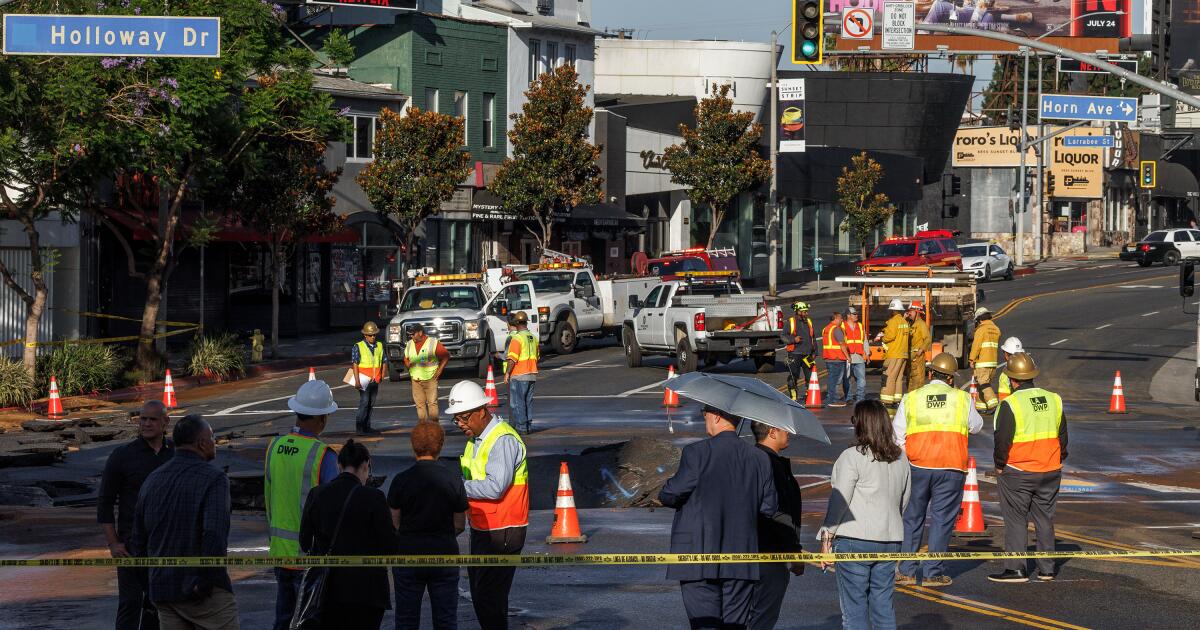 California5 minutes ago
More water pipes burst in Venice, Hollywood as Sunset Strip repairs enter Day 4
-

 Colorado11 minutes ago
Police searching for suspect after shooting at gas station in Denver metro area
-

 Connecticut17 minutes ago
Meriden police shoot suspect in fatal baseball bat attack
-

 Delaware23 minutes ago
Man’s body found in retention pond near Christiana Hospital in Newark, Delaware
-

 Florida29 minutes ago
Two men die after shooting in Florida city over key and home entry
-

 Georgia35 minutes ago
Another Georgia officer arrested over alleged Flock camera misuse as internal audits continue uncovering cases
-

 Hawaii41 minutes ago
What It Takes to Retire in Hawaii at 62 on $1.5 Million Without Touching Your Principal
-

 Idaho47 minutes ago
‘Skeletal remains’ found in Idaho river identified as 24-year-old single mom who vanished in December

