


| Round | Overall |
|---|---|
| First round | No. 12 |
| First round | No. 20 |
| Third round | No. 92 |
| Fourth round | No. 112 |
| Fifth round | No. 152 |
| Fifth round | No. 177* |
| Fifth round | No. 180* |
| Seventh round | No. 218 |
| *Comp pick |
Dallas, TX
Six years after Dallas approved monument to racial violence victims, it’s finally happened

/cloudfront-us-east-1.images.arcpublishing.com/dmn/URMRFFZQTJFZXKMUSAVSCZ65CM.jpg?ssl=1 "Six years after Dallas approved monument to racial violence victims, it’s finally happened")
Adjacent to the Sixth Floor Museum and the Grassy Knoll sits another patch of sacred ground with its own historically consequential story.
It took Dallas decades to fully face President John F. Kennedy’s assassination. It’s taken far longer to acknowledge the murders that occurred about 100 years earlier — just on the other side of where the Triple Underpass would eventually stand.
In 1860, three enslaved Black men — Patrick Jenkins, Cato Miller and the Rev. Samuel Smith — were lynched at this site, alongside the original path of the Trinity River. They were hanged after specious accusations concerning their part in setting a downtown fire, and their deaths became part of an infamous reign of terror led by white businessmen during which enslaved individuals were rounded up and tortured.
At long last, Dallas will formally dedicate a sculpture on the site next Tuesday that honors these three men and all other victims of lynching and racial violence in our city between 1853 and 1920.
Artists Shane Allbritton and Norman Lee created the sundial-inspired weathering steel sculpture, “Shadow Lines.” At one end of its semicircular wall is a poem written about this location and its brutal history by former Dallas resident and poet laureate of Virginia Tim Seibles.
In early 2018, in the midst of the debate over removal of Confederate statues, City Council members expressed interest in a memorial to victims of racial violence. George Keaton Jr., founder of Remembering Black Dallas, persevered until his death in December 2022 to turn the idea into action. The Dallas County Justice Initiative, with Ed Gray at the helm, and Remembering Black Dallas finished the job.
The sculpture sits on a wedge of city land known as Martyrs Park. It’s not an ideal place for a contemplative green space, trapped between the Triple Underpass and the access ramp to Interstate 35E, and deafened by highway traffic and the Trinity Railway Express rumbling overhead.
It’s no mystery why the dedication ceremony is taking place at the Sixth Floor Museum before the ribbon-cutting at the sculpture site. Hearing the speeches would be impossible at Martyrs Park.
But Gray, like Keaton before him, is steadfast about this being the right location.
“To the people who ask, ‘Why did we build this here?’ This is where it occurred,” Gray told me. “We can’t change what’s there now, but it remains historic and sacred.”
I took my first close look at the sculpture Saturday and was pleasantly surprised to find a more welcoming feel at Martyrs Park, a raw space full of trash and tents on my several previous visits.
Accessibility remains a challenge. Your best bet is to park in the Sixth Floor Museum area and walk along the Elm Street sidewalk and through the pedestrian tunnel. Once you emerge, you are only steps from the park.
/cloudfront-us-east-1.images.arcpublishing.com/dmn/55IAZS4ANRAMFN7Z2RJ2KMN75I.jpg)
The most important upgrades have taken place in the tunnel. Never before had I walked through this long dark corridor when it didn’t smell like a urinal — and looked even worse. It’s now been repaired, painted, scrubbed and lighted. On order is vandal-resistant permanent lighting.
The park department has cleaned out decades of trash, underbrush and scraggly bushes that once encircled much of Martyrs Park. The lower limbs of the stately trees along the street and in the background have been trimmed to allow for better viewing. A new sidewalk is in place, and lights illuminate the sculpture at night.
Let me be clear — the place didn’t look great. Recent heavy rains had left deep puddles throughout and threatened to wash away newly planted grass. The railroad-owned embankment remains unsightly. A man lay tucked up against the sculpture’s front wall — his sleep only disturbed when I began reading the inscriptions aloud.
But if you squint a little, you actually see a park, not a dumping ground. It’s a minimalist’s landscape that keeps the focus on the piece of stark public art, just as Keaton wanted.
Still to be added are two Texas Historical Commission markers, one honoring Jenkins, Miller and Smith and the other commemorating Jane Elkins, a slave hanged in 1853 after her conviction for killing her white owner as he attempted to rape her. Elkins’ name is also included on the “Shadow Lines” sculpture.
Martyrs Park provides a homecoming for all local victims of racial violence, Gray said. “It gives them a sense of all being put together in one spot and further sanctifying that ground.”
/cloudfront-us-east-1.images.arcpublishing.com/dmn/ZZ3DLF4P7JCBTBJGWAJMT6MCOM.jpg)
The “Shadow Lines” dedication at Martyrs Park will mark the last of three high-profile events in Dallas’ reckoning with the violence wrought by racism.
To secure the markers for two other victims, the Dallas County Justice Coalition worked for years to meet the requirements of the Equal Justice Initiative, whose National Memorial for Peace and Justice in Montgomery, Ala., is a shrine to the victims of lynching.
The marker for Allen Brooks, who was abducted, killed and hanged downtown in front of a large crowd in 1910, was dedicated at Pegasus Plaza in November 2021. The marker for William Allen Taylor, lynched by vigilantes in 1884 near the Trinity River, was dedicated last November at Trinity Overlook Park. The names of Brooks and Taylor are also among those on the Martyrs Park sculpture.
Gray had many kind words about how hard City Hall, especially the Equity and Inclusion, Arts and Culture, and Park and Recreation departments, have worked to get the commemorations done right.
He said it was important, in contrast, to note Mayor Eric Johnson has not attended any of the events. “His reluctance to be a part of these is troublesome and disturbing,” Gray said.
Johnson’s chief of staff, Alheli Garza, told me the mayor “regrettably has a preexisting immovable conflict” with Tuesday’s event. She said his office is “coordinating a private visit for Mayor Johnson to view the installation and meet the artists on a future date.”
Most meaningful to me at the memorial site is Seibles’ poem, the words of which are punched into the sculpture’s steel wall. It’s exactly what needed to be written for Dallas, where we’ve made a lot of progress but still prefer the reconciliation part of racial healing to the hard truth-telling.
Seibles’ words are no Kumbaya moment, but rather searing honesty. Please take time to read the full text, which accompanies my column.
/cloudfront-us-east-1.images.arcpublishing.com/dmn/RMWSSDCTKZCBLJGOMRKT3FJ2UY.jpg)
Finally, as I consider the 50 or so tourists I passed on the Grassy Knoll as I walked to Martyrs Park — where I was the sole visitor, not counting the homeless guy — here’s a suggestion: The last JFK information placard is only steps from the pedestrian tunnel. Can a sign be added about the historically relevant events visitors can find on the other side of the bridge?
That’s history Dallas and its visitors also need to understand.
The public dedication of “Shadow Lines” will begin at 10 a.m. March 26 in the Courts Room of the Sixth Floor Museum, 411 Elm St,, followed by the ribbon-cutting at the “Shadow Lines” sculpture at Martyrs Park, 379 Commerce St.
Below is the full text of the poem cut into the sculpture:
Here
These are the things
nightmares are made of:
ropes, knives, a torn
black face, burning flesh,
white mobs, their picnics
and blood-spattered hands.
We want to forget
what happened here,
But it is impossible
not to wonder what broken
song in the human heart
led to this. What rancid fear
tightened the knots, gathered
the grinning throngs?
All of us live with these echoes:
the last screams of a man
ripped apart, hung for display,
the mob’s ruthless laughter.
Though we remain
tied to these wounds
and wary of each other —
though we don’t want
to believe this happened here.
this grief, this jagged silence
still builds inside us, no matter
how far we run, no matter
how quickly we turn away.
You are here now.
Remember that this too
made America.
Sound your voice.
— Tim Seibles, 2023

Dallas, TX
A look at Dallas Cowboys’ 2026 NFL draft picks after Osa Odighizuwa, Solomon Thomas trades

Entering Wednesday, the Cowboys had seven selections in the upcoming draft and no Day 2 picks going into the first day of the NFL League Year.
By the end of the business day, the Cowboys gained an extra draft pick — and it will be on Day 2.
Dallas traded defensive tackle Osa Odighizuwa to San Francisco for a third-round pick, No. 92 overall. The team also traded defensive tackle Solomon Thomas to the Tennessee Titans and swapped seventh-round selections, moving from No. 225 to No. 218.
Dallas now has eight draft picks, three in the Top 100 and two fifth-round selections that are compensatory.
The biggest thing was getting a Day 2 pick.
The Cowboys originally had picks No. 12 and No. 20 in the first round and wouldn’t pick again until No. 112 in the fourth round.
Dallas gave up Day 2 picks (second and third rounds) in trades for Quinnen Williams (New York Jets) and George Pickens (Pittsburgh Steelers) last year.
Cowboys owner and general manager Jerry Jones was determined to get back into the second or third rounds and moving Odighizuwa, a 2021 third-round selection, to the 49ers to get back into the second day of the draft has proven vital.
In recent years, the Cowboys have struggled to get good value with their second-round picks.
Taking a gamble on players coming off injury or with troubled backgrounds was something the Cowboys wanted to do in the second round.
Jones said at the NFL scouting combine that the team was no longer planning on doing that, considering the issues the defense had last season.
The third round has proved a little more successful. Cooper Beebe (2023) is a starting center and DeMarvion Overshown (2023) at linebacker is a reliable performer. Injuries, however, have slowed Overshown’s development in his brief time in the NFL.
Dallas is hopeful last year’s Day 2 picks, Donovan Ezeiruaku (second round) and Shavon Revel (third round), emerge as starters in 2026.
Revel recovered from knee surgery and played in seven games. Ezeiruaku played 17 games with nine starts at defensive end. Ezeiruaku, who underwent offseason hip surgery, will move to outside linebacker in the new 3-4 defensive scheme.
Also, the Cowboys have the ability to use one of their two first-round picks to move up in the draft or package the third-rounder acquired in the Odighizuwa trade to gain more picks.
Cowboys 2026 draft picks
Find more Cowboys coverage from The Dallas Morning News here.

The Dallas Cowboys were initially in the mix for Las Vegas Raiders superstar pass rusher Maxx Crosby ahead of NFL free agency, and were believed to be one of the finalists in trade talks. However, he was ultimately traded to the Baltimore Ravens for two first-round picks.
Now, the NFL world has been turned on its head with the Ravens deciding to pull out of the trade agreement with Las Vegas.
On Tuesday night, NFL insider Adam Schefter was among the experts discussing what went wrong between the Raiders and Ravens, revealing that Cowboys team physician Dr. Daniel Cooper, one of the premier knee specialists, played a role in the Ravens’ evaluation of Crosby.
Schefter discussed how Dr. Cooper was among the doctors who reviewed scans on Crosby’s knee, which ultimately spooked the Ravens and triggered the end of the deal.
“The Baltimore Ravens essentially failed him on their physical, and my understanding is there were multiple doctors that reviewed his MRI scans,” Schefter said. “There were doctors that examined him, including Dr. Daniel Cooper, the Dallas Cowboys doctor that performed surgery on Patrick Mahomes and Malik Nabers.
“Many teams and players rely on Dr. Cooper’s expertise, and Dr. Cooper was one of the doctors who reviewed the images where the Ravens then felt compelled to back out of this trade.”
It’s hard not to connect the dots that Dr. Cooper’s involvement in the medical review of Crosby led to the team deciding against re-engaging in trade discussions. Though that could change, currently, the Cowboys are expected to move forward with Pro Bowl EDGE Rashan Gary, who the team agreed to acquire from the Green Bay Packers for a 2027 fourth-round pick on the first day of legal tampering.
It will be interesting to continue monitoring the situation and its fallout, which has left the Raiders in a terrible position.
But, with the Raiders now forced to re-examine the money they committed to free agents on Wednesday evening, they may have to pull out of one of their own agreements, which could open the door for the Cowboys to reopen their pursuit of a linebacker like Nakobe Dean or Quay Walker.
The 2026 NFL calendar year officially begins on Wednesday, March 11, at 4:00 p.m. ET, so get your popcorn ready, because it’s going to be a wild ride.
— Sign up for the Cowboys Daily Digest newsletter for more free coverage from Dallas Cowboys on SI —

Dallas Cowboys Nation’s hopes of landing superstar pass rusher Maxx Crosby were dashed last weekend when it was announced that he was being traded to the Baltimore Ravens. However, less than 24 hours before the new year, the trade has fallen apart.
On Tuesday night, the Las Vegas Raiders announced that the Ravens have backed out of the trade.
“The Baltimore Ravens have backed out of our trade agreement for Maxx Crosby,” the statement read. “We will have no further comment at this time.”
The news sends a major ripple for the league, with the Crosby sweepstakes once again open. Before his trade to the Ravens, the Cowboys were considered one of the teams closely monitoring the situation and a team that made a legitimate offer for Crosby.
At this time, there is no word on why the trade between Las Vegas and Baltimore fell through. When the trade was first reported, the Raiders were set to receive a 2026 and 2027 first-round pick from the Ravens.
Now, his future is in limbo. Before he was traded to the Ravens, it was believed that the Cowboys, Chicago Bears, and Los Angeles Rams were the top candidates to land him. In fact, the Cowboys were “considered runner-ups” in the sweepstakes.
Dallas’ Original Trade Offer
According to ESPN’s Jeremy Fowler, the Cowboys initially offered the No. 12 overall pick in the 2026 draft, a 2027 second-round pick, and an unnamed veteran player.
“Dallas kept a hard line throughout. The franchise wasn’t willing to part with two first-round picks, hoping its 12th pick in April’s draft, plus a future second-rounder, would be enough to entice Las Vegas. Dallas was also willing to package a veteran player to sweeten the deal, but Vegas wasn’t interested in that. The Raiders prioritized picks,” Fowler wrote.
Last season, Crosby recorded 73 total tackles, 28 tackles for a loss, 20 quarterback hits, 10 sacks, two forced fumbles, and an interception.
We’ll have to see if Dallas ends up being his new home, now that the team has a second chance to make something special happen, but there will be some serious competition. The 2026 NFL calendar year officially begins on Wednesday, March 11, at 4:00 p.m. ET.
— Sign up for the Cowboys Daily Digest newsletter for more free coverage from Dallas Cowboys on SI —

World7 minutes ago
A red fox stows away on a cargo ship, traveling from England to US
News13 minutes ago
ICE Lawyer Who Told Judge She Was Overwhelmed Is Running for Congress
Lifestyle55 minutes ago
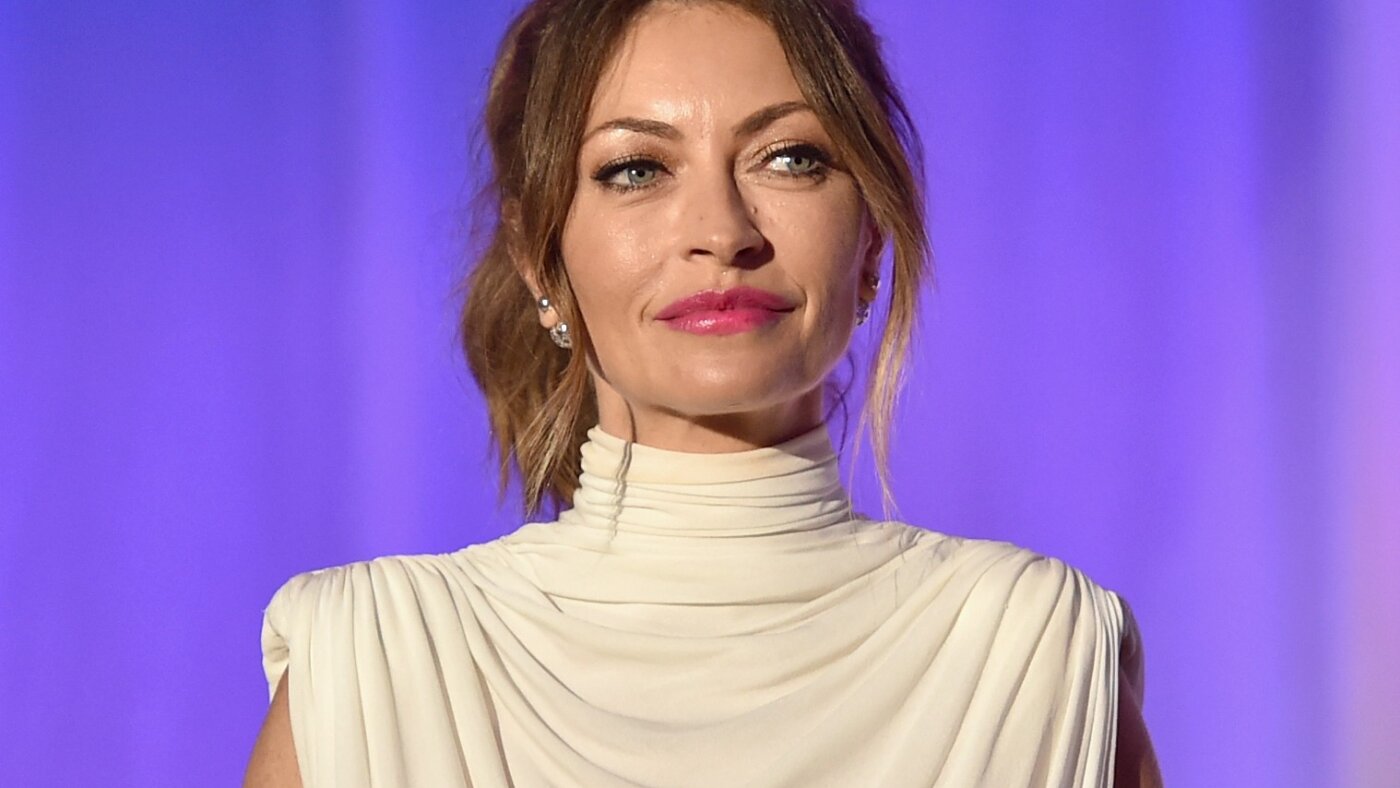
Rebecca Gayheart Dane on caring for her late husband, Eric Dane, and synthetic voices

Technology1 hour ago
One of Grammarly’s ‘experts’ is suing the company over its identity-stealing AI feature

World1 hour ago
Spain permanently pulls ambassador from Israel amid Iran war

Florida1 year ago
Florida High School Football Rankings: Top 25 teams – Oct. 21

Connecticut2 years ago
Cleary's 21 help Le Moyne down Central Connecticut State 69-64 in OT

Oregon2 years ago
How old is Bo Nix? What to know about Oregon quarterback ahead of 2024 NFL Draft

Virginia2 years ago
99th annual Pony Swim held in Virginia

Indiana2 years ago
Indiana Members Credit Union announced as new anchor tenant at Bottleworks District
News13 minutes ago
ICE Lawyer Who Told Judge She Was Overwhelmed Is Running for Congress

Politics1 hour ago
Dr Oz helps older woman who collapsed during Trump’s speech at Kentucky event

World2 hours ago
The Ring: Is the EU a spectator or player as war grips Middle East?

News3 hours ago
The government is investigating new claims that DOGE misused Social Security data

Politics13 hours ago
Reporter’s Notebook: Trump’s SAVE Act ultimatum runs into Senate reality
-

 Massachusetts1 week ago
Massachusetts man awaits word from family in Iran after attacks
-

 Detroit, MI6 days ago
U.S. Postal Service could run out of money within a year
-

 Miami, FL1 week ago
City of Miami celebrates reopening of Flagler Street as part of beautification project
-

 Pennsylvania7 days ago
Pa. man found guilty of raping teen girl who he took to Mexico
-

 Sports1 week ago
Keith Olbermann under fire for calling Lou Holtz a ‘scumbag’ after legendary coach’s death
-

 Michigan2 days ago
Operation BBQ Relief helping with Southwest Michigan tornado recovery
-

 Culture1 week ago
Try This Quiz on the Real Locations in These Magical and Mysterious Novels
-

 Virginia1 week ago
Giants will hold 2026 training camp in West Virginia