Related
Dallas, TX
If the Dallas Stars move to the suburbs, what city deals could help fund a new $1B arena?


As speculation surrounds the Dallas Stars eyeing a move to the site of a Plano shopping mall, there are few details available on the NHL team’s potential new $1 billion arena — or the incentives cities may offer to attract the team in a competitive market.
From grants to tax breaks, there are several tools Texas cities can use for economic development. Some go to the ballot, but other incentives can go through without a vote as cities vie for the prestige, potential economic boost and tax revenue that comes with hosting a major sports team and its stadium.
After discussions with Frisco, The Colony, Arlington and Fort Worth, the Dallas Stars are considering relocating from the American Airlines Center in Dallas to The Shops at Willow Bend, two people with knowledge of the team’s efforts told The Dallas Morning News this fall, potentially following the lead of many major U.S. sports teams’ exodus to the suburbs.
Nola Agha, professor at the University of San Francisco, researches the economic impact of teams and stadiums. While a team’s move might not generate much new economic activity at the regional level, a move within North Texas can make things competitive, she said.
“When you live in a suburb, and you care about your own tax base … you see this competition between municipalities for shifting that activity,” Agha said.
City officials will not comment on the Stars or a potential arena, but Plano has historically used incentives to attract companies like Toyota, Capital One and JPMorgan Chase to anchor regional headquarters in the city.
Ted Benavides, former Dallas city manager and a professor of social sciences at the University of Texas at Dallas, said Plano is well-positioned to pursue a deal with the Stars, as cities like Arlington and Frisco have done with major North Texas teams.
“They have money,” Benavides said. “They’re very active on the economic development front, so there’s a lot of things they could do.”
An exterior view of The Shops at Willow Bend mall at W Park Blvd and the North Dallas Tollway in Plano, Texas, October 28, 2025.
Tom Fox / Staff Photographer

Grants and loans
Texas law allows cities to use money to promote economic development. In addition to tax breaks, a city can award companies grants and loans to incentivize them to stay in, move to or invest in a city.
In 2006, the Plano City Council approved a property tax increase of two cents per $100 property valuation for an economic development incentive fund. The city caps annual contributions to the fund at $8.5 million, city documents show, and uses the money to offer loans and grants that promote economic development.
Benavides said Plano was likely motivated to compete with cities like McKinney, Frisco and Allen that use the sales tax they are not contributing to public transportation to fund economic development corporations.
Plano contributes a one-cent sales tax to Dallas Area Rapid Transit — $116 million in the 2023 fiscal year, according to DART documents. The city plans to hold an election to withdraw from the agency next May and, if voters choose to exit, eventually regain that penny of revenue.
Related

Cities can award grants for a number of reasons, including to promote redevelopment and revitalization of retail centers or cover a company’s fees to the city.
“It has to make financial sense for us,” said Doug McDonald, Plano’s economic development director and the city’s next deputy city manager.
McDonald would not comment on specific economic development projects not yet brought to the City Council, but gave insight into how Plano’s incentives generally work.
Economic development agreements involving grants typically last 6-10 years, he said, and factor in the tax revenue a project might generate and what service costs it might create.
Related
Redevelopment tools
Agha has found municipalities compete for sports teams to shift economic activity from one area to another, with cities traditionally using sales tax to finance sports development projects.
For example, in 2004, Arlington voters approved a half-cent sales tax increase and other increases to hotel and rental car taxes to help pay for the city’s $325 million contribution to AT&T Stadium, where the Dallas Cowboys play. The Cowboys paid the remaining cost of the $1.2 billion venue, according to the city.
“That’s fallen out of favor … because people don’t like to be taxed,” Agha said. “It usually has to go up to a vote, and it very commonly gets voted down. Because of that, the most popular financing technique, especially for smaller cities, is tax increment financing.”
This tool captures the growth in a property’s tax revenue created by new development within a defined area. When businesses and property owners invest in improvements in the area and those improvements increase tax revenue, that increase can be used to reimburse project costs or fund additional improvements that spur continued growth in the area.
A view of The Shops at Willow Bend mall sign at W Park Blvd and the North Dallas Tollway in Plano, Texas, October 28, 2025.
Tom Fox / Staff Photographer

Frisco and its school district have used this economic development tool to fund several projects, such as Toyota Stadium, PGA golf courses, the Ford Center and more.
“It’s popular because it’s relatively hidden, meaning the taxpayers don’t have to know that a city is using property tax and giving it back to a developer,” Agha said. “They don’t have to vote on it, and it can incentivize a developer to build something.”
But when economic development projects happen without voter approval, there may be fewer opportunities for residents to weigh in.
Plano currently has four such reinvestment zones, which are historically in “blighted or underdeveloped areas,” according to the city’s website. The existing zones are in East Plano, at Silver Line stations, at Collin Creek Mall and in Plano’s Legacy district.
“The intent of these districts is to help encourage areas that are in need of redevelopment and reinvestment,” McDonald said.
Related
Bond funding on the ballot
Cities can also ask voters to approve issuing bonds to fund projects and borrow money.
“Every once in a while, there are different things that come up in the community that are important enough that the bond committee of citizens puts something on the ballot,” McDonald said.
Some cities have funded large sports projects with bond funding. In 2016, Arlington voters approved $500 million in bonds to partially fund Globe Life Field.
Tax breaks
Another economic development tool is a break from certain taxes. Cities can offer companies tax abatements, reducing taxes for businesses on improvements to property. These can apply to things like commercial construction or facility expansions.
Tax abatements are an option if a company is adding significant value to a site, McDonald said.
Related
“We don’t typically use tax rebates or abatements when the building is already there unless there’s going to be a significant or complete demolition and rebuild,” McDonald said.
Agha said for large projects, tax breaks are a drop in the bucket.
“Arenas and stadiums are running close to a billion dollars,” Agha said. “Property tax abatement is probably a very small piece of what the total cost would be.”
What’s at stake
Economic development projects are meant to add value to the community in the form of high-paying jobs, sales tax, property tax and more. Their incentives often have expiration dates.
“Our hope is that the company stays here and continues to invest in the community,” McDonald said.
Related
Suburbs with more land flexibility can add development around the stadium to “sweeten the pot,” Benavides said, and add different streams of income. For example, the Texas Live! entertainment and hotel complex in Arlington near its ballpark received tax and grant incentives.
But new developments can disrupt traffic and the regular patterns of economic activity. They are not always popular. McDonald said city officials listen to concerns and will try to mitigate them.
“There’s potential for gain,” Agha said, if economic activity shifts from Dallas to Plano.
“The important caveat to that is, will the city enter into some sort of financial agreement where they essentially give back all that new economic activity to the team?” Agha asked. “The devil can be in the details.”
Email tips on all things Collin County to lilly.kersh@dallasnews.com.



Dallas, TX
Texas took this Dallas couple’s newborn baby for 3 weeks. A judge says their rights were violated

A Travis County judge ruled the state’s child welfare agency violated the constitutional rights of a Dallas couple whose newborn daughter was temporarily taken into state custody for week after a hospital visit three years ago.
Temecia and Rodney Jackson sued the Department of Family and Protective Services, the agency that houses Child Protective Services, last year. The parents say the department put them on the Central Registry — a public abuse and neglect database — without a clear way to appeal and get themselves removed.
Travis County District Judge Catherine Mauzy ruled late last month two sections of the state administrative code used in the Jacksons’ case impair or interfere with the family’s constitutional due process rights.
One section states DFPS can label an investigation into alleged abuse as “unable to determine,” which means investigators could not rule out abuse or neglect, but the subject of investigation isn’t completely cleared of wrongdoing.
The Jacksons argued the Central Registry process and the “unable to determine” label didn’t give the parents an opportunity to appeal the determinations and defend themselves.
“That is a denial of procedural due process,” said Charelle Lett with the ACLU of Texas, which is helping represent the Jacksons in court. “And this court agreed that the Jacksons are entitled to that, and so is every other Texan that comes through this system.”
KERA News reached out to DFPS for comment and will update this story with any response.
CPS took baby Mila into custody after Baylor Scott and White Doctor Anand Bhatt reported the Jacksons for alleged medical neglect in 2023. Bhatt diagnosed 3-day-old Mila with jaundice during a routine postpartum checkup and believed she needed treatment in the hospital.
The Jacksons opted to pursue an alternative treatment plan at home with their midwife to avoid being separated from Mila. Texas law gives parents the right to consent to their child’s health care.
Bhatt named a different woman as Mila’s mother, according to the lawsuit. That woman’s name, criminal and family history were later written on the affidavit authorities used to take Mila into CPS custody. DFPS corrected the mistake days later but said CPS would still keep Mila.
At the time, DFPS found “reason to believe” there was medical neglect in Mila’s home — a label indicating abuse or neglect has likely occurred — and, without notice, put the Jacksons on the department’s Central Registry for perpetrators of abuse or neglect.
DFPS said the Texas Family Code requires the department to make these kinds of findings, according to court records. The parents requested an administrative review of those findings and provided DFPS with records to make their appeal, according to the suit.
DFPS ultimately dismissed the case and returned Mila to her parents after three weeks in CPS custody. The label on their case was changed to “unable to determine” nearly a year later, after an informal review by a DFPS specialist.
That removed the Jacksons’ case from the Central Registry. According to the suit, DFPS did not rule out the allegations because there was “significant concern for risk.”
But the Jacksons sued, arguing the DFPS process gives them no options to entirely clear their name from the department’s systems.
Temecia Jackson told KERA News last year that following Mila’s return, the family resettled in Dallas with Mila and their two older sons to get away from the traumatic memories of Mila being taken from their DeSoto home.
In their suit, Rodney Jackson says he felt his reputation has been jeopardized by the DFPS investigation, and he’s uncomfortable volunteering in the community or coaching his kids’ sports teams.
DFPS says its rules are consistent with what state law requires for child safety, and the Jacksons already used the existing process to successfully challenge their “reason to believe” finding. DFPS argued the Jacksons have already been removed from the registry, their case records are not public, and state law does not allow the family to get agency decisions changed or erased.
And DFPS says the family’s alleged reputational harms are hypothetical.
Unless the state appeals, Lett said, Mauzy’s ruling brings an end to the Jacksons’ case. While the future for the Jacksons and their case is uncertain, Lett called the decision a win for all parents.
“We are not trying to keep the DFPS from taking children out of dangerous situations,” Lett said. “There is value to what they do, but they could do it in a way that does not infringe on people’s rights.”
Toluwani Osibamowo is KERA’s law and justice reporter. Got a tip? Email Toluwani at tosibamowo@kera.org.
KERA News is made possible through the generosity of our members. If you find this reporting valuable, consider making a tax-deductible gift today. Thank you.

DALLAS – The U.S. has a big opportunity on its hands in the World Cup Round of 16 against Belgium.
You can watch the live stream of the crowd at FIFA Fan Festival Dallas in the video player above.
USA vs. Belgium watch party at FIFA Fan Festival Dallas
What we know:
Many fans have already gathered in Fair Park to watch tonight’s U.S. vs. Belgium match.
Past watch parties for U.S. games have drawn massive crowds as fans of the Red, White and Blue hope to see their team advance to the World Cup quarterfinals.
The U.S. is playing Belgium, who knocked the USMNT out of the 2014 World Cup in the Round of 16.
If the USA gets a little revenge, they would play Spain in the quarterfinals on Friday, July 10, in Los Angeles.
The Source: Information in this story comes from FIFA Fan Festival Dallas.

Juliet serves up bougie on a plate.
Courtesy of Juliet
Drake, Travis Scott, Lizzo and many other celebrities were name-dropped in the release we received about the latest modern steakhouse opening in Dallas this summer.
Juliet opened in Houston in 2022, and the movie-themed steakhouse quickly became a buzzy celebrity hangout. Now, it’s expanding into Dallas with a new location in the Design District at 1400 Hi Line Drive, right next to Delilah, another “celebrity-magnet supper club,” they called it.
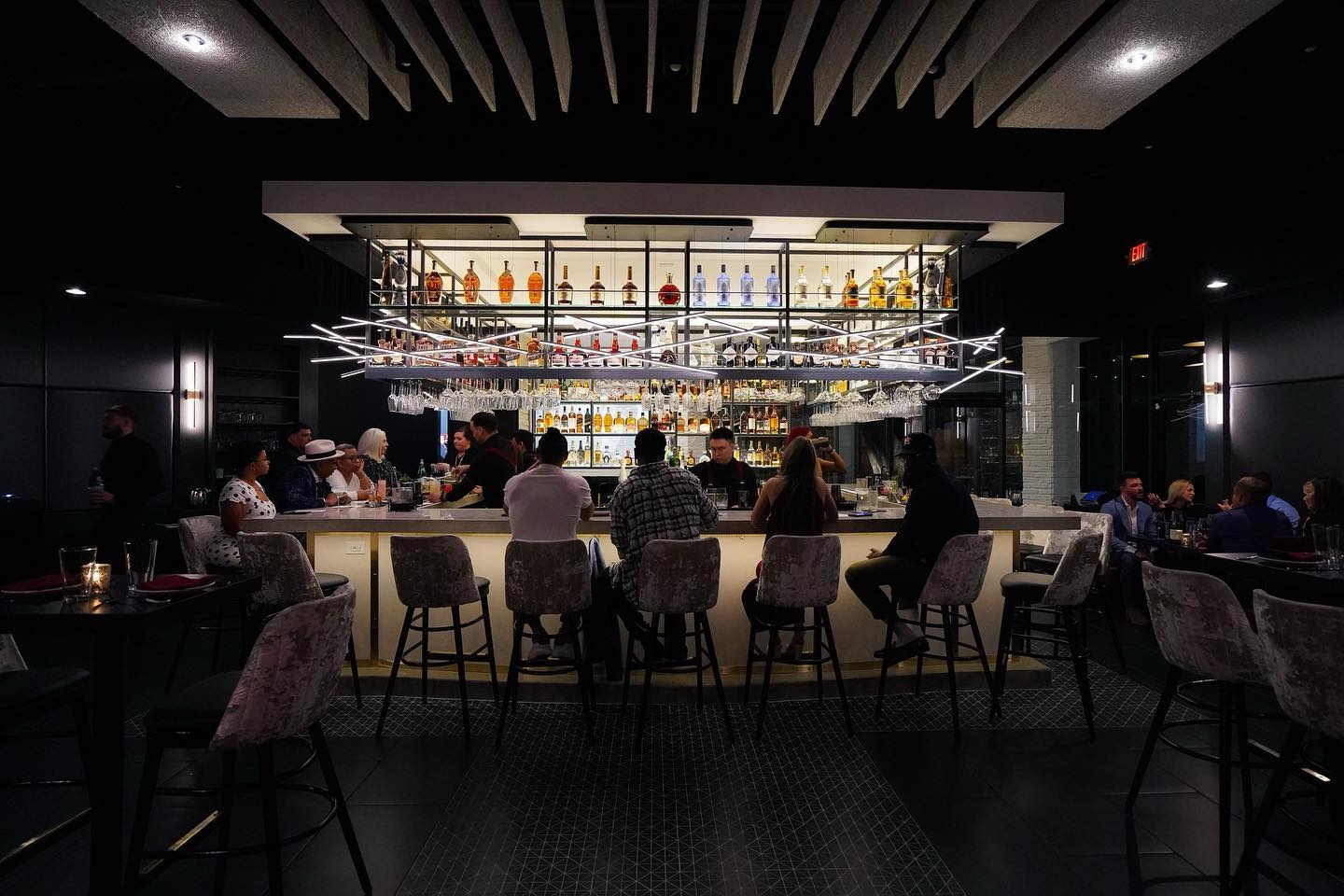
The release touts that if we thought Delilah turned heads, we should wait until we see what is walking in beside it. If it’s anything like the last four Old Hollywood art deco-themed supper club restaurants to open in Dallas, sadly, they’re probably right.
The layout
What will make Juliet different is that it’s an immersive dining experience built around a movie-theater concept. Classic films will play in the background, and the dining room will have cinematic elements throughout.
The exterior of the Houston location is a replica of a movie theater marquee, and inside, it features a mock lobby with candy and popcorn displays.
A black curtain separates the lobby from the main dining room. Past it, you’ll find a wall of mirrors and black-and-white photos from iconic scenes in cinema decorating the dining room.
If they have The Godfather running in there, count us in.
The cinematic dining destination has made a name for itself with a laundry list of A-list celebrities coming in to dine with them. Notable guests they mentioned were the Dallas Cowboys wide receiver Cee Dee Lamb, Lizzo, Glorilla, Olandria, Travis Scott and Drake.
They say that to match the ambition of the Dallas dining scene, they’re delivering an even more elevated atmosphere than the Houston original.
Juliet is likely to come in swinging with its entire roster of menus, which includes brunch, dinner, dessert, steak night and happy hour. Executive chef Jeff Auld is leading the kitchen.
The dinner menu is straightforward and centered around prime steak cuts, seafood, a raw bar and classic apps like crab cakes and calamari.
Prices aren’t listed on their website, but based on Google images, you can expect appetizers to range from $14 to $28. Entrees start at $34, but there’s a jump from that cheapest option to the others, which cost $42 and up. All sides are $14.
Wednesday night is Steak night. This is $39.95 on OpenTable; diners get a choice of potato soup or Caesar salad with a 6-ounce filet mignon. There’s also a $25 Girl Dinner on Sunday nights.
Interestingly, Juliet will seemingly work in tandem with its new neighbor, Delilah, instead of against it. The side-by-side glitz of both restaurants is likely to make this strip of Dallas the place to go to see and be seen.
Imagine that.
-

 Los Angeles, Ca18 minutes ago
Missing 13-year-old with autism last seen at Los Angeles beach
-
Detroit, MI36 minutes ago
GET TO KNOW: Wide receiver Kendrick Law
-

 San Francisco, CA48 minutes ago
Multiple people lose eyes, hands in illegal fireworks-related injuries in San Francisco
-
Dallas, TX51 minutes ago
Texas took this Dallas couple’s newborn baby for 3 weeks. A judge says their rights were violated
-

 Miami, FL56 minutes ago
South Florida foundation empowering thousands of young girls through education, mentorship, community support
-

 Boston, MA1 hour ago
Where to watch Boston Red Sox vs Chicago White Sox: TV channel, start time, streaming for July 7
-

 Denver, CO1 hour ago
House fire in Denver fully engulfs power pole, detached garage mostly destroyed
-

 Seattle, WA1 hour ago
WEST SEATTLE SCENE: Stranded dog’s rocky rescue


