Austin, TX
Texas ban on university diversity efforts provides glimpse of future across GOP-led states – Maryland Daily Record


AUSTIN, Texas — The dim lighting and vacant offices were the first clues.
Other changes struck Nina Washington, a senior at the University of Texas, when she returned to her favorite study spot from winter break. The words “Multicultural Center” had been taken off the wall, erasing an effort begun in the late 1980s to serve historically marginalized communities on campus. The center’s staff members were gone, its student groups dissolved.
“Politics, behaviors and emotions are returning to the old ways,” said Washington, who as a Black woman found a sense of community at the center.
The void in the heart of the nearly 52,000-student campus is one of many changes rippling across college campuses in Texas, where one of the nation’s most sweeping bans on diversity, equity and inclusion initiatives took effect Jan. 1.
At least five other states have passed their own bans and Republican lawmakers in at least 19 states are pursuing various restrictions on diversity initiatives, an issue they hope will mobilize their voters this election year.
With over 600,000 students enrolled at more than 30 public universities across the state, the rollout in Texas offers a large-scale glimpse of what lies ahead for public higher education without the initiatives designed to make minorities feel less isolated and white students more prepared for careers that require working effectively with people of different backgrounds.
At the University of Texas’ flagship campus in Austin, the state’s second most populous public university, only 4.5% of the student population is Black and 25.2% is Hispanic, numbers some students fear will drop as they struggle to adjust in an atmosphere of fear about what they can say and do.
The law signed by Republican Gov. Greg Abbott bans public higher education institutions from influencing hiring practices with respect to race, sex, color or ethnicity, and prohibits promoting “differential” or “preferential” treatment or “special” benefits for people based on these categories. Also forbidden are training and activities conducted “in reference to race, color, ethnicity, gender identity, or sexual orientation.”
Republican state Sen. Brandon Creighton, who authored the bill, said in an emailed comment Tuesday that DEI efforts claim they are meant to increase diversity, “but after close examination, they are an effort to inject politics and promote cancel-culture into our colleges and universities.”
Time will tell. The Texas Higher Education Coordinating Board, whose nine members are appointed by the governor, is required to inform lawmakers every two years about the ban’s impact on admissions, academic progress and graduation rates of students by race, sex and ethnicity.
To comply with the law, the cultural identity centers that admissions offices promoted to attract minorities are now closed. University websites have scrubbed out references to “diversity” and “inclusion,” replacing them with “access” and “community engagement.” Staff have been reassigned to new roles.
“People want to keep their jobs, but many of us were trained to do this work around diversity, inclusion and equity and were hired specifically to do that,” said Patrick Smith, vice president of the Texas Faculty Association.
Professors are fearful, editing their syllabi and watching their speech, as they navigate the boundaries of compliance, Smith said.
As for the multicultural center in the student union on the Austin campus, the university announced it will consider how best to use the space “to continue building community for all Longhorns.”
Meanwhile, although the law explicitly exempts academics, uncertainty over its scope also has professors and students wondering how to comply.
“To know that your speech is monitored and basically censored if you do the kind of work that I do, that is a strange feeling,” said Karma Chavez, a professor of Mexican American and Latino/a Studies at the university.

The Hispanic Faculty Association, of which Chavez is the co-president, has been prohibited from meeting during working hours or using campus spaces without paying a fee. They can’t even communicate through university email, and groups affiliated with the university cannot co-sponsor events with them.
The limits have Chavez catching herself in meetings or when mentoring a student before she speaks on race or ethnicity, because she is unsure of what she can say and when.
“I don’t think I am self-censoring, I think I have been censored by the state legislature,” Chavez said.
University officials shuttered a group aimed at providing resources for students who qualified for the federal Deferred Action for Childhood Arrivals program. Chavez said the DACA group wasn’t specifically helping any of the classifications of people, so “it tells you how widely, how extensively they are interpreting the law.”
Some student groups whose university funding has been prohibited are struggling with the financial burden of maintaining their identity communities and continuing cultural traditions.
University of Texas senior Christian Mira, financial officer for the Queer Trans Black Indigenous People Of Color Agency, said the group lost its space in the multicultural center and has been aggressively fundraising through alumni, local supporters and community outreach. They hope to keep supporting a lively community of students with signature events including a block party, leadership institutes and a ball, although they’re not sure where.
“College is already a difficult experience, so having people around you who you depend on to have that kind of community — it made students feel safe, it made students feel like they could succeed on campus,” Mira said.
Alexander De Jesus, who attends UT-Dallas and is an advocate with Texas Students for DEI, said they prepared for months in ways big and small, such as more clearly advertising that anyone can use a closet of clothes frequented by students who are transitioning.
“It has also been stressful telling other students, ‘Hey, keep your head up,’” De Jesus said. “It is difficult to say that when you see a climate of fear developing and when you see people who are justifiably angered about traditional pathways or politics or people not listening to them.”
Acacia Coronado reports for The Associated Press.



AUSTIN, Texas — With heavy rain expected across parts of Central Texas this week and flooding top of mind, the city of Austin is proposing to put more money toward flood mitigation improvements in next year’s budget.
The proposal would invest in new flood infrastructure, add staff, and help move flood mitigation projects forward, according to city leaders. Austin City Councilmember Ryan Alter said the investments are aimed at keeping the city prepared for future flooding.
Residents who live near waterways say they have seen how quickly conditions can change. David Haderspeck, who lives near Shoal Creek, said the creek “fills up pretty fast” and “gets a lot higher than you’d expect.” He said he has watched the water rise dramatically after rain.
“I’ve seen it come up probably 10 to 15 feet to the ordinary high-water mark,” he said.
This week, parts of Central Texas, including the Hill Country, are expected to get heavy downpours. While Austin is not expecting the same impacts as parts of the Hill Country, leaders said the city is using this year’s budget planning to continue investing in flood safety.
Alter said the city has the expertise to address flooding risks but needs to follow through on projects.
ALSO| Central Texas urged to prepare as heavy rainfall sits in forecast over next two days
“We have the experts. We just have to put the plans into practice, and that’s what we’re doing in this budget,” he said.
Under the budget proposal, the city would provide about $134.5 million for the Drainage Utility Fund, which helps pay for flood mitigation, drainage infrastructure and watershed protection efforts.
Alter said the proposal would shift more of the funding balance toward building new infrastructure.
“What we’re going to do is shift that balance a little bit more to building new infrastructure so that when we do have large flooding events, we’ve got that infrastructure in place to keep people safe,” he said.
The proposal also adds staff and invests in both new and existing flood mitigation projects across the city.
Asked whether the proposed investments would be enough moving forward, Alter said, “I do…I think we’re doing the right thing and just making sure that our residents have the infrastructure to stay safe.”
Alter said heavy rain cannot be prevented, but the city’s goal is to have infrastructure in place to help keep people safe when it happens.

FILE – LinkedIn logos are displayed on an iPhone and computer screen. (Photo by Carl Court/Getty Images)
AUSTIN, Texas – The Texas Attorney General’s office has opened an investigation into LinkedIn over allegations that the professional networking platform misleads consumers with advertising and profiting from misleading or fake job listings, otherwise known as “ghost jobs.”
LinkedIn investigation

In this photo illustration a Linkedin logo seen displayed on a mobile phone. (Photo Illustration by Stanislav Kogiku/SOPA Images/LightRocket via Getty Images)
What we know:
Texas announced on Tuesday it has issued a Civil Investigative Demand (CID) seeking documents, data and internal communications related to LinkedIn’s advertising, marketing, job listing verification practices and its Premium subscription services.
The investigation centers on whether LinkedIn violated Texas’ consumer protection laws by promoting paid subscription services while allegedly failing to disclose that some job listings on the platform may not actually be representative of hiring opportunities.
What is a ‘ghost job’?
An image of a woman holding a cell phone in front of a LinkedIn logo displayed on a computer screen. On Tuesday, January 12, 2021, in Edmonton, Alberta, Canada. (Photo by Artur Widak/NurPhoto via Getty Images)
Dig deeper:
LinkedIn is owned by Microsoft and the world’s largest professional networking platform, with more than 1 billion registered users worldwide.
A “ghost job” generally refers to a position advertised online that either is no longer available or that an employer has no immediate intention of filling. The attorney general’s office cited independent studies estimating that ghost jobs account for between one-fifth and one-third of online job postings.
Texas AG targets Premium Subscription Fees
Photographer: Mark Felix/Bloomberg via Getty Images
What they’re saying:
According to the office of the attorney general, LinkedIn does not independently verify the hiring status of most job listings on its platform. Ken Paxton’s office alleges that the company’s marketing for its Premium subscription services does not disclose that a significant number of postings could be inactive, unfilled or not reflect genuine employment opportunity.
“I will use every resource available to my office to help job-seeking Texans find and secure real employment opportunities,” Paxton said in a statement. “LinkedIn has a duty to provide the services it advertises and ensure that consumers paying for Premium subscriptions are receiving access to legitimate job postings.”
Texas officials said LinkedIn’s Premium Career and Premium Business subscriptions cost about $39.99 and $69.99 per month, respectively, and are marketed to jobseekers looking to improve their employment prospects.
What’s next:
The investigation does not include any formal allegations of wrongdoing, and no lawsuit has been filed.
The Source: Information in this article was provided by the Texas Attorney General’s Office.

Director Kristin Tièche says the seed for her new documentary, The Invisible Mammal, was planted back in 1999, when she was a film student in upstate New York.
“I was sitting at this pub on campus, and I looked up and the sky was just filled with bats,” said Tieche, a native Californian who had never seen a bat before.
“I just thought it was the coolest thing ever,” she said.
These days, such a sight is all but impossible to behold in New York and many other states. A deadly disease called white-nose syndrome is to blame.
The Invisible Mammal follows a team of researchers as they set out to protect bats from the disease, which has emptied entire caves and roosting spots once teaming with life. It’s being screened Tuesday night at AFS Cinema and will be followed by a Q&A.
White-nose syndrome is caused by an invasive fungus found in Europe, likely brought to America on the clothes of a visitor who came to see American bats up close. It kills by starving hibernating bats.
The disease causes bats to “wake up too often during winter and they burn up their fat reserves and die before spring,” said Winifred Frick, chief scientist at Bat Conservation International.
First detected in New York state in 2006, the disease steadily spread across the continent, inflicting catastrophic damage on bat colonies in the Northeast, mid-Atlantic and Midwest. In some parts of the U.S. and Canada, white-nose has wiped out over 90% of bat populations. While the disease exists in Texas, it has not proved as destructive so far.
When it appeared in California in 2019, Tièche thought back to that night decades before when she saw her first bat flight.
“I knew at that moment that it was time to launch this film project,” she said.
The result is a nonnarrated documentary that follows researchers and conservationists across the country, as they protect bats and study ways to battle white-nose syndrome.
Its primary focus is Frick and the team of scientists behind the Fat Bat Project, an initiative started in Michigan’s Upper Peninsula that aims to keep bats well fed around their winter hibernation.
“The idea was could we help bats get fat in the fall and also help them recover their body condition in the spring?” Frick said. “Because we had research that showed that the bats that were surviving tended to be fatter at the start of hibernation.”
Tièche said it was not until she arrived in Michigan to shoot that she realized the team of scientists working on the Fat Bat Project was comprised entirely of women.
“I knew at that point that I also was going to tell the story of women in science,” she said.
White-nose exists in Texas, but the colonies of Mexican free-tailed bats so celebrated in the Hill Country are at lower risk of death. That’s largely because they do not hibernate in the same way some other species do, and insect meals are available in Central Texas deeper into the winter months.
Still, Austin’s Congress Avenue bat bridge makes an appearance in the documentary. The film also opens and closes with immersive scenes — filmed by Austin wildlife cinematographer Skip Hobbie — of bats flying out of the Bracken Cave Preserve, home to the world’s largest bat colony.
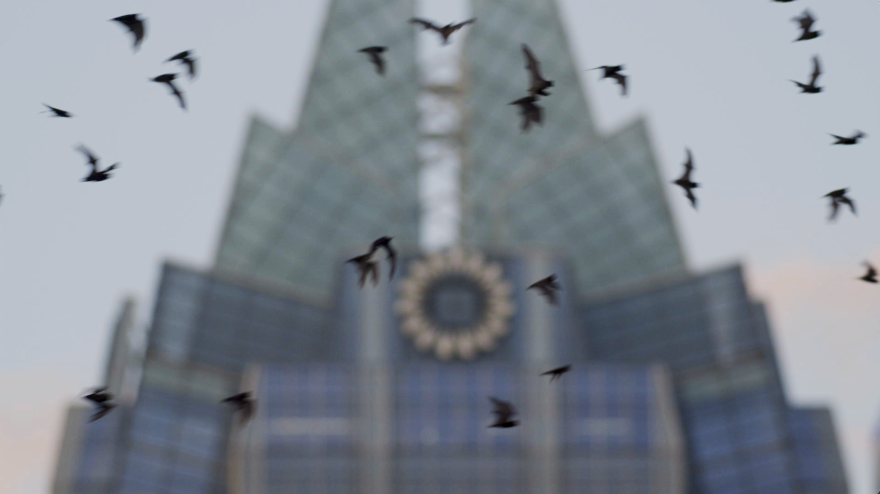
Courtesy of Kristin Tièchei
“I told him [Hobbie] I was hoping for people to fall in love with bats when they watch,” Tièche said. “You protect what you love.”
White-nose syndrome continues to decimate bats as it spreads, but there’s reason for cautious optimism. Some species that were nearly wiped out in the Northeastern states are beginning to show modest recovery, Frick said, though it is not fully clear why.
She said the Fat Bat Project, which has expanded across the Northeast and into Texas, is also showing promise as one tool of many that could stave off total population collapse in some areas.
The Invisible Mammal is screening at 6:30 p.m., Tuesday, July 14, at AFS Cinema. It will be followed by a Q&A with filmmaker Kristin Tièche, producer Matthew Podolsky, cinematographer Skip Hobbie and Winifred Frick of Bat Conservation International.
-

 South Dakota4 minutes ago
AARP commits $125,800 to strengthen community projects in Mobridge, Gregory, seven other South Dakota towns
-

 Tennessee10 minutes ago
Former Tennessee teacher who allegedly showed nude photo to student indicted by grand jury
-

 Texas16 minutes ago
Texas AG secures 23andMe bankruptcy settlement after 2023 data breach
-

 Utah22 minutes ago
Muslim man in Utah was targeted in stabbing because of his religion, police say
-

 Vermont28 minutes ago
Hazy, hot, and humid: Wildfire plumes give southern Vermont skies an odd glow
-

 Virginia34 minutes ago
Five charged after Virginia Beach Police conduct human trafficking operation
-

 Wisconsin46 minutes ago
Flood relief grant applications now open for nonprofits, churches in Northeast Wisconsin
-

 West Virginia52 minutes ago
New law allows employers to provide benefits for independent contractors in West Virginia

