Austin, TX
Move over, Phil: Texas Groundhog Day traditions that are bigger and better


Did You Know?: What is Groundhog Day?
Every February 2, people across the U.S. eagerly await for Punxsutawney Phil to tell us whether we will see more winter or finally spring. But where did this tradition come from and just how accurate is this little rodent? Good Day Austin meteorologist Adaleigh Rowe explains in this “Did You Know?”.
AUSTIN, Texas – Every year on Feb. 2, Americans turn their eyes to Punxsutawney, Pennsylvania, to see whether Punxsutawney Phil will see his shadow. An often-unfulfilled promise that decides six more weeks of winter or early spring.
In Texas, animal-based forecasts come with a Lone Star twist, from armadillos and alligators to prairie dogs and more. In the Lone Star State, Groundhog Day isn’t just about shadows on the ground, it’s a community event.
Tradition with a Lone Star Twist

A black-tailed prairie dog (Cynomys ludovicianus) (Photo by Marcos del Mazo/LightRocket via Getty Images)
The backstory:
Groundhog Day is a tradition rooted in a 19th-century Pennsylvania superstition that says if a groundhog emerges from its burrow on Feb. 2, and sees its shadow, it will retreat to its den and winter will go on for six more weeks. If the groundhog does not see its shadow, spring will arrive early.
The superstition has inspired a wide network of animal prognosticators across North America, but in Texas, locals have embraced unique forecasters and unorthodox weather-predicting methods that reflect the state’s wildlife and culture.
Bee Cave Bob
Bee Cave Bob is a nine-banded armadillo from Bee Cave, Texas, who has been providing a weather forecast on Feb. 2 since 2010. This Texas town refers to the event as Armadillo Day, instead of Groundhog Day.
Photo courtesy: Bee Cave Bob on Facebook
During Bob’s annual appearance, he emerges from his burrow onto a concrete slab painted to resemble a highway. The armadillo’s behavior is then observed and interpreted to determine his weather prediction. If he sees his shadow, he will retreat and winter will go on for six more weeks. If Bob does not see its shadow, spring will arrive early.
Bee Cave’s “Armadillo Day” celebration is organized by the Benevolent Knights of the Raccoon, a Texas-based group that hosts the semi-private ceremony that takes place at a ranch known as West Pole Ranch, located on Highway 71. The event invites Texans to the Hill Country to celebrate with barbecue, chili and tamales.
Big Al in Beaumont
Big Al is a 94-year-old, nearly 14-foot-long alligator that weighs over 1,000 pounds from Gator Country Adventure Park in Beaumont, Texas. The alligator has been providing a Feb. 2 weather prediction since 2006.
Photo courtesy of Gator Country Beaumont Texas’s Facebook page.
On Groundhog Day 2026 at 2 p.m. Big Al will be provided with a serving of food, typically meat of some kind. If the alligator takes a bite of the food, that means Texas will have an early Spring. If he does not eat, there will be a long winter.
Big Al’s handlers told the Beaumont Enterprise that alligators are unable to digest food unless warm weather is on the way. So during this time of the year, when temperatures drop, alligators are in a state similar to hibernation, known as brumation. While in brumation, alligators reduce their body temperature and heart rate, slow down their metabolism and don’t eat. Only drinking water to avoid dehydration.
Prairie Dog Pete in Lubbock
Prairie Dog Pete is a prairie dog ambassador located at Mackenzie Park in Prairie Dog Town in Lubbock, Texas. The prairie dog became such an asset and goodwill ambassador for the city that Lubbock adopted it as its mascot.
The City of Lubbock uses the prairie dogs at the park as prognosticators to predict the weather in one of two ways. Similar to Punxsutawney Phil, Pete either sees his shadow, meaning six more weeks of winter, or he does not see his shadow, indicating an early spring.
Pete’s forecasts in years past, have been done by choosing between celery or carrots as a method of predicting weather. If he chooses celery, that means six more weeks of winter. If he chooses the carrot, that means spring is on the way.
Wiener dogs in Buda
The Greater Buda Chamber of Commerce hosts their second annual Buda Ground Dog Day celebration at noon Feb. 1. A twist on the classic Groundhog Day, incorporating the city’s theme of wiener dogs, dating back to Buda’s inaugural competition in 1997 under the theme “The Amazing Wiener Dog.”
Buda, the self-proclaimed Wiener Dog Capital of Texas, traditionally chooses an honorary dachshund dog that gives the weather prediction for the Buda City Park event.
The honorary dachshund, Beans, will make the official prediction for the season ahead. Beans was selected as the honorary wiener dog for this year’s celebration during a random selection process on the city’s Chamber of Commerce Facebook page.
In 2025, the honorary wiener dog, Nacho, made the first ever Ground Dog Day forecast at the Buda Amphitheater and Pavilion. Nacho’s weather-predicting method relied on him choosing between a stuffed snowman and a sunshine plush, upon his highly anticipated release from a dog house.
City of Buda, TX — City Government’s Facebook post
The Source: Information in this article was provided by Countdown to Groundhog Day. Additional information was provided by the official social media pages of the cities mentioned.



AUSTIN, Texas – One person is dead after an officer-involved shooting in downtown Austin Saturday.
What we know:
One person is dead after an officer-involved shooting in downtown Austin Saturday morning following a foot pursuit, according to the Austin Police Department.
Police said officers first received calls shortly after 8 a.m. reporting that a white man was pointing a handgun at several people along the trail near Lamar Boulevard and West Cesar Chavez Street.
About three hours later, an officer located the suspect near the TownLake YMCA in the 1100 block of West Cesar Chavez Street. Police said the suspect fled on foot, leading officers on a chase.
What they’re saying:
According to APD, officers repeatedly ordered the suspect to drop the handgun, but he refused to comply.
“The officers gave commands for the individual to drop the firearm. The subject refused to stop, refused to drop the firearm,” an APD spokesperson said. “At one point, the officers caught up with the individual. Unfortunately, the officers were faced with a situation in which they had fired rounds, striking the subject.”
“This is the first time I’ve seen something like this happen since I’ve been coming here in over 10 years,” said a man named Salvador, who goes to the Townlake YMCA almost every day. He says he was grateful no one else was injured in the shooting, considering it was the facility’s busiest day of the week.
“It’s difficult to even walk in the place because there’s just so many parents and children at this YMCA on Saturdays,” he told FOX 7. “It’s very scary. Not only do I go to the YMCA here, but I also run on the trail, which is right across the street. I run on a trail there maybe two or three times a week. And if it’s a nice day, there are thousands of people running on the trails on Saturday morning because the weather is really mild, and they can get their walk in or their run in. So, it’s terrifying.”
Assistant Police Chief Lee Rogers says that there will be two investigations into the incident, including an administrative investigation conducted in conjunction with the Austin Police Oversight and a criminal investigation with APU Special Investigations Unit and the Travis County District Attorney’s Office.
Dig deeper:
Police said officers immediately rendered medical aid after the shooting, but the suspect died from his injuries.
No officers or members of the public were injured during the incident.
Authorities have not released the identity of the man who was killed.
Police have not identified the officers involved in the shooting or said how many officers fired their weapons.
The officer-involved shooting remains under investigation.
This is a developing story. Check back for updates.
The Source: Information in this article comes from the Austin Police Department.

Two police officers shot and killed an armed man after a brief foot chase in downtown Austin, Texas, hours after multiple people reported that he was pointing a handgun at people near a busy trail system, according to officials.
Police began receiving 911 calls shortly after 8 a.m. Saturday about a white man armed with a handgun near the trails around Lamar Boulevard and Cesar Chavez Street, according to Police Chief Lee Rogers. Callers reported that the man was pointing the weapon at multiple people throughout the area.
Officers searched the downtown area for several hours before encountering a man matching the description at about 11 a.m. He was initially on a scooter when officers approached and attempted to detain him and question him about the earlier calls.
The man left the scooter behind and ran away, leading officers on a short foot chase. Officers saw that he had a firearm and repeatedly ordered him to stop and drop the weapon, but he refused.
When the officers caught up with him, both opened fire and struck him. Rogers did not explain what immediately caused the officers to shoot, but said more than one round was fired.
Officers provided medical aid, but the man was pronounced dead from his injuries.
Rogers said he could not confirm reports that the man was homeless. The shooting is being investigated administratively with Austin Police Oversight and criminally by the department’s Special Investigations Unit and the Travis County District Attorney’s Office.
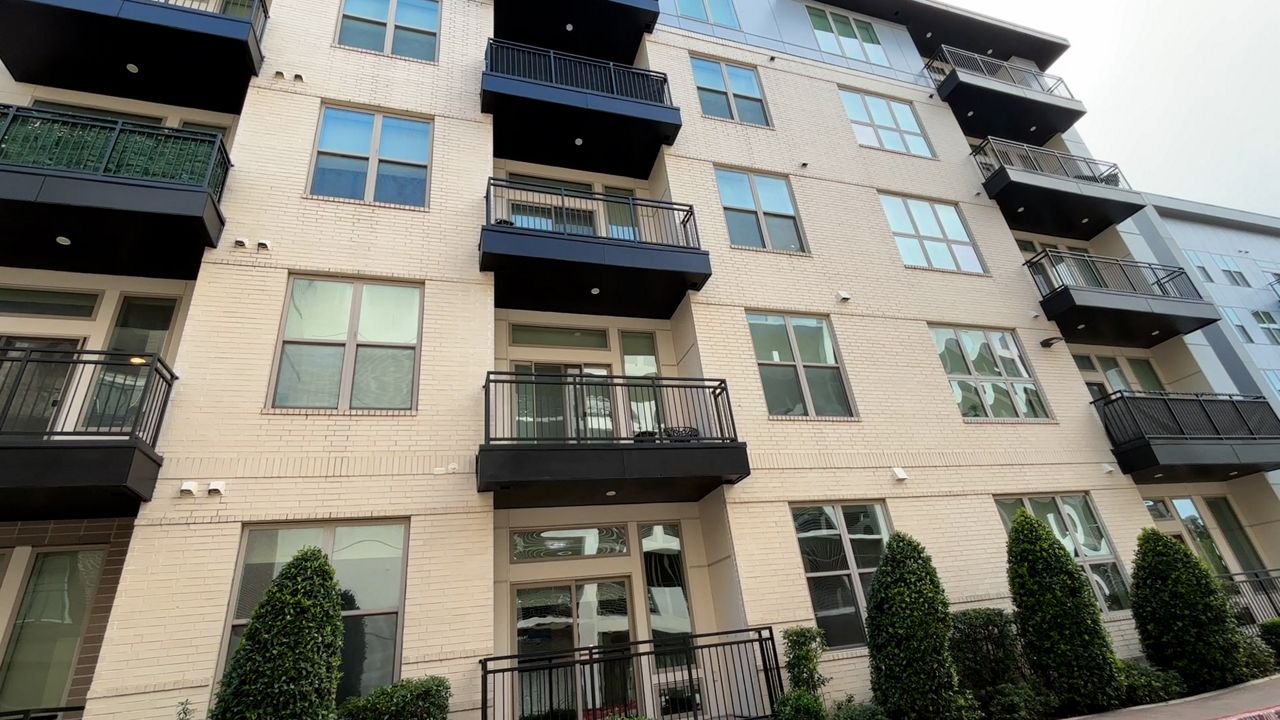
TEXAS — According to Redfin, a national real estate brokerage firm, the top three most affordable cities for renters in the country are in Texas. The firm released its study in 2025, which also lists the median incomes needed to afford the average rent.
Renters living in the Sawyer Heights neighborhood near downtown Houston say apartments in that area come with a hefty price tag.
“It’s not cheap to live in this city, especially with income the way it is,” said Evan Camp, a renter.
Jacinto Cepeda shares his sentiment, adding you get what you pay for.
“It’s just increasing in price if you want to live somewhere nicer or a little bit safer, I would say, it’s definitely on the pricier side,” Cepeda said.
However, Redfin’s report ranking the top 10 most affordable metros for renters across the country shows renters in the Houston metro area may be better off compared to other Texans. Austin, Houston and Dallas took the top three spots, respectively.
The study analyzes Census Bureau data on median incomes and average rent costs, based on the affordability criteria of renters spending no more than 30% of their income on rent.
“In the most recent American Community Survey, we found that, for the first time, the majority of renters in Harris County in Houston are cost-burdened, meaning they spend more than 30% of their income on rent,” said Dr. Stephen Sherman, an associate director of research at the Kinder Institute for Urban Research at Rice University.
Sherman says while some may consider Houston rent as more reasonable than New York City and Los Angeles, Harris County incomes have not kept up with inflation.
“When you start to look at how that compares to people’s incomes, how high eviction rates are, the quality of multifamily building here, you start to see that that cheery story has some cracks and fissures,” he said.
The Redfin study shows the typical U.S. renter earns nearly $9,000 less than the income needed to afford the median apartment. It shows a median rent in the Houston metro of $1,239, meaning the affordability required for annual income needed is closer to $50,000. As of December 2024, Houston’s median renter income was roughly $58,000, which was nearly $9,000 more than needed to cover the rent. Sherman says that means nearly half of renters don’t make enough.
“Apartment rents and home prices, as well, have stabilized, but when you look at incomes, especially after adjusting for inflation, they’ve actually gone down,” said Sherman, adding this is while expenses like groceries and gas have gone up. “Everything is a trade-off. You can find affordable places to live in Houston, but it might be in an older building in dire need of repairs.”
Cepeda said walkability is one thing he appreciates about the Heights area.
“It’s just a matter of where you’re willing to live where you’re willing to live, and how you’re willing to live is the most important thing,” he said.
-

 New Mexico2 minutes ago
New Mexico State’s Jack Turner taken in 10th round of 2026 MLB Draft
-
North Carolina2 minutes ago
Eastern North Carolina under a flood watch until Monday morning, says the NWS
-

 North Dakota14 minutes ago
NDSU Sets North Central Research Extension Center Field Day for July 15
-

 Ohio17 minutes ago
Yosteria opens its enoteca
-

 Oklahoma22 minutes ago
Where Every Oklahoma Player was Selected in the MLB Draft
-

 Oregon29 minutes ago
Evacuation orders in effect as Olive Butte Fire bears down on small city
-

 Pennsylvania32 minutes ago
3 dead in wrong-way crash on I-76 in Montgomery County, Pennsylvania, state police say
-

 Rhode Island37 minutes ago
Massachusetts and Rhode Island residents arrested after woman found nude inside Target


