Austin, TX
Lawmakers discuss solutions to diminish damage from future Panhandle wildfires

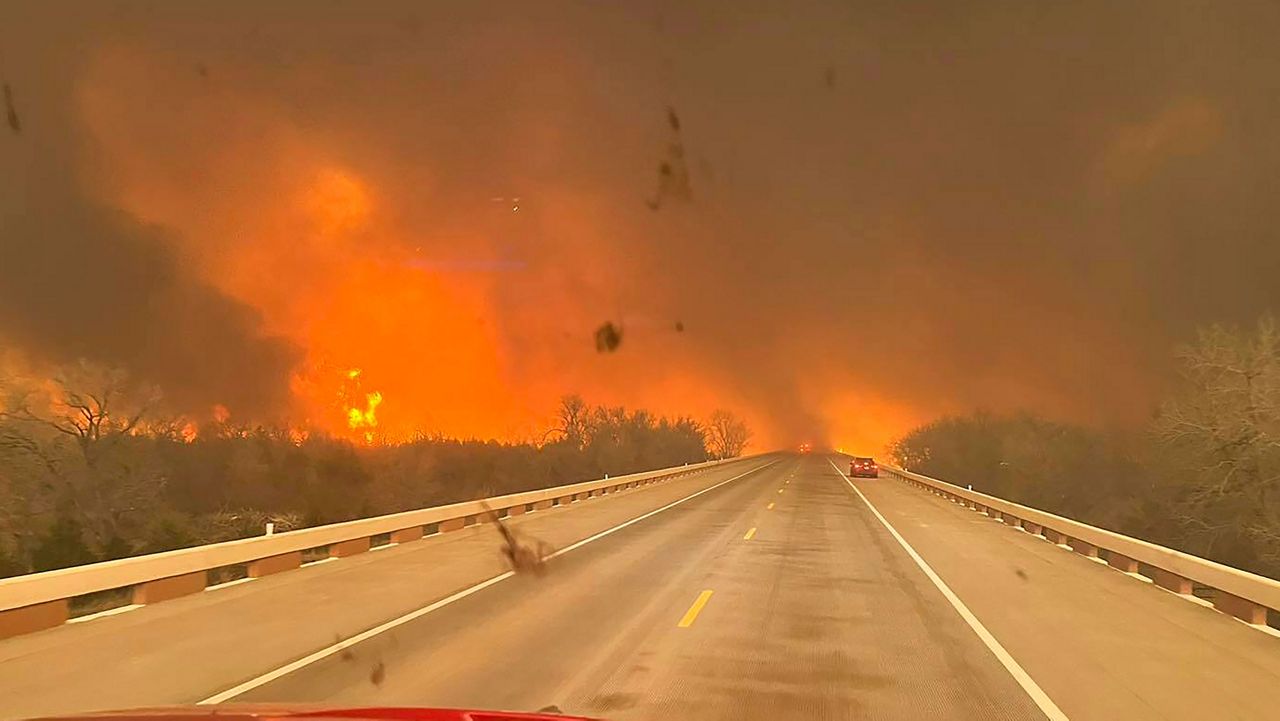
AUSTIN, Texas — Texas is still reeling from the $123 million loss from the Panhandle wildfires earlier this year. Tuesday morning, a committee of lawmakers heard from state agencies about the multiple problem points surrounding the fires and ways to address them.
What You Need To Know
- A committee of lawmakers heard from state agencies about the multiple problem points surrounding the fires and ways to address them
- The primary cause of the fires was old oil wells with active electrical currents coming into contact with aging power lines knocked down by the wind
- The Railroad Commission claims that since the fires, landowners have increased the number of reports for possible fire starters
- Even with an increase in reports, the threat of wildfires is still present
Panhandle-area Rep. Ken King sat in on a House State Affairs hearing where lawmakers were tasked with going over the recommendations from the Investigative Committee on the Panhandle Wildfires.
“We don’t have a wind problem in the Panhandle. We have an aging infrastructure problem,” said King.
The primary cause of the fires was old oil wells with active electrical currents coming into contact with aging power lines knocked down by the wind.
“Who knows who strung that wire, and it might’ve been there 60 years,” said Rep. Jay Dean, the Republican representative from Texas House District 7.
An official with the Railroad Commission explained that they inspect oil and gas locations across the state, but if power lines go through private land, they have no authority to access it, meaning there is no formal inspection process, often for miles in rural areas.
“That’s why you need landowners, operators and others to be your eyes out in the field,” said Dallas-area Democratic Rep. Rafael Anchiá.
The Railroad Commission claims that since the fires, landowners have increased the number of reports for possible fire starters.
“Depending on which category its placed into, whether it’s an immediate risk, a significant risk or a normal enforcement violation, it’ll decide whether it goes through the PUC, the state fire Marshall or our normal enforcement process,” said an Assistant Executive Director of the Railroad Commission of Texas Randall Collins.
Even with an increase in reports, the threat of wildfires is still present without updated infrastructure. That’s why state officials say there’s a need for streamlined communication between agencies responding to fires at the local, state and federal levels.
“The state of Texas does not own a single fixed wing firefighting aircraft,” said Nim Kidd, chief of the Texas Division of Emergency Management.
It’s a problem that’s even garnered the attention of President Joe Biden, who got a briefing on this year’s wildfire season.
“Nationwide, nearly 37,730 wildfires burning over 7.3 million acres, which is more land than even some states occupy,” said Biden.
The Texas Division of Emergency Management also testified that more money is needed to support EMS and firefighting units in the Panhandle region to increase response time on the ground.



AUSTIN, Texas – Central Texans gather to celebrate Juneteenth or “Freedom Day” on June 19 and commemorate the end of slavery.
What you can do:
The Greater East Austin Youth Association (GEAYA) is hosting the Central Texas Juneteenth Parade and Festival today (6/19).
It’s free and taking place at Rosewood Park in East Austin located at 2300 Rosewood Ave.
The schedule for the events is as follows:
- ACME Juneteenth FunRun – 8:30 AM – 9:30 AM
- Juneteenth Historical Parade – 10 AM – 12 PM
- Park Celebration and Fireworks – 12 PM – 9:45 PM
Other events
On June 20, the Carver Kickback: Juneteenth Edition will be taking place 11 a.m. to 4 p.m. at the George Washington Carver Museum, Cultural, and Genealogy Center located at 1165 Angelina Street.
It will be a day of celebration and remembrance and there will be BBQ plates and music as well as vendors and hands-on activations.
The backstory:
Juneteenth commemorates the end of formal slavery in Texas on June 19, 1865, two and a half years after President Abraham Lincoln signed the Emancipation Proclamation on January 1, 1863, and more than one month following the end of the American Civil War.
Colloquially known as “The Black 4th of July,” Juneteenth marks the beginning of an African American journey to carve a new place in society for free people to shape identities independent of racial caricature, eradicate slave culture, promote ethnic pride, and create economic prosperity.
The Source: Information from City of Austin and Greater East Austin Youth Association and reporting by Jessica Rivera.

Juneteenth celebrations are happening across the city this weekend. The events will mark the 161st anniversary of the day Union troops arrived in Galveston Bay to announce that more than 250,000 enslaved people in Texas were free. The announcement on June 19, 1865, came more than two years after the signing of the Emancipation Proclamation. June 19 — known as Juneteenth — became a federal holiday in 2021.
From historical bike rides to Austin’s annual parade, here are seven events taking place in Austin.
Annual Juneteenth FunRun, June 19
The city of Austin’s African American Cultural and Heritage Facility will host a fun run starting at 8:30 a.m. on Friday at East Martin Luther King Jr. Street and Leona Street, and concluding at Hargrave Street near the Millennium Youth Entertainment Complex. Participants will have one hour to complete the course. The route is the same as the parade through the African American Historical Cultural District that will start later that morning. Runners and walkers of all ages and levels can participate.
Central Texas Juneteenth Parade & Festival, June 19
The annual Juneteenth parade will take place Friday and begin at 10 a.m. at East Martin Luther King Jr. Boulevard and Leona Street and will travel down to Chicon Street before turning on Rosewood Avenue. The parade will feature floats, live music and performers.
A Very Juneteenth Comedy Jam, June 19
The Velveeta Room, Austin’s longest-running comedy club, will have shows highlighting Black voices Friday night at 8 p.m. and 10 p.m. The 18+ event will feature comedians like Freddy Do Less and Roderick McDaniel. Tickets for both shows are around $23.
Sistas Walk And Talk: Juneteenth Edition, June 20
Texas Sistas Society will host a 3-mile walk and talk Saturday at 515 S. Pleasant Valley Road starting at 7:45 a.m. Texas Sistas Society is an Austin-based community created for Black women and women of color. Attendees are encouraged to wear Juneteenth colors: red, yellow, green or black, and to RSVP ahead of time.
The Carver Kickback: Juneteenth Edition, June 20
The George Washington Carver Museum in Austin is dedicated to creating a “space where the global contributions of all Black people are celebrated.” The museum is hosting a free celebration from 11 a.m. to 4 p.m. Saturday with barbecue plates, live music, vendors and activities for all ages.
Black Auteur Film Festival, June 20
The Black Auteur Film Festival, a nonprofit dedicated to uplifting Black filmmakers in Texas, is hosting its third annual film festival to showcase short films directed by Black Texans at AFS Cinema on Saturday. One filmmaker will win the $1,000 “Best of Fest” award, and attendees can enter a raffle for a chance to win Austin Film Society memberships and movie tickets. The festival runs from 2 to 5 p.m. Tickets are $14.
Juneteenth Social Ride, June 21
Black History Bike Ride, an Austin nonprofit teaching people about the city’s Black history through cycling, is hosting its seventh annual Juneteenth ride starting at the Haskell House on Saturday at 10 a.m. Austin-based historian Harrison Eppright will serve as the ride’s guide. Registration is required for all attendees. The event is free, but donations are encouraged.

AUSTIN (KXAN) — Data analyst Corey Yeung created the ATX Running Guide to help runners find community across Central Texas. What started as a personal project has become one of Austin’s most comprehensive running resources.
Looking for a Run Club? There’s a Map for That
When Corey Yeung moved to Austin three years ago, he had a simple question:
“How many run clubs are actually out there?” The answer wasn’t easy to find. While several websites listed local groups, Yeung felt none offered a complete picture. So, he decided to build one himself. What started as a spreadsheet evolved into ATX Running Guide, a website and social media platform that helps runners discover clubs throughout the Austin area.
“The list would be more useful if it were a map and search tool,” Yeung said. “The Instagram page was simply a way to communicate those free resources to the community.”
Today, the guide covers running groups from San Marcos to Hutto and serves as a one-stop resource for runners looking to connect. In this episode of KXAN’S Plus Simple Health, Corey Yeung walks us through everything you need to know about the 200-plus running clubs in Austin.
-

 Illinois3 minutes ago
Illinois has already broken the record for number of tornadoes in a year — and it’s only June
-

 Indiana5 minutes ago
Hamilton County teen is youngest delegate at Indiana Republican convention
-

 Iowa11 minutes ago
Reynolds orders flags lowered for funeral of Iowa Sen. Julian Garrett
-
Kentucky21 minutes ago
Louisville celebrates Juneteenth with parade honoring history and culture
-

 Louisiana26 minutes ago
From ‘not pageant people’ to Miss Louisiana stage: Addison J…
-

 Maine33 minutes ago
Maine gubernatorial candidates trade barbs on first day of general campaign
-

 Maryland36 minutes ago
Maryland governor celebrates Juneteenth in historically-Black Montgomery County community – WTOP News
-

 Michigan41 minutes ago
West Michigan celebrates Juneteenth

