Arkansas
State of the State 2024: Arkansas banks navigate uncertain interest rate landscape – Talk Business & Politics


Editor’s note: The State of the State series provides reports twice a year on Arkansas’ key economic sectors. The series publishes stories to begin a year and stories in July/August to provide a broad mid-year update on the state’s economy. Link here for the State of the State page and previous stories.
According to the state’s top banking official, the uncertain interest rate environment is the most significant conversation topic entering the year.
“The rate environment is posing headwinds for many institutions, but tailwinds for others,” said Susannah Marshall, Arkansas State Bank Department commissioner. “Especially those that have structured their balance sheets to be in an asset sensitive position and to take advantage of repricing assets at higher interest rates.”
Marshall said banks with strong mortgage divisions bore the brunt of the interest rate volatility in 2023 and will remain impacted until a downward movement emerges.
“I don’t want to attempt to predict what will happen with interest rates in 2024 or the timeframe of any potential rate decreases,” she said. “Regardless of whether we will see any additional increases or rates remain flat for the foreseeable future, I believe any potential declines could be further out in 2024.”
Marshall and other Arkansas banking leaders offered various thoughts on the industry entering 2024. According to the latest data from the Federal Deposit Insurance Corp. (FDIC), 82 federally insured lenders doing business in Arkansas had a cumulative net income of $1.49 billion through the third quarter of 2023, up 4.1% from the previous year. The banks grew their combined assets robustly to $165.6 billion, up 7.3% year-over-year. Loan growth was even stronger at 13.8%. Construction loans accounted for a third of that growth, reflecting the vibrant economy.
Tim Yeager expects banks to remain strong — Arkansas’ average return on assets (ROA) of 1.23% is well above the benchmark ratio of 1% — but they are unlikely to match their 2023 performance.
“The lagged effect from high interest rates will lead to slower loan growth, an increase in problem loans, and a shortage of core [stable] deposits,” said Yeager, a finance professor who holds the Arkansas Bankers Association Chair in Banking at the University of Arkansas. His responsibilities include teaching, research and outreach to Arkansas bankers. “Loan demand will slow as businesses and consumers adjust to higher interest rates. In addition, borrowers will struggle to repay the higher interest payments on their debts, leading to more problem loans.”
Like many analysts, Yeager said he expects the Federal Reserve to lower interest rates in the coming months, which will somewhat reduce the pressure on loan demand and funding costs. He said Arkansas bankers are most concerned about a longer-term issue: the ability to hire and maintain qualified workers. He noted that many top students in finance want careers in investment banking, primarily because they think they can make more money on Wall Street.
That might be true, but he tries to explain that there are other advantages of working for a bank.
“We need to get the message across that this is a soul-fulfilling career,” Yeager said. “You’re going to do well, but will you be a millionaire or a billionaire? It’s less likely. But you will have a much more balanced, satisfactory life by doing this.”
According to the American Bankers Association, Arkansas banks employ around 16,000 people at over 1,000 offices and branch locations and have around 5 million customers.
‘ARTIFICIAL’ ECONOMY
Simmons First National Corp. (Simmons Bank) of Pine Bluff is one of the state’s largest banks, with $27.5 billion in assets. It’s one of four Arkansas-based lenders with assets greater than $21 billion at the end of last year’s third quarter. Bank OZK of Little Rock ($32.7 billion), Arvest Bank of Fayetteville ($27.3 billion) and Centennial Bank of Conway ($21.8 billion) were the others.
George Makris Jr. is the bank’s president and CEO. He said that after a decade marked by growth through acquisition, Simmons Bank is focused on organic growth and efficiency in 2024.
“We acquired 13 banks [in five states] in the past 10 years, which has given us access to some of the best markets,” he said. “We are improving our delivery channels and standardizing many internal functions. That combination should produce favorable financial results leading to capital growth and additional capacity to offer to our customers.”
Makris said the uncertainty around interest rates coupled with government spending and its upward pressure on inflation makes for an “artificial” economy, and that environment will trickle down to consumers.
“Banks are in the risk management business and will shift as much of the risk to the borrower as possible under uncertain times, which will restrict credit access,” he said. “That is more severe for the least credit-worthy borrowers. Loan funding costs and the cost of capital are also negative drivers of access to credit. That said, access to credit is still there for solid projects. Speculative projects will sit on the sidelines.”
Makris joked that his crystal ball has a crack in it, but he predicted that if inflation remains steady for the first half of the year – the current U.S. inflation rate is 3.4% for the 12-month period leading up to December 2023, according to the Bureau of Labor Statistics – a modest rate reduction could come in late 2024.
“However, this is an election year, and whether we like it or not, politics plays a role in many governmental decisions,” he said.
Makris also offered an opinion on artificial intelligence (AI) in banking.
“Banks are certainly aware of the proliferation of AI discussion,” he said. “That has driven much of the buzz for tech stocks. However, I believe we need to be very cautious and deliberate in advancing AI. It will be used for nefarious purposes well before we have maturity and risk protocols to mitigate bad actors.
“The other element not discussed much is who is teaching AI to deploy its logic. Banks have been using variations of AI to determine probability, relationships and other integrated data sets.”
Marshall also alluded to the increasing threat landscape regarding cyber risks and their impact on the industry.
“This increasing risk also translates into increased costs and pressure on resources,” she said. “Unfortunately, many comments I have received lately center around bankers’ concerns about the increases in fraud attacks on their customers and the impact it is having on the industry.”

Arkansas
Shepherd confirmed as federal judge in Arkansas’ Western District – Talk Business & Politics

John Thomas Shepherd of El Dorado has been confirmed by the U.S. Senate to be a U.S. District judge in the Western District of Arkansas, according to the offices of U.S. Sens. John Boozman and Tom Cotton, R-Ark.
Shepherd is a native of El Dorado and graduate of Rice University and the University of Arkansas School of Law in Fayetteville, where he was managing editor of the Arkansas Law Review.
He was a partner at Shepherd & Shepherd in El Dorado and also served as a prosecuting attorney, and later judge, for the Arkansas Circuit Court’s 13th Judicial District. He is a member of the Federalist Society, according to a press release from Cotton’s office.
His brother, Matthew Shepherd, is a partner in the El Dorado law firm and is a former speaker of the Arkansas House of Representatives. Their father is Federal Judge Bobby Shepherd who sits on the U.S. Court of Appeals for the Eighth Circuit.
“I am pleased to congratulate John Thomas Shepherd on his confirmation and am confident he will serve with the same integrity, professionalism and sound judgment he has demonstrated throughout his career,” noted a statement from Boozman’s. “We are grateful for his deep commitment to public service and the rule of law.”
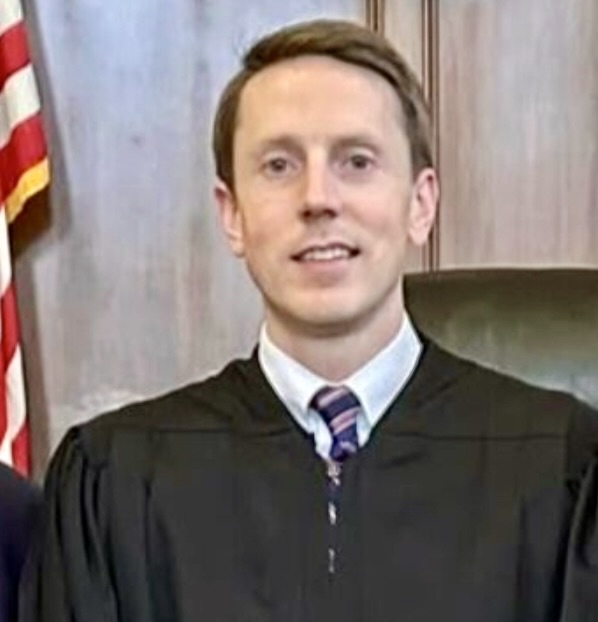
Shepherd succeeds U.S. District Court Judge Susan Hickey who has been on the bench since October 2011. She was chief judge of the district between 2019 and 2025. The U.S. District Court for the Western District of Arkansas includes 34 counties stretching from Texarkana and El Dorado to Fayetteville and Fort Smith.
Shepherd is the second Western District judge to be confirmed so far in 2026. David Clay Fowlkes, the former U.S. Attorney for the Western District of Arkansas, was confirmed in early February to be a federal judge in the Western District of Arkansas. He succeeded U.S. District Court Judge P.K. Holmes III, and will be in the Fort Smith office.
Other judges now in the Western District are Chief Judge Timothy Brooks (Fayetteville bench), Magistrate Judge Christy Comstock (Fayetteville), Magistrate Judge Mark Ford (Fort Smith), and Magistrate Judge Spencer Singleton (El Dorado).
Related


Pitching for Alabama baseball had been fine for much of this season. Then the Crimson Tide ran into an Arkansas Razorbacks team that got hot at the plate over the weekend at Sewell-Thomas Stadium in Tuscaloosa.
Arkansas scored 25 runs in a three-game sweep of the Tide, snapping a string of three straight SEC series victories for Alabama. In all three games, the Razorbacks’ bats came alive late. Arkansas used a six-run eighth inning on Friday for a 7-5 win, then plated 11 runs over the final three innings Saturday in a 15-6 rout.
Alabama had a 2-0 lead in after five innings in Sunday’s series finale, but the Razorbacks scored single runs in the sixth, seventh and eighth innings to complete the sweep. The Crimson Tide had won 11 of their last 12 games entering the weekend, including SEC series victories over top 25 teams Florida, Auburn and Oklahoma.
After a 1-3 week in Week 9 of the 2026 NCAA baseball season, here’s where Alabama ranks in Monday’s new USA TODAY Sports Coaches Poll.
Alabama sees modest drop in Baseball Coaches Poll after Arkansas sweep
In Monday’s new Coaches Poll, Alabama (26-11 overall, 8-7 conference) fell four spots to No. 13. The Crimson Tide are ranked one spot above the West Virginia Mountaineers and one spot below Oklahoma.
Alabama is one of five teams to drop at least four spots in this week’s top 25 rankings. Florida State had a four-spot fall to No. 10, and Mississippi State tied Nebraska for the biggest slide. The Bulldogs fell eight spots to No. 16; the Cornhuskers eight spots to No. 25.
SEC slides, ACC rises in top 5 of NCAA Baseball Coaches Poll
Both Georgia Tech and North Carolina rose in the top five of the Coaches Poll after impressive weekend series against Florida State and Clemson, respectively. Texas and Georgia dropped in the top five after series losses to Texas A&M and Florida, respectively.
Here’s a look at the full top 25 rankings in the USA TODAY Sports Baseball Coaches Poll for April 13.
| Rank | Team | Record | PTS | 1st | Prev | Chg | Hi/Lo |
|---|---|---|---|---|---|---|---|
| 1 | UCLA | 33-2 | 750 | 30 | 1 | – | 1/2 |
| 2 | Georgia Tech | 30-5 | 719 | 0 | 3 | 1 | 2/5 |
| 3 | North Carolina | 30-6 | 680 | 0 | 5 | 2 | 3/14 |
| 4 | Texas | 27-7 | 621 | 0 | 2 | 2 | 2/4 |
| 5 | Georgia | 29-8 | 618 | 0 | 4 | 1 | 4/13 |
| 6 | Oregon State | 28-7 | 611 | 0 | 7 | 1 | 6/18 |
| 7 | Texas A&M | 27-7 | 516 | 0 | 15 | 8 | 7/NR |
| 8 | Coastal Carolina | 26-9 | 511 | 0 | 11 | 3 | 7/25 |
| 9 | USC | 30-7 | 506 | 0 | 10 | 1 | 8/NR |
| 10 | Florida State | 24-11 | 437 | 0 | 6 | 4 | 6/17 |
| 11 | Auburn | 24-11 | 402 | 0 | 12 | 1 | 4/12 |
| 12 | Virginia | 26-11 | 383 | 0 | 14 | 2 | 11/NR |
| 13 | Alabama | 26-11 | 325 | 0 | 9 | 4 | 9/NR |
| 14 | Oklahoma | 24-11 | 319 | 0 | 18 | 4 | 8/NR |
| 15 | West Virginia | 24-8 | 306 | 0 | 19 | 4 | 12/NR |
| 16 | Mississippi State | 26-10 | 305 | 0 | 8 | 8 | 3/16 |
| 17 | Arkansas | 24-13 | 272 | 0 | 22 | 5 | 5/22 |
| 18 | Florida | 27-10 | 233 | 0 | 24 | 6 | 8/25 |
| 19 | Oregon | 26-10 | 216 | 0 | 20 | 1 | 10/NR |
| 20 | Southern Miss | 25-11 | 176 | 0 | 13 | 7 | 7/20 |
| 21 | Kansas | 26-10 | 153 | 0 | NR | 12 | 21/NR |
| 22 | Arizona State | 26-11 | 138 | 0 | 21 | 1 | 21/NR |
| 23 | Ole Miss | 26-11 | 125 | 0 | NR | 3 | 18/NR |
| 24 | Boston College | 26-12 | 111 | 0 | 25 | 1 | 24/25 |
| 25 | Nebraska | 27-9 | 93 | 0 | 17 | 8 | 17/NR |
Schools Dropped Out
No. 16 UCF; No. 23 North Carolina State
Others Receiving Votes
North Carolina State 74; UCF 49; Jacksonville State 33; Miami (FL) 15; Tennessee 14; California Baptist 13; Missouri State 6; Wake Forest 5; Kentucky 4; UC Santa Barbara 3; Vanderbilt 2; UTSA 2; LSU 2; Liberty 1; Dallas Baptist 1
Alabama baseball 2026 schedule: When do Crimson Tide play next?
Alabama will face the UAB Blazers (23-13) at Regions Field in Birmingham on Tuesday in midweek play. First pitch for Alabama-UAB is 6 p.m. CT.
The Crimson Tide visit Austin for their next series in SEC play beginning Friday. They take on the Texas Longhorns (27-7, 9-5) at 6:30 p.m. CT Friday.
Here’s a look at Alabama’s 2026 baseball schedule. All start times Central.
- Feb. 13-15: vs. Washington State (L, 8-4; W, 8-1; W, 11-1)
- Feb. 17: at Samford (W, 3-2)
- Feb. 18: vs. Alabama State (W, 2-1)
- Feb. 20-22: vs. Rhode Island (W, 19-4; W, 8-5; W, 11-1)
- Feb. 24: at Southern Miss (L, 14-4)
- Feb. 27: vs. Iowa at Frisco College Baseball Classic (W, 12-2)
- Feb. 28: vs. Oregon State at Frisco College Baseball Classic (W, 8-7)
- March 1: vs. Houston at Frisco College Baseball Classic (L, 8-2)
- March 3: vs. Jacksonville State (W, 6-5)
- March 4: at Alabama State (W, 13-4)
- March 6-8: vs. North Florida (W, 7-2; W, 9-3; W, 12-2)
- March 10: vs. Troy (W, 7-3)
- March 13-15: at Kentucky (L, 7-4; L, 8-7; L, 6-4)
- March 17: at South Alabama (L, 6-3)
- March 20-22: vs. Florida (W, 6-0; W, 8-4; W, 14-7)
- March 24: vs. Austin Peay (W, 6-2)
- March 27-29: vs. Auburn (W, 11-1; W, 3-2; W, 3-1)
- March 31: at Jacksonville State (W, 4-3)
- April 2-5: at Oklahoma (W, 10-7; L, 4-2; W, 3-2)
- April 7: vs. Samford (W, 16-2)
- April 10-12: vs. Arkansas (L, 7-5, L, 15-6, L, 3-2)
- April 14: at UAB, 6 p.m.
- April 17-19: at Texas (6:30 p.m. Friday, 2 p.m. Saturday, 1 p.m. Sunday)
- April 21: vs. UAB, 6 p.m.
- April 23-25: at Tennessee (6 p.m. Thursday, 5:30 p.m. Friday, noon Saturday)
- April 30-May 2: vs. Vanderbilt (6 p.m. Friday, 6 p.m Saturday, 1 p.m. Sunday)
- May 5: at Troy, 6 p.m.
- May 8-10: at South Carolina (4:30 p.m. Friday, noon Saturday, 12:30 p.m. Sunday)
- May 14-16: vs. Ole Miss (6 p.m. Thursday, 6 p.m. Friday, 1 p.m. Saturday)
- May 19-24: SEC Tournament in Hoover, Alabama
Record: 26-11 overall, 8-7 SEC.
Follow us at @RollTideWire on X, and like our page on Facebook, for ongoing coverage of Alabama Crimson Tide news, notes and opinions.

South Dakota Sports Hall of Fame to induct 21 new members in September

Into the ‘Black Hole:’ Tenn. lawmakers push 240+ bills through the Finance Subcommittee before session ends

Painted Tree Boutiques abruptly closes all locations nationwide, including final Texas stores

Utah County Republican Party to hold convention Saturday

Vermont argues that Trump administration provided no factual basis for voter data request – VTDigger

Florida High School Football Rankings: Top 25 teams – Oct. 21

How old is Bo Nix? What to know about Oregon quarterback ahead of 2024 NFL Draft

Cleary's 21 help Le Moyne down Central Connecticut State 69-64 in OT

99th annual Pony Swim held in Virginia

Indiana Members Credit Union announced as new anchor tenant at Bottleworks District

Dem fundraising giant in the hot seat as GOP lawmakers demand answers over dodged subpoena

Fifth woman accuses former US lawmaker Eric Swalwell of sexual misconduct

Commercial Ships Transit Strait of Hormuz as U.S. Blockades Iran’s Ports

Video: How Stephen Miller Is Adjusting Trump’s Immigration Agenda

Biden DOJ weaponized FACE Act against pro-life Americans, 882-report alleges
-

 Atlanta, GA1 week ago
1 teenage girl killed, another injured in shooting at Piedmont Park, police say
-

 Georgia1 week ago
Georgia House Special Runoff Election 2026 Live Results
-

 Arkansas4 days ago
Arkansas TV meteorologist Melinda Mayo retires after nearly four decades on air
-

 Pennsylvania1 week ago
Parents charged after toddler injured by wolf at Pennsylvania zoo
-
 Milwaukee, WI1 week ago
Potawatomi Casino Hotel evacuated after fire breaks out in rooftop HVAC system
-

 Ohio12 hours ago
‘Little Rascals’ star Bug Hall arrested in Ohio
-

 Austin, TX7 days ago
ABC Kite Fest Returns to Austin for Annual Celebration – Austin Today
-

 World1 week ago
Zelenskyy warns US-Iran war could divert critical aid from Ukraine