Alabama
Alabama, Texas unmasked? Our biggest college football overreactions from Week 8


US LBM Coaches Poll: Texas falls out of No. 1 spot after loss to Georgia
The latest US LBM Coaches Poll is here and Texas no longer sits at the top after losing to Georgia in Week 8.
Sports Pulse
Say what you will about the current state of collegiate athletics in the United States of America. But it’s indisputable that there are few other sporting endeavors that generate the same level of emotions, be they positive or negative, from fans.
That was on clear display over the most recent college football weekend, which featured everything from jubilant field rushes to angry debris tossing. Overreactions are therefore inevitable given such passion. We’re here once again to sort through a few involving the biggest-name programs, and hopefully provide a modicum of big-picture perspective.
Here are the top five overreactions from Week 8.
Alabama’s playoff chances are cooked
It’s true that the Crimson Tide’s SEC championship hopes are likely gone with a second league loss. There might, however, still be a path to the expanded 12-team playoff.
Alabama’s last three games in November are quite winnable. One is a tune-up against Championship Subdivision member Mercer, and the final two league contests are against Oklahoma and Auburn, teams in an even greater state of disarray at this writing.
It’s the pair of games over the next three weekends that will tell the tale for Alabama – a home date with Missouri next Saturday and a Nov. 9 trip to LSU. Should the Tide win both, they’ll have a fairly clear route to 10-2 with the win against Georgia also in the bank, a resume that would almost certainly be deemed playoff worthy. A split of those two and a 9-3 finish would leave matters in a much more ambiguous realm.
Whether Alabama could actually win the title should it be included in the at-large pool is a discussion for another day, but for now we must wait and see where things are in a few weeks. We understand that patience is not an abundant quality for many fan bases, but don’t write the Tide off just yet.
Texas is back – to mediocrity.
It didn’t take long for the college football universe to move from anointing the Longhorns as title favorites to wondering aloud if they’re not ready for this new conference after all. As with many such discussions, the truth probably lies somewhere between those extremes.
As has been pointed out, the foundation upon which the Longhorns’ No. 1 ranking had been constructed wasn’t as sturdy as we might have believed given the ongoing struggles of Oklahoma and Michigan (more on the Wolverines below). It is equally true, however, that Texas is hardly the first team to be humbled by an encounter with a motivated Georgia squad. Remember how post mortems for Clemson were being written after Week 1?
In short, we’ll wait and see how Texas responds to its first taste of adversity, starting next week with a visit to a suddenly frisky Vanderbilt.
MISERY INDEX: Oklahoma tops most miserable fanbase after Week 8
HIGHS AND LOWS: Georgia, Alabama headline Week 8 winners and losers
Indiana is going to win the Big Ten
Most people probably didn’t believe Curt Cignetti when he made that bold pronouncement upon accepting the head coaching gig in Bloomington. But lo and behold the Hoosiers have steamrolled everything in their path en route to a 7-0 start that now has everyone’s attention.
There’s just one teensy weensy problem though. The penultimate week of the season involves a trip to Ohio State. We are in no way saying a win in Columbus isn’t possible. But if the Hoosiers do come up short there, they would lose a head-to-head tiebreaker with the Buckeyes for a spot in the conference title game, assuming both teams win the rest of their games. There is no Penn State or Oregon on Indiana’s schedule, which is a plus in that all their other contests are winnable but a minus in that there is no opportunity to offset a potential loss to the Buckeyes.
Now with all that said, the Hoosiers do very much have a strong at-large case for the playoff should they make it to the finish line at 11-1. That might seem overly ambitious for a program that has enjoyed limited gridiron success in its history, but we shouldn’t be surprised now if it comes to pass.
Michigan could miss a bowl
On the opposite end of the Big Ten’s expectations meter we find the Wolverines, the defending national champions in name only now flailing to find any kind of offensive identity.
Aside from a home date with Northwestern, Michigan’s November slate is a veritable murderers’ row in the new-look conference. The Wolverines will be heavy underdogs against Oregon, Indiana and Ohio State, even with the Ducks and Buckeyes coming to Ann Arbor. This makes next week’s rivalry game against Michigan State a virtual must-win if the Wolverines hope to reach the six-victory threshold for bowl eligibility. Of course the Spartans aren’t likely to be terribly sympathetic having their own challenging second-half schedule ahead of them. But Michigan State has made progress under coach Jonathan Smith in recent weeks, and the Spartans will come into the Big House with confidence after showing they could solve a tough defense like Iowa’s. It won’t top the must-watch list for next week, but it’s a game to keep an eye on, especially if you’re the organizer of a bowl game with a Big Ten tie-in.
The Cougar Conundrum
30 for 30 voice: What if I told you there’s a team currently without FBS conference affiliation with an excellent chance to go 11-1 – and it’s not Notre Dame? Sure, the Fighting Irish could get there as well. But there’s another non-affiliated team that could provide the CFP with an interesting test case.
Washington State, of the once-and-future Pac-12, has made it to 6-1 with its lone blemish coming against Boise State. That would be the same Broncos’ squad that came within a field goal of the current No. 1 team. In addition to a hard-fought Apple Cup win against former league foe Washington, the Cougars also have another Power Five victory against Texas Tech in their column.
But now comes the bad news for the Cougars. That Texas Tech result lost some value over the weekend when the Red Raiders were thumped at home by Baylor for their first Big 12 loss. None of Washington State’s remaining opponents figure to add much to its schedule strength calculation. It would help the Cougars’ cause if Boise State made the playoff field, but that might require help from Notre Dame in the form of knocking both Navy and Army from the ranks of the undefeated. Those results would in turn enhance Fighting Irish’s credentials as an at-large candidate, at the expense of the Cougars and others.
As things stand, Washington State would need a whole lot of breaks to go its way to earn consideration. But complete chaos always seems to be right around the corner in this sport, so fans on the Palouse should stay tuned.



Enter your email and we’ll send a secure one-click link to sign in.
WKRG News 5 is provided by Nexstar Media Inc., and uses the My Nexstar sign-in, which works across our media network.
Learn more at nexstar.tv/privacy-policy.
WKRG News 5 is provided by Nexstar Media Inc., and uses the My Nexstar sign-in, which works across our media network.
Nexstar Media Inc. is a leading, diversified media company that produces and distributes engaging local and national news, sports, and entertainment content across its television and digital platforms. The My Nexstar sign-in works across the Nexstar network—including The CW, NewsNation, The Hill, and more. Learn more at nexstar.tv/privacy-policy.

MONTGOMERY, Ala. (WSFA) – Plaintiffs have appealed to the Alabama Supreme Court after a circuit judge last week dismissed their lawsuit against Republican gubernatorial candidate Tommy Tuberville.
The suit argues Tuberville does not meet the Alabama Constitution’s eligibility requirements to serve as governor.
In the appeal filing, plaintiff’s attorney Barry Ragsdale said the issue is “whether the circuit court had subject matter jurisdiction to hear Plaintiffs’ claims.”
It is unclear when the Alabama Supreme Court will rule.
Montgomery County Circuit Judge Brooke Reid ruled July 9 that the court did not have jurisdiction to hear the case.
The plaintiffs, two Alabama voters, claim Tuberville’s primary residence is in Florida and argue he does not meet the constitutional requirement that candidates for governor be Alabama residents for at least seven years before the general election.
On June 29, Tuberville’s legal team and the plaintiffs argued the case in Montgomery County Circuit Court.
Tuberville previously cleared a challenge from fellow Republican gubernatorial candidate Ken McFeeters.
The Alabama GOP Candidate Committee unanimously ruled Tuberville is qualified to run for governor, citing documentation including an Alabama driver’s license, voting record and tax returns.
Not reading this story on the WSFA News App? Get news alerts FASTER and FREE in the Apple App Store and the Google Play Store!
Copyright 2026 WSFA. All rights reserved.

In certain outposts throughout the South, it’s pronounced “progrum,” not program.
However you say it, the SEC footprint houses some of the most celebrated and iconic college football programs in all the land, complete with rabid fanbases that breathe college football all year. Games are played in towering cathedrals where the crowds partake in what’s almost a religious experience on fall Saturdays.
When evaluating the SEC’s programs, recent results should be considered, but rankings also should reflect historical success, traditions, blue-blood status and fan support.
Here’s how I rank the SEC’s programs, top to bottom:
Alabama football is more than a program, and it’s bigger than an international brand. It’s a way of life. The Script A represents tradition and excellence. Alabama fans are plugged in year-round to their favorite sport, and expectations rarely dip. Coaches who thrive in T-Town are immortalized in bronze. The GOAT conversation runs through Alabama. Is it Nick Saban or Bear Bryant? Either way, it’s an Alabama coach.
2. Oklahoma
The crimson and cream have blue blood. Among SEC schools, Oklahoma trails only Alabama for all-time winning percentage. Double-digit win seasons remain the standard, although the 2000 Sooners remain OU’s last national champion. Oklahoma ruled the 1950s under Bud Wilkinson, then ran back their dominance with Barry Switzer’s wishbone in the 1970s and 80s. Seven Heisman winners point to the program’s star power.
3. Texas
Texas’ deep war chest suits the NIL era, but don’t mistake the Longhorns for the nouveau riche. They’re a traditional power that emerged from an inexcusable, prolonged slumber in between Mack Brown and Steve Sarkisian. Texas enjoyed its heyday in the Southwest Conference under Darrell Royal, but the Longhorns also showed their horns during the Brown era. They belong among the heavy hitters.
The Bulldogs don’t crack the list of blue bloods, but Kirby Smart made them look like one. Georgia has seized a place of persistent power that was long considered possible, because of the school’s location within fertile recruiting terrain. Smart flawlessly implemented Saban’s recruit-and-develop blueprint. We’re witnessing Georgia’s glory days, decades after Herschel Walker and Vince Dooley supplied the previous peak in the early 1980s.
5. LSU
LSU is the only program to have three coaches win a national championship in this millennium. Lane Kiffin could become the fourth. Money poured in to fund his roster. LSU’s standards are such that Brian Kelly got fired after winning 71% of his games. In-state talent gravitates to LSU, but the Tigers also built a national brand, and a night game at Tiger Stadium is a college football mecca.
6. Tennessee
Few states can match Tennessee’s unrelenting vigor for college football. Gen. Robert Neyland put the Vols on the map and got his name on the stadium. Johnny Majors earned a place of adoration. Phillip Fulmer’s Vols flourished in the 1990s. Since Fulmer, Tennessee’s ravenous fans infrequently had a chance to say, “It feels like ’98.” For too long, it felt more like dysfunction, but Tennessee recaptured respectability under Josh Heupel.
Few individuals mean more to a program than what Steve Spurrier means to Florida. He revolutionized the Gators from an also-ran into one of the premier programs of the 1990s. The Head Ball Coach branded The Swamp and gave the Gators an identity. They became SEC championship game regulars. Urban Meyer injected more glory with two titles. Florida lacks the consistency and history of some higher-ranked programs, but its peaks are just as lofty.
These are dark days for Auburn. The Tigers endured five consecutive losing seasons, their bleakest period since the late 1940s. Auburn’s loyal fan base deserves better. Recent woes aside, this accomplished program achieved undefeated seasons under three coaches since the 1990s. From Pat Sullivan to Bo Jackson to Cam Newton, Auburn produced decorated stars. Now, it just needs to pull out of this funk.
Trivia question: When did Texas A&M last win a national championship? Answer: 1939. The Aggies possess the financial resources, fan support and recruiting location to be top shelf, but greatness stubbornly eludes them. R.C. Slocum’s Aggies ruled the Southwest Conference in the early 1990s. Is it time for a fresh set of glory days? Mike Elko’s early returns suggest it’s safe for the Aggies to dream of ascending to their potential.
10. Mississippi
Those old enough to witness Johnny Vaught remember Ole Miss as a powerhouse. Those who watched Archie Manning remember the Rebels with a superstar. Then, Kiffin and Trinidad Chambliss made it so everyone can remember Ole Miss as a playoff team with a premier quarterback. Kiffin treated the Rebels like they were small by leaving for LSU, but not before spawning an uprising that showed the school’s potential in the NIL era.
Arkansas piled up Southwest Conference hardware under Frank Broyles, along with an undefeated season. The conference crowns ceased after Arkansas left in 1991 for the SEC, where there’s been more famine than feast for the Hogs. Even in the SEC, the Razorbacks enjoyed a few highlight seasons, but those uprisings are fading into the rearview mirror. The Hogs need another Darren McFadden.
The Tigers tout seven seasons of double-digit-wins in the past 20 years. They transitioned to the SEC better than many expected. Gary Pinkel became the best thing to happen to Mizzou since Dan Devine. Eliah Drinkwitz has been a gift, too. Anyone who’s a millennial or older can remember the program’s highlight moments, even if they never resulted in a Big 12 or SEC title.
13. Mississippi State
Dan Mullen and Mike Leach did it well for Mississippi State, but Starkville remains one of the toughest SEC outposts to win big or to sustain success. Jackie Sherrill’s 74 wins are the most for any Mississippi State coach. He needed 13 seasons to reach that number. You can’t take the cowbells away from Mississippi State, nor its 15-12 record in bowl games.
14. South Carolina
Spurrier’s successful 11-year run at South Carolina ranks among the best program-building feats in modern history. He won 11 games three seasons in a row, and his teams finished ranked in the top 10 each year. The Gamecocks never won 11 games before Spurrier, and they’ve never hit double digits since he left. Aside from Spurrier’s tenure, the peaks are few and far between.
A program that employed Bear Bryant (and finished 11-1 under the Bear in 1950) can’t rank last on this list, so here we arrive at Kentucky. What can we say about the Wildcats? Well, they own a winning record against Vanderbilt, and they occasionally aren’t as bad as you’d expect a basketball school to be. Mark Stoops got them to a respectable level, but was unable to keep things afloat.
16. Vanderbilt
Vanderbilt’s 10 wins last year register as its single-season record, so you could say the program’s never looked better. The less said, the better, about much of Vanderbilt’s history — unless you want to discuss the 1904 season. That year, Vanderbilt went 9-0 and outscored its competition 474-4. Glory days.
Blake Toppmeyer is the USA TODAY Network’s senior national college football columnist. Email him at BToppmeyer@gannett.com and follow him on X @btoppmeyer.
-
Business5 minutes ago
Grocery Outlet restarts expansion with new California branches
-
 Entertainment11 minutes ago
Review: Christopher Nolan’s ‘The Odyssey’ is a mighty Trojan horse of his thematic obsessions
-
 Lifestyle17 minutes ago
They just completed all of L.A. Times’ 101 Best California Experiences — and we’ve got questions!
-
 Politics23 minutes ago
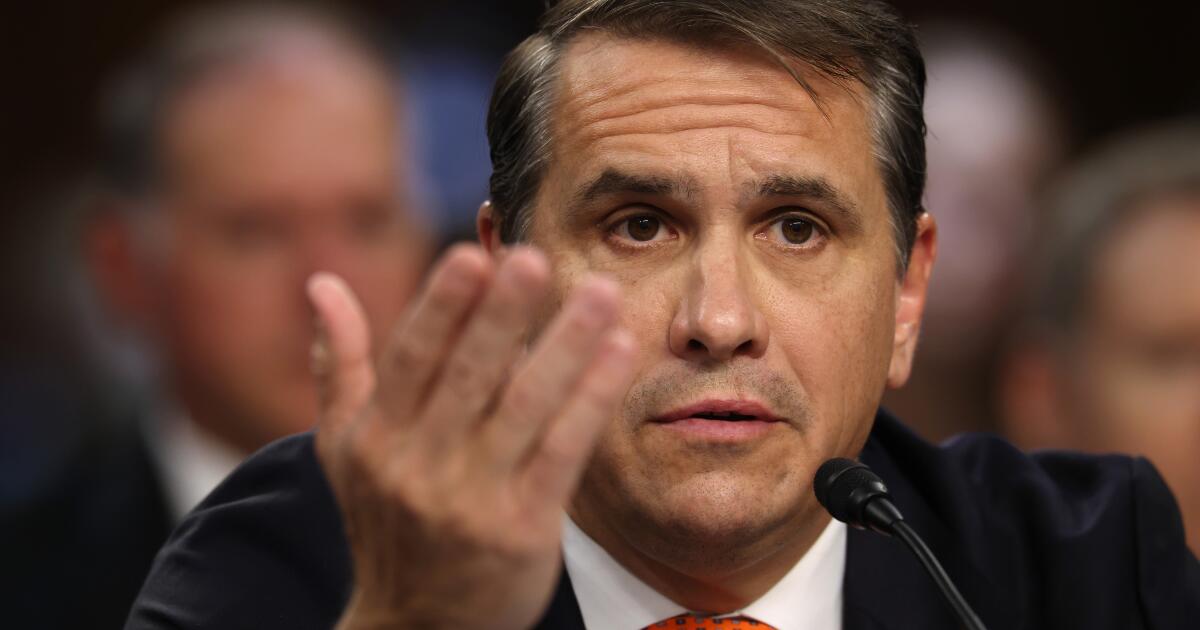
Blanche to face questions about his independence at attorney general confirmation hearing
-
 Sports35 minutes ago
How World Cup senior citizens like Lionel Messi have bio-hacked longer careers
-

 World47 minutes ago
Baltic presidents warn of Russian infrastructure attack plans
-
News1 hour ago
ICE should do traffic stops despite recent shootings, Trump says, seeming to oppose new suspension
-

 Los Angeles, Ca3 hours ago
Southern California hits hottest day of its extreme heat warning


