Science
What the rise of the caesarean section reveals about pregnancy and childbirth in the U.S.

Book Review
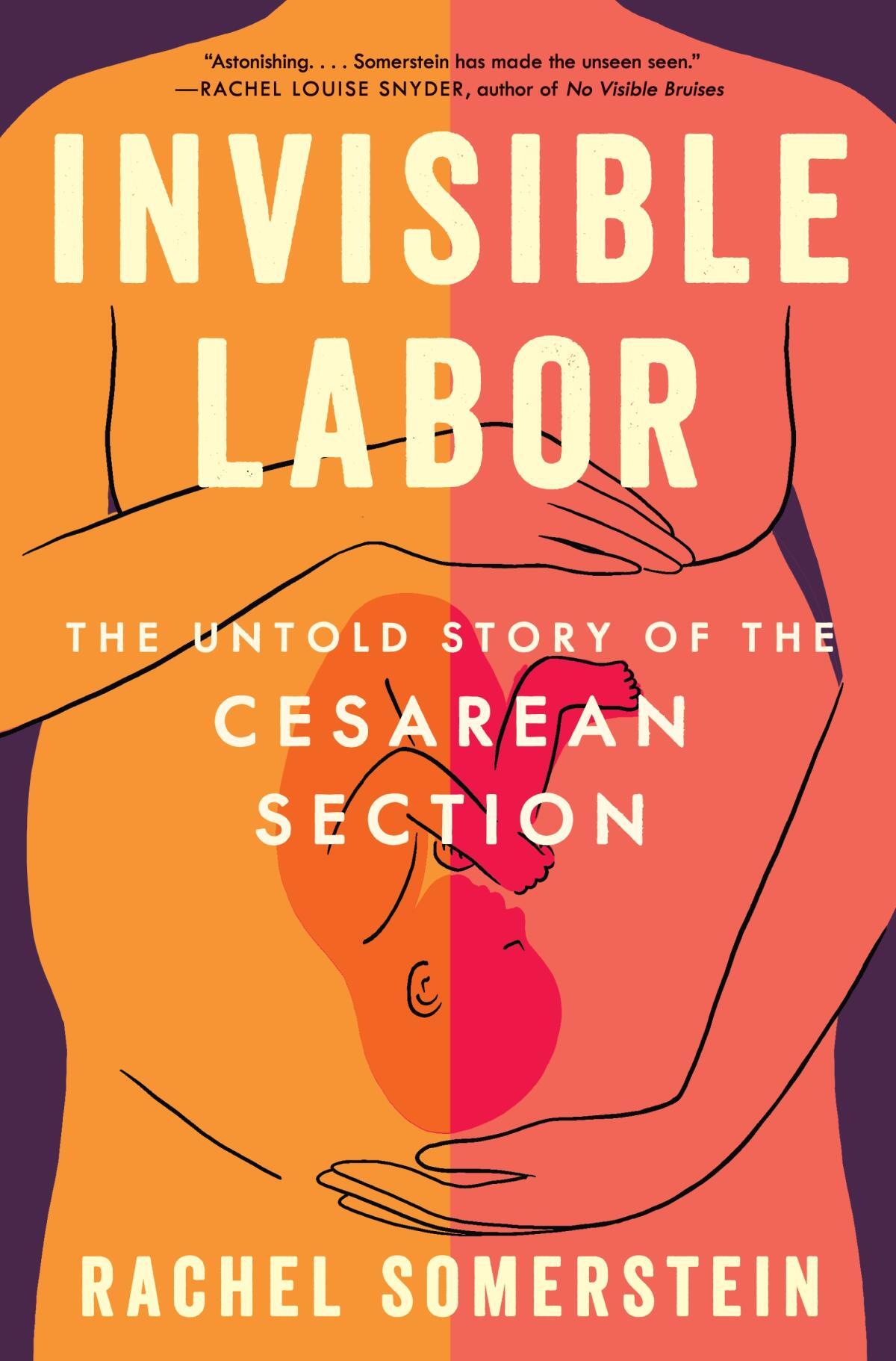
Invisible Labor: The Untold Story of the Cesarean Section
By Rachel Somerstein
Ecco: 336 pages, $32
If you buy books linked on our site, The Times may earn a commission from Bookshop.org, whose fees support independent bookstores.
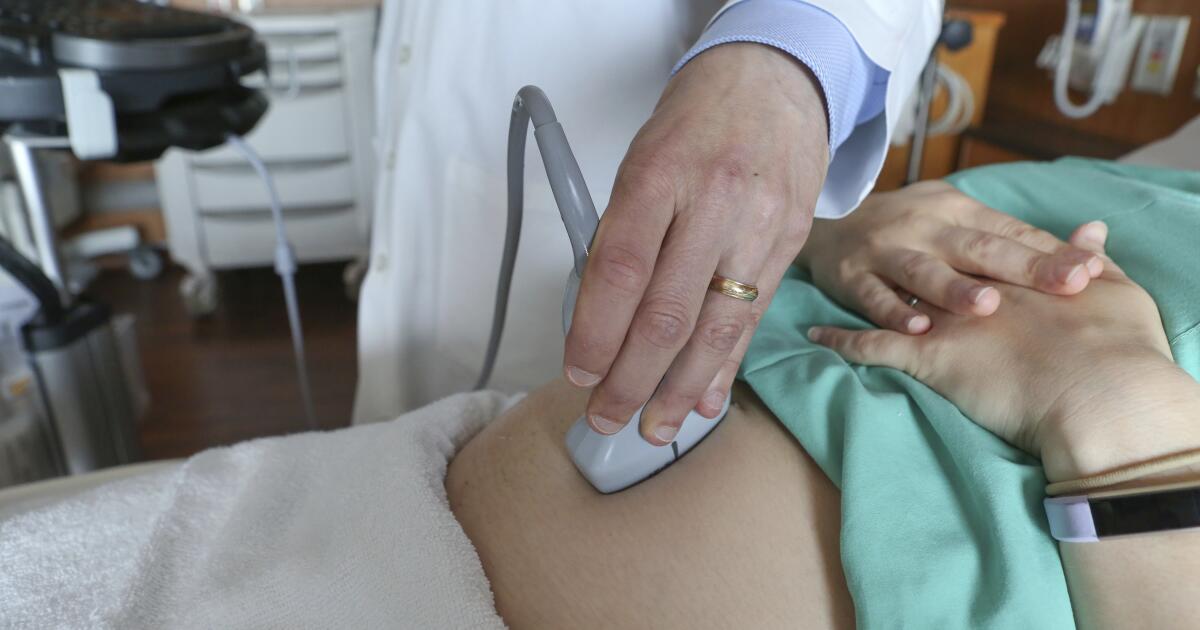
After Rachel Somerstein was rushed into an operating room for an unplanned caesarean section, her doctor made the first cut. “I felt that,” she told him. “You’ll feel pressure,” the doctor responded.
But, horrifyingly, Somerstein “felt it all: the separation of my rectus muscles; the scissors used to move my bladder; the scalpel, with which he ‘incised’ my uterus.” When her daughter was born, Somerstein was so traumatized that she couldn’t hold her baby. She screamed for her to be taken from the room.
Friends encouraged Somerstein to file a lawsuit; others balked, doubting that she could have undergone major abdominal surgery without anesthesia. The overarching message to mothers who experience traumatic delivery in this country is to get over it. “How long did it really take,” one attorney asked the author, “five minutes?”
It’s a common refrain: Just be happy you have a healthy baby. The dangerous and potentially unnecessary interventions of medicalized childbirth are never called into question when the pain and trauma of the person giving birth are invalidated. Somerstein quotes two scholars of healthcare and science: “Something is visible [only] when somebody recognizes it as relevant.”
Propelled by Somerstein’s own experience, “Invisible Labor” is a thorough investigation of birthing practices grounded in misogyny, racism and other forces contrary to the well-being of mothers.
Somerstein illuminates the capitalistic drive to rush birth in American hospitals facing infrastructural and staffing deficiencies: “Compared with vaginal births, C-sections are more efficient. Particularly if they are scheduled, a hospital can do far more of them … in a day.”
The medicalization of childbirth, including the C-section, undoubtedly saves lives. But the dehumanization of those giving birth, and the erasure of their well-being and experience, hurts everyone. As “Invisible Labor” shows, the lack of attention and communication in the hospital setting can be fatal.
Somerstein delves into the history of the C-section, which was devised to help save both mother and child. It was quickly adapted by enslavers, however, in “a push to bring about more slaves. In the U.S., most early caesareans took place in the South, and they still do today; a disproportionate number of Black and enslaved women made up the subjects.”
The history of birthing in the U.S. becomes a means of grappling with the history of slavery, racism and eugenics. Once the C-section was in practice, doctors realized that they could also sterilize women of color and those deemed disabled without their consent. “ ‘Acabó la canción,’ said one woman sterilized at L.A. County Hospital in the 1970s. My song has ended.”
Rachel Somerstein
(Joe Lingeman)
Relying on essential feminist texts such as Adrienne Rich’s “Of Woman Born: Motherhood as Experience and Institution,” Somerstein amplifies the role of the midwife — and her removal from the delivery room, taking away a library’s worth of knowledge about birth and birthing people and placing them in largely inexperienced, male hands.
“Just as land gets colonized, so does knowledge,” Barbara Katz Rothman, a sociologist, told Somerstein. “By laying claim to birth, medicine established boundaries over who has authority to attend it.”
Shockingly, Somerstein’s research shows that the electronic fetal monitoring technology used in hospitals, known as EFM, is “notoriously unreliable.” Often, it reports a falling fetal heart rate or stalled labor when the baby and mother are perfectly healthy. But it allows doctors and nurses to tend to many patients, running from room to room and leaving patients alone. Doctors and nurses are trained in the technology instead of the skills of midwives, who know what to look for from extensive experience.
“When used on mothers who have not previously had a caesarean,” Somerstein writes, “EFM, according to one study, makes a person up to 81 percent more likely to have a C-section than mothers monitored intermittently.”
The C-section rate has grown and grown — to about 1 in 3 U.S. births — and “a C-section mom is about 80 percent more likely to have a serious complication, like needing a blood transfusion or an emergency hysterectomy.” Women of color and particularly Black women are more likely to have caesareans.
Speaking to Rei Shimizu, a social work researcher, Somerstein relates: “There’s an assumption in the health system … that nonwhite female bodies cannot give birth safely without intervention.”
“Obstetric racism is about white doctors being racist, but it’s also about doctors, white, Black, whatever, that when you’re expressing your concerns, they just don’t listen,” said Nicole Carr, a professor who spoke to Somerstein about losing her baby after her concerns about her pregnancy were ignored. “It’s a system that makes it so that when you go in and talk about your concerns, it’s almost like you’re not an expert in your own body.”
“Invisible Labor” does not claim that doctors or even medicalized childbirth is the problem. Rather, it’s a system that decenters our humanity and relies on technology and statistics.
“We believe this visual omniscience will fix the problem,” Somerstein writes. “And we discard or forget that events take place outside the frame, including what subjective, embodied knowledge can reveal.”
Women who experience traumatic childbirth are far more likely to suffer from postpartum depression, anxiety or both. Perhaps “attending to women’s pain could be rectified by the simple but radical decision to ask women how they feel and listen to the answer,” Somerstein writes. Instead of telling her “You’ll feel pressure” when he made the incision, her doctor could have asked, “Do you feel pressure?” or, even better, “Do you feel pain?”
Then again, what do we expect in a country whose Supreme Court struck down women’s bodily autonomy? As it stands now, an unborn fetus has more rights than a woman or girl in many states. To create a better system of childbirth for mothers, we have to believe that the rights and indeed the lives of pregnant people matter.
“Invisible Labor” clearly and compassionately blends scientific research and reportage with the personal stories of Somerstein and other women. Childbirth is painful, but with the right care, it can also ground us in our humanity.
Some of the most moving accounts of birth in “Invisible Labor” come from women who had the support of a doula or midwife. When Somerstein writes that “every woman deserves the touch of a midwife,” she is communicating that every person deserves someone who will listen to and validate their experience. This should be the first standard of care.
Jessica Ferri is the owner of Womb House Books and the author, most recently, of “Silent Cities San Francisco.”





Science
After rash of overdose deaths, L.A. banned sales of kratom. Some say they lost lifeline for pain and opioid withdrawal

Nearly four months ago, Los Angeles County banned the sale of kratom, as well as 7-OH, the synthetic version of the alkaloid that is its active ingredient. The idea was to put an end to what at the time seemed like a rash of overdose deaths related to the drug.
It’s too soon to tell whether kratom-related deaths have dissipated as a result — or, really, whether there was ever actually an epidemic to begin with. But many L.A. residents had become reliant on kratom as something of a panacea for debilitating pain and opioid withdrawal symptoms, and the new rules have made it harder for them to find what they say has been a lifesaving drug.
Robert Wallace started using kratom a few years ago for his knees. For decades he had been in pain, which he says stems from his days as a physical education teacher for the Glendale Unified School District between 1989 and 1998, when he and his students primarily exercised on asphalt.
In 2004, he had arthroscopic surgery on his right knee, followed by varicose vein surgery on both legs. Over the next couple of decades, he saw pain-management specialists regularly. But the primary outcome was a growing dependence on opioid-based painkillers. “I found myself seeking doctors who would prescribe it,” he said.
He leaned on opioids when he could get them and alcohol when he couldn’t, resulting in a strain on his marriage.
When Wallace was scheduled for his first knee replacement in 2021 (he had his other knee replaced a few years later), his brother recommended he take kratom for the post-surgery pain.
It seemed to work: Wallace said he takes a quarter of a teaspoon of powdered kratom twice a day, and it lets him take charge of managing his pain without prescription painkillers and eases harsh opiate-withdrawal symptoms.
He’s one of many Angelenos frustrated by recent efforts by the county health department to limit access to the drug. “Kratom has impacted my life in only positive ways,” Wallace told The Times.
For now, Wallace is still able to get his kratom powder, called Red Bali, by ordering from a company in Florida.
However, advocates say that the county crackdown on kratom could significantly affect the ability of many Angelenos to access what they say is an affordable, safer alternative to prescription painkillers.
Kratom comes from the leaves of a tree native to Southeast Asia called Mitragyna speciosa. It has been used for hundreds of years to treat chronic pain, coughing and diarrhea as well as to boost energy — in low doses, kratom appears to act as a stimulant, though in higher doses, it can have effects more like opioids.
Though advocates note that kratom has been used in the U.S. for more than 50 years for all sorts of health applications, there is limited research that suggests kratom could have therapeutic value, and there is no scientific consensus.
Then there’s 7-OH, or 7-Hydroxymitragynine, a synthetic alkaloid derived from kratom that has similar effects and has been on the U.S. market for only about three years. However, because of its ability to bind to opioid receptors in the body, it has a higher potential for abuse than kratom.
Public health officials and advocates are divided on kratom. Some say it should be heavily regulated — and 7-OH banned altogether — while others say both should be accessible, as long as there are age limitations and proper labeling, such as with alcohol or cannabis.
In the U.S., kratom and 7-OH can be found in all sorts of forms, including powder, capsules and liquids — though it depends on exactly where you are in the country. Though the Food and Drug Administration has recommended that 7-OH be included as a Schedule 1 controlled substance under the Controlled Substances Act, that hasn’t been made official. And the plant itself remains unscheduled on the federal level.
That has left states, counties and cities to decide how to regulate the substances.
California failed to approve an Assembly bill in 2024 that would have required kratom products to be registered with the state, have labeling and warnings, and be prohibited from being sold to anyone younger than 21.
It would also have banned products containing synthetic versions of kratom alkaloids. The state Legislature is now considering another bill that basically does the same without banning 7-OH — while also limiting the amount of synthetic alkaloids in kratom and 7-OH products sold in the state.
“Until kratom and its pharmacologically active key ingredients mitragynine and 7-OH are approved for use, they will remain classified as adulterants in drugs, dietary supplements and foods,” a California Department of Public Health spokesperson previously told The Times.
On Tuesday, California Gov. Gavin Newsom announced that the state’s efforts to crack down on kratom products has resulted in the removal of more than 3,300 kratom and 7-OH products from retail stores. According to a news release from the governor’s office, there has been a 95% compliance rate from businesses in removing the products.
(Los Angeles Times photo illustration; source photos by Getty Images)
Newsom has equated these actions to the state’s efforts in 2024 to quash the sale of hemp products containing cannabinoids such as THC. Under emergency state regulations two years ago, California banned these specific hemp products and agents with the state Department of Alcoholic Beverage Control seized thousands of products statewide.
Since the beginning of 2026, there have been no reported violations of the ban on sales of such products.
“We’ve shown with illegal hemp products that when the state sets clear expectations and partners with businesses, compliance follows,” Newsom said in a statement. “This effort builds on that model — education first, enforcement where necessary — to protect Californians.”
Despite the state’s actions, the Los Angeles County Board of Supervisors is still considering whether to regulate kratom, or ban it altogether.
The county Public Health Department’s decision to ban the sale of kratom didn’t come out of nowhere. As Maral Farsi, deputy director of the California Department of Public Health, noted during a Feb. 18 state Senate hearing, the agency “identified 362 kratom-related overdose deaths in California between 2019 and 2023, with a steady increase from 38 in 2019 up to 92 in 2023.”
However, some experts say those numbers aren’t as clear-cut as they seem.
For example, a Los Angeles Times investigation found that in a number of recent L.A. County deaths that were initially thought to be caused by kratom or 7-OH, there wasn’t enough evidence to say those drugs alone caused the deaths; it might be the case that the danger is in mixing them with other substances.
Meanwhile, the actual application of this new policy seems to be piecemeal at best.
The county Public Health Department told The Times it conducted 2,696 kratom-related inspections between Nov. 10 and Jan. 27, and found 352 locations selling kratom products. The health department said the majority stopped selling kratom after those inspections; there were nine locations that ignored the warnings, and in those cases, inspectors impounded their kratom products.
But the reality is that people who need kratom will buy it on the black market, drive far enough so they get to where it’s sold legally or, like Wallace, order it online from a different state.
For now, retailers who sell kratom products are simply carrying on until they’re investigated by county health inspectors.
Ari Agalopol, a decorated pianist and piano teacher, saw her performances and classes abruptly come to a halt in 2012 after a car accident resulted in severe spinal and knee injuries.
“I tried my best to do traditional acupuncture, physical therapy and hydrocortisone shots in my spine and everything,” she said. “Finally, after nothing was working, I relegated myself to being a pain-management patient.”
She was prescribed oxycodone, and while on the medication, battled depression, anhedonia and suicidal ideation. She felt as though she were in a fog when taking oxycodone, and when it ran out, ”the pain would rear its ugly head.” Agalopol struggled to get out of bed daily and could manage teaching only five students a week.
Then, looking for alternatives to opioids, she found a Reddit thread in which people were talking up the benefits of kratom.
“I was kind of hesitant at first because there’re so many horror stories about 7-OH, but then I researched and I realized that the natural plant is not the same as 7-OH,” she said.
She went to a local shop, Authentic Kratom in Woodland Hills, and spoke to a sales associate who helped her decide which of the 47 strains of kratom it sold would best suit her needs.
Agalopol currently takes a 75-milligram dose of mitragynine, the primary alkaloid in kratom, when necessary. It has enabled her to get back to where she was before her injury: teaching 40 students a week and performing every weekend.
Agalopol believes the county hasn’t done its homework on kratom. “They’re just taking these actions because of public pressure, and public pressure is happening because of ignorance,” she said.
During the course of reporting this story, Authentic Kratom has shut down its three locations; it’s unclear if the closures are temporary. The owner of the business declined to comment on the matter.
When she heard the news of the recent closures, Agalopol was seething. She told The Times she has enough capsules of kratom for now, but when she runs out, her option will have to be Tylenol and ibuprofen, “which will slowly kill my liver.”
“Prohibition is not a public health strategy,” said Jackie Subeck, executive director of 7-Hope Alliance, a nonprofit that promotes safe and responsible access to 7-OH for consumers, at the Feb. 18 Senate hearing. “[It’s] only going to make things worse, likely resulting in an entirely new health crisis for Californians.”
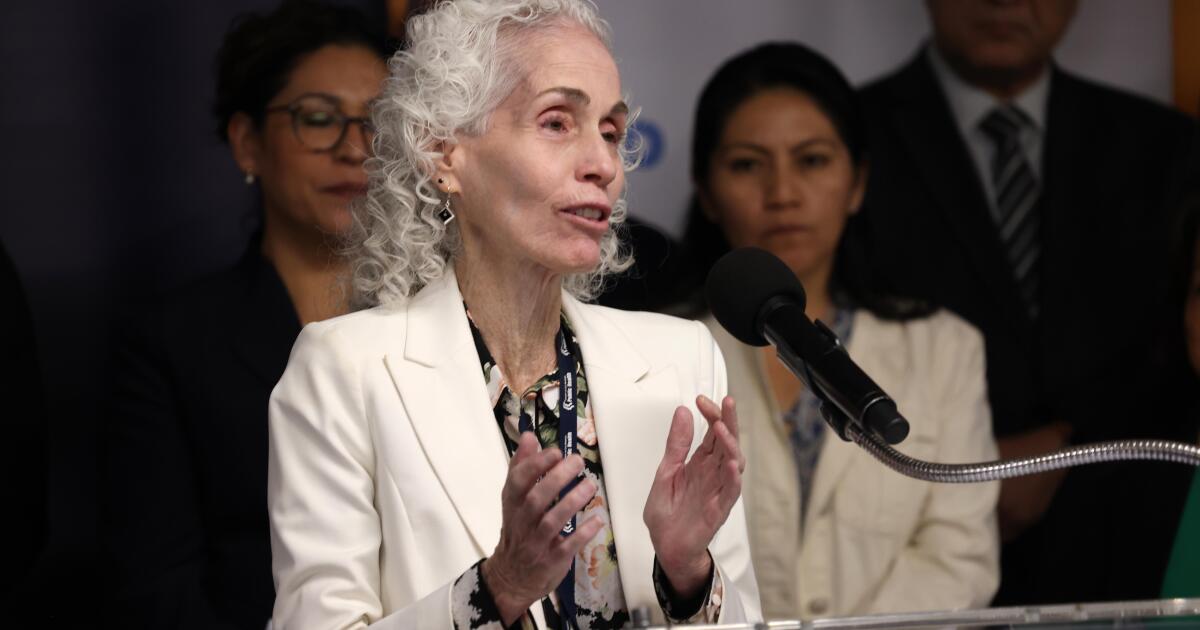
Because of budget cuts, the Los Angeles County Department of Public Health has ended clinical services at seven of its public health clinic sites.
As of Feb. 27, the county is no longer providing services such as vaccinations, sexually transmitted infection testing and treatment, or tuberculosis diagnosis and specialty TB care at the affected locations, according to county officials and a department fact sheet.
The sites losing clinical services are Antelope Valley in Lancaster; the Center for Community Health (Leavy) in San Pedro, Curtis R. Tucker in Inglewood, Hollywood-Wilshire, Pomona, Dr. Ruth Temple in South Los Angeles, and Torrance. Services will continue to be provided by the six remaining public health clinics, and through nearby community clinics.
The changes are the result of about $50 million in funding losses, according to official county statements.
“That pushed us to make the very difficult decision to end clinical services at seven of our sites,” said Dr. Anish Mahajan, chief deputy director of the L.A. County Department of Public Health.
Mahajan said the department selected clinics with relatively lower patient volumes. Over the last month, he said, the department has sent letters to patients about the changes, and referred them to unaffected county clinics, nearby federally qualified health centers or other community providers. According to Mahajan, for tuberculosis patients, particularly those requiring directly observed therapy, public health nurses will continue visiting patients.
Public health clinics form part of the county’s healthcare safety net, serving low-income residents and those with limited access to care. Officials said that about half of the patients the county currently sees across its clinics are uninsured.
Mahajan noted that the clinics were established decades ago, before the Affordable Care Act expanded Medi-Cal coverage and increased the number of federally qualified health centers. He said that as more residents gained access to primary care, utilization at some county-run clinics declined.
“Now that we have a more sophisticated safety net, people often have another place to go for their full range of care,” he said.
Still, the closures have unsettled providers who work closely with local vulnerable populations.
“I hate to see any services that serve our at-risk and homeless community shut down,” said Mark Hood, chief executive of Union Rescue Mission in downtown Los Angeles. “There’s so much need out there, so it always is going to create hardship for the people that actually need the help the most.”
Union Rescue Mission does not receive government funding for its healthcare services, Hood said. The mission’s clinics are open not only to shelter guests, up to 1,000 people nightly, but also to people living on the streets who walk in seeking care.
Its dental clinic alone sees nearly 9,000 patients a year, Hood said.
“We haven’t seen it yet, but I expect in the coming days and weeks we’ll see more people coming through our doors looking for help,” he said. “They’re going to have to find help somewhere.” Hood said women experiencing homelessness are especially vulnerable when preventive care, including sexual and reproductive health services, becomes harder to access.
County officials said staffing impacts so far have been managed through reassignment rather than layoffs. Roughly 200 to 300 positions across the department have been eliminated amid funding cuts, officials said, though many were vacant. About 120 employees whose positions were affected have been reassigned; according to Mahajan, no one has been laid off.
The clinic closures come amid broader fiscal uncertainty. Mahajan said that due to the Trump administration’s “Big Beautiful Bill,” Los Angeles County could lose $2.4 billion over the next several years. That funding, he said, supports clinics, hospitals and community clinic partners now absorbing patients who previously went to the clinics that closed on Feb. 27.
In response, the L.A. County Board of Supervisors has backed a proposed half-cent sales tax measure that would generate hundreds of millions of dollars annually for healthcare and public health services. Voters are expected to consider the measure in June.

Sharon Horton stepped through the door of a sky-blue mobile clinic and onto a Skid Row sidewalk. She wore a yellow knit beanie, gold hoop earrings and the relieved grin of a woman who has finally checked a mammogram off her to-do list.
It had been years since her last breast cancer screening procedure. This one, which took place in City of Hope’s Cancer Prevention and Screening mobile clinic, was faster and easier. The staff was kind. The machine that X-rayed her breast was more comfortable than the cold hard contraption she remembered.
Relatively speaking, of course — it was still a mammogram.
“It’s like, OK, let me go already!” Horton, 68, said with a laugh.
The clinic was parked on South San Pedro Street in front of Union Rescue Mission, the nonprofit shelter where Horton resides. Within a week, City of Hope, a cancer research hospital, would share the results with Horton and Dr. Mary Marfisee, the mission’s family medical services director. If the mammogram detected anything of concern, they’d map out a treatment plan from there.
Naureen Sayani, 47, a resident of Union Rescue Mission, left, discusses her medical history with Adriana Galindo, a medical assistant, before getting a mammogram on last week.
(Kayla Bartkowski / Los Angeles Times)
“It’s very important to take care of your health, and you need to get involved in everything that you can to make your life a better life,” said Horton, who is looking forward to a forthcoming move into Section 8 housing.
Horton was one of the first patients of a new women’s health initiative from UCLA’s Homeless Healthcare Collaborative at Union Rescue Mission. Staffed by third-year UCLA Medical School students and led by Marfisee, a UCLA assistant clinical professor of family medicine, the clinic treats mission residents as well as unhoused people living in the surrounding neighborhood.
The new cancer screening project arrives at a time of dire financial pressures on county public health services.
Citing rising costs and a $50-million reduction in federal, state and local grant and contract income, the Los Angeles County Department of Public Health on Feb. 27 ended services at seven of 13 public clinics that provide vaccines, tests and treatment for sexually transmitted diseases and other services to housed and unhoused county residents.
Although Union Rescue Mission’s own funding comes mainly from private sources and is less imperiled by public cuts, the 135-year-old shelter expects the need for its services to rise, Chief Executive Mark Hood said.
Even as unsheltered homelessness declined for the last two years across Los Angeles County, the unsheltered population on Skid Row — long seen as the epicenter of the region’s homelessness crisis — grew 9% in 2024, the most recent year for which census data are available.
For many local women navigating daily concerns over housing, food and personal safety, “their own health is not a priority,” Marfisee said.
Those whose problems have become too serious to ignore face daunting obstacles to care. Marfisee recalled one patient who came to her with a lump in her breast and no identification.
In order to get a mammogram, Marfisee explained, the woman first needed to obtain a birth certificate, and then a state-issued identification card. Then she needed to enroll in Medi-Cal. After that, clinic staff helped her find a primary care physician who could order the imaging test.
Given the barriers to preventative care, homeless women die from breast cancer at nearly twice the rate of securely housed women, a 2019 study found. Marfisee’s own survey of the mission’s female residents found that nearly 90% were not up to date on recommended cancer screenings like mammograms and pap smears, which detect early cervical cancer.
To address this gap, Marfisee — a dogged patient advocate — reached out to City of Hope. The Duarte-based research and treatment center unveiled in March 2024 its first mobile cancer screening clinic, a moving van-sized clinic on wheels that it deploys to food banks and health centers, as well as to companies offering free mammograms as an employee benefit.
“In true Dr. Mary fashion, she saw the vision,” said Jessica Thies, the mobile screening program’s regional nursing director. After working through some logistical hurdles, the mission and City of Hope secured a date for the van’s first visit.
The next challenge was getting the word out to patients. Marfisee and her students walked through the surrounding neighborhood, went cot to cot in the women’s dorm and held two informational sessions in December and January to answer patients’ questions.
At the sessions, the team walked through the basics of who should get a mammogram (women age 40 or older, those with a family history of breast cancer) and the procedure itself. (“Like a tortilla maker?” one woman asked skeptically after hearing a description of the mammography unit.)
The medical students were able to dispel rumors some women had heard: The test doesn’t damage breast tissue, nor do the X-rays increase cancer risk. Others questioned a mammogram’s value: What good was it knowing they had cancer if they couldn’t get follow-up care?
On this latter point, Marfisee is determined not to let patients fall through the cracks.
Thirteen patients received mammograms at the van’s first visit on Wednesday. Within a week, City of Hope will contact patients with their results and send them to Marfisee and her team. She is already mentally mapping the next steps should any patient have a situation that requires a biopsy or further imaging: working with their case manager at the mission, calling in favors, wrangling with any insurance the patient might have.
“It’ll be a good fight,” Marfisee said, as residents in the adjacent cafeteria carried trays of sloppy joes and burgers to their lunch tables. “But we’ll just keep asking for help and get it done.”

Stephen A. Smith called Zion Williamson a ‘food addict,’ is now feuding with the Pelicans on social

Sánchez defies Trump in political gamble as Madrid say no to war

Satellite images show Iran school strike hit more buildings than earlier reported

Young mother swept away to her death while hiking in California, officials say

Gun rights expert says Minnesota Dems tried to block her testimony on firearm bills to ‘avoid’ policy debate

Florida High School Football Rankings: Top 25 teams – Oct. 21

Cleary's 21 help Le Moyne down Central Connecticut State 69-64 in OT

How old is Bo Nix? What to know about Oregon quarterback ahead of 2024 NFL Draft

99th annual Pony Swim held in Virginia

Indiana Members Credit Union announced as new anchor tenant at Bottleworks District
Sánchez defies Trump in political gamble as Madrid say no to war
Satellite images show Iran school strike hit more buildings than earlier reported

US submarine sinks Iranian warship by torpedo in a first since World War II

Which oil and gas facilities in the Gulf have been attacked?

Mojtaba Khamenei, son of former supreme leader, tipped to become Iran’s next head of state
-

 World7 days ago
Exclusive: DeepSeek withholds latest AI model from US chipmakers including Nvidia, sources say
-

 Massachusetts1 week ago
Mother and daughter injured in Taunton house explosion
-

 Wisconsin3 days ago
Setting sail on iceboats across a frozen lake in Wisconsin
-

 Denver, CO1 week ago
10 acres charred, 5 injured in Thornton grass fire, evacuation orders lifted
-

 Maryland4 days ago
AM showers Sunday in Maryland
-

 Louisiana1 week ago
Wildfire near Gum Swamp Road in Livingston Parish now under control; more than 200 acres burned
-

 Florida4 days ago
Florida man rescued after being stuck in shoulder-deep mud for days
-

 Oregon5 days ago
2026 OSAA Oregon Wrestling State Championship Results And Brackets – FloWrestling