Science
Senators Press Marty Makary on Abortion Pills and Vaccines


At a confirmation hearing for Dr. Marty Makary on Thursday, senators focused heavily on the safety of the abortion pill, with Republican lawmakers urging him to restrict access and Democratic lawmakers demanding that he maintain its current availability.
Dr. Makary, President Trump’s nominee to lead the Food and Drug Administration, signaled that he shared Republicans’ concerns about the current policy, issued during the Biden administration, which expanded access by allowing people to obtain the pills without an in-person medical appointment.
Several Democrats pointed to volumes of studies showing that the drugs are safe. Dr. Makary told members of the Senate health committee, which held the hearing, that he would review the pill’s safety and the policy at issue.
He said he would “take a solid, hard look at the data and to meet with the professional career scientists who have reviewed the data at the F.D.A. and to build an expert coalition to review the ongoing data, which is required to be collected.”
The hearing also touched on vaccines, with several lawmakers, including the committee chairman, Senator Bill Cassidy, Republican of Louisiana, questioning why an advisory committee meeting on next year’s flu vaccine had been canceled in recent weeks and asking whether it would be held later. He and others stressed that the flu panel met annually, and some reminded Dr. Makary that Robert F. Kennedy Jr., who oversees the F.D.A. as health secretary, had pledged transparency in agency decision-making.
Senator Patty Murray, Democrat of Washington, called the cancellation “unprecedented and dangerous” after decades of annual meetings.
Dr. Makary repeatedly reminded senators that he was not responsible for scrapping the meeting. He also suggested there was a need for a broader review of the role of vaccine committees that convene experts to advise the F.D.A. He shot back at criticism, saying there is a “huge difference” between “requiring every 12-year-old girl to get an eighth Covid booster” and “rubber stamping” the vaccine chosen by a global health panel that had targeted dominant influenza strains.
He offered no details about any school or entity that requires children to have annual Covid boosters.
He also was questioned about the measles vaccine in light of the current outbreak in Texas, where one child has died and 22 people were hospitalized.
“Vaccines save lives,” Dr. Makary said. “I do believe that any child who dies of a vaccine-preventable illness is a tragedy in the modern era.”
But he did not take the bait lobbed by Senator John Hickenlooper, Democrat of Colorado, who criticized Mr. Kennedy’s endorsement of vitamin A and cod liver oil as remedies for measles. Dr. Makary responded by saying that supplements can improve conditions like malnutrition, which is associated with poor outcomes in measles outbreaks.
Lawmakers also warned about staff cuts and hiring freezes the Trump administration has ordered and how they could affect workers who inspect the safety of the food supply, and urged Dr. Makary to review the layoffs among those staff members whose salaries are backed by industry fees.
They also touched on work related to chemicals like dyes in the food supply, an area Dr. Makary agreed to study, invoking European products with fewer additives as an area for review.
Among other issues raised during the hearing, the vexing problem of illegal vape products from China with unknown ingredients was stressed by Senator Ashley Moody, Republican of Florida.
The vapes tend to have high levels of nicotine, advertise thousands of puffs and come in flavors like strawberry lemonade that are appealing to adolescents.
Ms. Moody said it was concerning that the products were banned within China.
“Whoever comes in as the head of F.D.A., this is one of your problems you have to address immediately,” said Ms. Moody, who was previously Florida’s attorney general.
Blocking the flow of the unauthorized vapes has been a priority for major tobacco companies that have followed F.D.A. rules and marketed vapes in tobacco or menthol flavors in the United States. It’s a priority public health groups also share. Dr. Makary said he would address the problem with the F.D.A.’s law enforcement division and the Justice Department.
Throughout the hearing, several senators returned to the abortion pill and the F.D.A.’s oversight of policy changes during the lengthy history of medication abortion over more than two decades.
Mifepristone — part of the standard two-drug medication regimen now used in nearly two-thirds of abortions — has become a focal point of anti-abortion efforts since the Supreme Court overturned the national right to abortion in 2022.
In a lawsuit filed against the F.D.A. and other efforts, abortion opponents have demanded that the agency either withdraw approval for mifepristone or roll back regulations to prevent abortion pills from being prescribed by telemedicine and mailed to patients.
The Biden administration waived the in-person dispensing requirement in 2021. Senator Maggie Hassan, Democrat of New Hampshire, said that she was concerned that Dr. Makary would “unilaterally overrule the data that currently exists for political purposes and for political reasons.”
Dr. Makary repeated that he had no preconceived notions and would examine the data. “I wish you were hedging a little bit less today,” Ms. Hassan shot back.
Mifepristone, which blocks progesterone, a hormone necessary for pregnancy to develop, has long been regulated by the F.D.A. under an especially strict program that applies to only a small number of drugs.
For years after its approval in 2000, mifepristone could be prescribed only by a doctor and patients were required to attend three in-person doctor visits to obtain and take the medication. In 2016 and 2021, based on updated scientific evidence, the agency made several changes, including that nurse practitioners and some other health care providers could prescribe mifepristone and that patients did not have to pick up the medication in person.
Senator Josh Hawley, Republican of Missouri, argued that the policy change to drop the requirement for in-person appointments was made in anticipation of the Supreme Court decision that overturned Roe v. Wade.
Reproductive health experts and organizations, however, had long argued that the requirement was unnecessary for safety and noted that the F.D.A. had already allowed women to take the medication at home without being supervised by a doctor. The Covid pandemic increased the importance of allowing people to obtain the pill by mail because many patients were not able to visit clinics or abortion providers.
Pressed further by Mr. Hawley, Dr. Makary signaled that he shared the concerns of some abortion opponents and said that he knew doctors who preferred to give the drug in their office: “I think their concern there is that if this drug is in the wrong hands, it could be used for coercion,” he said.
Mr. Cassidy closed the hearing with a direct request: to change the policy back to what it was in the first Trump administration and require an in-person visit.
The F.D.A. has a staff of about 18,000 and a budget of about $7.2 billion. The agency has vast regulatory authority over products that include prescription and over-the-counter drugs, medical devices, tobacco and about 80 percent of the food supply. It also regulates artificial intelligence software used to scan medical images, an area where the agency has been dismissed as too permissive in its approvals.
If confirmed, Dr. Makary would first encounter tensions among staff members, who have been whipsawed by the Trump administration’s aggressive measures to reshape the federal bureaucracy in recent weeks.
The staff endured an initial round of about 700 layoffs, decimating some product-review teams that ensure the safety of medical devices such as surgical robots and systems that deliver insulin to people with diabetes. Those firings were followed by some job reinstatements, though many of those in the tobacco division who review the safety of new products and lost their positions, were not called back.
Asked about the layoffs, Dr. Makary said he supported efforts to increase efficiency and that he would review recent personnel decisions.
Pam Belluck contributed reporting.



Confirmation hearings began Wednesday for Dr. Erica Schwartz, President Trump’s pick to head the U.S. Centers for Disease Control and Prevention.
In a typical administration, it would not be headline news that a potential CDC director supports vaccination and other basic public health measures.
But the second Trump administration is anything but typical, and Schwartz’s nomination is for many public health proponents a pleasant surprise.
She served as deputy surgeon general in Trump’s first administration and holds degrees in medicine, law and public health. Schwartz is a board-certified preventive medicine physician with a long track record of relevant professional experience and government service, primarily with the U.S. military. She’s familiar with the agency she’s been chosen to lead. Public health experts praised her appointment.
She appeared this week before the Senate Committee on Health, Education, Labor and Pensions, which will decide whether her nomination advances to a full Senate vote.
Among former CDC staff and advisors, there is tentative hope that Schwartz’s nomination could mark the start of a more sober-minded era at the embattled agency — provided that she is actually given the authority to do the job.
Schwartz “has the expertise, credibility and integrity to lead the CDC effectively. If allowed to follow the science without political interference, she’ll excel,” Dr. Jerome Adams posted after her nomination was announced back in April.
Adams, who selected Schwartz as his deputy while serving as Trump’s first surgeon general, clarified: “Cautiously optimistic but encouraged by this pick.”
“As CDC director, my sacred responsibility is to provide the American people with public health guidance that is clear, honest and evidence based. I will never betray the science,” Schwartz said in her opening remarks at the hearing.
After receiving her undergraduate and medical degrees at Brown University, Schwartz served as a physician in the U.S. Navy. In 2005 she joined the U.S. Public Health Service Commissioned Corps, a uniformed service that acts as the medical corps of the U.S. Coast Guard.
In that capacity, she was the U.S. Coast Guard’s head of preventive medicine and later its chief medical officer. She wrote the branch’s policies on smallpox and anthrax vaccination, communicable disease quarantines, HIV and influenza pandemics. She retired in 2021 as a rear admiral.
“While I think you are immensely qualified, I am very, very concerned that even qualified people have either had to change their positions or quit,” Democratic Sen. Lisa Blunt Rochester of Delaware told Schwartz during the hearing.
Dr. Daniel Jernigan, former director of the CDC’s National Center for Emerging and Zoonotic Infectious Diseases, worked with Schwartz during the early stages of the federal COVID-19 response. Jernigan recalled her as “deeply engaged” in expanding access to testing.
His concerns about the nomination were not about Schwartz’s qualifications, but about the climate of the agency she may be taking over.
“I deeply respect her training and experience. I hope she is given some independence from the secretary to return CDC to evidence-based decision making and support for vaccines,” Jernigan said. “Without that independence, she will need to determine what lines she is not willing to cross, similar to those of us in leadership who are no longer there.”
Jernigan was one of several CDC officials who resigned in August after Robert F. Kennedy Jr., secretary of Health and Human Services, fired Susan Monarez, the agency’s last confirmed director.
Monarez later told a Senate committee that Kennedy fired her in part because she refused to sign off on his planned alterations to the nation’s vaccine schedule without being allowed to see the scientific evidence justifying the changes.
When asked in April if he would commit to implementing whatever vaccine guidance Schwartz issued, Kennedy declined.
“I’m not going to make that kind of commitment,” he told Rep. Raul Ruiz while testifying before the House Energy and Commerce Committee.
If confirmed, Schwartz will take over an agency that has lost hundreds of employees to layoffs and resignations since January 2025 and endured what many former staffers see as an intentional effort by the administration to undermine its science.
Health and Human Services Deputy Secretary Jim O’Neill stepped in as acting CDC director in August after Monarez’s departure. During O’Neill’s time at the helm, Kennedy slashed the number of diseases covered in the pediatric immunization schedule, altered the CDC website to include inaccurate information and packed a key CDC advisory committee with vaccine skeptics.
O’Neill left his position in February, at which point National Institutes of Health chief Jay Bhattacharya stepped in as acting director.
Back in April, word of Schwartz’s nomination irked some vaccine skeptics who were rising to prominence under Kennedy. Aaron Siri, a leading antivaccine lawyer who has previously worked as Kennedy’s personal attorney, took to X to voice his disapproval.
“Trump’s pick to head the CDC, Erica Schwartz, would likely be a disaster,” posted Siri, who in December urged the Advisory Committee on Immunization Practices to “end mandates” in a presentation one committee member called “a terrible, terrible distortion of all the facts.”
“Schwartz led nationwide Covid-19 vaccine deployment and her long track record of directly issuing rights-crushing civilian and military vaccine mandates, including mandating injection of smallpox, anthrax, and flu vaccines into U.S. Forces, and discipling [sic] those that refused, reflects she lacks the basic ethics and morals to lead the CDC,” Siri wrote.
While vaccine skepticism has reached the highest levels of the U.S. health system under Kennedy, it remains a minority viewpoint among the public. In a Pew Research Center poll released in November, 84% of Americans said they agreed strongly or somewhat with the statement that childhood vaccines are highly effective at preventing illness, and another 21% said they somewhat agreed.
Public health experts said they were hopeful that Schwartz’s nomination is a sign that the administration is beginning to back away from an unpopular stance that may cost votes — not to mention lives.
“I have never met Dr. Schwartz and all I know about her is what I’ve read. But I’m thrilled that she is a nominee for CDC director,” said Dr. Paul Offit, director of the Vaccine Education Center at Children’s Hospital of Philadelphia and a former ACIP member in the early 2000s. “Clearly, the Trump administration does not like what is happening under the leadership of RFK Jr. and is looking to distance itself from his anti-vaccine rhetoric.”
Science
Commentary: The doctor who helped save her is in another state, and telemedicine follow-up is prohibited
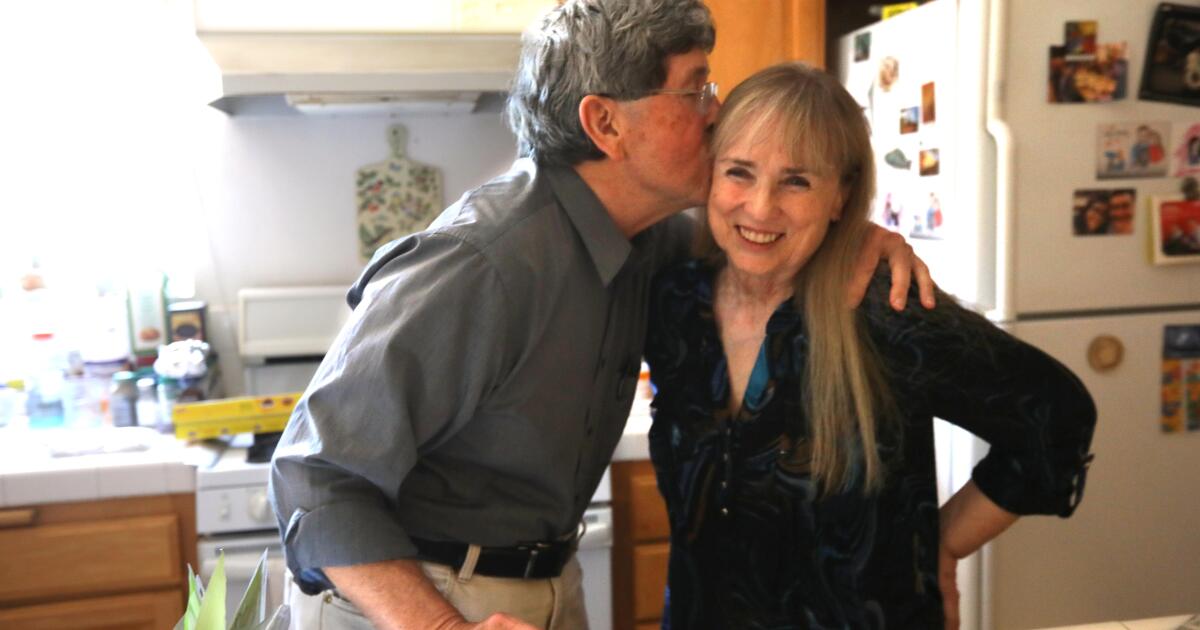
In her fight against an aggressive form of cancer, Santa Clarita Valley resident Robin Clough is winning, for now.
But in her fight for the right to have telemedicine followups with the out-of-state doctor who helped save her life, she is losing. And legislation that would have eased the way for her and other California patients who are in remission to get continued care across state lines just died in Sacramento.
Clough and her husband, Dr. Gene Dorio, a house-call geriatrician I’ve written about several times, were driving home from a medical appointment the other day when I reached them by phone. Clough, still doing well four years after a diagnosis of anaplastic thyroid cancer, said people can’t believe it when she tells them about the prohibition on communications with her doctor in Texas.
“They’re like, ‘That’s absurd,’” Clough said.
And the problem isn’t limited to California, which is one of about 30 states with tight restrictions on interstate telemedicine.
“There are tens if not hundreds of thousands of cases,” said Dr. Helen Hughes, a Johns Hopkins pediatrician and leading advocate for reforms that would remove barriers between patients and the care they need.
Huges said that during the COVID-19 pandemic, telemedicine flourished by necessity. That included cases in which a patient in one state was being treated by a doctor in another state. But there’s been a gradual return to prohibiting doctors from providing care to patients in states where they are not licensed to practice.
Patients with cancer and various chronic diseases are affected. But so are students who attend college out of state and can’t check in with their doctors back home. And someone who participates in a clinical trial could run into interstate restrictions.
These conflicts will become more common, said Hughes, as medical technology evolves, with scattered locations providing specialty care for chronic, critical and rare conditions. There won’t be “experts on everything in every state,” said Hughes, so patients who are able will seek out the latest breakthroughs and best care.
Dr. Shannon MacDonald, a Massachusetts radiation oncologist and Harvard professor who treats rare pediatric malignancies, sees patients from across the country.
“I treat them with a type of radiation that’s not available in every state,” she told me.
In the past, MacDonald said, she continued to care for those patients, sometimes meeting with parents by video conference to review scans taken in their home state. That saved the families the time and money needed to travel back to Massachusetts with a sick child.
But hospital administrators have been pulling the plug on those types of arrangements.
“Giving medical advice to an out-of-state patient over the phone can put me at risk of losing my license, and, in states such as California and New Jersey, of criminal charges as well,” MacDonald wrote in a guest opinion piece for the Wall Street Journal.
This is the very problem Robin Clough has run into. She was diagnosed in 2022 with anaplastic thyroid cancer and underwent chemotherapy and radiation, but the cancer persisted. Her doctor at Cedars-Sinai knew an oncologist at the MD Anderson Cancer Center in Houston, a leader in treating anaplastic cancer. Clough traveled there for targeted immunotherapy treatment, and about a month later, the cancer was in check.
“I was supposed to be gone, but I’m not,” Clough told me two years ago in the kitchen of her home. “So every day is ‘Wow,’ you know? I get to see my daughters, and in the process of this I had my first grandchild.”
Clough had several telemedicine followups with her Houston doctor, which was legal under California law that allows interstate telemedicine for patients with life-threatening conditions. But the law does not apply to patients in remission, and so Clough is forced to travel to Texas for continued care.
Clough and Dorio are members of California’s advisory senior legislature, and they proposed a bill to allow patients in remission to continue interstate care. It led to S.B. 1002, introduced in February by Sen. Roger Niello (R-Sacramento).
“Some of us are in remission or with no evidence of disease,” Clough testified at a hearing on the bill. “That does not mean we are cured. We are still in jeopardy of recurrence and require careful continuity of care monitoring by our out-of-state specialist.”
But at that same hearing, representatives of the Medical Board of California and the California Medical Assn. pushed back. They argued that out-of-state doctors are not licensed to practice in California and might be unfamiliar with state laws and standards of care, putting patients at risk and making oversight and disciplinary action difficult.
The bill passed in the Senate but failed in the Assembly, with support from only one Democrat. Assemblyman Marc Berman (D-Menlo Park), who heads the committee where the bill died, voted against the remission amendment and said there are “multiple ways out-of-state doctors can continue to provide care to state residents.”
A doctor can get a license in California, the patient can travel to where the doctor is licensed, or the doctor can consult with the patient’s in-state doctor. Otherwise, Berman said, if an out-of-state doctor commits “malpractice or negligence, there’s no recourse for the California patient.”
Berman told me he’s sympathetic to the plight of Clough and others, and he’s open to further discussion. But under current law, he said, an out-of-state doctor can have a video conference with a patient and that patient’s in-state doctor, and he supports that practice.
When I put that to MacDonald, she said, “I’m in clinic today, and I have 35 patients.” Imagine the complication, she said, of coordinating a video conference with an equally busy doctor in another state. As for getting licensed in other states, MacDonald said it would involve hours of paper work and cost about $90,000 to get a license in every state, with periodic renewals required.
Niello told me he got involved when he heard about Clough’s case. He said her Houston treatment center is a premier facility, and “for California to opine that it’s not good enough for us” is a strange concept. He said he thinks it’s “actually kind of cruel” to restrict communication between a patient and “the doctor who … guides” that patient to a “renewed life.”
The senator said that if he is re-elected in the fall, he’ll reintroduce the bill. Meanwhile, advocates are pursuing lawsuits on behalf of patients whose access to interstate care is restricted. And Johns Hopkins has launched a three-year program to research remedies, including waivers in the case of long-established doctor-patient relationships.
Dorio said there are thousands of cancer mutations for which there are thousands of therapies, and in the modern world of medical advances and telehealth capability, no one is served by restricting access to care. He and Clough have twice traveled to Houston for followups that could have been done by video conference, but not everyone can afford to do the same, he said.
Dorio and Clough are about to take their third trip to Texas, and his California driver’s license, he noted, is good in every state. So why do physicians, who all must meet uniform national standards of education and training to become doctors, have to get a license in every state?
“We’re going to look back one day,” Dorio said, “and see how ridiculous this is.”
steve.lopez@latimes.com
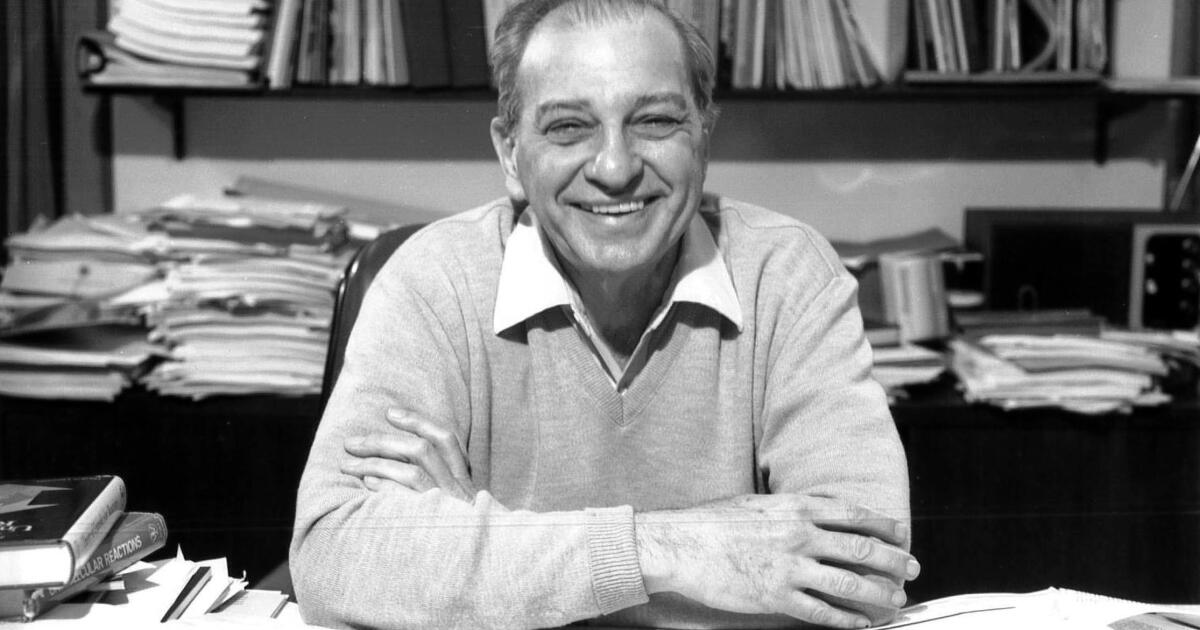
Rudolph Marcus was perplexed. It was 1955 and Marcus, a 31-year-old associate professor of chemistry still in the early stages of his career, had found an elementary mistake in the work of an esteemed scientist.
“Something doesn’t add up,” Marcus thought..
Marcus had discovered a calculation that violated the law of conservation of energy, a bedrock scientific principle, tucked inside a new theory on electron behavior. This frustrated Marcus because he otherwise liked the innovative theory that had been proposed by Willard Libby, a physicist who had helped develop the atom bomb.
Marcus set out to fix the problem, but ended up doing much more. Within a month, he had developed an elegant formula that would upend scientific understanding of how molecules use energy and eventually win him the Nobel Prize.
“When I got the result it was the most exciting moment that I’d ever had in science in my life,” he recalled in a Caltech oral history interview in 1993. “There was just such exhilaration. … It came out in such a simple form. It really was a thing of beauty — to me, anyway.”
Marcus, a Caltech professor for nearly half a century and a longtime Pasadena resident, died peacefully Thursday at home, Caltech and his family said. He was 102.
“Rudy Marcus’s career exemplified the beauty and reach of fundamental science, and he will be deeply missed,” said Caltech President Ray Jayawardhana. “He was a visionary scientist who transformed our understanding of chemical reactions at their most elementary level, [and] laid the conceptual foundations that continue to shape advances in clean energy, catalysis, electronics, and beyond.”
Marcus, who would have turned 103 on Tuesday, was at work on three separate research papers at the time of his death, his family said.
Marcus first published his conclusions on “electron transfer reactions” in 1956 and continued to refine them over the next nine years. His ideas were controversial until they were confirmed by experiments over three decades. In 1992, he was awarded the Nobel for chemistry.
The Marcus Theory, as it came to be known, provides a mathematical way to determine how fast or slow, or in what direction, electrons jump between molecules without breaking chemical bonds. It expanded scientists’ knowledge of a wide spectrum of processes, such as how plants gain energy from sunlight, how animals use oxygen and food as fuel, and how batteries use chemicals to create electricity.
He was also known for his part in what was called the RRKM theory, named for the four scientists, including Marcus, who developed it. It describes how energy is released from the chemical reactions of molecules in the gas phase.
“The RRKM theory is one of the outstanding theories of chemical physics,” said Harold Johnson, a physics professor at UC Berkeley, in 1985. “Marcus took a good theory developed in the 1920s and ‘30s, brought it up to date in 1951 and made it complete. All kinds of people in chemistry use it.”
Rudolph Arthur Marcus was born July 21, 1923, in Montreal, the only child of American-born Myer Marcus and English-born Esther Marcus, both of Jewish Lithuanian descent. His father had various jobs, selling picture frames at one point, later managing a fruit store. When he was 3, his family moved to Detroit, then returned to Montreal when he was 9.
While his father had little interest in education, Marcus found academic inspiration in two uncles who were doctors, a great-uncle who could speak nine languages and, mostly, his mother.
“She liked school so much that she went to the last grade twice, because she couldn’t afford to go on,” Marcus recalled in a 1991 interview with the Chemical Heritage Foundation.
In high school, he developed a love for mathematics: “If the teacher said do every alternate problem, I’d do every problem, just simply for the fun of doing it.”
At Montreal’s McGill University, he majored in chemistry, partly because an advisor said that as a Jew he would have a harder time finding a job in mathematics. He received his bachelor’s degree in 1943 and a PhD in 1946, both in chemistry and both from McGill.
Marcus did his first postdoctoral research in Ottawa, but in 1949 he jumped at the chance to study theory — instead of hands-on, experimental chemistry — at the University of North Carolina. Within his first few days there, Marcus met Laura Hearne, a graduate student in sociology, and they married six months later. They would have three sons together and remain married until her death in 2003.
In 1951, Marcus landed at the Polytechnic Institute of Brooklyn as an assistant professor. It was there, four years later, that he had his Nobel-winning insight.
“We’ve heard of ‘eureka’ and, yes, there was this eureka moment,” he recalled. “I’ve never solved a problem so quickly, before or after.”
In 1958, he was naturalized as an American citizen.
In 1964, Marcus left Brooklyn’s Polytechnic to be a chemistry professor at the University of Illinois. He spent 14 years there — even turning down a professorship at England’s Oxford University because he didn’t want to uproot his family — before coming to Pasadena and the California Institute of Technology in 1978. Caltech was his home for the rest of his career, though he stepped down from teaching at the age of 95.
“Enough is enough,” he joked in 2023. “They should really have somebody who really knows something.”
The Nobel and its $1.2-million prize did little to change Marcus. A 1994 Los Angeles Times profile noted that he continued to walk to work most days from his home just off the Pasadena campus, and still drove a 16-year-old car. He said proudly that when Laura met Sweden’s King Carl Gustav XVI, she was wearing a homemade dress.
Around the Caltech campus, Marcus remained so unaffected and so focused on his research that one colleague quipped that he “must have spent his million dollars on a new sweater.”
Said Marcus: “It’s best if one doesn’t think too much about prizes and things. That puts the focus in the wrong place, which should be on your work … on a particular problem and how you should solve it.”
Marcus is survived by sons Alan, Kenneth and Raymond; four grandchildren; one great-grandson; and his long-term colleague and companion Maria-Elizabeth Michel-Beyerle.
In 2023 Caltech held a symposium in honor of Marcus’ 100th birthday. As family, friends and colleagues dropped by his table to offer congratulations, he confessed that he was eager to get back to the office. He had a new experiment he was excited to work on.
“The main thing is finding something that you enjoy doing, that preferably doesn’t harm others, and that tests whatever aptitude one has, that tests one’s ingenuity,” he said of his approach to life. “It’s almost like a kind of a game. You against nature.”
-
 Lifestyle39 minutes ago
Sunday Puzzle: A test of WI-T
-

 Technology51 minutes ago
I hate that I don’t hate this song made with Suno
-

 World57 minutes ago
Earthquake shakes Peru’s Andes region, killing at least 5, displacing hundreds
-

 Politics1 hour ago
‘Let’s brew it in the United States’: Teamsters target Modelo and Corona in push for Mexican beer tariffs
-

 Health1 hour ago
New Alzheimer’s blood test predicts who is likely to develop dementia in 5 to 10 years
-

 Sports1 hour ago
Trump to present FIFA World Cup winners with trophy
-

 Technology1 hour ago
Would this survival pod make you feel safer?
-
 Business1 hour ago
‘The Odyssey’ is Christopher Nolan’s biggest-ever global opening with $264.1 million debut

