Science
Living Car-Free in Arizona, on Purpose and Happily


Last year, when Andre Rouhani and Gabriela Reyes toured Culdesac Tempe, a rental development outside of Phoenix, the place looked pretty sweet. It had winsome walkways, boutique shops and low-slung white stucco buildings clustered around shaded courtyards.
The only surprise came when Mr. Rouhani, 33, a doctoral student at Arizona State University, asked about resident parking and was told there was none.
The couple had two dogs, a toddler and another baby on the way. “Long story short, we decided that all the pros outweigh the cons,” Mr. Rouhani said in a recent phone interview. The family gave its car to Ms. Reyes’ father and moved into Culdesac in December. “We do really, really love it here,” Mr. Rouhani said. “It’s the best place I’ve ever lived.”
50 States, 50 Fixes is a series about local solutions to environmental problems. More to come this year.
Modeled on towns in Italy and Greece built long before the advent of cars, Culdesac Tempe is what its developers call the country’s first neighborhood purposely built to be car free.
Ryan Johnson, the Culdesac chief executive, said he wanted to offer a blueprint for living in a walkable place, even in a state that’s car-centric and often broiling.
“It’s one of the best things we can do for climate, health, happiness, low cost of living, even low cost of government,” said Mr. Johnson, who lives at Culdesac, too. “It’s also a better lifestyle. We all become the worst versions of ourselves behind the wheel.”
While there’s a short-term parking lot for deliveries, retailers and guests, Culdesac residents are expected to get around by the nearby light rail system, as well as on buses, scooters, electric bikes and by using ride shares. There are 22 retail shops, several of them live-work spaces, and a small Korean market. So far, 288 apartment units have been built on eight of the site’s 17 acres with another 450 units planned.
There are other car-free places in the United States, mostly island getaways where people walk, bike or tool around on golf carts. But zoning requirements in most cities usually require new developments to provide residents with a minimum number of parking spots, including in the Phoenix area, a paragon of urban sprawl. Culdesac Tempe’s developers were given a special exemption from parking requirements by the City of Tempe.
“This is completely different than our modern, conventional approach to development,” said Edward Erfurt, chief technical adviser at Strong Towns, a North American nonprofit group that promotes community resilience. “We’ve just had this experiment for the last eight decades where we’ve opted to prioritize an isolated transportation system versus our natural way of working together as humans.”
Culdesac Tempe broke that mold, Mr. Erfurt said, adding, “This is a very big deal.”
Culdesac’s two- and three-story buildings are designed for the desert climate, painted bright white to reflect heat. Not having to factor in residential parking allowed its architects to configure buildings to maximize shade and to design narrow pathways that encouraged breezes and social engagement.
“The pedestrian is really the primary person, the figure that you’re developing for,” said Alexandra Vondeling, the lead architect on the project. Big expanses of glass were eschewed, awnings added over sun-facing windows, and native plants and trees put in for cooling shade. There’s a wide walkway that can accommodate emergency vehicles, but no asphalt, reducing the urban heat island effect and improving conditions for the dogs that live there, too.
The apartments range from studios to three bedroom units, renting from between $1,300 to $2,800 a month, which Mr. Johnson said were market rates. Nearly 90 percent are leased.
Some residents were drawn to Culdesac because of its car-free mission, others in spite of it. There’s a contingent, size unknown, that quietly still owns cars, just parked off-site.
Sheryl Murdock, 50, a postdoctoral researcher who lives in Canada, is renting a unit because she is frequently in Tempe for work and wanted to balance the carbon emissions from all that flying.
Ashley Weiland and her husband moved in with their young child to give up the expense of having a car and ended up getting jobs at Culdesac, she at a restaurant there and he in maintenance.
Electra Hug, 24, who works for the city of Tempe and is blind, wanted to be close to public transit and have a sense of community. It’s the first time she’s lived without the assistance of family and friends. “In order to have a good time or have fun, I do not have to cross the street,” Ms. Hug said. “It’s just super unique and really just homey.”
Mr. Rouhani and Ms. Reyes borrow her father’s car once a week for errands. Otherwise they mostly ride public transit with free passes provided by Culdesac.
Living in a place where people are not zipping about in their cars means the pace is slower, with more opportunity for connection, Mr. Rouhani said. It is the kind of community, he said, where neighbors borrow a cup of sugar from each other. In the days after their daughter was born, three different families either brought a meal, dropped off cookies, or offered to go buy them groceries. “We really feel supported and loved here,” he said.
David King, who teaches urban planning at Arizona State University, said Culdesac Tempe could prompt other developers to push for exemptions from parking requirements. And Mr. Erfurt of Strong Towns said Culdesac Tempe could pave the way, as it were, for similar car-free developments to be built in places like shuttered strip malls, which could address the affordable housing crisis, lessen loneliness and bring people closer to where they work.
“We could do all that simply by decoupling parking from development,” Mr. Erfurt said. “In every market, people are looking for that.”



NEW YORK — Scientists have unearthed communities of marine life — including jellyfish, tubeworms and brittle stars — thriving on a whale graveyard that is millions of years old.
These graveyards form when whale carcasses fall to the sea floor, becoming a sustaining snack for nearby critters. This one, located up to 23,000 feet below the surface of the southeastern Indian Ocean, spans the largest area and is so far the deepest and oldest found.
A whale’s sheer size and the unique chemistry of its bones are the keys to forming these unique underwater neighborhoods, said Xikun Song, a biologist with the Chinese Academy of Sciences’ Institute of Deep-sea Science and Engineering.
“At the same time, the very nature of the deep ocean makes these sites exceptionally difficult for scientists to locate,” Song, who was involved with the latest find, wrote in an email.
Researchers explored the remains during multiple deep-sea submersible trips in 2023, collecting samples and mapping the extent of the necropolis. They found five carcass sites and fossils, including skulls belonging to beaked and baleen whales. The oldest bones date back 5.3 million years.
Feeding and living on the carcasses were myriad creatures, large and small, including sea cucumbers, squat lobsters and saltwater clams. Many of them are likely species that have never been documented, according to findings published Wednesday in the journal Nature.
“The potential number of specimens is just astounding,” said paleontologist Stephen Godfrey with the Calvert Marine Museum in Maryland, who wasn’t involved in the research.
Many factors likely conspired to preserve the bones for millions of years, according to the study authors. They’re dense enough to outlast attacks from bone-eating worms, and located deep enough in the ocean to avoid getting buried by dust and loose particles. The bones also were coated with a light layer of minerals from the surrounding seawater, which may have prevented them from degrading.
Why did so many whales die here? Maybe they were already living in the area and died of natural causes. A few could have perished from exhaustion or illness caused by deep-sea diving. The area’s shape, akin to the letter V, could also have funneled the remains to their resting spot, the authors wrote.
Such discoveries are important because they clue scientists into the vibrant communities that find a way to live even in remote, hard-to-reach environments.
Studying the whale graveyards “is important for understanding how life can adapt to such extreme conditions, not only due to the lack of light and oxygen but also to the incredibly high pressure,” said study co-author and paleontologist Giovanni Bianucci with the University of Pisa in Italy in an email.
Ramakrishnan writes for The Associated Press.
The Associated Press Health and Science Department receives support from the Howard Hughes Medical Institute’s Department of Science Education and the Robert Wood Johnson Foundation.
Science
El Niño turns crumbling California pier into climate battleground over what to save — and who pays

As a historic El Niño supercharges the Pacific Ocean and San Francisco experiences record high seasonal sea levels, the latest structural casualty of intense wave action is prompting Bay Area politicians to call for help from the state and federal governments.
They want to rebuild a concrete pier shut down this month after officials deemed it unsafe because of cracking from decades of pounding surf and storms.
As waves crashed against the derelict structure Monday morning, U.S. Rep. Sam Liccardo (D-San José) held a news conference and asked the federal government to follow through on $50 million in climate resilience funding promised by the Biden administration but terminated by the Trump administration in 2025.
The city of Pacifica had been on the shortlist for the Building Resilient Infrastructure and Communities program, managed through FEMA. California and 22 other states successfully sued to reinstate the program, but the funding has yet to be allocated.
Liccardo also asked for nearly $1 million in promised funds from the National Oceanic and Atmospheric Administration for a handrail project on the pier and an additional $9 million to protect coastal bluffs.
Coastlines are already being buffeted and inundated by rising seas. With the closed-off Pacifica Municipal Pier in the background, local politicians and community members said they’re on the front lines and want to rebuild.
“Pacifica is ground zero for coastal resilience,” said state Sen. Josh Becker (D-Menlo Park), as he asked Gov. Gavin Newsom to declare a state of emergency and “help us fix this pier and help this community recover again.”
“This is very much a reminder that an ounce of prevention is worth a pound of cure,” he said, noting that previous attempts for funding went unheeded. “We cannot wait until infrastructure fails before we invest in protecting it.”
As climate change starts to become expensive, it prompts questions about what to protect and what to abandon.
Chad Nelson, chief executive of the Surfrider Foundation, a coastal environmental advocacy organization, said city piers provide coastal access to people who can’t swim or walk on the beach; they are often popular fishing spots and tend to serve a broad swath of their communities.
On the flip side, he said, they keep getting beat up by the ocean and costing taxpayers millions of dollars to repair or replace.
In Santa Cruz, a public wharf damaged by storms in 2024 recently reopened after $1.3 million in repairs. In Capitola, a storm-damaged wharf reopened earlier this year after $10 million had been sunk into repairs. The city is now considering building an open-air restaurant, public bathrooms, a bait shop and a boat launch.
“I think the larger question is: Are we subsidizing bad responses to problems that we know are going to persist?” he said, responding to a question about infrastructure that won’t last.
Charles Lester, director of the Ocean and Coastal Policy Center at UC Santa Barbara, agreed with Nelson that it’s important to distinguish public from private benefits.
“There’s a bit of a difference between a public recreational pier, for example, and your private development that’s going to impact the beach,” he said.
And at some point, he said, we have to acknowledge things are only going to get worse.
In a white paper authored by Lester and Nelson, the two described the coming El Niño as a “reckoning” for the California coast.
El Niños result in larger waves, elevated sea levels and powerful storms — “predictable signature(s) of a climate pattern that returns every two to seven years and is expected, as the planet warms, to intensify,” they wrote.
Wave energy along the shore can run 50% above average during an El Niño, while sea levels can climb 6 to 12 inches — flooding coastal homes, roads and infrastructure. Coastal erosion increases by more than 69% during extreme El Niño events, according to the U.S. Geological Survey.
During the 1997-98 El Niño, seven Pacifica seaside houses were condemned after powerful waves and storms made them unsafe and irreparable. Seventeen people in the state died as a result of the historic flooding and storms.
The funding requests for the pier also come as San Francisco sees its highest summer water levels ever. On Saturday, the National Weather Service recorded levels 1.83 feet above normal high tide. Early Monday morning, the popular Pier 14 along the city’s Embarcadero waterfront was submerged.
High surf along the coast killed a young girl in Laguna Beach, and hundreds of people have been rescued at Newport Beach. Water stranded a hiker along the cliffs of San Francisco’s Presidio — requiring a seven-hour rescue mission that ultimately left the hiker and a rescuer injured as the waves crashed them into the rocks.
“This stretch of coast has been a continuous coastal emergency declaration for almost 10 years due to the repeat damage of storms in recent El Niño years,” the mayor of Pacifica, Christine Boles, said.
Pacifica has been planning for climate change for years, she said. But climate change is outstripping those efforts, and without financial and regulatory support from the federal and state governments, the battle will be all but lost.
Science
Californian is infected with rare tick-borne illness. What to know about the deadly bacteria

A Northern Californian has been confirmed as the fourth-ever person diagnosed with a newly recognized and rare tick-borne disease that causes symptoms similar to Rocky Mountain spotted fever.
The California Department of Public Health confirmed the latest case of Rickettsia lanei bacteria in a patient who was diagnosed in April of this year. Two other California cases were reported in 2004 and 2023.
Public health officials told The Times that the infected person “was seriously ill, hospitalized and has since been discharged and is recovering.”
It is unclear how long the person was in the hospital or what their symptoms were. The state agency said it could not disclose the home county of the person but confirmed the infected person lived and worked in Northern California.
Rickettsia lanei comes from the spotted fever group Rickettsia, bacteria transmitted to humans from the bite of an infected tick.
In California three types of ticks — the American dog tick (Dermacentor similis), the Pacific Coast tick (Dermacentor occidentalis) and the brown dog tick (Rhipicephalus sanguineus) — can transmit the bacteria that cause Rocky Mountain spotted fever in humans and dogs, according to the California Department of Public Health.
Symptoms of Rocky Mountain spotted fever can range from fever and a rash to long-term effects that include damage to internal organs or neurological disorders.
The tick-borne disease has been spreading globally since the early 2000s, most notably in Mexico and Brazil, with reported fatality rates that can exceed 50%, according to a study published by UC Davis.
What is Rickettsia lanei?
Rickettsia lanei bacteria were identified this year in a few Pacific Coast ticks, including a tick in Contra Costa County, according to SFGate, where the latest case was first reported in April.
The new bacterium was added to the list of potentially transmittable pathogens in 2024 by the state public health department after its severe symptoms were studied in two cases of infected men nearly 20 years apart, according to a report published in the Centers for Disease Control and Prevention Emerging and Infectious Diseases journal.
“Sustained investment in public health has enabled development of the advanced molecular tools that detected these infections,” the California Department of Public Health said in a statement to The Times.
According to the report, both men fell ill after spending time outdoors, one playing golf at five courses in Alameda and Contra Costa counties within 14 days of the onset of his symptoms. This first patient had fever, headaches, muscle pain, malaise, loss of appetite, diarrhea and abdominal pain, among other symptoms. His condition worsened on his third day in the hospital, according to the report. The man was ultimately in the hospital for 22 days, including 11 in the intensive care unit with a primary diagnosis of rocky mountain spotted fever and a secondary diagnosis of acute kidney injury.
The other infected person had visited and camped at a county park and state beach in San Mateo and Marin counties. The second man reported a five-day history of headaches, vomiting, light sensitivity, neck pain and confusion, according to the report. On the third day of hospitalization, the man became comatose and was intubated, the report stated. After 13 days, he was discharged with a primary diagnosis of severe Rickettsia.
Researchers have known about Rickettsia lanei since 2018 when it was detected in rabbit ticks in Sonoma County, but they didn’t know its potential harm to humans because the rabbit tick rarely bites people.
“The Pacific Coast tick, which bites humans more frequently, may occasionally acquire the organism from an infected rabbit, which is the most likely route for the rare human infections that have been identified,” the state health agency said.
Should I be worried about contracting Rickettsia lanei?
Human infections are rare but could be underreported because Rickettsia lanei symptoms are very similar to those of rocky mountain spotted fever, said Janet Foley, veterinarian and disease ecologist at UC Davis.
“I think it’s so new that I don’t know if anybody’s really gotten a grant to study it or put it under a microscope,” Foley said.
Rickettsia lanei bacteria cases could also have gone undetected for so long because some cases were not severe, she said.
Foley said Californians should be aware of Rickettsia lanei and take precautions against tick bites.
How to keep disease-carrying ticks at bay
The best way to avoid ticks and tick bites is to be vigilant in your surroundings, Foley said, noting that ticks can transmit other diseases such as Lyme disease.
To keep a disease-carrying tick at bay, Foley recommends:
- Covering up your arms and legs when outdoors by wearing pants and long-sleeved shirts.
- Staying out of the grass where a tick can latch onto your clothing. Instead stay on a cleared path.
- Wearing light-colored clothing so it’s easier to spot a tick if one jumps on you.
- After an outdoor activity, take off your clothes, toss them in the wash and take a shower.
- If your dog goes with you for outdoor activities, give it a bath and then apply tick medication.
-

 Technology5 minutes ago
Barret Zoph is out at OpenAI again after just five months
-

 World11 minutes ago
Iran hardliner behind US deal warns Tehran won’t honor agreement if Trump fails to deliver
-

 Politics18 minutes ago
Top GOP lawmaker rallies around conservative school board member facing calls to resign
-

 Sports26 minutes ago
2026 World Cup Odds: How Far Can Mexico Go After Winning Group A?
-

 Technology33 minutes ago
6 in 10 identity crimes now begin with a new account
-
 Business36 minutes ago
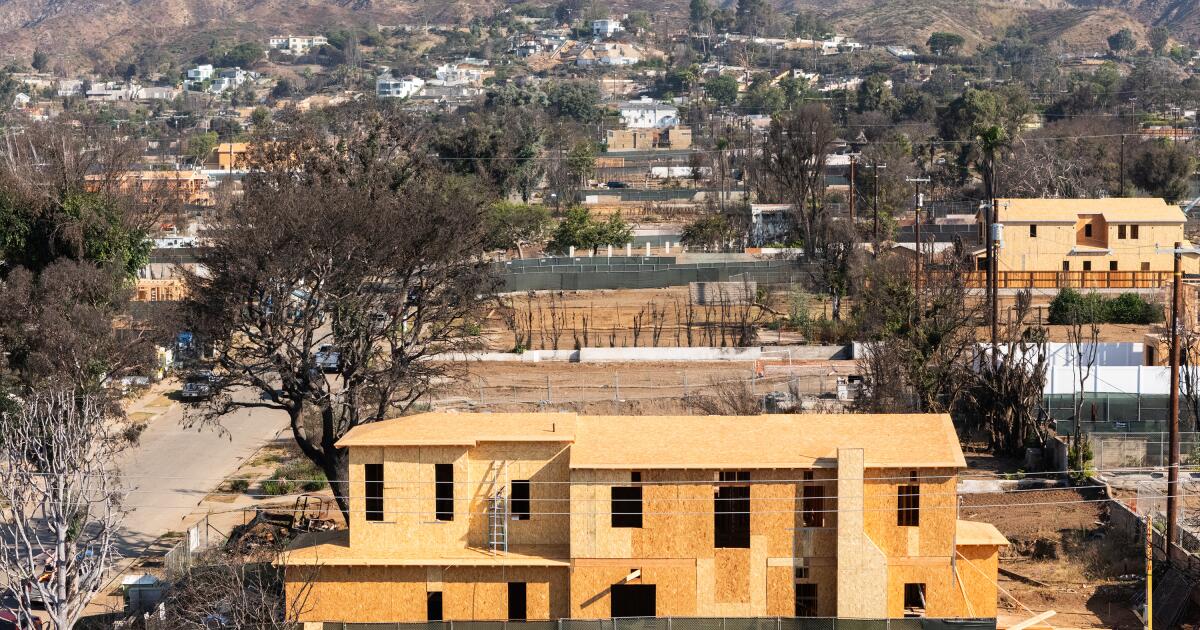
January 2025 wildfire victims seek tougher penalties against State Farm over claims handling
-
 Entertainment41 minutes ago
Review: ‘Sugar,’ with Colin Farrell as an alien private eye, gets a new and improved second season
-
 Politics51 minutes ago
Political watchdog fines Newsom for failing to report $5.5M in solicited donations on time

