Science
How Foreign Aid Cuts Are Setting the Stage for Disease Outbreaks


Dangerous pathogens left unsecured at labs across Africa. Halted inspections for mpox, Ebola and other infections at airports and other checkpoints. Millions of unscreened animals shipped across borders.
The Trump administration’s pause on foreign aid has hobbled programs that prevent and snuff out outbreaks around the world, scientists say, leaving people everywhere more vulnerable to dangerous pathogens.
That includes Americans. Outbreaks that begin overseas can travel quickly: The coronavirus may have first appeared in China, for example, but it soon appeared everywhere, including the United States. When polio or dengue appears in this country, cases are usually linked to international travel.
“It’s actually in the interest of American people to keep diseases down,” said Dr. Githinji Gitahi, who heads Amref Health Africa, a large nonprofit that relies on the United States for about 25 percent of its funding.
“Diseases make their way to the U.S. even when we have our best people on it, and now we are not putting our best people on it,” he added.
In interviews, more than 30 current and former officials of the United States Agency for International Development, members of health organizations and experts in infectious diseases described a world made more perilous than it was just a few weeks ago.
Many spoke on condition of anonymity for fear of retaliation by the federal government.
The timing is dire: The Democratic Republic of Congo is experiencing the deadliest mpox outbreak in history, with cases exploding in a dozen other African countries.
The United States is home to a worsening bird flu crisis. Multiple hemorrhagic fever viruses are smoldering: Ebola in Uganda, Marburg in Tanzania, and Lassa in Nigeria and Sierra Leone.
In 2023, U.S.A.I.D. invested about $900 million to fund labs and emergency-response preparedness in more than 30 countries. The pause on foreign aid froze those programs. Even payments to grantees for work already completed are being sorted out in the courts.
Waivers issued by the State Department were intended to allow some work to continue on containing Ebola, Marburg and mpox, as well as preparedness for bird flu.
But Trump administration appointees choked payment systems and created obstacles to implementing the waivers, according to a U.S.A.I.D. memo by Nicholas Enrich, who was the agency’s acting assistant administrator for global health until Sunday.
Then last month, the Trump administration canceled about 5,800 contracts, effectively shuttering most U.S.A.I.D.-funded initiatives, including many that had received permission to continue.
“It was finally clear that we were not going to be implementing” even programs that had waivers, Mr. Enrich recalled in an interview.
The decision is likely to result in more than 28,000 new cases of infectious diseases like Ebola and Marburg, and 200,000 cases of paralytic polio each year, according to one estimate.
Secretary of State Marco Rubio “has been working diligently since being sworn in to review every dollar spent,” the State Department said in an emailed statement.
“We’ll be able to say that every program that we are out there operating serves the national interest, because it makes us safer or stronger or more prosperous,’” the statement quoted Mr. Rubio as saying.
Most U.S.A.I.D. staff members were terminated or placed on administrative leave without warning. The agency had more than 50 people dedicated to outbreak responses, the result of a Congressional push to beef up pandemic preparedness.
Now it has six. Those who were fired included the organization’s leading expert in lab diagnostics and the manager of the Ebola response. “I have no idea how six people are going to run four outbreak responses,” said one official who was let go.
Also sent home were hundreds of thousands of community health workers in Africa who were sentinels for diseases.
In early January, the Tanzanian government denied there were new cases of Marburg, a hemorrhagic fever. It was a community health worker trained through a U.S.-funded Ebola program who reported the disease a week later.
The outbreak eventually grew to include 10 cases; it is now under control, the government has said.
Even in quieter times, foreign aid helps to prevent, detect and treat diseases that can endanger Americans, including drug-resistant H.I.V., tuberculosis and malaria, and bacteria that don’t respond to available antibiotics.
Much of that work has stopped, and other organizations or countries cannot fill the gap. Compounding the loss is America’s withdrawal from the World Health Organization, which has instituted cost-cutting measures of its own.
“This is a lose-lose scenario,” said Dr. Keiji Fukuda, who has led pandemic prevention efforts at the W.H.O. and the C.D.C.
The slashing of foreign aid deprives the world of American leadership and expertise, but it also locks the United States out of global discussions, Dr. Fukuda said: “For the life of me, I cannot see the justification or the reason for this very calculated, systematic approach to pull down public health.”
Trying to Adapt
U.S.A.I.D.’s intense focus on global health security is barely a decade old, but it has mostly received bipartisan support. The first Trump administration expanded the program to 50 countries.
Much of the aid was intended to help them eventually tackle problems on their own. And to some extent, that was happening.
But confronted with a new virus or outbreak, “there’s so many things that one has to do and learn, and many countries can’t do that on their own,” said Dr. Lucille Blumberg, an infectious diseases physician and expert on emerging diseases.
U.S.A.I.D. and its partners helped countries identify the expertise, training and machinery they needed, brought together officials in various ministries and engaged farmers, businesses and families.
“It actually doesn’t cost the U.S. government that much,” said an official with a large development organization. “But that sort of trust-building, communication, sharing evidence is a real strength that the U.S. brings to health security — and that’s gone.”
In Africa, some countries have reacted to the disappearance of aid with alarm, others with resignation. “We’re doing our best to adapt to this development,” said Dr. Muhammad Ali Pate, Nigeria’s health minister.
“The U.S. government is not responsible, ultimately, for the health and the security of Nigerian people,” he said. “At the end of the day, the responsibility is ours.”
A successful outbreak response requires coordination of myriad elements: investigators to confirm the initial report; workers trained to do testing; access to test kits; transport of samples; a lab with enough workers, running water, electricity and chemical supplies for diagnoses; and experts to interpret and act on the results.
In broad strokes, the C.D.C. provided expertise on diseases, U.S.A.I.D. funded logistics and the W.H.O. convened stakeholders, including ministries of health.
Before the aid freeze, employees from each organization often talked every day, sharing information and debating strategy. Together, they lowered response time to an outbreak from two weeks in 2014 to five days in 2022 to just 48 hours most recently.
But now, C.D.C. experts who have honed their expertise over decades are not even allowed to speak to colleagues at the W.H.O.
U.S.A.I.D. funding for sample transport, lab supplies, fuel for generators and phone plans for contact tracers has ended. Much of its investment in simple solutions to seemingly intractable problems has also stopped.
In West Africa, for example, rodents that spread Lassa fever invade homes in search of food. One program in U.S.A.I.D.’s Stop Spillover project introduced rodent-proof food containers to limit the problem, but has now shut down.
In Congo, where corruption, conflict and endless outbreaks mean that surveillance “looks like Swiss cheese even at the best of times,” the mpox response slowed because there were no health workers to transport samples, said a U.S.A.I.D. official familiar with the response.
More than 400 mpox patients were left stranded after fleeing overwhelmed clinics. Before a waiver restarted some work, the United States identified two new cases of mpox, both in people who had traveled to East Africa.
In Kenya, U.S.A.I.D. supported eight labs and community-based surveillance in 12 high-risk counties. Labs in the Marsabit, Mandera and Garissa counties — which border Ethiopia and Somalia — have run out of test kits and reagents for diseases including Rift Valley fever, yellow fever and polio, and have lost nearly half their staff.
Kenya also borders Uganda and Tanzania and is close to Congo — all battling dangerous outbreaks — and has lost more than 35,000 workers.
“These stop-work orders would mean that it increases the risk of an index case passing through unnoticed,” Dr. Gitahi said, referring to the first known case in an outbreak. His organization has terminated nearly 400 of its staff of 2,400.
Many labs in Africa store samples of pathogens that naturally occur in the environment, including several that can be weaponized. With surveillance programs shut off, the pathogens could be stolen, and a bioterrorism attack might go undetected until it was too late to counter.
Some experts worried about bad actors who may release a threat like cholera into the water, or weaponize anthrax or brucellosis, common in African animals. Others said they were concerned that even unskilled handling of these disease threats might be enough to set off a disaster.
Funding from the U.S. government helped hire and train lab workers to maintain and dispose of dangerous viruses and bacteria safely.
But now, pathogens can be moved in and out of labs with no one the wiser. “We have lost our ability to understand where pathogens are being held,” said Kaitlin Sandhaus, founder and chief executive of Global Implementation Solutions.
Her company helped 17 African labs become accredited in biosafety procedures and supported five countries in drafting laws to ensure compliance. Now the firm is shutting down.
In the future, other countries, including China, will know more about where risky pathogens are housed, Ms. Sandhaus said: “It feels very dangerous to me.”
China has already invested in building labs in Africa, where it is cheaper and easier to “work on whatever you would like without anyone else paying attention,” said one U.S.A.I.D. official.
Russia, too, is providing mobile labs to Ugandans in Mbale, on the border with Kenya, another official said.
Some African countries like Somalia have fragile health systems and persistent security threats, yet minimal capacity for tracking infections that sicken animals and people, said Abdinasir Yusuf Osman, a veterinary epidemiologist and chair of a working group in Somalia’s health ministry.
Each year Somalia exports millions of camels, cattle and other livestock, primarily to the Middle East. The nation has relied heavily on foreign aid to screen the animals for diseases, he said.
“The consequences of this funding shortfall, in my view, will be catastrophic and increase the likelihood of uncontrolled outbreaks,” Dr. Osman said.
In countries with larger economies, foreign aid has helped build relationships. Thailand is a pioneer in infectious diseases, and U.S.A.I.D. was funding a modest project on malaria elimination that boosts its surveillance capabilities.
The abrupt end to that commitment risks losing good will, said Jui Shah, who helped run the program.
“In Asia, relationships are crucial for any type of work, but especially for roles that work with surveillance and patient data,” she said. “Americans will suffer if other countries hesitate to engage with us about outbreaks.”



Video released by Chinese state media shows a state-owned aerospace company launching a rocket and recovering part of it on Friday. The successful launch of a reusable rocket was a major step for China toward challenging SpaceX’s satellite internet dominance.
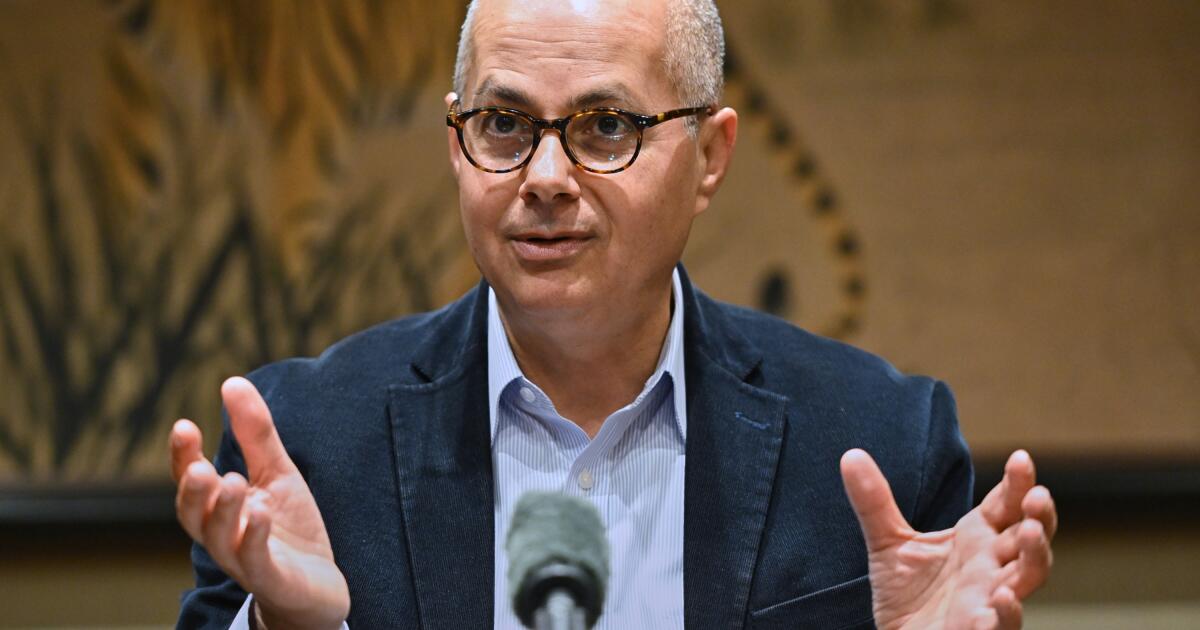
Nobel Prize recipient Omar Yaghi is leaving his role at UC Berkeley to lead the development of a new artificial intelligence institute at Tsinghua University in Beijing, the Chinese university announced.
Yaghi will head the AI Chemistry and Materials Research Institute at Tsinghua, where he was appointed an honorary professor in 2022. Known as AIMATRY (AI × Materials × Chemistry), the new center will focus on material design and synthesis through artificial intelligence, according to a statement from the university.
In 2025, Yaghi shared the Nobel Prize in chemistry with Susumu Kitagawa of Kyoto University and Richard Robson of the University of Melbourne for their development of metal-organic frameworks, a type of super-porous material in which metal ions and carbon-based molecules combine to form crystals with exceptionally large surface areas.
The material has the potential to combat climate change by capturing and storing carbon or other pollutants, and by extracting water from the atmosphere in water-scarce areas. Upon awarding the prize, a member of the Nobel committee likened the technology’s ability to store enormous amounts of stuff in seemingly compact spaces to Hermione Granger’s enchanted handbag in the Harry Potter series.
Yaghi’s Irvine-based company, Atoco, has said it will start taking orders later this year for its technology that harvests water from the air.
A representative for Yaghi said he was not yet available to respond to questions.
China is one of several countries that has been actively recruiting scientists from the U.S., where the Trump administration has slashed science funding, suspended research grants, fired science advisors and tightened immigration restrictions.
“For many, many years, our funding was very competitive; if you worked hard and you were doing good research, you would get funding,” Yaghi said of the U.S. in an interview with Scientific American earlier this year. “The current state is not so encouraging because of the cutting back on grants and support of science by the very agencies that many university researchers rely on.”
Yaghi was born in Jordan to Palestinian refugees, and immigrated to the U.S. when he was 15 to study.
“We’ve learned over and over in human civilization that scholars can move across borders,” Yaghi told the New York Times last year. “This is how knowledge spread and how vast regions of the world lifted themselves out of poverty.”
Science
Trump administration seeks to limit federal funding that doesn’t ‘advance’ presidential policies

A new rule proposed by the White House Office of Management and Budget would fundamentally overhaul the way federal grants are awarded and overseen — a sweeping change that one scientific society said “would all but end the use of scientific merit in the selection of grants and programs across the government.”
Proposed in late May, the rule would give political appointees unprecedented control over federal grants for research, education and infrastructure, and specifies that government funds can only be spent on projects “aligned with administration policies and priorities,” according to a copy of the proposed rule.
The rule would also restrict research topics, limit U.S. scientists’ ability to collaborate with colleagues in other countries and make it easier for the government to suspend or cancel grants at any time.
The changes are intended to improve “transparency, accountability, and oversight for Federal awards” while “ensuring that American tax dollars are not wasted or misused,” according to the White House office.
But critics say that if the rule is implemented, the final sign-off for grants will no longer be in the hands of subject-matter experts within individual agencies, but in those of political appointees.
“This touches all parts of American life,” said Dr. Eric Rafla-Yuan, a psychiatrist who practices at the Veterans Administration and San Diego County’s psychiatric hospital.
“Control of how all of the federal grants and programs are funded will fall under a small group of highly partisan individuals who would have very few limits on how they spend these billions of taxpayer dollars,” said Rafla-Yuan, who also chairs the Committee to Protect Public Mental Health advocacy group. “This touches everyone’s life, even if they don’t realize it.”
OMB published the proposed rule May 29, opening a 45-day comment period that closes July 13.
Opposition to the proposed rule has mobilized multiple sectors of society. Professional groups representing cancer researchers, civil engineers, county governments, medical schools, housing agencies, city and municipal governments, nonprofits and others have publicly expressed concerns about potential consequences.
By midday Thursday, the Federal Register logged nearly 100,000 comments about the proposal, many of them expressing concern.
“I understand the need for oversight, fiscal responsibility, and accountability. That is not the issue,” wrote Jack Feldman, a neuroscientist who holds the David Geffen School of Medicine Chair in Neuroscience at UCLA. “The issue is whether scientific research is to be judged by scientific merit, or whether it can be approved, denied, or terminated according to broad political criteria that may change from one administration to the next.”
Crucially, the rule converts policies governing federal grants from “guidance” into binding regulations that all agencies would be required to follow. It would give political appointees power to override federal agencies’ merit-based reviews and mandate that a political appointee review decisions to ensure that all awards “demonstrably advance the President’s policy priorities.”
The elevation of political appointees in what were previously merit-based decisions has alarmed many scientists.
“The proposed rule changes would all but end the use of scientific merit in the selection of grants and programs across the government,” read a statement from the Planetary Society, a nonprofit dedicated to space research.
Researchers and science groups have also expressed concern about a section of the rule prohibiting the promotion of “theories of disparate-impact liability” — a legal concept that refers to policies that appear neutral but cause disproportionate harm to certain groups.
The section’s vague language and many loopholes could have a chilling effect on any research that studies the effects of a disease, policy or public health intervention on any specific group of people, Rafla-Yuan said.
As an example, he said, “if there’s a specific age range that is at higher risk for suicide, and we want to figure out, well, what’s going on with people that are aged 14 to 19 … we can’t do that under the wording in this rule.”
New restrictions on collaborations with scientists in other countries would hinder opportunities for U.S. researchers and limit innovation, said Joanne Padrón Carney, chief government relations officer for the American Assn. for the Advancement of Science.
“Science is a global enterprise. Especially in biomedical and public health fields, diseases don’t care about borders or government policies,” she said.
California’s congressional delegation sent a letter Wednesday asking OMB to rescind the proposal, outlining concerns about its impact on scientific innovation, U.S. competitiveness and the fiscal stability of local governments, many of which rely on federal grants for local services.
The proposed rule grants the federal government broad powers to suspend or cancel grants for any reason, introducing “unprecedented unpredictability into local governance,” the lawmakers wrote, “leaving vital infrastructure projects unfinished and abandoning vulnerable populations who rely on these services.”
Republican Sen. Susan Collins has also asked the White House to withdraw certain parts of the letter and extend the public comment period, saying the proposed rule as written would “harm small and rural communities, undermine scientific and biomedical research, and conflict with Congress’ control over the federal funding process.”
-

 Boston, MA3 minutes ago
GBH Daily: Come sail away
-

 Denver, CO9 minutes ago
New ice cream shop with a ‘waffle theater’ bets big on downtown Denver
-

 Seattle, WA15 minutes ago
Seattle weather: Sunny skies and warmer temperatures Tuesday
-

 Milwaukee, WI27 minutes ago
Milwaukee cooling centers, heat advisory tips; what to know
-

 Atlanta, GA33 minutes ago
Warnock, Dickens talk about new housing legislation
-

 Indianapolis, IN45 minutes ago
Indiana heat index to hit 100 as hot, dry pattern holds | July 14, 2026
-

 Pittsburg, PA51 minutes ago
Another stretch of high temperatures in the 90s hitting the Pittsburgh area this week
-

 Augusta, GA57 minutes ago
Flash flooding impacts multiple areas across Columbia County

