Science
Desperate parents turn to magnetic therapy to help kids with autism. They have little evidence to go on

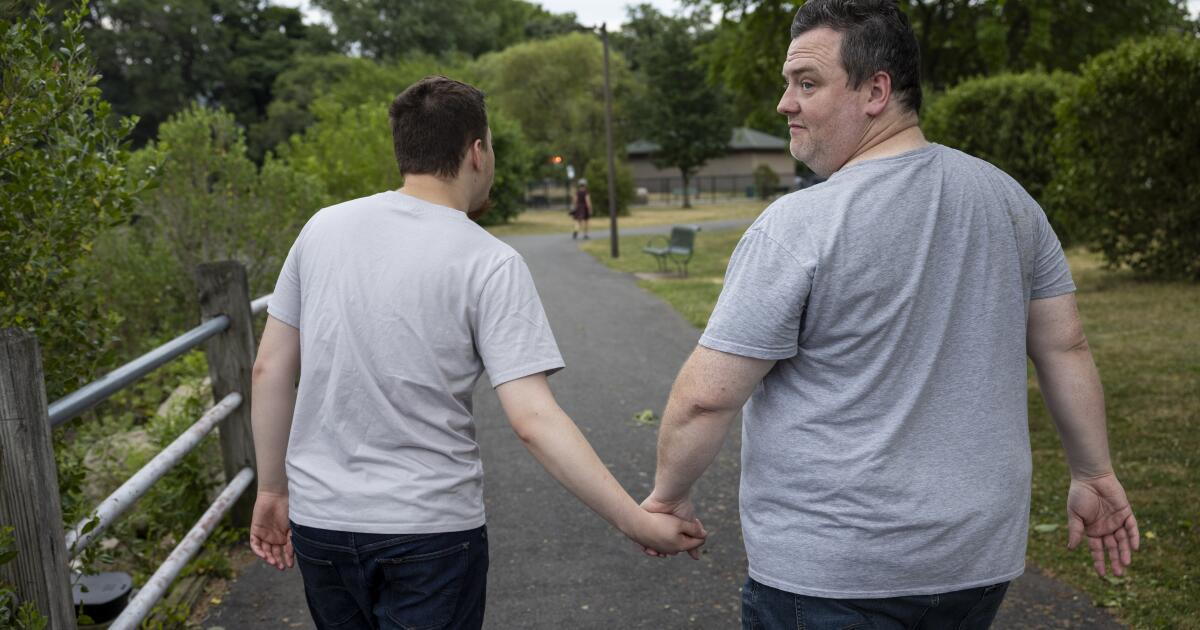
Thomas VanCott compares his son Jake’s experience with autism to life on a tightrope. Upset the delicate balance and Jake, 18, plunges into frustration, slapping himself and twisting his neck in seemingly painful ways.
Like many families with children on the autism spectrum, Jake’s parents sought treatments beyond traditional speech and behavioral therapies.
One that seemed promising was magnetic e-resonance therapy, or MERT, a magnetic brain stimulation therapy trademarked in 2016 by a Newport Beach-based company called Wave Neuroscience.
The company licensed MERT to private clinics across the country that offered it as a therapy for conditions including depression, PTSD and autism.
Those clinics described MERT as a noninvasive innovation that could improve an autistic child’s sleep, social skills and — most attractive to the VanCott family — speech. Jake is minimally verbal.
It was expensive — $9,000 — and not covered by insurance. “It’s too much for most things,” VanCott said, “but not for the potential of my child speaking.”
“It just did nothing,” Thomas VanCott says of the $9,000 MERT sessions his son received.
(Claudia Paul / For The Times)
After raising money through GoFundMe, VanCott met with a doctor at a New Jersey clinic who described how MERT would reorganize Jake’s brain waves. VanCott does not have a scientific background, and the technical details went over his head. What he had was a severely disabled son he was desperate to help.
The doctor “seemed pretty confident. And his confidence gave me confidence,” VanCott said. “It made me think, tomorrow Jake’s gonna wake up and say a sentence.”
Autism diagnoses in children have risen steadily since 2000, in part due to increased awareness and screening. As the number of people living with autism has grown, so have alternative therapies promising to alleviate or even reverse its associated behaviors.
“There’s also a lot of pressure put on parents,” said Zoe Gross, a director at the Autistic Self Advocacy Network, a nonprofit group run by and for autistic adults. “People will be saying things like, ‘Time’s ticking, your kid’s missing milestones … you have to fix it now.’”
One therapy that often surfaces in Google searches, social media groups and word-of-mouth discussions is MERT, which is based on a brain stimulation therapy approved by the Food and Drug Administration for depression and obsessive-compulsive disorder.
Clinics offering MERT sell it as a “safe and effective treatment for autism” that yields “miraculous results” for kids on the spectrum.
Most compelling to many families is an oft-cited marketing claim that research has shown MERT to improve speech and eye contact in a majority of autistic patients, research that several clinics attributed to Wave.
The Times spoke to parents who said MERT caused positive, lasting changes in their autistic children’s sleep, communication and concentration.
Other parents told The Times they saw only minimal changes in their children’s behavior. Many, including Thomas VanCott, saw no changes at all. “It just did nothing,” VanCott said. And a few saw worrying behavioral regressions that persisted long after the therapy ended.
All remember being told by MERT providers that while results weren’t guaranteed, many patients saw positive results. When the dramatic changes they hoped for didn’t happen, these families left believing they were unlucky. Without quality data, it’s impossible to know if any of these outcomes are outliers or typical patient experiences.
Wave has not conducted any studies on whether its signature product works for autism. A Wave executive argued that the need for new autism therapies is strong enough to justify moving forward with commercial solutions before rock-solid evidence is available.
“Academics pointing towards insufficient evidence for clinical adoption may not represent a true reflection of clinical utility in a population where there are very few therapeutic options, great suffering, and a willingness of physicians and patients to seek innovative treatment choices with diligent clinical care and oversight,” said Dr. Erik Won, Wave’s chief medical officer.
For many parents, even a small possibility of a life-changing breakthrough is worth any price. Although some families have reported benefits from the treatment, no large scientific studies exist that show MERT is significantly better than a placebo, according to nine psychiatrists, psychologists and neuroscientists with expertise in brain stimulation and autism.
MERT is Wave’s trademarked version of a therapy called transcranial magnetic stimulation. The product of decades of research, TMS is approved by the FDA to treat major depression, OCD and cigarette addiction.
It is also used to treat conditions for which it is not FDA-approved, in what’s known as “off-label” prescribing. Off-label use of drugs and devices is a common practice in medicine.
Clinics offering cash-pay TMS for a variety of off-label conditions, including autism, have proliferated in recent years. MERT in particular has become especially popular among families with autistic children.
Autism spectrum disorder is a complex neurological and developmental condition that manifests differently in nearly every individual who has it. Symptoms cluster around difficulties in communication, social interaction and sensory processing.
Many autistic people need minimal support to live, work and thrive independently, while others require intense daily care and are unable to express themselves verbally. There are few evidence-based interventions to alleviate the disorder’s most profoundly disabling traits.
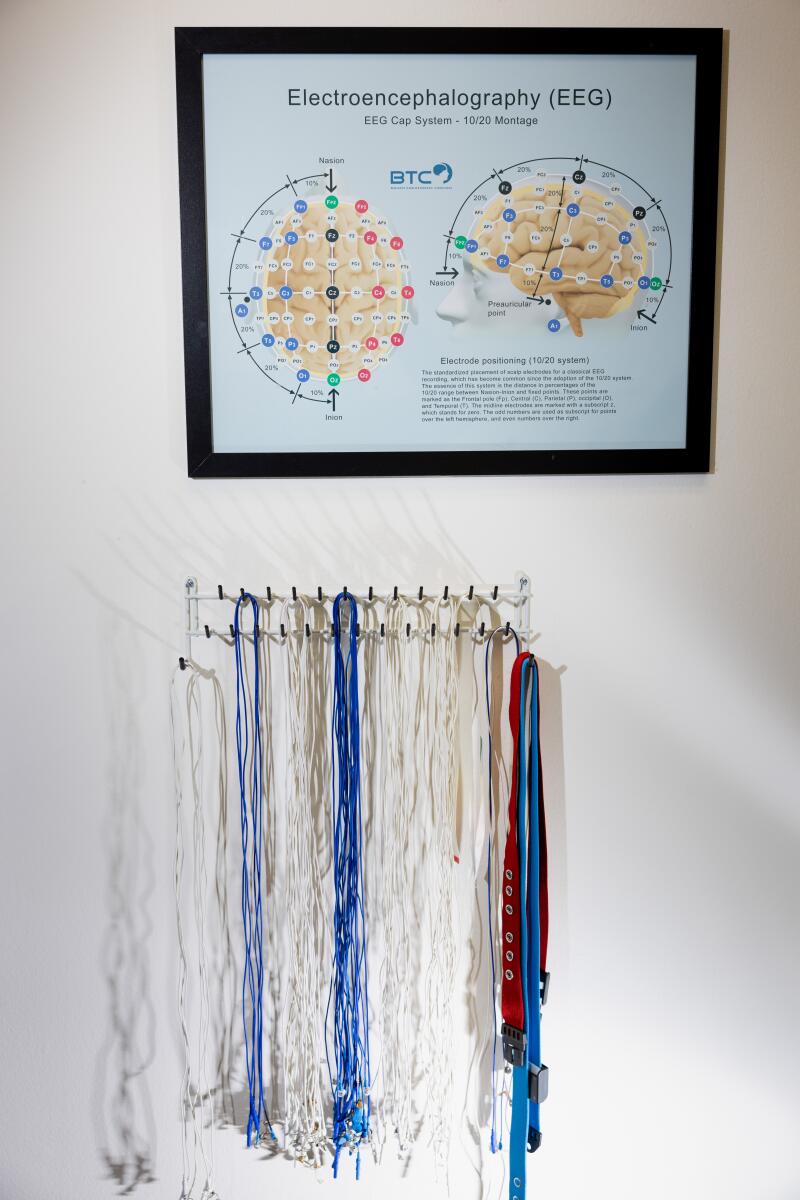
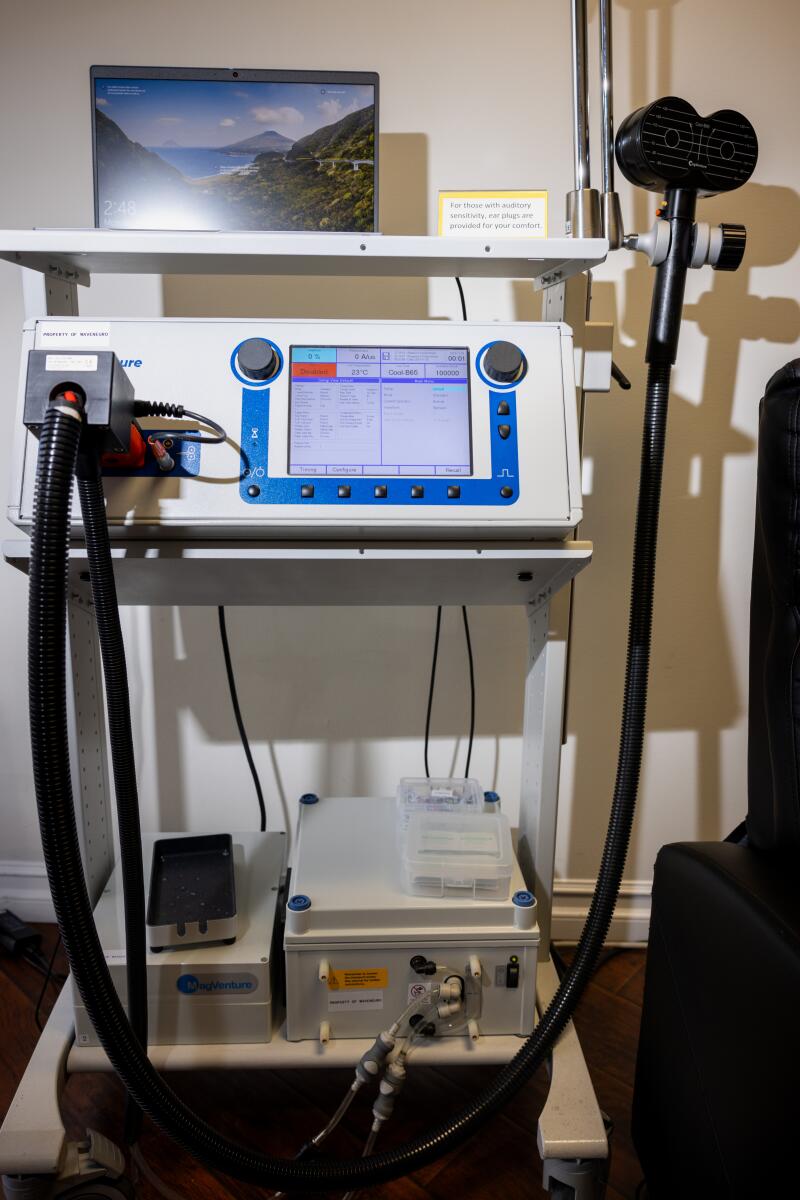
MERT providers first use EEG, a common brain scan, to assess patients. Wave’s proprietary technology, photographed at a Newport Beach clinic, then determines which areas of the brain to target for treatment. (Jay L. Clendenin / Los Angeles Times)
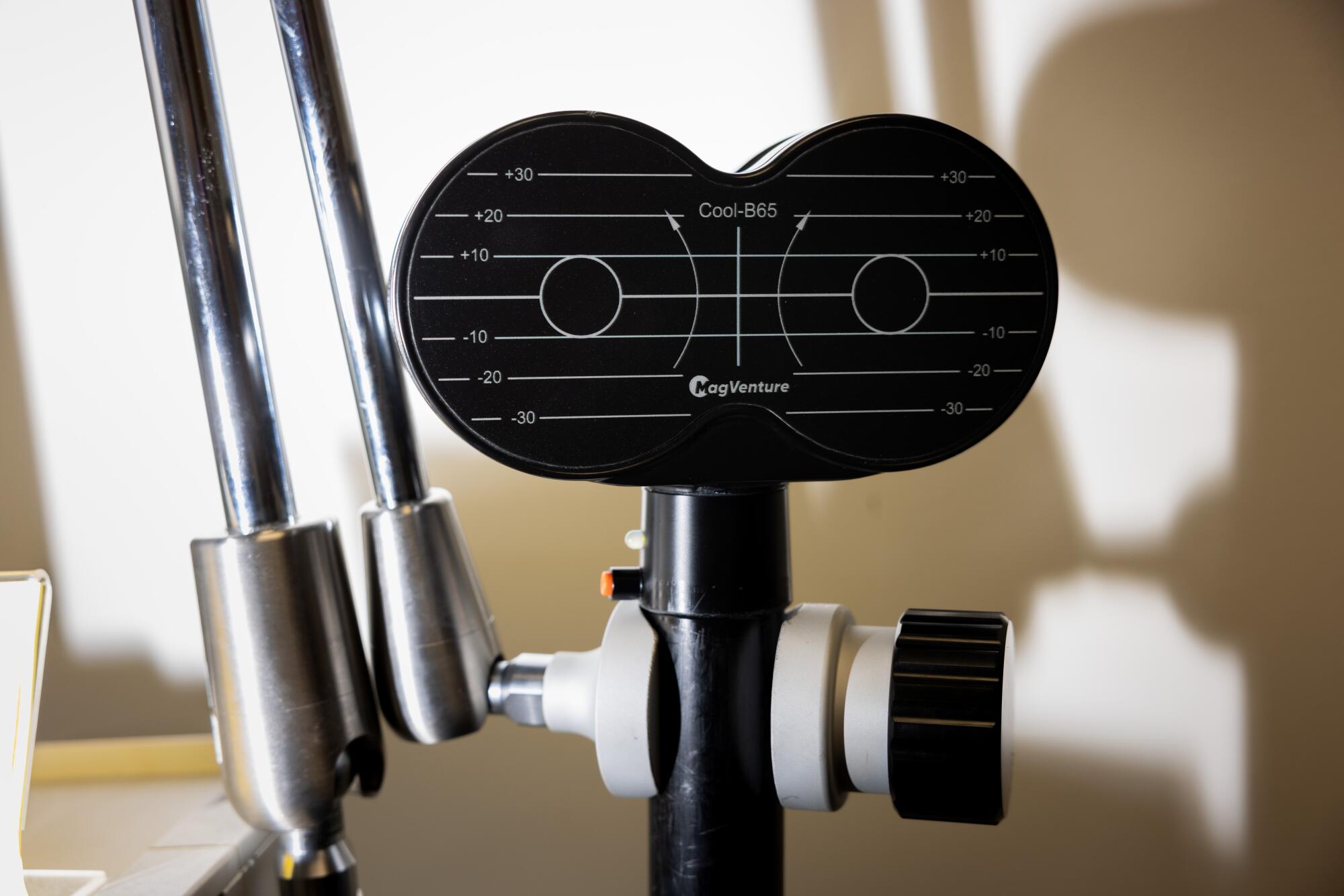
During treatment, a magnetic coil is placed against the patient’s scalp. Each session of gentle electromagnetic pulses lasts about 30 minutes.
(Jay L. Clendenin / Los Angeles Times)
A MERT patient first sits for a 10-minute quantitative electroencephalogram, a noninvasive test that measures the brain’s electrical activity, and an electrocardiogram, which gauges electrical activity in the heart.
Results are then analyzed by Wave’s proprietary software. If its algorithm identifies “areas of the brain that are not functioning properly,” clinic providers will recommend a protocol of TMS-style treatments. In these sessions, the provider places a magnetic coil against the patient’s scalp that emits a gentle electromagnetic pulse. Sessions typically last about 30 minutes and are administered five days a week, for two to six weeks.
Won, Wave’s president and chief medical officer, said the goal is “to help the brain function most efficiently as an organ. And the hypothesis was, if we improve the metabolic efficiency of the brain, would we see some changes in a variety of different medical conditions?
“As we sort of tested this, there was a realization: Wow, we can do something pretty special for autism,” he said.
A six-week course of MERT — the standard protocol Wave recommends for autistic patients — typically costs $9,000 to $12,000, families and clinic owners said, and is not covered by insurance.
MERT was originally developed as a therapy for post-traumatic stress disorder and traumatic brain injury. Since Wave’s inception in 2019, it has described military veterans as its primary patient demographic.
Wave is in Phase II of a clinical trial to test MERT for PTSD, Won said. The company has not conducted any clinical trials on autism.
“The strategic decision to focus on PTSD was largely dictated by market factors,” Won said. He added that his company is dedicated to helping those with autism and is working to obtain funding “for further studies and ultimately an FDA indication.”
Dr. Andrew Leuchter is the director of UCLA’s TMS Clinical and Research Service, which has provided FDA-approved and off-label treatments to more than 1,000 patients.
Given its solid safety profile and effectiveness at treating other complex brain-based disorders, Leuchter said that he and many other TMS clinicians believe the therapy could have benefits for conditions other than the few for which it is FDA-approved.
When a patient approaches the clinic seeking treatment for an off-label condition Leuchter believes could be helped by TMS, the psychiatrist reviews the case with his colleagues. If they decide to proceed, he explains to the patient that the efficacy of TMS for their condition isn’t proven, though there is reason to believe it is safe and effective.
But when parents call asking whether he can treat autistic characteristics such as sensory challenges, minimal speech or lack of eye contact, Leuchter says no.
“Off-label treatment can be just fine so long as there’s data to support this and the risks are low,” he said. For autism, he said, “the evidence base is not very strong. … And I don’t think that there is sufficient evidence to recommend the use of TMS for the treatment specifically of autism.”
Multiple researchers are currently examining whether TMS could improve certain symptoms of autism. But eight researchers interviewed for this article said there isn’t yet enough evidence to recommend TMS as an autism therapy, or to say with confidence that it works for that condition.
Lindsay Oberman, director of the Neurostimulation Research Program at the National Institute of Mental Health, published a paper last year summarizing the current state of research on TMS and autistic children. Nearly all published studies on the treatment to date have been very small, open-label (meaning both patients and providers knew which treatment they were receiving) or focused on a very specific subgroup, she and her co-authors wrote.
Without large, randomized controlled trials — the gold standard in medicine — “broad off-label use of these techniques in this population is not supported by currently available evidence,” the paper concluded.
Won acknowledged that the company has so far not pursued such research on MERT and autism.
“We owe the community some academically rigorous science,” he said. “This is not going to be a panacea. I don’t want to misrepresent anything to the parents who are making these difficult decisions. But for a subgroup, this is clearly something that’s leading to a response.”
Medical research moves far more slowly than most patients and their families would like, and many are willing to try experimental therapies long before researchers and regulators are ready to sign off on them.
“When you’re a parent of a child and you think that this can help, it’s like, FDA be damned, right?” VanCott said. “If I think it’s gonna help my kid, I want to do it.”
Wave’s provider directory now lists more than 60 U.S. licensees and an additional 18 internationally. More than 400,000 MERT sessions have been administered to more than 20,000 people, according to the company.
Won said Wave does not maintain comprehensive data on patients treated at licensee clinics. In an interview, he estimated that about half of these patients were seeking treatment for autism. He later said that 20% to 30% was a better estimate.
Although some clinic owners said they treat few autistic children, staffers at multiple facilities told The Times that most or all of their patients were autistic.
To pay for the procedure, families have used savings or turned to crowdfunding. Others placed the treatment on credit cards. Their experiences vary widely.
Though initially skeptical, Joo Flood booked a six-week course of treatment at a Dallas clinic in 2022 for her minimally verbal son Max, then almost 5. They returned for another round in May 2023.
Max now responds far more often to his name, makes regular eye contact and has an easier time following directions, his mother said.
“If I didn’t do the MERT, I’m not sure Max can be at this level,” she said.
Yestel Concepcion and her husband sought MERT for her stepson after hearing about it on a talk show.
The New Jersey couple scraped together savings and gratefully accepted donations from friends and family for the $10,000 cost. They spent nearly $5,000 more relocating the family to Maryland during the monthlong treatment.
Apart from an increase in the boy’s hyperactivity, the couple saw “no result whatsoever,” Concepcion said. The clinic suggested more sessions, at an additional cost. But their money and trust had run out.
Most parents who spoke to The Times about their children’s MERT treatments said the possibility of speech for their nonverbal or minimally verbal children was the primary reason they pursued it, even if it meant taking on debt.
Until recently, more than a dozen MERT clinics around the country, under the headline “Results that ‘Speak,’” cited an “internal double-blind randomized control trial” that had produced striking results: Two out of three patients who had difficulties with verbal and nonverbal communications “experienced improvement” after MERT. In the same trial, the ad copy read, 70% of patients who had trouble maintaining eye contact saw “improved eye contact behavior.”
Four clinics attributed those statistics to Wave.
According to Wave, the source of that claim is a small study of 28 patients that was conducted around 2017 by the Newport Brain Research Laboratory. It has not been published nor vetted by independent scientists. The study was among assets of the now-defunct laboratory that Wave purchased in 2019.
The only part of this work available to the public is an undated poster presentation that roughly outlines the study.
Wave declined to release details of the study or name its authors, but Won described the results. He said 71% of subjects in the group of 14 patients that received MERT instead of a placebo had positive changes in their visual response afterward, and 67% of subjects had positive changes in their verbal communication, according to their parents’ responses on the Childhood Autism Rating Scale, known as CARS.
“I never put much weight into the findings I see in a poster or talk, especially if it isn’t followed by a later peer-reviewed publication,” said Christine Conelea, an associate professor at the University of Minnesota Medical School who runs the university’s Non-Invasive Neuromodulation Laboratories.
“Small samples like this aren’t good for establishing the benefits of a treatment, conclusively showing safety or demonstrating that an investigational treatment is better than placebo,” Conelea said.
Statistics taken from the unpublished study have featured prominently on the websites of at least 17 MERT clinics, as well as the primary website for the Brain Treatment Center, a trademark owned by Wave under which many MERT clinics do business.
Won said he was not aware that so many clinics were using the study’s conclusions as a marketing tool. Shortly after The Times asked Wave about the statistics, almost all of those clinics took them down.
“I don’t feel good about it,” he said. “A lot of families benefited from it [MERT], and their children are doing better, and that’s wonderful. But I don’t want to misrepresent or overrepresent things. … I would always want there to be published, peer-reviewed, academically rigorous science to back up a claim.”
Following The Times’ questions, Won said that Wave contacted the study authors and requested that they expedite the preparation and submission of a research paper containing the study results to a peer-reviewed journal. The company has also asked the authors to release the manuscript on a preprint server, a website where scientists can post preliminary findings.
“We need to get that publication out so that people can make informed decisions,” he said. “It would be easier if it’s in the public domain, and other people can critique it and break it down and take it for what it’s worth.”
Manuel Casanova, a retired University of South Carolina professor who spent years studying TMS as a potential autism therapy, questioned why MERT providers had so little empirical data to share after administering the treatment to thousands of autistic patients — a gap, he said, that “raises a red flag as to the therapeutic benefits of the technique.”
MERT providers operate in an “ethical gray area,” said Anna Wexler, an assistant professor at the University of Pennsylvania who studies the ethics of emerging technologies.
Doctors can use approved therapies to treat any condition they deem appropriate, Wexler said. But if the condition being treated isn’t the same one for which the therapy has been cleared, providers must be “as transparent as possible” about the evidence they’re relying on, she said. If there is little or no evidence to support MERT’s efficacy for a given condition, she said, “it is unethical for providers to advertise that it is effective.”
“If someone opts for an experimental therapy, that in itself is not problematic,” Wexler said. “What is problematic is if they are making that decision based on erroneous or incorrect beliefs about efficacy.”
Won did not respond to a question about Wexler’s critique.
Nine psychiatrists, psychologists and neurologists with expertise in transcranial magnetic stimulation say there is to date no evidence to suggest this kind of therapy can reliably prompt a nonverbal autistic child to develop speech, or to significantly alter an autistic child’s sensory and communication abilities.
“The plain English is that it’s not there yet, and I have not seen it working convincingly outside of a strong placebo effect,” said Dr. Alexander Rotenberg, a professor of neurology at Harvard Medical School and director of Boston Children’s Hospital’s Neuromodulation Program.
Peter Enticott, a psychologist at Australia’s Deakin University, is leading a multisite trial of TMS for autism funded by the Australian government. Enticott has spoken with families whose children received MERT from Wave licensees in Australia and were thrilled with the outcomes. But for a scientist, uplifting anecdotes are not a substitute for data.
“It’s too early,” he said. “And I think it’s particularly problematic given that they are charging large amounts of money for an unverified therapy.”
Criticisms of the treatment’s pricing were “not a reflection of Wave Neuroscience,” Won said. “The comments seem to be objecting to the realities of the healthcare market.”
Scientists consulted by The Times said they would encourage families interested in TMS and autism to look for a clinical trial that would provide the treatment free of charge in exchange for using the patient’s data in a study.
“I would consider this something that should be researched, but nobody should be paying $5,000 to $10,000 out of pocket for this,” said Alycia Halladay, chief science officer at the Autism Science Foundation, one of five autism advocacy groups The Times consulted that said there is not enough evidence for them to recommend MERT.
Despite his disappointment, VanCott does not regret his decision. Had he not pursued the treatment, he would always have wondered whether he had turned down something that could have helped his son — no matter how high the cost, no matter how slim the chance.
“I mean, being able to sleep at night?” he said. “What’s that worth?”
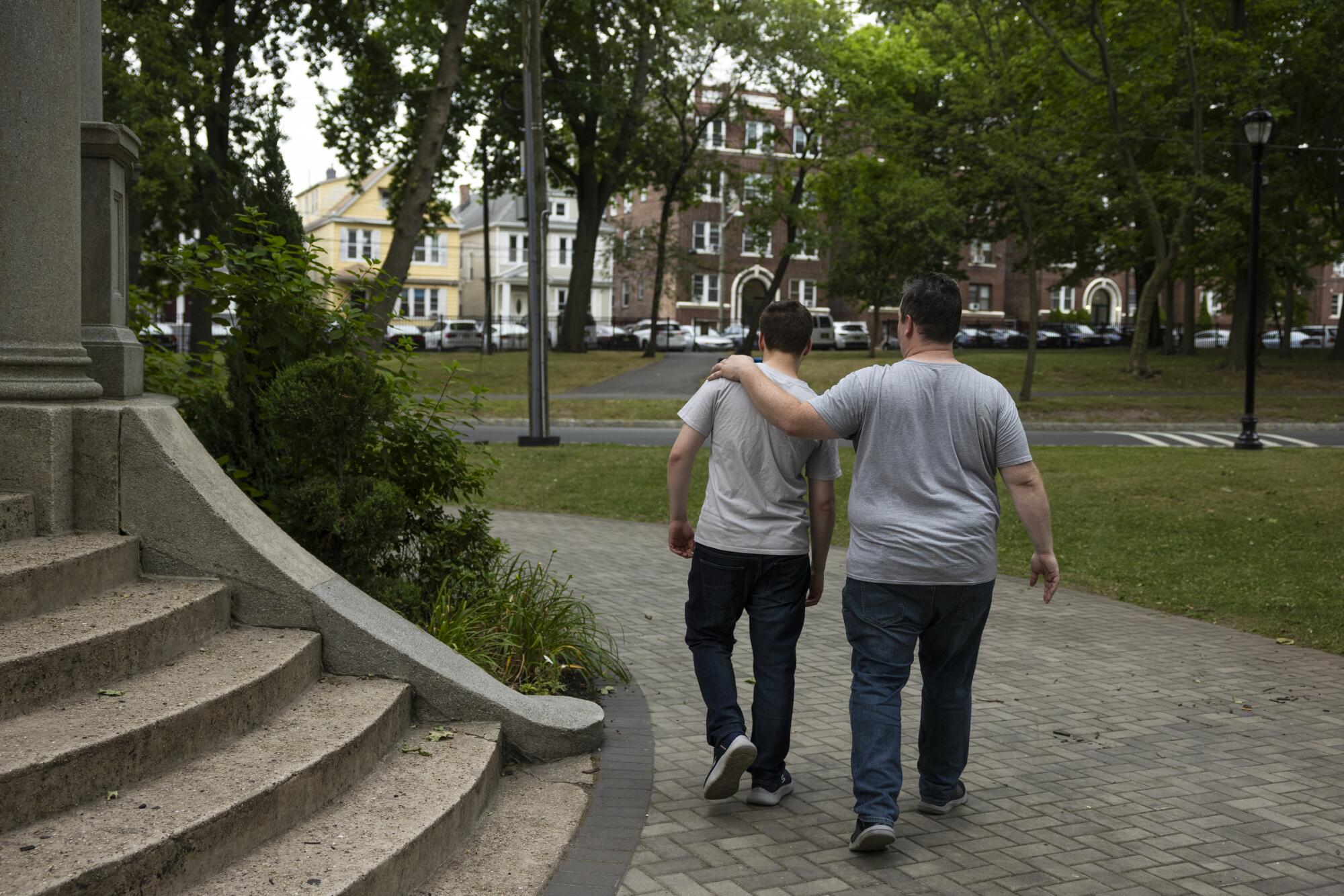
Thomas VanCott said he signed up son Jake for MERT sessions because he did not want to be wondering whether he turned down something that could have helped his child.
(Claudia Paul / For The Times)


new video loaded: NASA Announces Artemis III Crew
transcript
transcript
NASA Announces Artemis III Crew
NASA announced the crew of Artemis III mission, which will fly to low-Earth orbit to test rendezvous and docking maneuvers with one or two lunar landers.
-
“I am excited to welcome you as the next crew in the Artemis journey to successfully return to the moon — this time to stay.” “I’m honored by the role that I’ve been given. I’m also very humbled by the task in front of us. But first and foremost, I’m grateful.” “So with that, the Artemis II crew, comrade, hands you the baton. You got the controls.” “As you know, we had a significant anomaly at our Launch Complex 36A on May 28. We’ve redoubled our efforts and are moving forward.”
By Alisa Shodiyev Kaff
June 9, 2026
Science
Santa Monica Mountains’ last steelhead trout survived the Palisades fire — and even had babies

Scientists feared the Santa Monica Mountains’ last remaining steelhead trout were dead, smothered by debris flows unleashed by the Palisades fire.
But the endangered fish surprised them: A team of biologists recently spotted 30 of the rare trout — and 21 babies — in Topanga Creek.
“There was a lot of happy dancing in the creek,” said Rosi Dagit, principal conservation biologist for the Resource Conservation District of the Santa Monica Mountains, which works with public and private landowners to conserve natural resources.
That’s because the steelhead here are endangered, at both the state and federal levels. Once, they swam in most streams of the Santa Monicas, but their numbers plummeted amid overfishing and coastal development. Increasingly frequent wildfire has further stressed their habitat. Topanga Creek, a biodiversity hot spot, is home to their last known population in the mountains that stretch from the Hollywood Hills to Point Mugu in Ventura County.
The trout that were spotted, including this one, are part of a distinct Southern California population that’s listed as endangered at the state and federal levels.
(RCDSMM Stream Team)
The California Department of Fish and Wildlife spearheaded a complex mission to rescue trout threatened by the Palisades fire that sparked in January 2025.
Time was of the essence. The fire hadn’t yet been fully contained. But rain was on the way, which would sweep massive amounts of sediment from the denuded hillsides into the water. Fish are often killed this way.
Crews stunned the fish with electricity, scooped them up in buckets, trucked them to a hatchery and ultimately moved them to Arroyo Hondo Creek in Santa Barbara County.
Within days, Topanga Creek was choked with mud. Some assumed the fish left behind were goners.
But in March, the conservation district’s team found four. The following month, when water conditions were clearer, they saw more.
“These fish continue to amaze me,” said Kyle Evans, environmental program manager for the state Department of Fish and Wildlife, who had seen the damage to the creek. “I had seen populations get wiped out in similar situations. So when I heard, I was thrilled.”
Evans surmises the fish that survived were in an area of the creek where less charred material and sediment were swept in.
“These fish likely hunkered down, were hiding under some rocks or places to try to get away from the main concentration of flow,” he said. “And luckily they weren’t buried.”
The ones that were spotted were fairly small, around 6 to 14 inches. Rainbow trout and steelhead trout are the same species, but with different lifestyles. If the fish remain in freshwater, they’ll be considered rainbows. However, they can migrate to the ocean and become steelhead, where they typically grow larger before returning to their natal waters to spawn.
Topanga Creek hasn’t fully recovered from the damage it sustained, but scientists say it’s looking better. Surveys last year were “so depressing,” Dagit said, with very few animals, and stretches that were essentially transformed into flat roads from all the sediment buildup. Some of the riparian canopy burned right down to the creek.
Then came 32 inches of rain over the last nine months, scouring out and moving sediment, creating deeper pools. Dagit said they recently found newt egg masses for the first time in years, as well as a few adult newts and many frogs. Plants that provide cover are starting to recover.
She provided photos comparing certain pools last year and this year, some dramatically transformed. In September 2025, the Shrine Pool could have been an overgrown hiking trail. This April, it was filled with shallow water.

The Shrine Pool in September 2025, left, and the same location in April 2026, right, with RCDSMM’s Isaac Yelchin donning a wetsuit.
(RCDSMM Stream Team)
Topanga Creek is home to another endangered fish, the small but hardy northern tidewater goby, often described as cute. Not long before the trout operation, Dagit led a rescue of hundreds of these fish too. Many were repatriated to the lagoon at the mouth of the creek in a moving ceremony last June.
There’s still the matter of what to do with the trout that were moved to Santa Barbara County last year. Evans would like to bring them home to the Santa Monicas at some point, but isn’t sure if it will happen. On one hand, they could bolster the small, genetically isolated surviving population. On the other, they might inadvertently bring in a disease or bacteria. There is some time to decide. Evans estimates the creek still needs to recover for two to three more years.
For now, the fish are functioning fine in their adopted creek. Experts worried the trauma wrought by the move would disrupt their spawning process, but they had babies that spring. This year, they spawned again.

The Pacifica Municipal Pier was shut down and taped off Thursday after city workers noticed cracks running through the landmark structure and concrete chunks falling into the ocean.
It’s just one of many coastal California structures that have recently crumbled under pressure from a rising and relentless ocean.
Officials from the small, beach city south of San Francisco said the pier was closed due to “cracking, separation, and displacement of the concrete walkway and structural elements.”
It will stay closed while structural engineers asses its safety.
Photos taken by city employees show a wide crack that runs from top to bottom and across the structure as well. Other photos show a large horizontal crack under the foundation of a small restaurant on the pier, the Chit Chat Cafe.
The cafe was also shut down.
This is not the first time the 53-year-old pier has shown signs of stress. In 2021, part of it was shut down after handrails along the edge collapsed. And in 2023, after a series of storms pummeled the Central California coast, damaging parts of the pier, the structure was partially closed for more than year.
Those same storms caused extensive damage in Aptos and Capitola, 70 miles south, where piers and waterfront infrastructure were swept away or damaged.
In 2024, a 150- to 180- foot section of the Santa Cruz wharf was ripped off by powerful waves.
At least 10 of the state’s dozens of coastal public piers were closed for part or all of 2024 due to structural damage sustained in winter storms since 2022. At least five others have longer-term upgrades planned to address structural issues.
“These things are costly to maintain,” said Zach Plopper, senior environmental director at Surfrider. “They are a part of our California coastal culture in many ways, but we’re going to need to reckon with, one, the state that they’re in, and two, the continuous and worsening threats they’re going to experience,”
He said most of the piers were constructed in the early 1900s, and they weren’t built to withstand decades of rough seas, storms and rising sea level.
“With this incoming El Niño, which is forecasted to be significant, and this marine heat wave we’re in the midst of, we’re kind of in uncharted waters as far as what this winter could bring in terms of storms and swells to the California coast, and we’re likely going to see a lot more damage,” he said. “Not just piers, but roads and other coastal infrastructure up and down the state.”
There was no storm in Pacifica earlier this week, so no single event could be blamed for the destruction.
However, a 2025 report from an outside engineering firm, GHD, found that several sections of the pier were in “poor” or “serious” condition, and they recommended closure before anticipated storms or events that could “subject the piles to high winds, swells and large waves.”
The firm found several areas of the pier where concrete was missing and rebar was exposed and corroding.
“The pier has continued to experience high winds and large waves in a harsh marine environment,” the engineers wrote in the report, noting that continuous exposure to seawater or marine spray was “detrimental” to the structure.
A 2023 city report estimated it would cost $19 million to repair.
That same year, a state law was enacted to require local governments along the California coast to plan for sea level rise in the coming decades.
Sea level has risen some 8 inches, on average, along the coast in the past 150 years, Plopper said, and researchers anticipate another foot in the next 25 years.
“We’re going to see profound shifts on our coastline, none that we have ever experienced before, and building static structures on the coast just doesn’t work all that well,” he said. “We’re going to have to make some really hard decisions.”
-

 Augusta, GA2 minutes ago
World Cup: Where to find a crowd to catch all the action
-

 Washington, D.C5 minutes ago
Permanent jewelry and pop-ups: Forever Adorned brings custom pieces to your stack
-

 Cleveland, OH10 minutes ago
Ohio House passes Amanda Dean’s Law
-

 Austin, TX17 minutes ago
Karmelo Anthony sentenced to 35 years in fatal stabbing of Austin Metcalf at Frisco track meet | Houston Public Media
-
 Alabama20 minutes ago
Alabama now making push for in-state 6-foot-5 offensive lineman
-

 Alaska25 minutes ago
Land transfer to Alaska Native corporation preserves stretch of Nome River
-

 Arizona32 minutes ago
Texas-based Buc-ee’s reveals opening date for first Arizona store
-

 Arkansas35 minutes ago
Arkansas lands grant to battle deadly cattle tick disease

